Age of Exploration (Junior Cert History): Revision Notes
📚Revision Notes
The Age of Exploration
Reasons for European Exploration
- Before the 1400s, sea travel was difficult due to poor navigation and fear of the unknown.
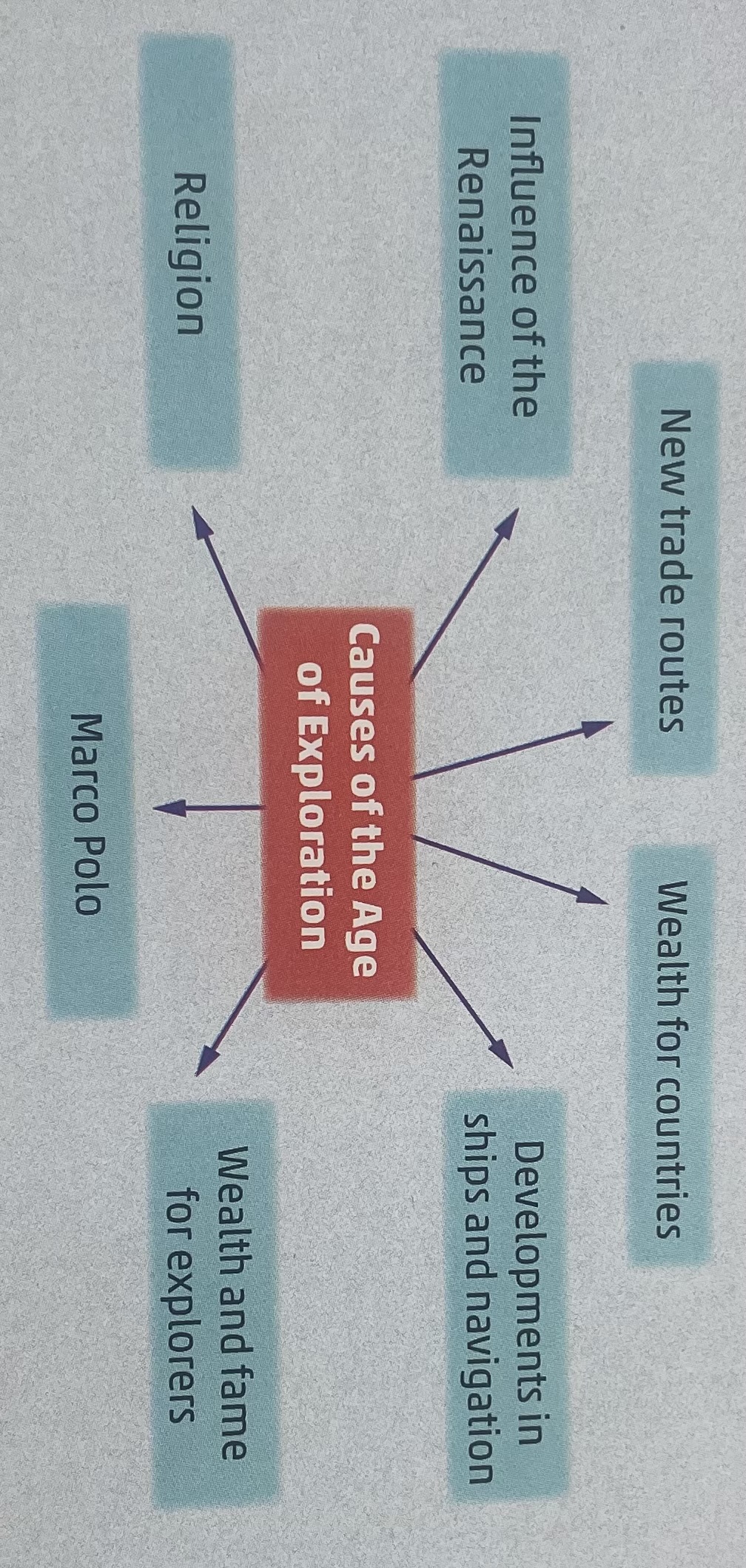
- The Renaissance encouraged learning about the world.
- Marco Polo's travels described wealth in China, inspiring exploration.
- Merchants sought new trade routes for silks and spices.
- The fall of Constantinople in 1453 cut off the Great Silk Road, necessitating new routes.
- European rulers desired new lands and empires.
- The Pope encouraged spreading Christianity as Islam grew more powerful
Technological Changes
- Advances in technology made ocean navigation possible.
- Cartographers adopted detailed maps from Constantinople and developed portolan charts.
- Quadrants and astrolabes determined latitude using stars and the sun.
- Compasses identified north.
- Log and line measured ship speed; line and lead weight measured water depth.
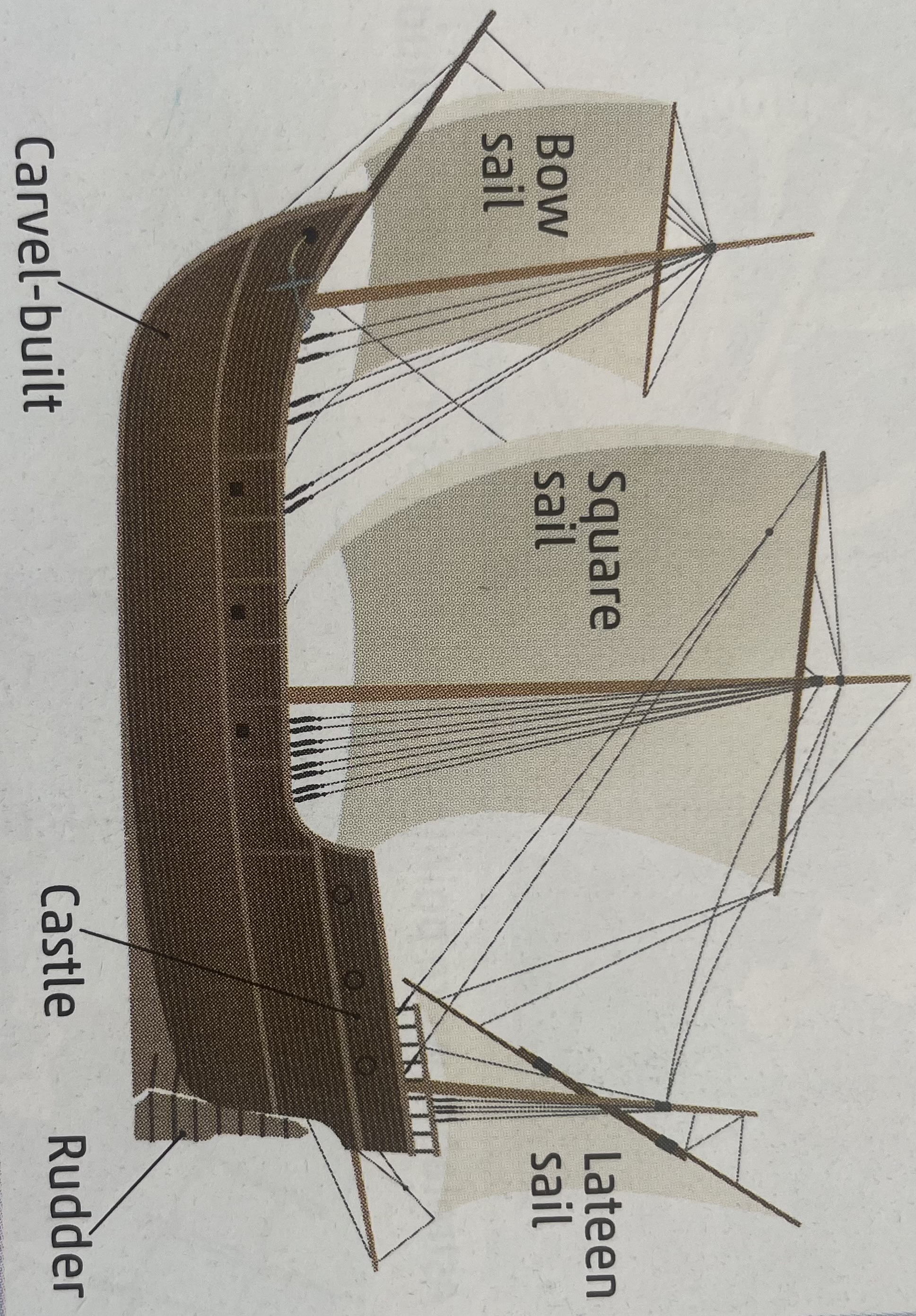
- The caravel was a new ship designed for long voyages with lateen sails, a caravel-built hull, and a rudder.
- The nao was a larger, stronger version of the caravel.
Life Aboard a Ship
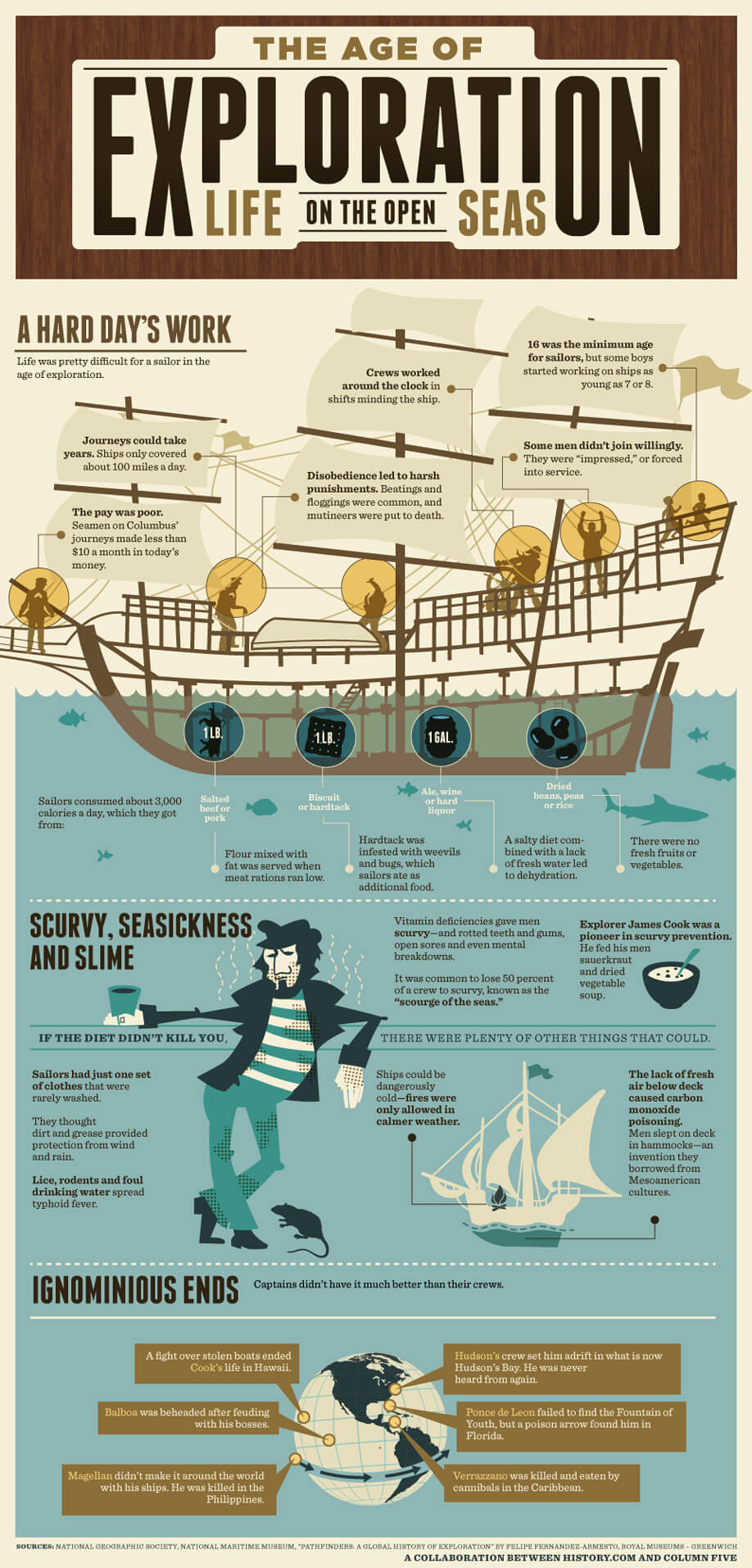
- The captain had a cabin, while the crew slept on deck or in hammocks.
- Sailing and maintaining the ship was hard work, with tensions between wealthy captains and poor sailors.
- Mutiny was a threat, so harsh discipline like flogging and execution was common.
- Food was preserved by drying or salting, leading to diseases like typhoid and scurvy due to lack of fresh water and vitamins.
- Sailors feared shipwrecks and "sea monsters."
Note
A mutiny is when crew members on a ship rebel against their captain's authority during a voyage.
Note
Clinker Built: Wooden boards were overlapped (stroger) and sails were square. Strong, but unable to turn quickly. Lateens**:** Triangular sails — to get in and out of harbours quickly. Slow, but very good at turning.
Caravel: Clinker built, with triangular and square sails for both power and manoeuvrability.
Carrack/Naos: Big caravels with extra room for storage.
The Early Voyages of Exploration
- Early voyages began from Portugal in the 1400s to find new trade routes.
- Prince Henry the Navigator set up a school of navigation at Sagres.
- Portuguese explorers aimed to find a way around Africa to Asia, setting up trading bases along the African coast.
- Bartolomeu Dias rounded the southern tip of Africa (Cape of Good Hope) in 1487.
- Vasco da Gama reached India by sailing around Africa in 1497, proving the route was viable.
Results of the Early Voyages
- Portugal became wealthy from trade and established a large empire in Africa and Asia.
- The spice trade came under Portuguese control, increasing spice imports to Europe.
- Other European rulers were inspired to sponsor their own voyages, including Spain, the Netherlands, France, and Britain.
Columbus and the Discovery of the 'New World'
- Spain, under King Ferdinand and Queen Isabella, sponsored Christopher Columbus to find a route to the Far East by sailing west.
- In 1492, Columbus set sail with the Niña, Pinta, and Santa María.
- On 12th October 1492, land was sighted, which Columbus named San Salvador, mistakenly thinking he had reached India.
- Columbus explored the Bahamas and returned to Spain with slaves and exotic goods, receiving the title of governor of the new territory.
- Columbus made three more voyages but was removed as governor in 1499 due to reports of brutality.
Age of Exploration After Columbus
Important explorations followed:
- John Cabot landed in Newfoundland, Canada, in 1497, claiming it for England.
- Ferdinand Magellan led the first voyage to circumnavigate the globe from 1519-1522.
- Abel Tasman discovered Tasmania and New Zealand in 1642.
Conquest and Colonisation: Conquering the New World
- The wealth of the New World attracted more explorers, including the conquistadores.
Hernán Cortés and the Aztecs
- The Aztecs were an advanced civilisation in southern Mexico.
- Hernán Cortés attacked the Aztecs for their gold, landing in 1519 with 11 ships and 500 soldiers.
- Cortés allied with local tribes to march on Tenochtitlan and took the king Montezuma hostage.
- After initial success, the Aztecs revolted, and Montezuma was killed.
- Cortés regrouped, laid siege to Tenochtitlan, and massacred its people, becoming governor of New Spain.
Francisco Pizarro and the Incas
- The Incas were an advanced civilisation in the Andes mountains.
- Francisco Pizarro, under orders from King Charles V of Spain, invaded the Incan Empire in 1532 with 180 men.
- Pizarro captured the Incan king Atahualpa, who was later executed despite negotiations.
- Pizarro defeated the Incans and established the Spanish province of New Castile with its capital at Lima.
Impact of Colonisation
- Colonisation had a major impact on both the colonised and the colonisers.
- Indigenous populations in South America were decimated by violence and diseases like measles, influenza, and smallpox.
- Indigenous cultures and languages were destroyed, with Spanish and Portuguese becoming dominant.
- The Catholic Church, especially the Jesuits, converted indigenous peoples to Christianity.
- The slave trade grew, with millions of Africans transported to the Americas to work on plantations, creating the Atlantic Slave Triangle.
Impact on Europe
- The Age of Exploration led to the Age of Imperialism, with European states creating empires.
- The British Empire colonised around 25% of the world's land.
- New Empires led to conflicts; the Treaty of Tordesillas divided the New World between Spain and Portugal.
- The Columbian Exchange introduced new foods, animals, and technology between Europe and the Americas.
| Explorer | Contributions & Discoveries |
|---|---|
| Prince Henry the Navigator | Established a school of navigation at Sagres. Advanced Portuguese exploration efforts from the 1400s. Facilitated the discovery of new trade routes around Africa to Asia. |
| Bartolomeu Dias | Rounded the southern tip of Africa, later named Cape of Good Hope, in 1487. |
| Vasco da Gama | Reached India by sailing around Africa in 1497, proving the sea route viable. |
| Christopher Columbus | Sighted land named San Salvador in 1492, initiating European exploration of the Americas. Opened up the 'New World' to European colonisation. |
| John Cabot | Landed in Newfoundland, Canada, in 1497, claiming it for England. |
| Ferdinand Magellan | Led the first successful circumnavigation of the globe from 1519-1522. |
| Abel Tasman | Discovered Tasmania and New Zealand in 1642. |
| Hernán Cortés | Conquered the Aztec Empire in 1519, establishing Spanish control over what would become Mexico. |
| Francisco Pizarro | Invaded and conquered the Incan Empire in 1532, establishing the Spanish province of New Castile in Peru. |
Key Terms
- Marco Polo: an explorer who travelled to Asia in the 13th century and wrote about his experiences, which inspired further exploration.
- Compass: a navigational instrument used for determining direction, which greatly aided explorers during the Age of Exploration.
- Caravel: a small, fast, and manoeuvrable ship developed by the Portuguese in the 15th century, crucial for long sea voyages.
- Prince Henry the Navigator: Henry the Navigator was a Portuguese royal who promoted exploration and maritime studies, helping to advance European exploration.
- Columbus: Columbus was an Italian explorer who completed four voyages across the Atlantic Ocean, opening the way for the widespread European exploration and colonisation of the Americas.
- Conquistadores: Spanish explorers and soldiers who conquered large areas of the Americas in the 16th century, such as Hernán Cortés and Francisco Pizarro.
- Colonisation: Colonisation is the process of establishing control over and settling in foreign lands, often leading to the exploitation and domination of local populations
Revision Questions
- What were some reasons for European exploration in the 1400s?
- True or False: The caravel was a new type of ship developed for long voyages.
- Who set up a school of navigation at Sagres?
- Fill in the blank: Columbus believed he had reached _______ when he landed in San Salvador.
- What was the Treaty of Tordesillas?
- True or False: The Columbian Exchange involved the transfer of foods, animals, and technology between Europe and the Americas.
- Who captured the Incan king Atahualpa?
- Fill in the blank: The fall of Constantinople in 1453 cut off the Great _______ Road.
- What was the impact of diseases on indigenous populations in South America?
- True or False: The British Empire colonised around 50% of the world's land.
Note
Really looking to impress? Here are 3 Key events you can research to get more information on the Age of Exploration:
- The Treaty of Tordesillas 1494
- The First Voyage of Vasco da Gama (1497-1499)
- The Lost Colony of Roanoke (1587)