Joseph Stalin (Junior Cert History): Revision Notes
📚Revision Notes
Joseph Stalin
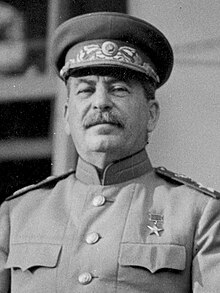
-
Birth and Early Life: Joseph Stalin was born in 1878 in Gori, Georgia, then part of the Russian Empire. He was born Ioseb Besarionis dzе Jughashvili and later adopted the name, Stalin, meaning "man of steel".
-
Early Political Involvement: In his early years, Stalin joined the revolutionary movement against the Tsarist regime. He became a member of the Bolshevik Party, led by Vladimir Lenin, in 1903.
-
Role in the Revolution: During the Russian Revolution of 1917, Stalin played a key role in the Bolshevik seizure of power. After the revolution, he held several important positions in the new Soviet government.
-
Rise to Power: After Lenin died in 1924, Stalin gradually consolidated power, eventually becoming the undisputed leader of the Soviet Union by the end of the 1920s. He transformed the country into an industrial power but at a great human cost.
-
Five-Year Plans: Stalin introduced the Five-Year Plans aimed at rapid industrialisation and collectivisation of agriculture. These policies led to significant economic transformation but also widespread famine and death.
-
Great Purge: In the late 1930s, Stalin initiated the Great Purge (or Great Terror), a campaign of political repression, persecution, and executions to consolidate his power. Millions of people were killed or sent to labour camps.
-
World War II: During World War II, Stalin led the Soviet Union against Nazi Germany after the breakdown of the Molotov-Ribbentrop Pact. His leadership was critical in the Allied victory.
-
Post-War Period: After the war, Stalin established Communist regimes in Eastern Europe, leading to the start of the Cold War. He also initiated various development projects within the Soviet Union.
-
Death: Stalin died in 1953 from a cerebral haemorrhage. His death marked the end of a totalitarian regime marked by widespread human rights abuses.
-
Legacy: Stalin's legacy is deeply controversial. He is credited with turning the Soviet Union into a global superpower but is also criticised for the brutal tactics he used to achieve this, including mass repressions, purges, forced displacements, and famines.
Note
Totalitarian Regime A totalitarian regime is a type of government where a single leader or party has complete control over all aspects of life. In this system, people have little or no personal freedom, and the government controls the media, economy, and even people's beliefs and actions. Opposition is not allowed, and the government uses fear and propaganda to maintain power.
Note
Stalin's Five-Year Plans Stalin's Five-Year Plans were a series of national economic plans implemented in the Soviet Union between 1928 and 1941. The main goals were to rapidly industrialise the Soviet economy and increase production, especially in heavy industries like steel, coal, and machinery.
- First Plan (1928-1932): Focused on building new factories and increasing industrial output. It aimed to transform the Soviet Union from an agrarian society into an industrial superpower.
- Second Plan (1933-1937): Continued industrial growth and emphasised improving infrastructure and transportation.
- Third Plan (1938-1941): Aimed to boost military production due to growing threats from other countries, but it was disrupted by World War II. These plans led to significant economic growth but also caused widespread hardships, including worker exploitation and shortages of consumer goods. Many people suffered due to harsh working conditions and government repression.