Life in Communist Russia (Junior Cert History): Revision Notes
📚Revision Notes
Life in Communist Russia
Communism and the Bolsheviks
- In February 1917, Tsar Nicholas II of the Romanov Dynasty was forced to step down.
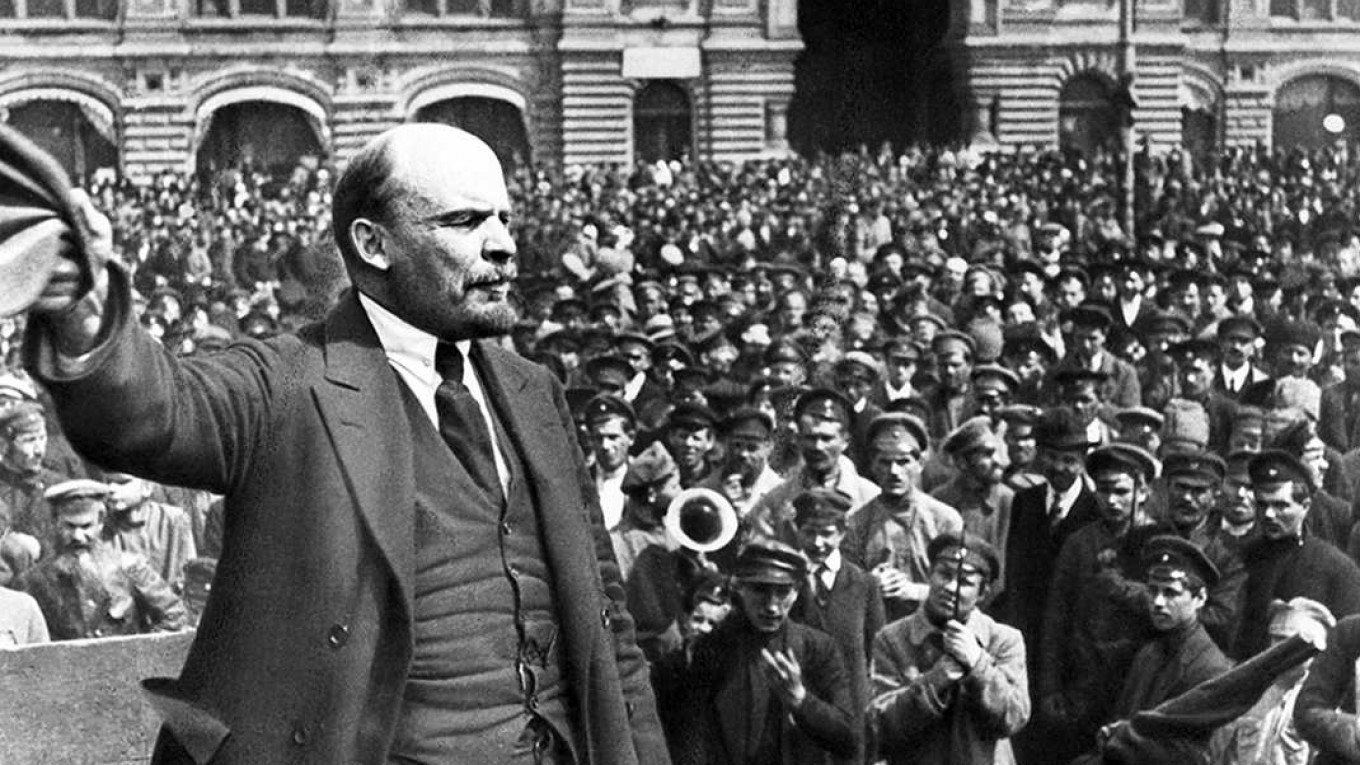
- The provisional government that replaced the Tsar was overthrown in the October Revolution of 1917 by Vladimir Lenin and the Bolsheviks.
- The Bolshevik Party believed in the communist ideas of Karl Marx, advocating for revolutions to end private ownership and distribute wealth, creating a classless society.
- Communism is a system where the state controls all aspects of the economy and society, with limited individual rights and discouragement of religion. Russia was the first communist state.
- Lenin's government banned all other political parties, took control of banks and factories, and ended Russia's involvement in World War I through a peace treaty with Germany.
Note
Communism is a system where the state controls all aspects of the economy and society, with limited individual rights and discouragement of religion. Russia was the first communist state.
The Russian Civil War
- In 1917, civil war broke out between the Bolshevik Red Army, led by Leon Trotsky, and the anti communist White Army.
- In July 1918, Tsar Nicholas II and his family were executed by the Bolsheviks.
- By 1922, the White Army was fully defeated, and Russia was renamed the Union of Soviet Socialist Republics (USSR), known as the Soviet Union.
Stalin's Rise to Power
- In 1922, Lenin suffered strokes and wrote his Testament, critical of Joseph Stalin, who was the General Secretary of the Party.
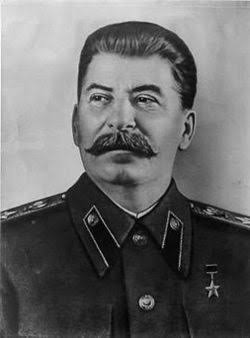
- Lenin died on 21st January 1924, leading to a power struggle among senior Party members, including Lev Kamenev, Grigory Zinoviev, Nikolai Bukharin, Leon Trotsky, and Stalin.
- Stalin seized control by organising Lenin's funeral, giving the main speech, and expelling Trotsky and others from the Party and government.
- Stalin's policy of 'Socialism in One Country' focused on strengthening communism in the USSR before spreading it further.
- By 1928, Stalin had become the absolute ruler, creating a dictatorship.
Note
A dictatorship is a form of government where one person or a small group has total control over a country. In a dictatorship, the leader, known as a dictator, has complete power and often limits freedoms like speech and voting. There are few or no checks on the dictator's power.
Daily Life in Stalin's Russia
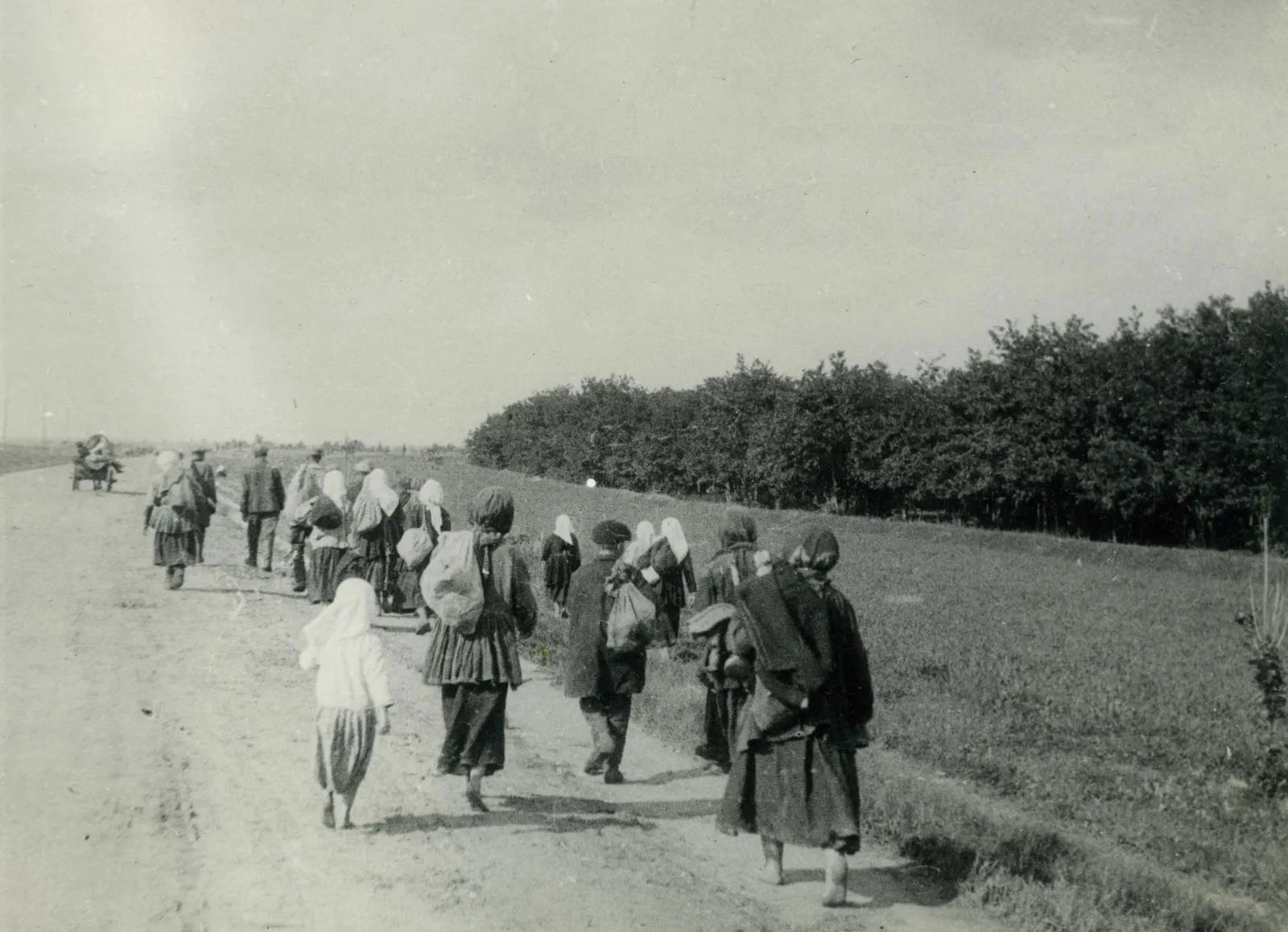
- In 1927, Stalin introduced collectivisation, merging small farms into large, state-owned farms.
- Resistance led to the deportation or execution of 2.5 million kulaks (wealthy farmers).
- By 1936, 90% of farmland was collectivised.
- Stalin launched three Five-Year Plans to boost industrialisation:
- The First Five-Year Plan (1928-1932) focused on heavy industry, with unrealistic targets but notable improvements.
- The Second Five-Year Plan (1933-1937) targeted industry, transport, and consumer goods, resulting in projects like the Moscow Underground.
- The Third Five-Year Plan (1938-1941) shifted focus to arms production due to World War II.
- Shortages of everyday goods and food rationing were common, leading to severe famines.
- Workers received benefits like apartments, free schooling, and healthcare.
- Productive workers were rewarded and used in propaganda.
Terror
-
Stalin was a dictator who used terror and propaganda to maintain power.
-
In 1934, the secret police, Cheka, were reorganised as the NKVD, arresting and executing 'enemies of the state'.
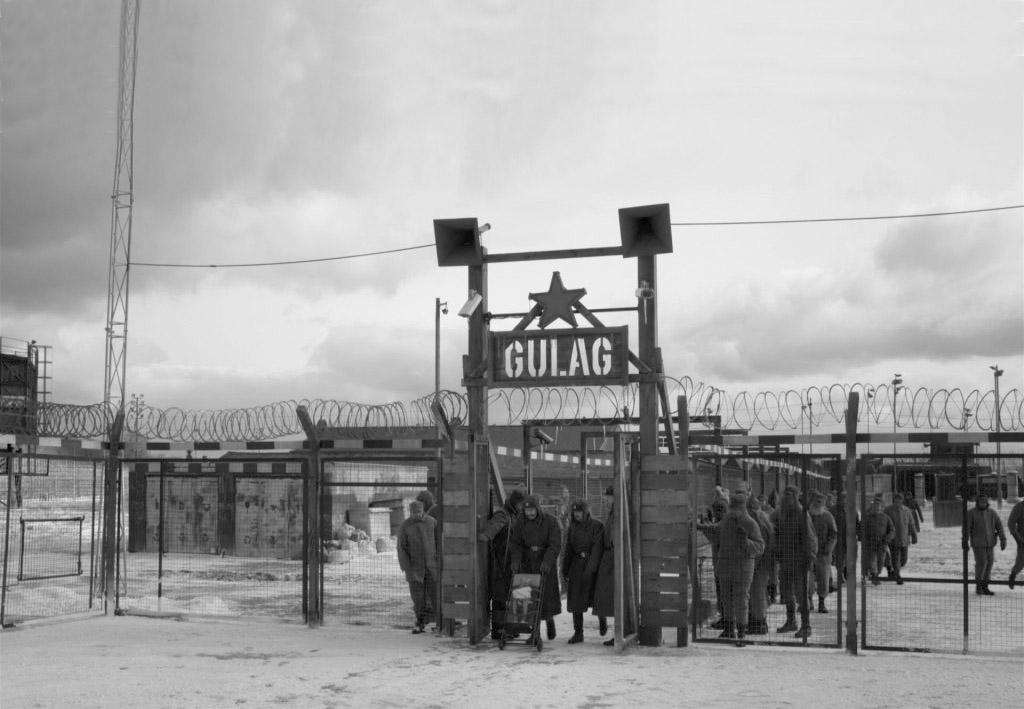
- The gulags (forced labour camps) held millions, with high death rates due to harsh conditions.
- Stalin initiated purges, including show trials where tortured confessions were used to eliminate rivals.
-
Major show trials included: 4. The Trial of the Sixteen (1936): Executions of Communist Party leaders. 5. The Trial of the Seventeen (1937): Executions and imprisonments of leading Bolsheviks. 6. The Trial of the Twenty-One (1938): Elimination of Stalin's last rivals.
-
Stalin also purged the Red Army, executing or firing nearly 30,000 officers.
Propaganda
- The Communist Party's newspaper, Pravda, and posters/art promoted the greatness of the Soviet Union and communism.
- Stalin was depicted as a godlike figure, with cities and streets named after him and enemies airbrushed from photos and records.
Note
Propaganda is information, often biassed or misleading, spread to influence people's opinions or beliefs. It is used by governments, organisations, or individuals to shape public perception, promote a specific agenda, or persuade people to support a cause.
Education
- Compulsory schooling and exams improved literacy rates.
- Propaganda influenced education, rewriting textbooks to glorify Stalin.
- Youth groups like the Young Communists and Komsomol were established.
Women's Lives
- Under Lenin, women gained the vote, education, and access to contraception and divorce. State provided services included dining halls and childcare.
- Under Stalin, contraception and abortion were banned by 1936, and divorce was discouraged to increase birth rates. Women were rewarded for having six or more children.
- By 1937, women made up 50% of the workforce.
A Leader in Communist Russia: Josef Stalin (1878-1953)
- Born near Tiflis, Georgia, Stalin was expelled from priest training for radical Marxist ideas.
- After joining the Bolsheviks, he was sent to Siberia in 1904 and played a minor role in the October Revolution.
- As General Secretary, he seized power after Lenin's death, expelling and exiling Trotsky.
- Stalin's policies included collectivisation and purges to eliminate opposition.
- In 1939, Stalin signed a nonaggression pact with Nazi Germany, but in 1941, Germany invaded the Soviet Union. Stalin joined the Allies to defeat Germany.
- After the war, Stalin imposed communist governments on Eastern Europe and initiated the Berlin Blockade in 1948, marking the start of the Cold War.
- Stalin's health deteriorated, and by his death in 1953, the Soviet Union was a nuclear power.
Key Terms
- Tsar Nicholas II: the last Emperor of Russia, ruling from 1894 until his abdication in 1917 during the Russian Revolution, leading to the end of the Romanov dynasty.
- October Revolution: a 1917 Bolshevik-led uprising in Russia that overthrew the provisional government and established a communist state under the leadership of Vladimir Lenin.
- Vladimir Lenin: the leader of the Bolshevik Party and the key figure in the October Revolution, who became the first leader of the Soviet Union.
- Union of Soviet Socialist Republics (USSR): a federal socialist state in Eastern Europe and Asia, established in 1922 and dissolved in 1991, known for its centralised economy and single-party rule.
- Josef Stalin: the leader of the Soviet Union from the mid-1920s until his death in 1953, known for his totalitarian rule, extensive purges, and policies of industrialisation and collectivisation.
- Collectivisation**:** a policy implemented by Stalin in the late 1920s and 1930s to consolidate individual peasant farms into large, state-controlled enterprises.
- Five-Year Plans: a series of nationalised plans for economic development in the Soviet Union, aimed at rapid industrialisation and centralised economic control.
- NKVD**:** the Soviet secret police organisation responsible for political repression, including purges, surveillance, and enforcement of Stalin's policies.
- Gulags**:** a network of labour camps in the Soviet Union where millions of people were imprisoned and subjected to harsh conditions, forced labour, and political repression.
- Berlin Blockade: a Soviet blockade of West Berlin in 1948-1949, aimed at forcing the Allies out of the city, which was countered by the Western Allies' Berlin Airlift to supply the city with food and goods.
Revision Questions
- What event forced Tsar Nicholas II to step down?
- True or False: Lenin's government allowed other political parties.
- Who led the Red Army during the Russian Civil War?
- Fill in the blank: The Soviet Union was renamed the _______ in 1922.
- What policy did Stalin introduce in 1927 to merge small farms?
- True or False: The NKVD was responsible for managing the gulags.
- What was the purpose of Stalin's Five-Year Plans?
- Fill in the blank: Stalin's purges included public trials known as _______.
- Who were the enemies airbrushed from photographs during Stalin's regime?
- True or False: Stalin signed a nonaggression pact with Nazi Germany in 1939.
Note
Really looking to impress? Here are 3 Key events you can research to get more information on life in Communist Russia:
- The Council of Clermont (1095) - This event marked the start of the First Crusade, when Pope Urban II called for Christians to reclaim the Holy Land.
- The Signing of the Magna Carta (1215)
- The Avignon Papacy (1309-1377)