The Petrograd Soviet (Junior Cert History): Revision Notes
📚Revision Notes
The Petrograd Soviet
During the time of the Russian Revolution in the early 20th century, "Soviets" were councils of workers and soldiers that were set up in many cities across Russia. These councils were like local governments that made decisions based on what the workers and soldiers wanted.
The Petrograd Soviet was one of the most important soviets. Petrograd is the old name for the city we now call Saint Petersburg. This Soviet became powerful during 1917, a year when there were two revolutions in Russia.
This was because Petrograd was the capital of Russia at that time, and had a lot of workers and soldiers who weren't happy with how things were going. They made demands for better conditions and more say in the government. The Petrograd Soviet had a lot of influence over these workers and soldiers, and so, played a big role in the political changes that were happening.
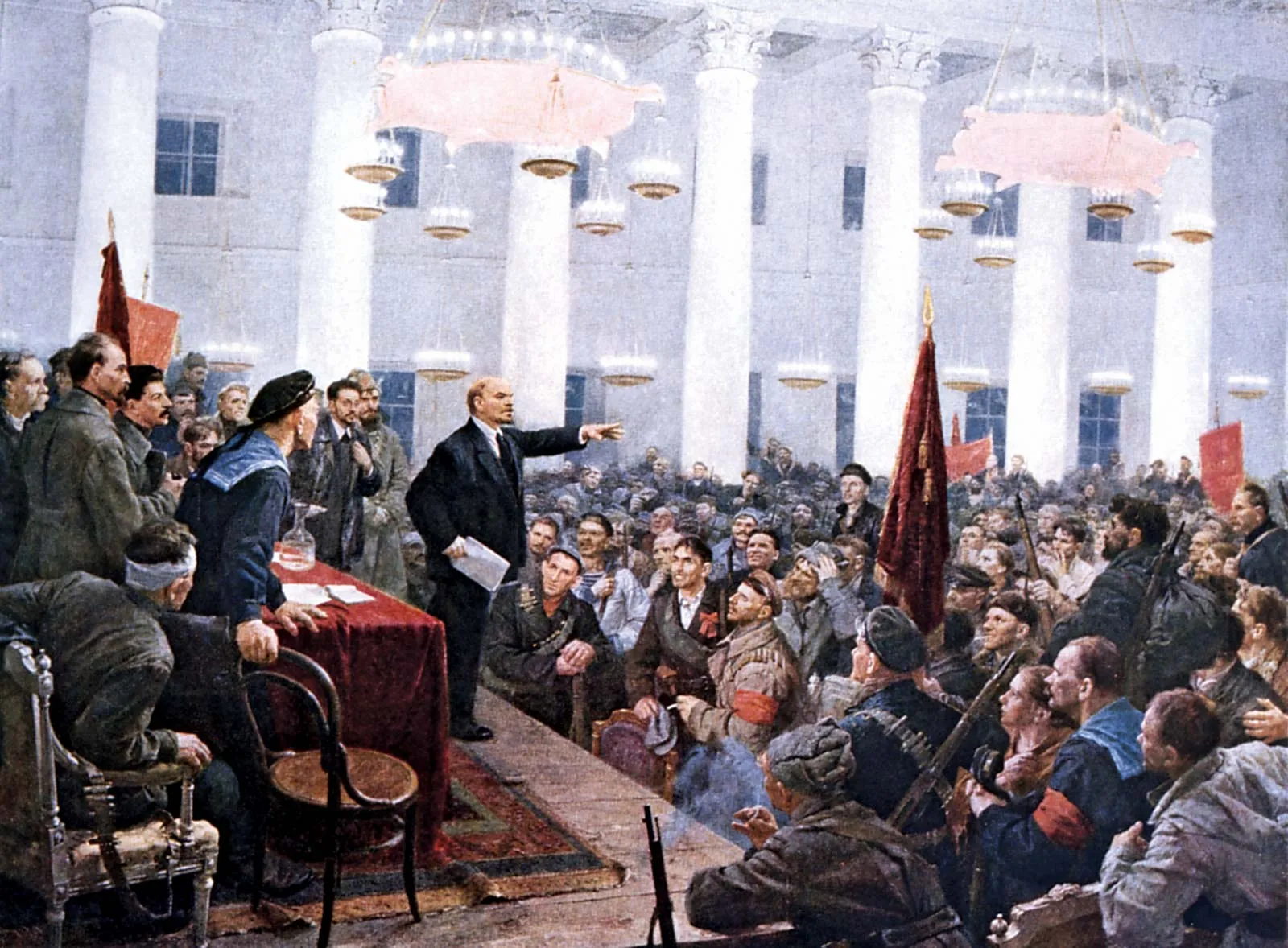
In October 1917, the Petrograd Soviet, under the leadership of the Bolshevik Party (led by Vladimir Lenin), helped to overthrow the Provisional Government (which was the temporary government after the first revolution in February 1917). This was the second revolution, often called the "October Revolution", and it led to the creation of the Soviet Union. The Petrograd Soviet was an essential part of this historical event.
Impact on History: The Petrograd Soviet was a crucial part of this historical event, showing how organised groups of workers and soldiers could change the course of a nation.
Note
Soviets: During the Russian Revolution in the early 20th century, "Soviets" were councils of workers and soldiers set up in many cities across Russia. These councils acted like local governments, making decisions based on what the workers and soldiers wanted.
Note
Dual Power: After the February Revolution in 1917, Russia was ruled by a system known as "dual power." This meant that the Provisional Government and the Petrograd Soviet shared power. The Petrograd Soviet had significant influence because it represented the interests of the workers and soldiers.