Life in Nazi Germany (Junior Cert History): Revision Notes
📚Revision Notes
Life in Nazi Germany
Hitler's Rise to Power
- After World War I, Germany became a democracy called the Weimar Republic.
- The Weimar government was blamed for signing the Treaty of Versailles, which imposed harsh conditions on Germany, leading to its nickname, the 'November Criminals'.
- The 1920s saw Germany in economic crisis with high unemployment and inflation.
The Nazi Party
- Founded in 1919 as the National Socialist German Workers' Party (NSDAP), the Nazis were anti communist and sought to reverse the Treaty of Versailles.
- Adolf Hitler joined and quickly became the party leader due to his powerful oratory skills.
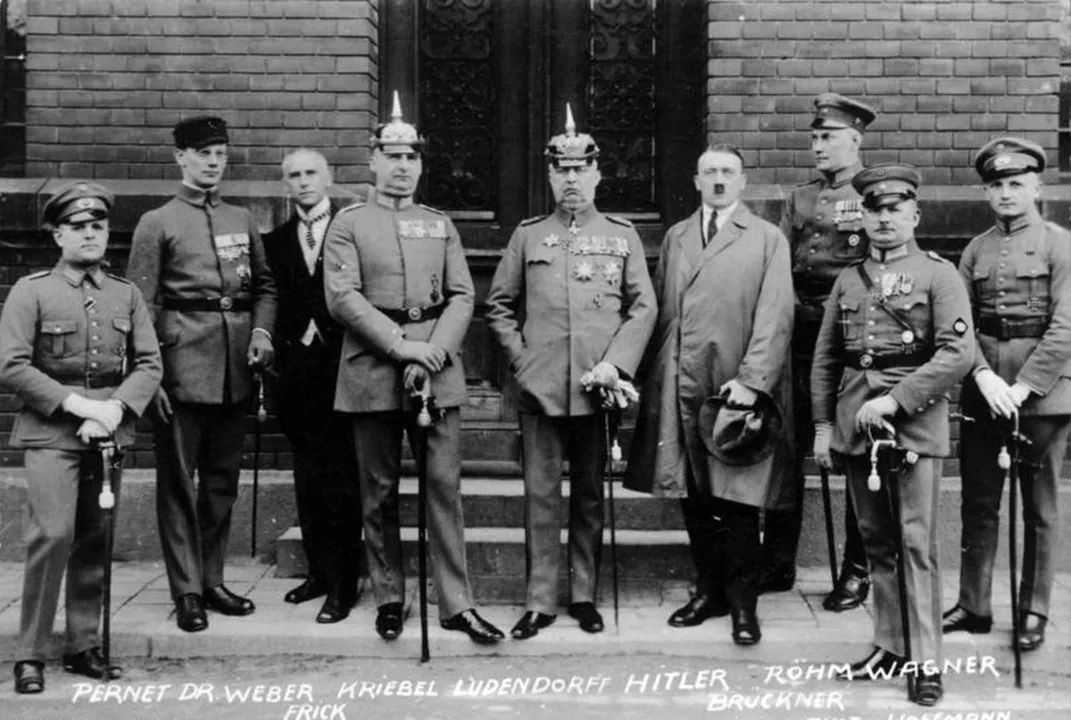
- In 1923, the Nazis attempted the Beer Hall Putsch in Munich. Hitler was imprisoned and wrote Mein Kampf, outlining Nazi beliefs and future plans for Germany.
- Hitler adopted methods from Mussolini, including the fascist salute, the Brownshirts (SA), and the swastika as the party emblem.
Note
Oratory skills refer to the ability to speak clearly and persuasively in public.
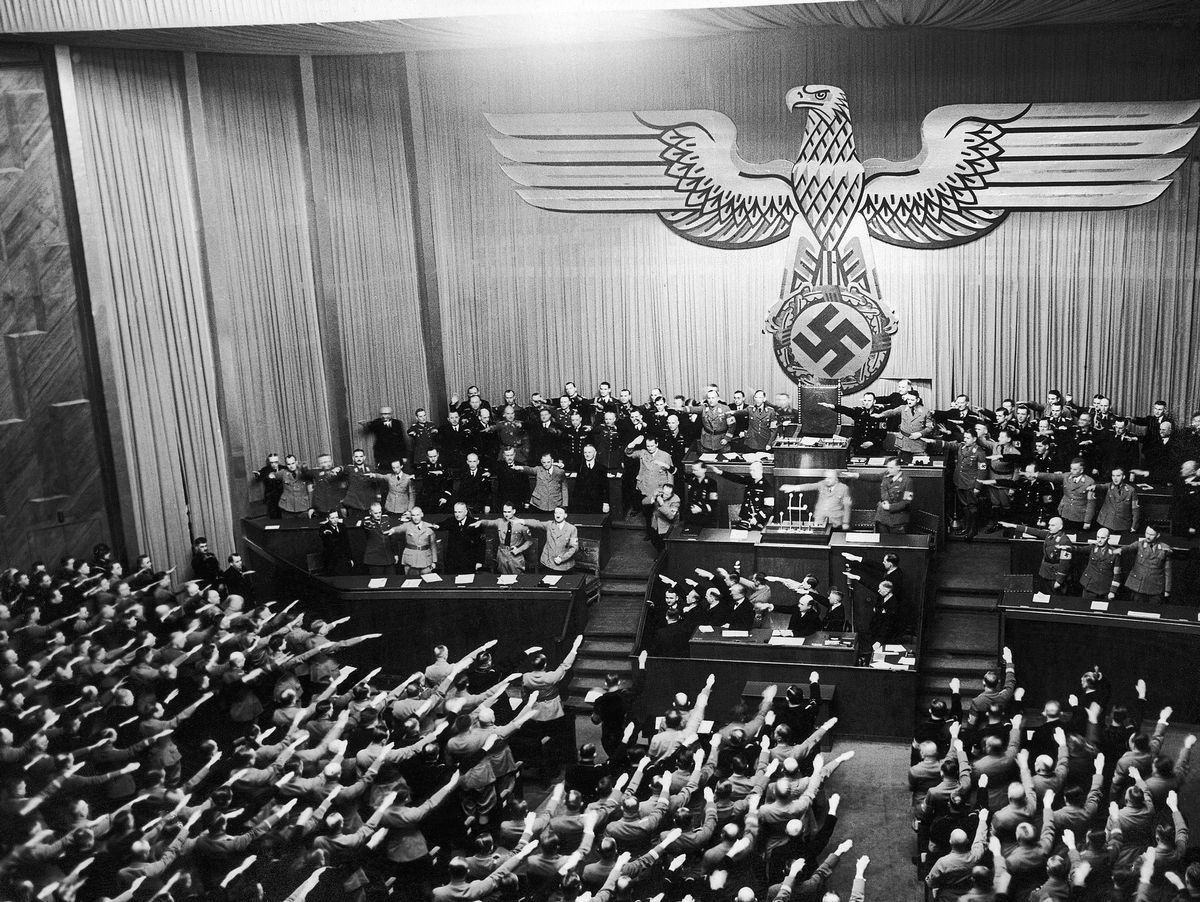
The Rise of the Nazi Party
- The Weimar government's unpopularity, the Treaty of Versailles, and the Great Depression (triggered by the 1929 Wall Street Crash) contributed to the rise of the Nazis.
- Hitler's nationalism and promises to restore Germany's greatness resonated with many.
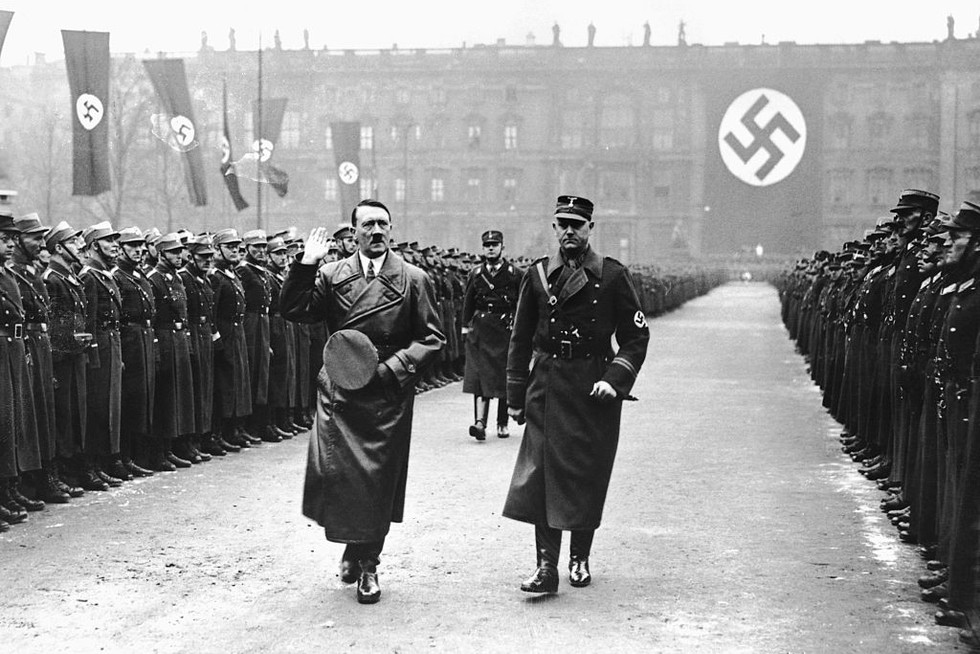
Note
The Great Depression and the Rise of the Nazis The Great Depression was a severe worldwide economic crisis that began in 1929 and lasted throughout the 1930s. It led to widespread unemployment, poverty, and financial instability, with banks failing and businesses closing.
In Germany, the Great Depression hit especially hard because the country was still recovering from World War I and dealing with reparations payments. As unemployment soared and people lost their savings, many Germans became frustrated with the Weimar government, believing it was unable to handle the crisis.
The Nazi Party, led by Adolf Hitler, took advantage of this discontent by promising to revive the economy, create jobs, and restore national pride. They used propaganda to blame minority groups and political opponents for Germany's problems, gaining support from people looking for solutions. This growing support helped the Nazis win more seats in the government and eventually led to Hitler becoming Chancellor in 1933.
Creation of a Dictatorship
- In February 1933, the Reichstag was set on fire, which Hitler blamed on Communists, allowing him to ban the Communist Party.
- In March 1933, the Enabling Act was passed, allowing Hitler to rule by decree without parliament, and he became der Führer.
Life in Hitler's Germany
Economic Policies
- Independent trade unions were abolished, and strikes were made illegal.
- Public work schemes built motorways (Autobahnen) and the Olympic Stadium.
- Rearmament began, and the motor industry developed the Volkswagen.
- Taxes were cut to encourage private industry.
Education
- Nazi youth groups like the Hitler Youth and the League of German Maidens were established.
- Schools rewrote textbooks to promote Nazi ideology, and Mein Kampf became a standard text. Teachers had to join the Nazi Party.
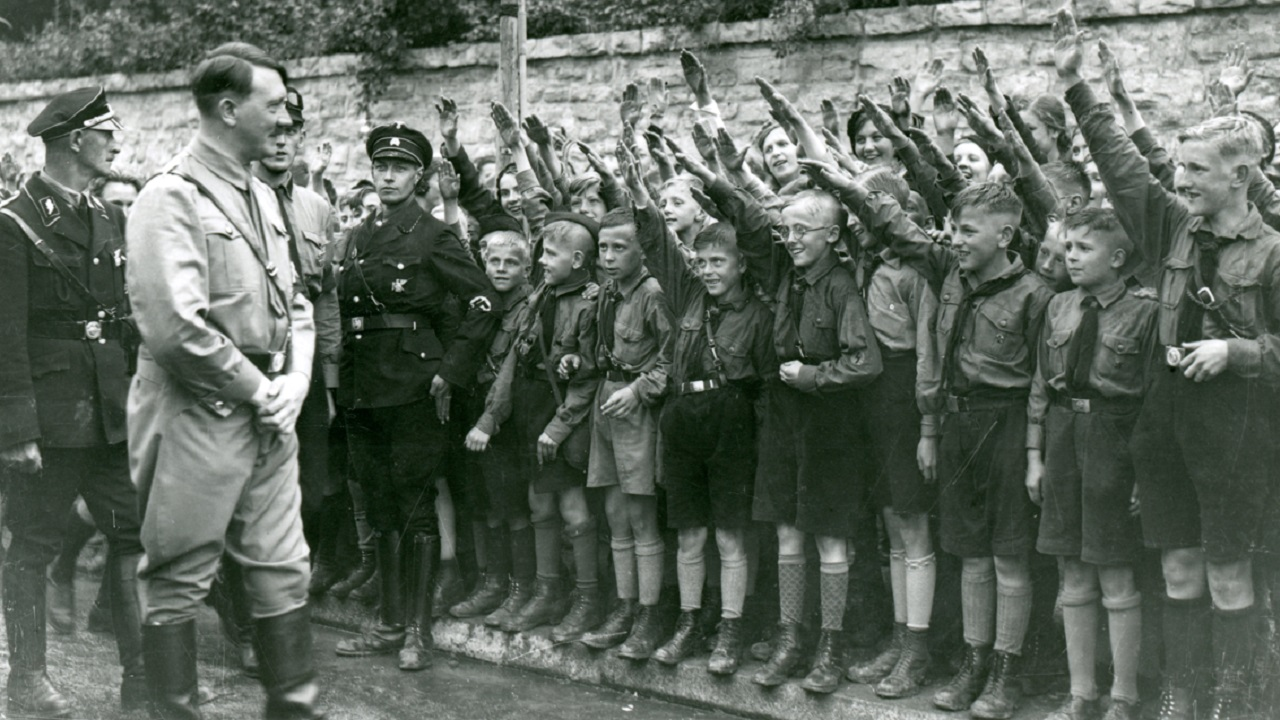
Note
Hitler Youth and the League of German Maidens The Hitler Youth and the League of German Maidens were organisations in Nazi Germany for young people. The Hitler Youth was for boys, while the League of German Maidens was for girls. These groups trained children to be loyal to Nazi ideals and prepared them for roles in the Nazi society. Boys were taught military skills and discipline, while girls were taught about homemaking and raising families. These organisations aimed to shape the beliefs and values of German youth to align with Nazi ideology.
Women's Lives
- Women were encouraged to focus on Kinder, Küche, Kirche (children, kitchen, church).
- Mothers with many children received medals, and women were expected to dress traditionally and avoid makeup and smoking.
Propaganda
- Joseph Goebbels, Minister for Propaganda, controlled the media, including the press, radio, and cinema.
- Book burnings were common, and the People's Radio made speeches accessible to all.
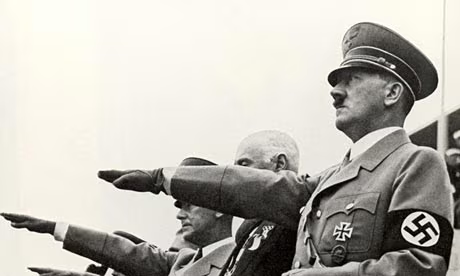
- The Nazi salute and 'Heil Hitler!' became compulsory greetings.
- The Nuremberg Rallies and the 1936 Berlin Olympics showcased Nazi Germany's strength and unity.
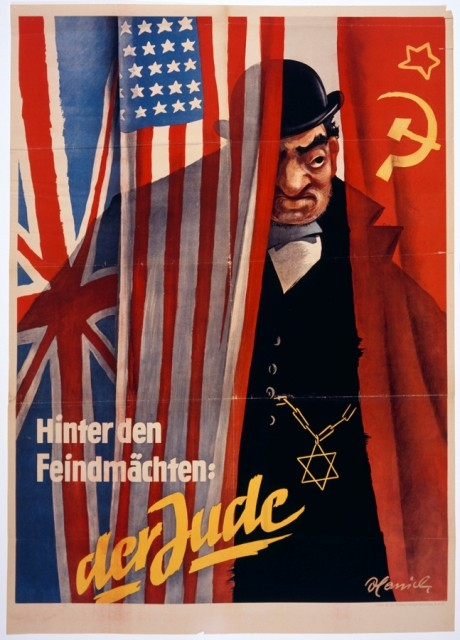
Nazi anti-Jewish propaganda
Nazi propaganda often portrayed Jews as engaged in a conspiracy to provoke war. Here, a stereotyped Jew conspires behind the scenes to control the Allied powers, represented by the British, American, and Soviet flags. The caption reads, "Behind the enemy powers: the Jew." Circa 1942.
Terror
- The Gestapo, led by Heinrich Himmler, was established as the secret police.
- In 1934, the Night of the Long Knives saw the SS eliminate SA leaders and other threats.
- Concentration camps imprisoned political opponents, Jews, and other marginalised groups.
A Fascist Leader: Adolf Hitler (1889-1945)
-
Adolf Hitler was born on April 20, 1889, in Braunau am Inn, Austria. He moved to Germany in 1913 and served in the German Army during World War I.
-
Hitler joined the German Workers' Party (DAP) in 1919, which later became the National Socialist German Workers' Party (NSDAP), or Nazi Party. By 1921, he became the party's leader.
-
While imprisoned after the failed Beer Hall Putsch in 1923, Hitler wrote "Mein Kampf" (My Struggle), outlining his ideology and future plans for Germany, including his views on race and expansionism.
-
Hitler promoted a racist ideology, believing in the superiority of the Aryan race. He blamed Jews, communists, and others for Germany's problems and promoted aggressive nationalism and anti Semitism.
-
Hitler was appointed Chancellor of Germany on January 30, 1933. He quickly consolidated power, transforming Germany into a totalitarian state.
-
Passed in March 1933, the Enabling Act gave Hitler dictatorial powers, allowing him to enact laws without the Reichstag's approval, effectively dismantling democracy in Germany.
-
Hitler, along with Joseph Goebbels, the Minister of Propaganda, used mass media, rallies, and symbols to manipulate public opinion and promote Nazi ideology.
-
Hitler's aggressive foreign policies led to the invasion of Poland on September 1, 1939, sparking World War II. His quest for territorial expansion and the establishment of a Greater German Empire brought devastation across Europe.
-
Under Hitler's regime, the systematic genocide known as the Holocaust led to the murder of six million Jews and millions of other victims, including Roma, disabled individuals, political dissidents, and others deemed "undesirable."
-
As Allied forces closed in on Berlin, Hitler committed suicide on April 30, 1945, in his bunker.
-
Germany surrendered shortly after, marking the end of World War II in Europe.
Note
Beer Hall Putsch The Beer Hall Putsch was a failed coup attempt by Adolf Hitler and the Nazi Party in Munich, Germany, on November 8–9, 1923. Hitler and his supporters tried to overthrow the Weimar Republic and seize power by marching from a beer hall, where they had gathered, to the centre of Munich. The coup was quickly suppressed by the police, resulting in several deaths and the arrest of Hitler and other leaders.
The failed putsch led to Hitler's imprisonment, during which he wrote his book Mein Kampf. Although unsuccessful, the event increased Hitler's national profile and helped him refine his strategy for gaining power through legal means rather than by force.
Key Terms
- Weimar Republic: the democratic government of Germany from 1919 to 1933, established after World War I and ended with the rise of the Nazi Party.
- Treaty of Versailles: the peace treaty signed in 1919 that officially ended World War I, imposing heavy reparations and territorial losses on Germany.
- Nazi Party: (National Socialist German Workers' Party) was the far-right political party led by Adolf Hitler that ruled Germany from 1933 to 1945, promoting nationalist, racist, and totalitarian ideologies.
- Mein Kampf: (My Struggle) is a book written by Adolf Hitler during his imprisonment in 1923-1924, outlining his political ideology and future plans for Germany.
- Reichstag: The Reichstag was the parliament of the Weimar Republic and later Nazi Germany; also refers to the building where the parliament met.
- Enabling Act: a 1933 law that gave Adolf Hitler and his cabinet the power to enact laws without the involvement of the Reichstag, effectively establishing a legal dictatorship.
- Volkswagen: (People's Car) was a car company established in 1937 under the Nazi regime to produce affordable cars for the German people, famously associated with the Beetle model.
- Gestapo: (Geheime Staatspolizei) was the official secret police of Nazi Germany, known for its brutal methods of surveillance, interrogation, and elimination of opposition.
- Night of the Long Knives: a purge in June 1934 where Adolf Hitler ordered the assassination of political rivals and perceived threats within the Nazi Party to consolidate his power.
Revision Questions
- What was the Weimar Republic?
- True or False: Hitler wrote Mein Kampf while in prison after the Beer Hall Putsch.
- What was the Great Depression's impact on Germany?
- Fill in the blank: The Enabling Act allowed Hitler to rule by _______.
- What was the role of the Hitler Youth?
- True or False: Women in Nazi Germany were encouraged to focus on careers.
- Who was the Minister for Propaganda in Nazi Germany?
- Fill in the blank: The Night of the Long Knives involved the elimination of _______ leaders.
- What was the significance of the Nuremberg Rallies?
- True or False: Hitler's non-aggression pact with Stalin remained unbroken throughout WWII.
Note
Really looking to impress? Here are 3 Key events you can research to get more information on life in Nazi Germany:
- The Nuremberg Laws of 1935
- Kristallnacht (1938)
- The Hitler Youth (1926-45)