The Cold War (Junior Cert History): Revision Notes
📚Revision Notes
The Cold War
The Causes of the Cold War
- Communism vs Capitalism
- Conflict and Mistrust During World War II
- The Iron Curtain
- Containment
1. Communism vs Capitalism
Communism: The Soviet Union was a communist country where the state owned all property and businesses, and there were no political freedoms. It was a single-party state with no elections, free speech, or free media.
Capitalism: The US had a capitalist economy where individuals could acquire wealth, own private property, and profit from business with minimal government interference. The US was also a democracy with multiple political parties, free elections, free press, and free speech.
2. Conflict and Mistrust During World War II
- Tensions existed between the Allies during WWII.
- Stalin believed Britain and the US delayed the D-Day landings to weaken the Soviet Red Army.
- The US also refused to share atomic bomb secrets with the Soviets.
3. The Iron Curtain
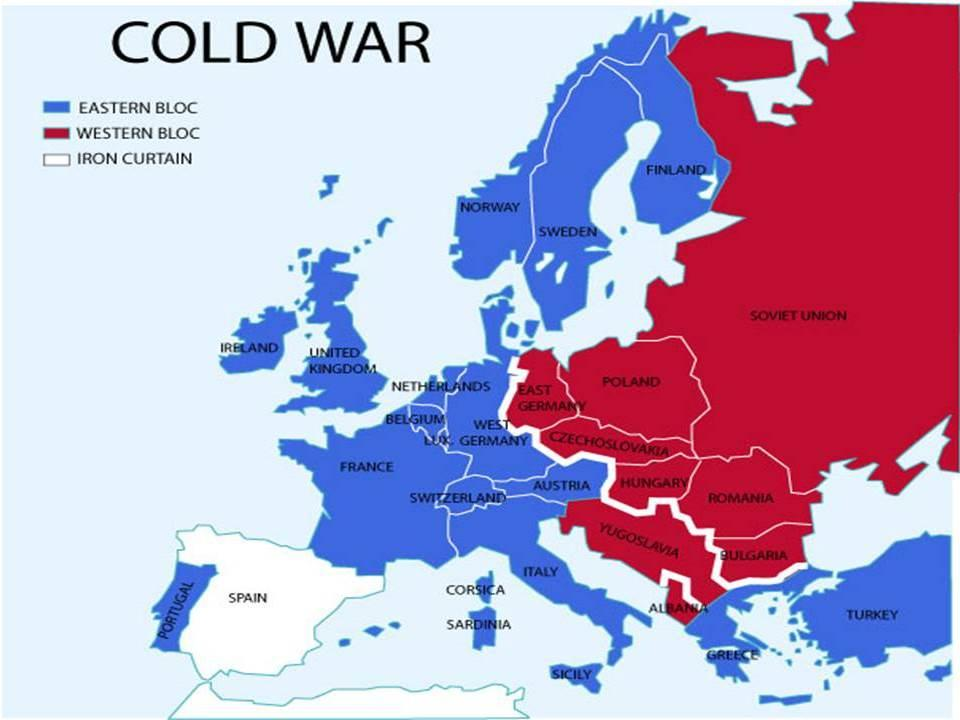
Stalin created a "buffer zone" by imposing communist governments on East Germany, Poland, Czechoslovakia, Hungary, Romania, and Bulgaria.
This division became known as the Iron Curtain, feared by Western Allies as a potential expansion of Soviet influence.
4. Containment
- In 1947, US President Harry Truman announced the Truman Doctrine, pledging US support to resist communism.
- The Marshall Plan provided funds to help Europe rebuild, aiming to prevent the spread of communism by fostering economic prosperity. Stalin refused Marshall Plan aid for Eastern Bloc countries.
The Cold War-Key Events:
- The Berlin Blockade (1948-1949)
- The Korean War (1950-1953)
- The Cuban Missile Crisis (1962)
- The Vietnam War (1964-1975)
Key Event 1: The Berlin Blockade (1948-1949)
- The Berlin Blockade occurred from June 24, 1948, to May 12, 1949. It was one of the first major crises of the Cold War, involving the Soviet Union and the Western Allies (United States, United Kingdom, and France).
- After World War II, Germany was divided into four occupation zones controlled by the US, UK, France, and the Soviet Union. Berlin, located in the Soviet zone, was also divided into four sectors.
- The Western Allies planned to merge their zones to form West Germany and introduced a new currency, the Deutsche Mark, in their sectors, which angered the Soviets.
- In response, the Soviet Union blocked all road, rail, and canal access to West Berlin, aiming to force the Western Allies out of the city.
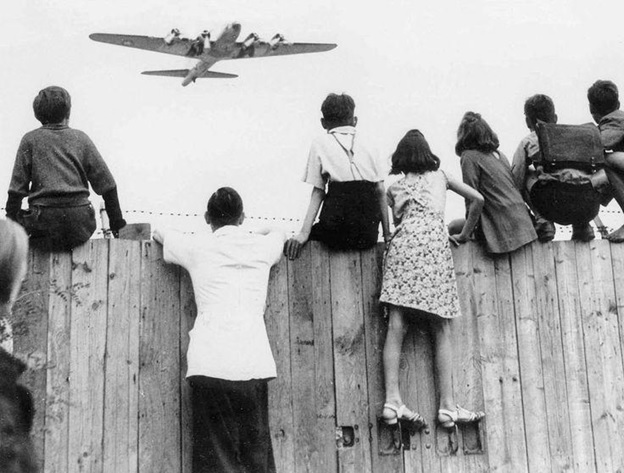
- To counter the blockade, the Western Allies organised the Berlin Airlift, flying in food, fuel, and other essential supplies to sustain the West Berlin population.
- The US-led airlift operation was codenamed "Operation Vittles," while the British operation was known as "Operation Plainfare." They flew over 200,000 flights in less than a year.
- Pilots and crews from the US, UK, and other Allied countries worked tirelessly to deliver supplies, ensuring that West Berliners had enough to survive.
- US pilot Gail Halvorsen became famous as the "Candy Bomber" for dropping candy to children in Berlin, boosting morale during the blockade.
- The blockade failed to force the Allies out of Berlin. Instead, it strengthened the resolve of the Western Allies and demonstrated their commitment to protecting West Berlin.
- On May 12, 1949, the Soviet Union lifted the blockade, acknowledging that their efforts had been unsuccessful. The Berlin Airlift continued until September to build up supplies in case of future blockades.
Key Event 2: The Korean War (1950-1953)
- The Korean War began on June 25, 1950, when North Korean forces, supported by the Soviet Union and China, invaded South Korea.
- Korea had been divided at the 38th parallel after World War II, with the North under a communist government and the South under a democratic government.
- The United Nations, led by the United States, quickly intervened to support South Korea, while China and the Soviet Union backed North Korea.
- The war saw major battles such as the Battle of Inchon, where UN forces launched a successful amphibious invasion, turning the tide in favour of the South.
- Chinese forces entered the war in October 1950, pushing UN forces back and prolonging the conflict.
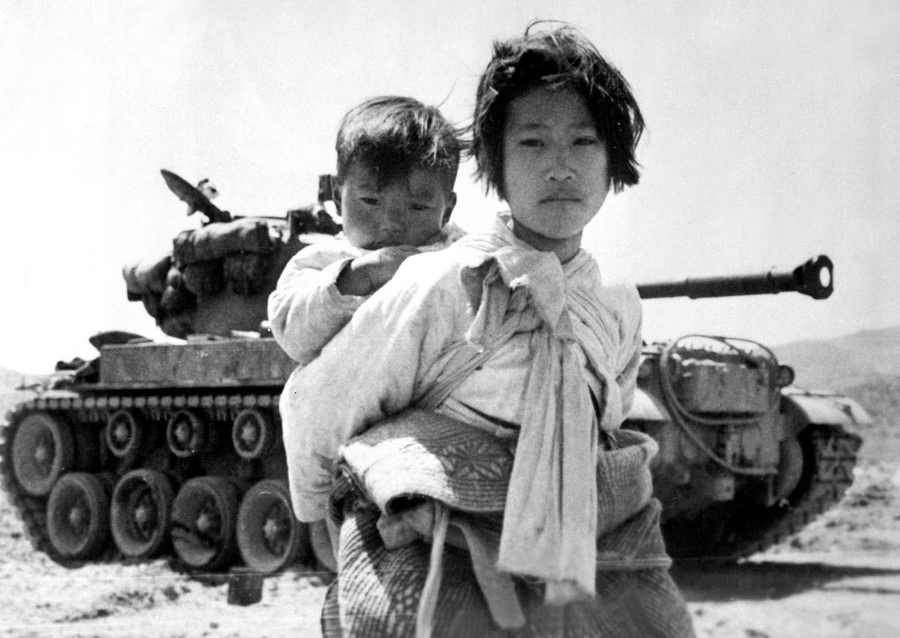
- Fighting was intense and brutal, with significant civilian casualties and widespread destruction across the Korean Peninsula.
- The war became a stalemate, with both sides fighting back and forth around the 38th parallel for most of the conflict.
- Peace talks began in 1951 but took two years to reach an armistice agreement, largely due to disagreements over prisoner exchanges and border demarcation.
- An armistice was signed on July 27, 1953, effectively ending the fighting but not officially ending the war, as a peace treaty was never signed.
- The Korean War had a lasting impact, solidifying the division of Korea into North and South, leading to the heavily fortified Demilitarised Zone (DMZ) that still exists today.
Note
Amphibious warfare: military operations characterised by attacks launched from the sea by naval and landing forces against hostile shores.
Key Event 3: The Cuban Missile Crisis (1962)
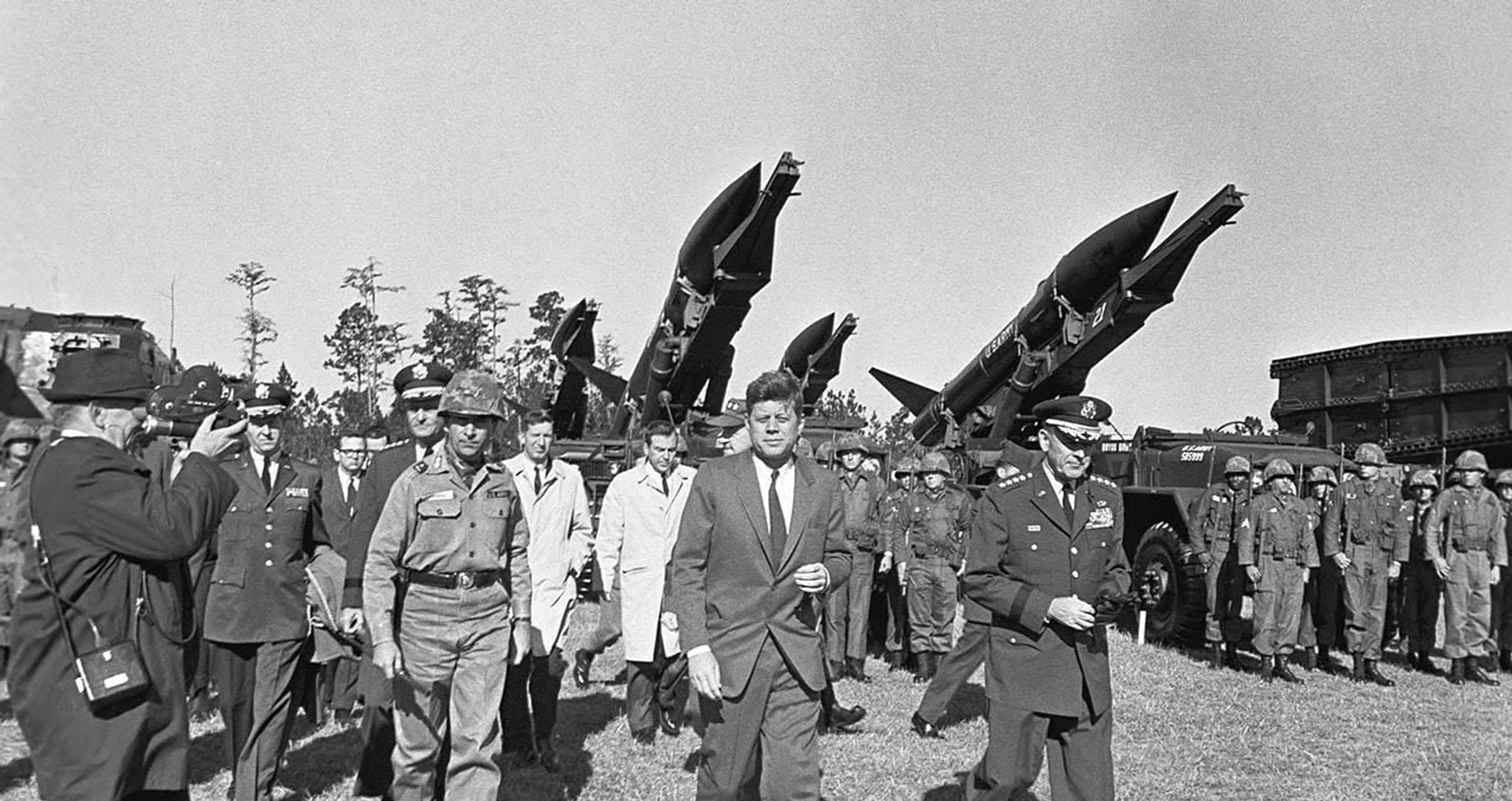
- The Cuban Missile Crisis occurred in October 1962, during the Cold War, when the United States discovered Soviet nuclear missiles being installed in Cuba.
- The crisis began when a US U-2 spy plane took photographs revealing Soviet missile sites under construction on the island of Cuba, just 90 miles from the US coast.
- President John F. Kennedy and his advisors formed the Executive Committee (ExComm) to decide how to respond to the threat of nuclear missiles so close to the United States.
- After intense debate, Kennedy decided to implement a naval blockade, referred to as a "quarantine," to prevent further Soviet missiles from arriving in Cuba.
- Kennedy announced the blockade in a televised address on October 22, 1962, demanding that the Soviet Union remove all offensive weapons from Cuba.
- Tensions escalated as Soviet ships approached the quarantine line, raising fears of a direct military confrontation between the superpowers.
- Behind the scenes, intense negotiations took place between the US and Soviet leaders, with both sides seeking to avoid a nuclear war.
- On October 28, 1962, Soviet Premier Nikita Khrushchev agreed to dismantle the missile sites in Cuba in exchange for a US public pledge not to invade Cuba and a secret agreement to remove US missiles from Turkey.
- The crisis ended peacefully, but it highlighted the dangers of nuclear brinkmanship and led to the establishment of a direct communication line between Washington and Moscow, known as the "hotline".
- The Cuban Missile Crisis is considered the closest the world has ever come to nuclear war and underscored the need for better communication and arms control agreements between the US and the Soviet Union.
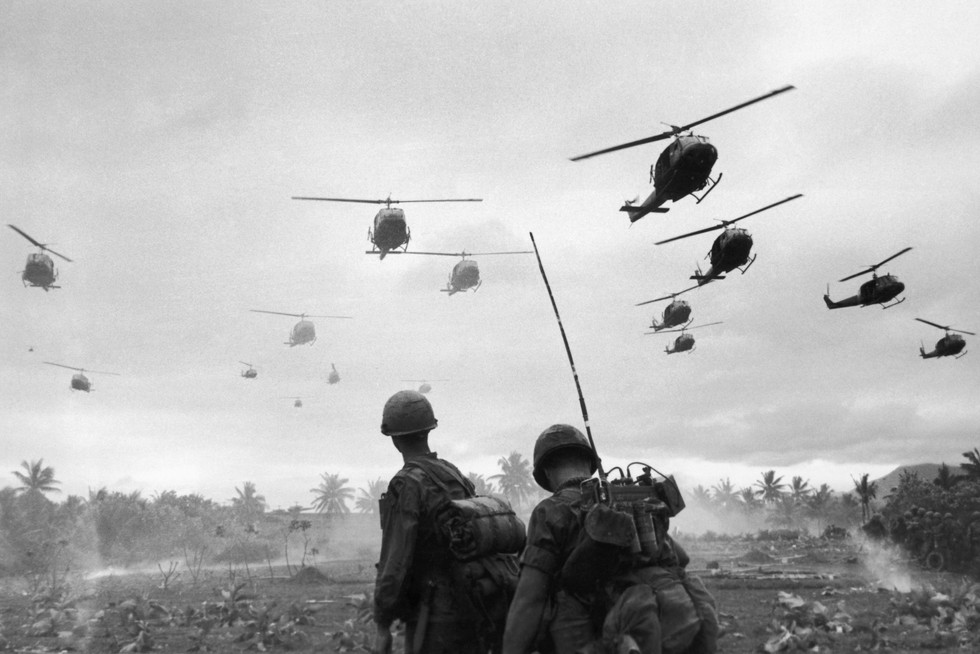
Key Event 4: The Vietnam War (1964-1975)
- The Vietnam War began in the late 1950s as a conflict between communist North Vietnam, supported by the Soviet Union and China, and non-communist South Vietnam, backed by the United States and other anti-communist allies.
- The war was rooted in the desire to prevent the spread of communism in Southeast Asia, a policy known as containment, which was a key aspect of US foreign policy during the Cold War.
- The Gulf of Tonkin Incident in 1964, where North Vietnamese forces allegedly attacked US naval vessels, led to the US Congress passing the Gulf of Tonkin Resolution, granting President Lyndon B. Johnson broad military powers in Vietnam.
- Operation Rolling Thunder, a sustained bombing campaign against North Vietnam, began in 1965, marking the escalation of US military involvement in the conflict.
- The Tet Offensive in 1968 was a coordinated series of attacks by North Vietnamese and Viet Cong forces on South Vietnamese cities and US bases. Although militarily a failure for the communists, it significantly eroded US public support for the war.
- The war saw extensive use of guerrilla warfare by the Viet Cong, challenging the conventional military tactics employed by US and South Vietnamese forces.
- The conflict had devastating effects on the Vietnamese civilian population, with widespread destruction, loss of life, and the use of chemical defoliants like Agent Orange causing long-term health issues.
- Anti-war sentiment grew in the United States, leading to widespread protests and influencing public opinion and government policy. Events such as the My Lai Massacre further fuelled opposition to the war.
- Vietnamisation, a policy introduced by President Richard Nixon, aimed to gradually withdraw US troops and transfer combat responsibilities to South Vietnamese forces. Despite this, fighting continued.
- The war officially ended on April 30, 1975, when North Vietnamese forces captured Saigon, leading to the reunification of Vietnam under communist control. The conflict left deep scars on both the Vietnamese people and American society, and it had lasting impacts on US foreign policy.
Note
Guerrilla warfare tactics involve small groups of fighters using surprise attacks, ambushes, and hit-and-run strategies against larger, traditional armies.
Eastern Europe Under the Soviets
Soviet Control in Eastern Europe
Communist governments were established in Eastern Europe, forming the Eastern Bloc.
The Warsaw Pact and Comecon ensured military and economic control.
The Soviets crushed uprisings in Hungary (1956) and Czechoslovakia (1968).
The Collapse of Communism
Gorbachev's Reforms
Mikhail Gorbachev aimed to reduce Cold War tensions and improve Soviet life through reforms and disarmament agreements with US President Ronald Reagan.
End of Communist Rule
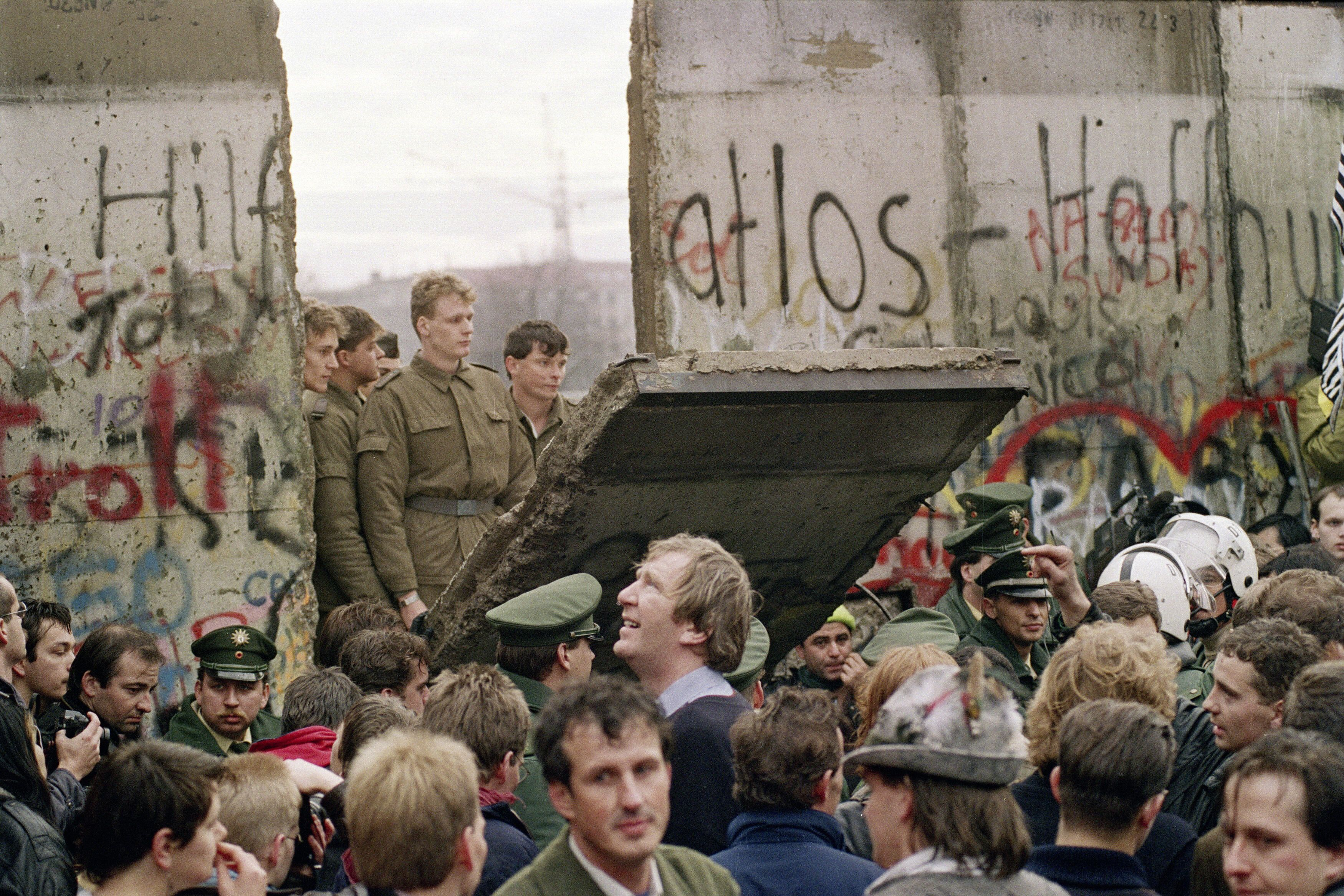
- In 1989, protests led to the fall of communist governments in Eastern Europe.
- The Berlin Wall was opened, and the Soviet Union dissolved by 1991, marking the end of the Cold War.
Key Terms
- Communism: a political and economic ideology advocating for a classless society where all property and resources are communally owned, with the state controlling the means of production.
- Capitalism: an economic system where trade, industries, and the means of production are privately owned and operated for profit, with minimal government intervention.
- Iron Curtain: a term coined by Winston Churchill to describe the division between the communist nations of Eastern Europe and the democratic nations of Western Europe during the Cold War.
- Truman Doctrine: This doctrine was a policy declared by U.S. President Harry S. Truman in 1947, promising to support countries resisting communism, marking the start of the U.S. containment policy.
- Marshall Plan: a U.S. initiative providing over $12 billion in economic aid to Western European countries to help rebuild after World War II and prevent the spread of communism.
- 38th Parallel: the line of latitude that roughly marks the border between North and South Korea, established after World War II and the Korean War.
- Bay of Pigs: a failed invasion of Cuba by Cuban exiles supported by the U.S. in 1961, aiming to overthrow Fidel Castro's communist government.
- Nuclear Test Ban Treaty: The Nuclear Test Ban Treaty (1963) is an agreement prohibiting all test detonations of nuclear weapons except underground, signed by the United States, Soviet Union, and United Kingdom to limit nuclear proliferation.
- Mikhail Gorbachev: the last leader of the Soviet Union, known for his policies of Glasnost (openness) and Perestroika (restructuring), which contributed to the end of the Cold War and the eventual dissolution of the USSR.
Revision Questions
- What is the Iron Curtain?
- True or False: The Truman Doctrine aimed to spread communism.
- What was Operation Vittles?
- Fill in the blank: The Berlin Wall was constructed in _______.
- What triggered the Cuban Missile Crisis?
- True or False: The Vietnam War ended with a US victory.
- What was the purpose of the Warsaw Pact?
- Fill in the blank: The Korean War divided Korea along the _______ parallel.
- Who led the Soviet Union's reforms in the 1980s?
- True or False: The Berlin Wall remained intact until the end of the Cold War.