The First World War (Junior Cert History): Revision Notes
📚Revision Notes
The First World War
The Causes of World War I
Before 1914, Europe was dominated by competing empires, deteriorating international relations, and driven apart by:
- Disagreements over colonies in Africa and Asia.
- Military arms races, particularly between industrialising Germany and Britain over naval fleets.
- Competition in the Balkans between the Habsburg Empire (Austria-Hungary) and the Romanov Dynasty (Russia) as the Ottoman Empire collapsed, leading to new states like Serbia.
- Creation of alliances to aid each other in wartime:
- Entente Powers: Britain (and Ireland), France, Russia (until 1917), Italy (from 1915), the United States (from 1917).
- Central Powers: Germany, the Austro-Hungarian Empire, the Ottoman Empire (Turkey).
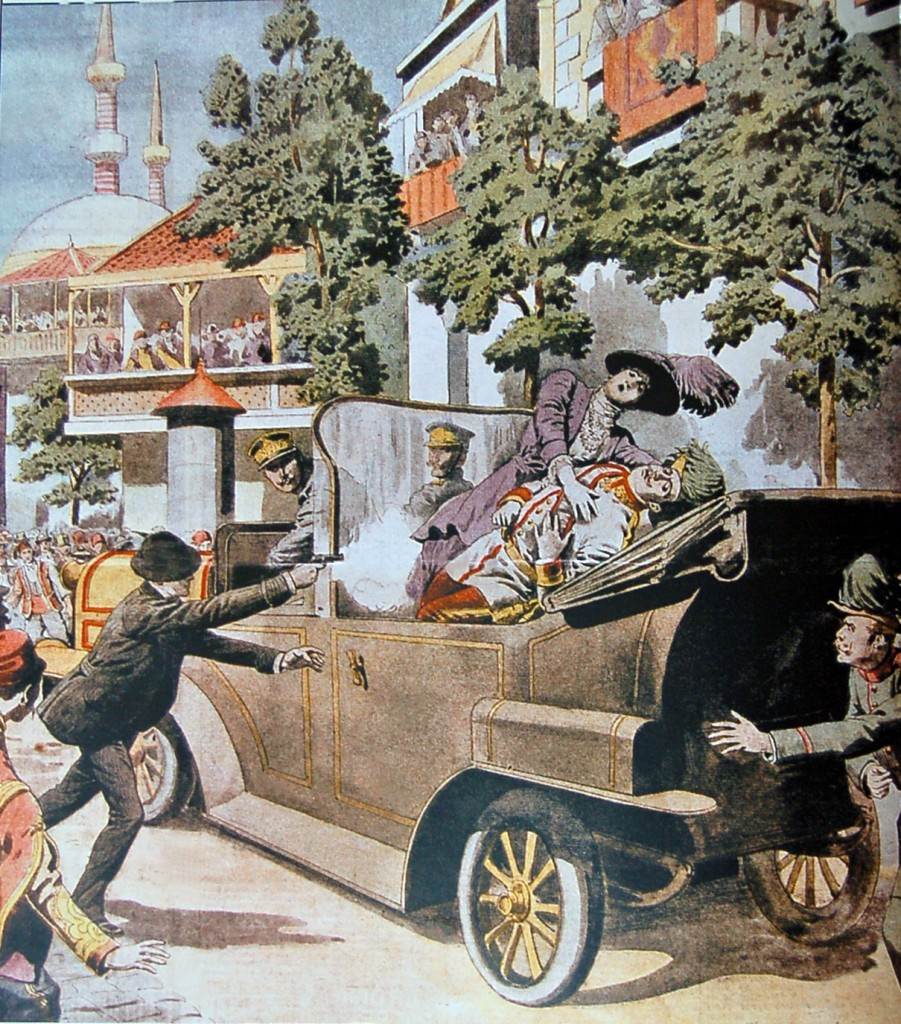
- June 28, 1914: Assassination of Archduke Franz Ferdinand and his wife Sophie by Gavrilo Princip, a Serbian nationalist, in Sarajevo, triggered a chain of war declarations:
- Austria blamed Serbia and declared war.
- Russia declared war on Austria.
- Germany declared war on Russia.
- France went to war with Germany.
- Germany invaded Belgium, leading Britain to declare war on Germany. All major European powers were now at war.
World War I: Life in the Trenches
- Both sides expected a short war, but it turned into a four-year stalemate.
- German forces had to split between the Eastern and Western Fronts.
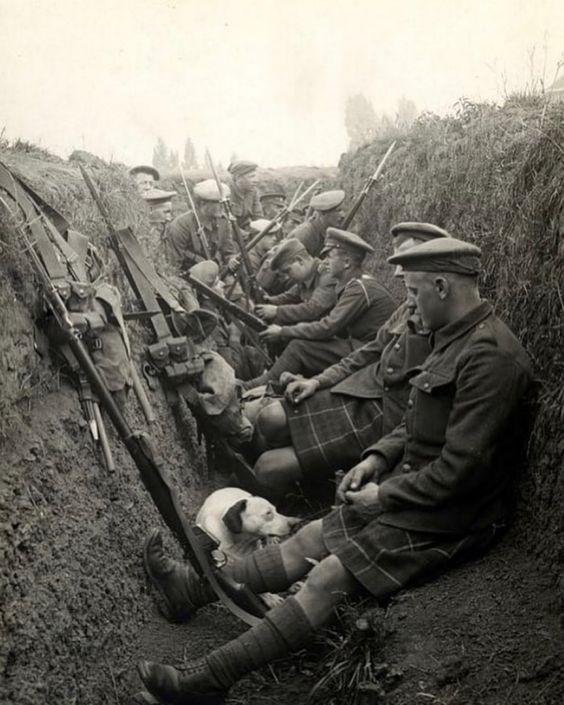
- Trench warfare emerged on the Western Front, creating deep, dangerous mud and widespread disease.
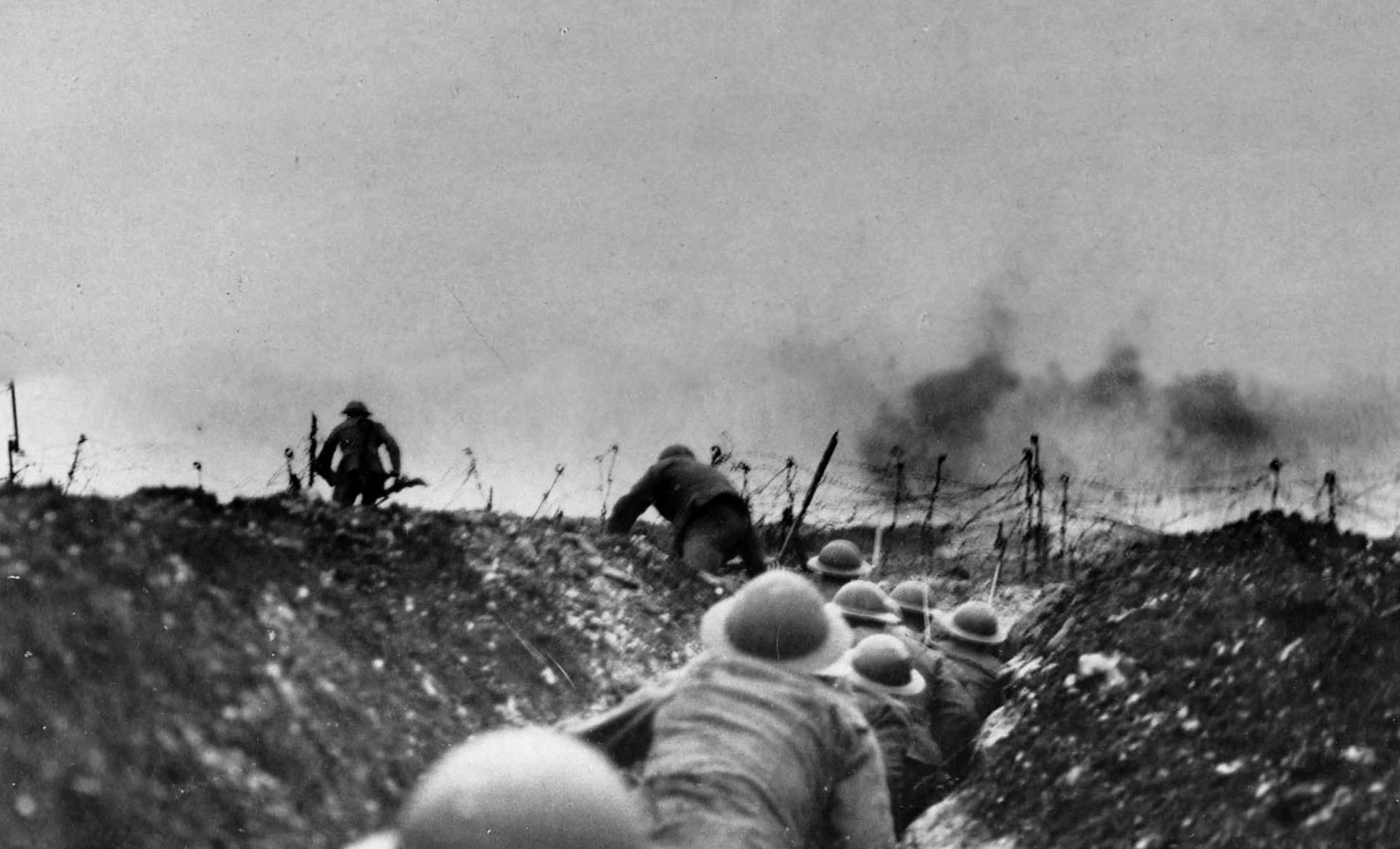
- Soldiers had to go "over the top" to attack enemy trenches, facing barbed wire, machine-gun fire, and shelling.
Conditions in the Trenches
- Disease spread easily due to poor weather and lack of sanitation.
- Weather conditions like rain, snow, and fog caused trench foot and frostbite.
- Rats spread diseases and consumed unburied bodies.
- Soldiers suffered from mental health issues like shell shock (now PTSD).
Conditions at Home
- Women took on factory jobs making clothes and weapons.
- Birth rates dropped.
- Food shortages were caused by wartime disruptions.
- Nations held deep post-war animosities affecting peace negotiations.
The Battle of the Somme
- Took place near the Somme River from 1st June to 18th November 1916.
- Involved the British Empire (led by Douglas Haig), the French Third Republic (led by Ferdinand Foch), and the German Empire.
- Aimed to break through German lines; however, 1.1 million soldiers died.
- Symbolised the horrors of warfare with advanced technologies like gassing, machine guns, and shelling.
A New Era in Warfare
- Aeroplanes: Used for reconnaissance, combat, and bombing.
- German U-boats: Attacked military and civilian ships.
- Tanks: Invented by Britain to break the stalemate.
- Chemical weapons:
- Phosgene: Responsible for 85% of chemical weapons fatalities.
- Chlorine Gas: Caused asphyxiation.
- Mustard Gas: Caused severe blistering and blindness.
The End of the War
- The Russian Revolution in October 1917 ended Russia's involvement.
- The US entered the war in 1917, tipping the balance.
- Germany and its allies surrendered in November 1918.
The Paris Peace Conference 1919
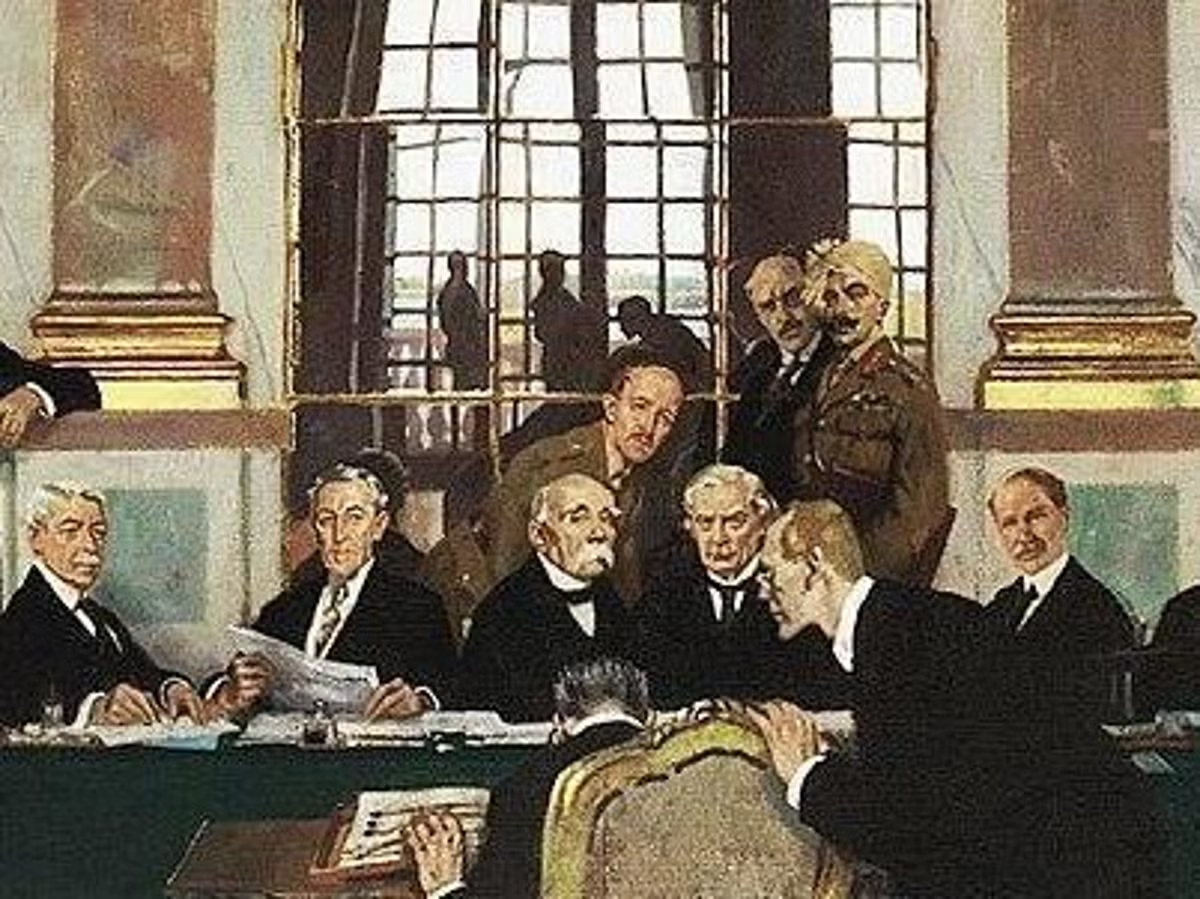
- The Treaty of Versailles was dictated by the Entente Powers.
- The Big Three: Woodrow Wilson (US), Georges Clemenceau (France), David Lloyd George (Britain).
- Wilson's Fourteen Points emphasised self-determination and a League of Nations.
- Clemenceau demanded harsh penalties for Germany.
- Lloyd George aimed to expand the British Empire.
Note
The Entente Powers, also known as the Allies, were a coalition of countries during World War I that opposed the Central Powers. The main Entente Powers were France, the United Kingdom, and Russia. Later, countries like Italy, the United States, and Japan joined their side. This alliance worked together to defeat the Central Powers and achieve victory in the war.
Terms of the Treaty of Versailles
- Germany accepted blame for the war (War Guilt Clause).
- Germany paid £6.6 billion in reparations.
- Germany surrendered all colonies.
- Germany lost European territory.
- The German army was reduced and limited.
- Germany and Austria were forbidden to unite.
- The League of Nations was established.
- The Rhineland was demilitarised.
Consequences of World War I
- The Habsburg and Ottoman Empires were abolished, creating new states.
- Anger in Germany and Italy led to the rise of Nazism and fascism.
- The Treaty of Versailles crippled Germany's economy, leading to widespread unemployment.
- The Great Depression of 1929 exacerbated economic hardships.
- The rise of communism in Russia under Lenin.
The League of Nations
- Intended to prevent future wars through collective security.
- Failed due to the absence of the US, Russia, and Germany.
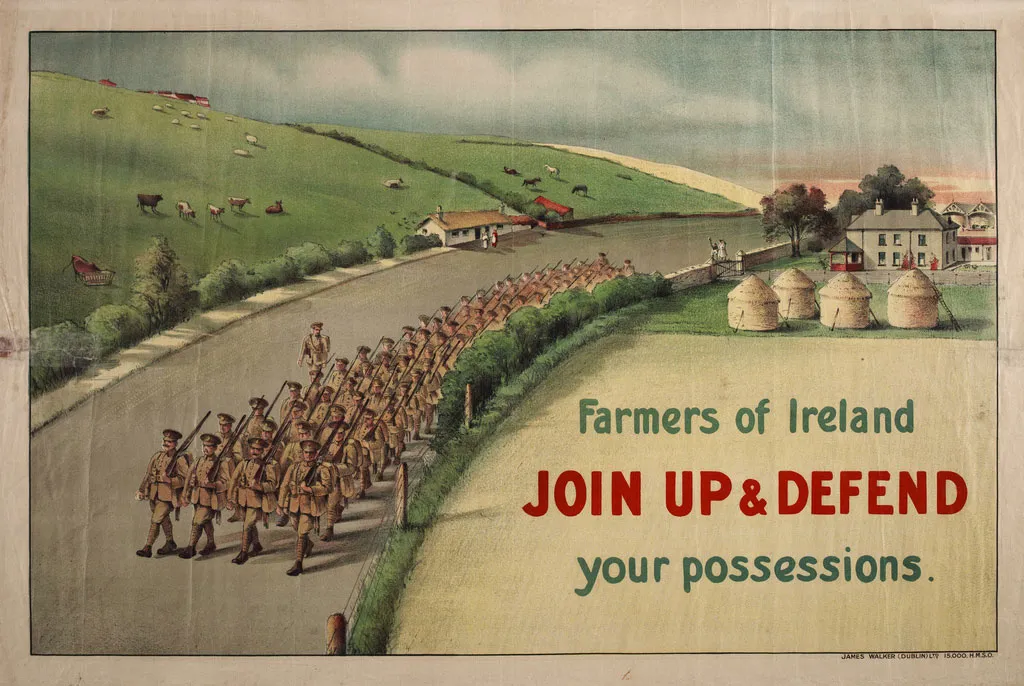
Ireland and World War I
- Unionists supported the war for special post-war treatment.
- John Redmond encouraged Irish Volunteers to join the British army, splitting the force into National Volunteers (supporting Redmond) and Irish Volunteers (led by Eoin MacNeill, opposed to participation).
Irish Soldiers in World War I
- About 250,000 Irishmen fought, with 30,000 to 50,000 killed.
- Nationalists joined the 16th (Irish) Division, Unionists the 36th (Ulster) Division.
- Irish soldiers fought in significant battles like the Somme, Passchendaele, and Gallipoli.
Key Terms
- Stalemate: a situation in a conflict where neither side can make significant progress or gain an advantage, often resulting in a deadlock.
- Trench Warfare: a type of combat during World War I where armies fought from extensive networks of trenches, leading to high casualties and little territorial gain.
- Battle of the Somme: a major battle during World War I in 1916, resulting in over a million casualties, with limited territorial gains for the Allies.
- Shell Shock: a term used during World War I to describe psychological trauma experienced by soldiers exposed to prolonged bombardment and warfare, now known as PTSD.
- Treaty of Versailles: the peace treaty signed in 1919 that officially ended World War I, imposing heavy reparations and territorial losses on Germany.
- Fourteen Points: a statement of principles for peace proposed by U.S. President Woodrow Wilson in 1918 to end World War I and prevent future conflicts.
- League of Nations: an international organisation established after World War I to promote peace and cooperation among countries, though it ultimately failed to prevent World War II.
- Great Depression: a severe global economic downturn that began in 1929 and lasted through the 1930s, leading to widespread unemployment, poverty, and political instability.
Revision Questions
- What triggered World War I?
- True or False: Trench warfare led to a quick end to the war.
- Who were the Big Three at the Paris Peace Conference?
- Fill in the blank: The Treaty of Versailles blamed _______ for starting the war.
- What new military technologies were introduced during World War I?
- True or False: The League of Nations succeeded in preventing future wars.
- What was the result of the Battle of the Somme?
- Fill in the blank: The Treaty of Versailles established the _______ of Nations.
- Who led the Irish Volunteers who opposed joining the British army?
- True or False: About 250,000 Irishmen fought in World War I.
Note
Really looking to impress? Here are 3 Key events you can research to get more information on the Great War:
- The Christmas Truce of 1914
- The Gallipoli Campaign (1915-1916)
- The Harlem Hellfighters (1917-1918)