The Second World War (Junior Cert History): Revision Notes
📚Revision Notes
The Second World War
Hitler's Foreign Policy
Lebensraum: Hitler aimed to expand Germany to provide "living space" for ethnic Germans, creating a greater Germany known as the Third Reich.
Topics:
- Rebuilding the German Army and Navy
- Reoccupying the Rhineland
- The Anschluss
- The Sudetenland
- Making Allies
- Appeasement
- The Munich Conference and the Nazi-Soviet Pact
1. Rebuilding the German Army and Navy
- In 1933, Hitler withdrew Germany from the League of Nations.
- In 1935, the Anglo-German Naval Agreement allowed Germany to expand its navy beyond Treaty of Versailles limits.
- Conscription was reintroduced, and the Luftwaffe (airforce) was created, violating the treaty. Britain and France did not intervene.
Note
Conscription is the compulsory enlistment of individuals into the military service.
2. Reoccupying the Rhineland
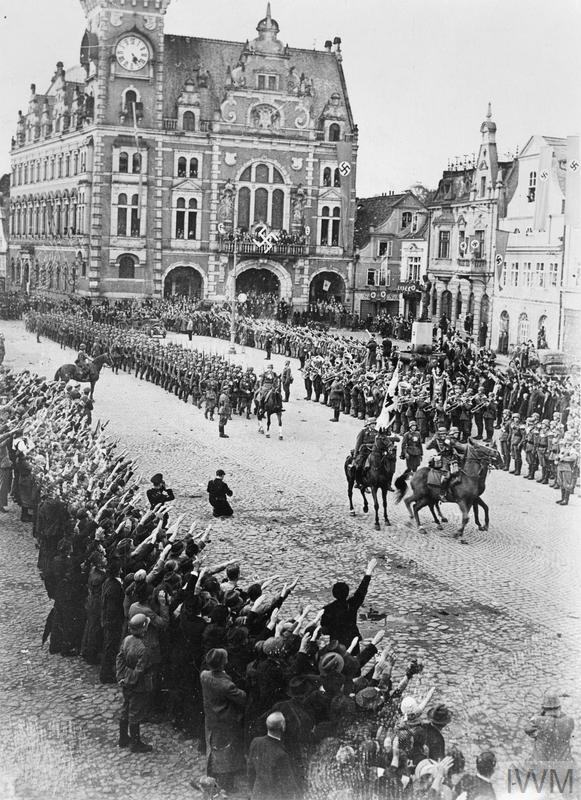
- In March 1936, Hitler sent troops into the Rhineland, which was forbidden by the Treaty of Versailles.
- France did not respond.
3. The Anschluss
The Anschluss: In 1938, Austria was incorporated into the Third Reich after Hitler pressured the Austrian Chancellor and replaced him with a Nazi who invited German occupation.
4. The Sudetenland
The Sudetenland, a German-speaking region in Czechoslovakia, was targeted by Hitler for inclusion in the Third Reich. Nazi propaganda fuelled Sudeten German calls for independence.
5. Making Allies
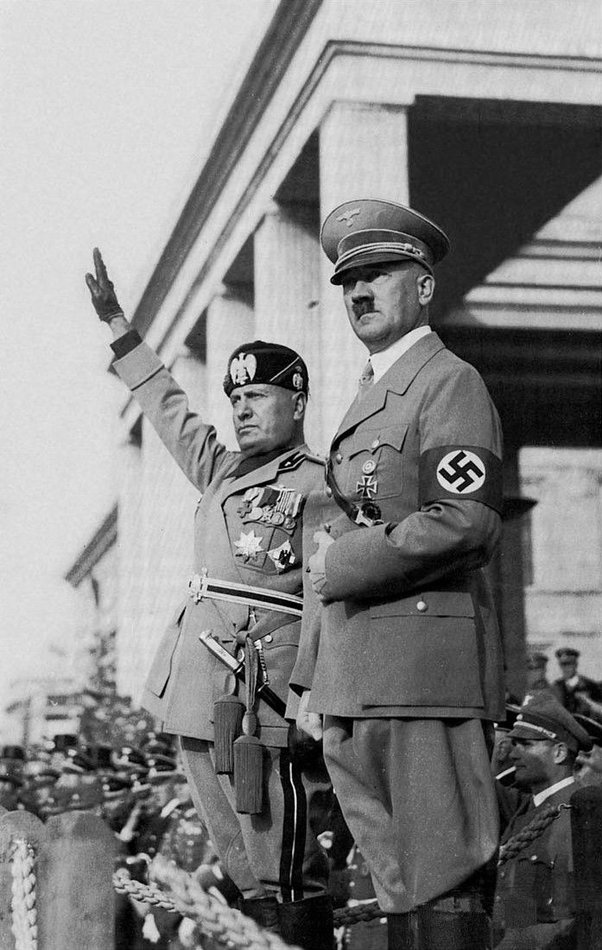
In 1936, Hitler and Mussolini signed the Rome-Berlin Axis, forming a mutual support agreement.
Note
Italy's Alliance with Germany Italy became allies with Germany through two important agreements. The first was the Rome-Berlin Axis in 1936, which established a political and military partnership between the two countries. This agreement aligned their foreign policies and strengthened their cooperation. The second agreement was the Pact of Steel in 1939, which was a military alliance where Italy and Germany promised to support each other in times of war, making their partnership even stronger.
6. Appeasement
Appeasement: Britain and France avoided confronting Hitler to prevent war, influenced by:
- Belief that the Treaty of Versailles was too harsh.
- Pacifist sentiment in Britain.
- Concerns about communism. This policy allowed Hitler to expand without opposition.
7. The Munich Conference and the Nazi-Soviet Pact
- Munich Conference (1938): Britain, France, Italy, and Germany forced Czechoslovakia to cede the Sudetenland to Germany.
- Nazi-Soviet Non-Aggression Pact (1939): Hitler and Stalin agreed not to attack each other and secretly planned to divide Poland.
Europe Falls into War: The Fall of Poland and France
The Invasion of Poland
On 1st September 1939, Germany invaded Poland using Blitzkrieg tactics. The Soviet Union invaded from the east, and Poland was quickly defeated.
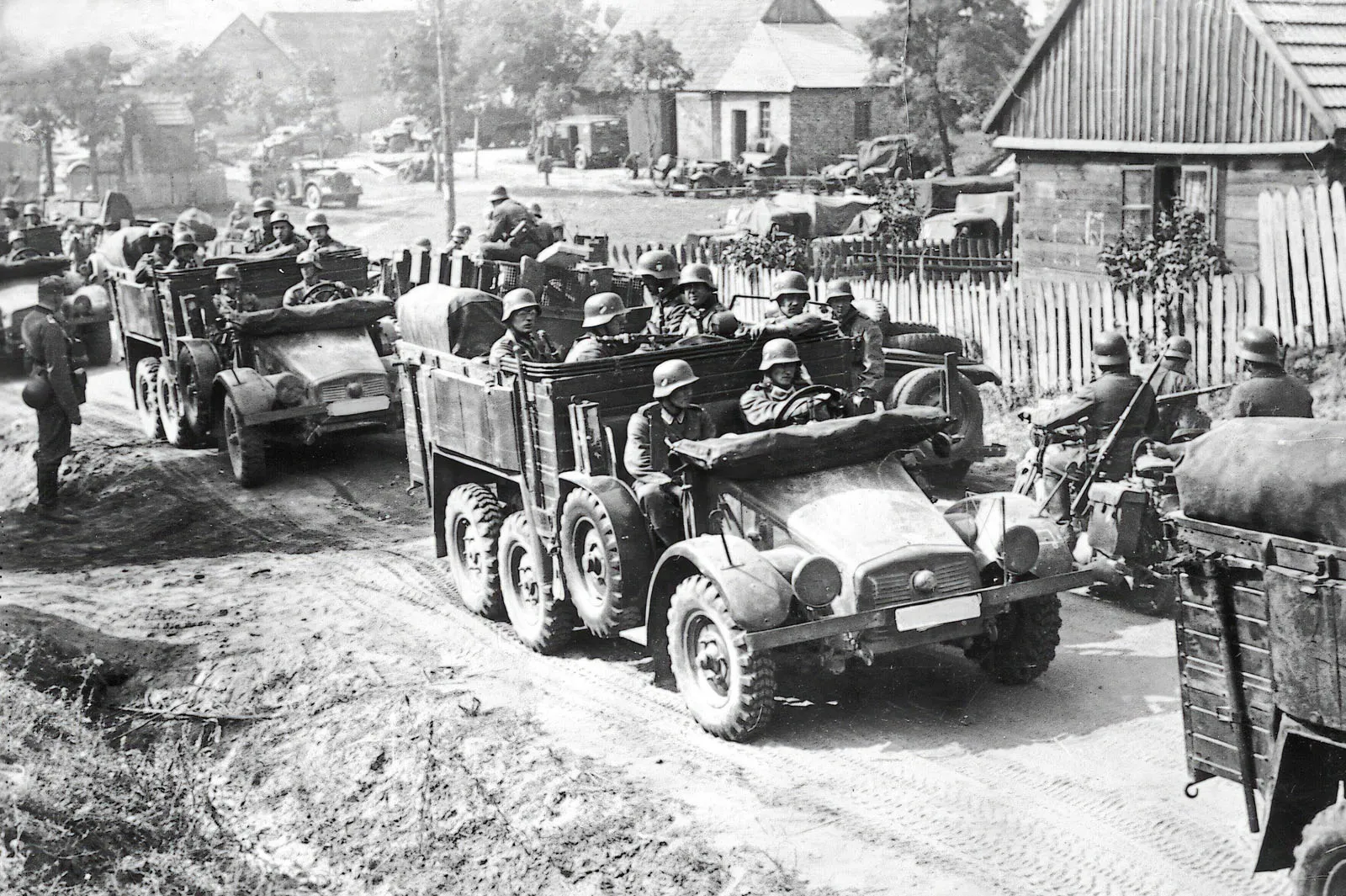
Nazi invasion of Poland
Note
Blitzkrieg Tactics Blitzkrieg, meaning "lightning war" in German, was a military tactic used by Germany during World War II. It involved quick and powerful attacks using planes, tanks, and infantry to surprise and overwhelm the enemy. The goal was to achieve rapid victories by breaking through enemy lines and causing confusion, preventing the enemy from organising an effective defence.
The Invasion of France
In May 1940, Germany invaded France via Belgium and the Ardennes Forest, bypassing the Maginot Line.
The British Expeditionary Force (BEF) retreated to Dunkirk, and by June 1940, Germany occupied northern France.
The Battle of Britain and the Blitz
The Battle of Britain
- Operation Sea Lion: Hitler's plan to invade Britain.
- The Battle of Britain involved the Luftwaffe attacking RAF bases. The RAF used advanced radar to win by September 1940.
The Blitz
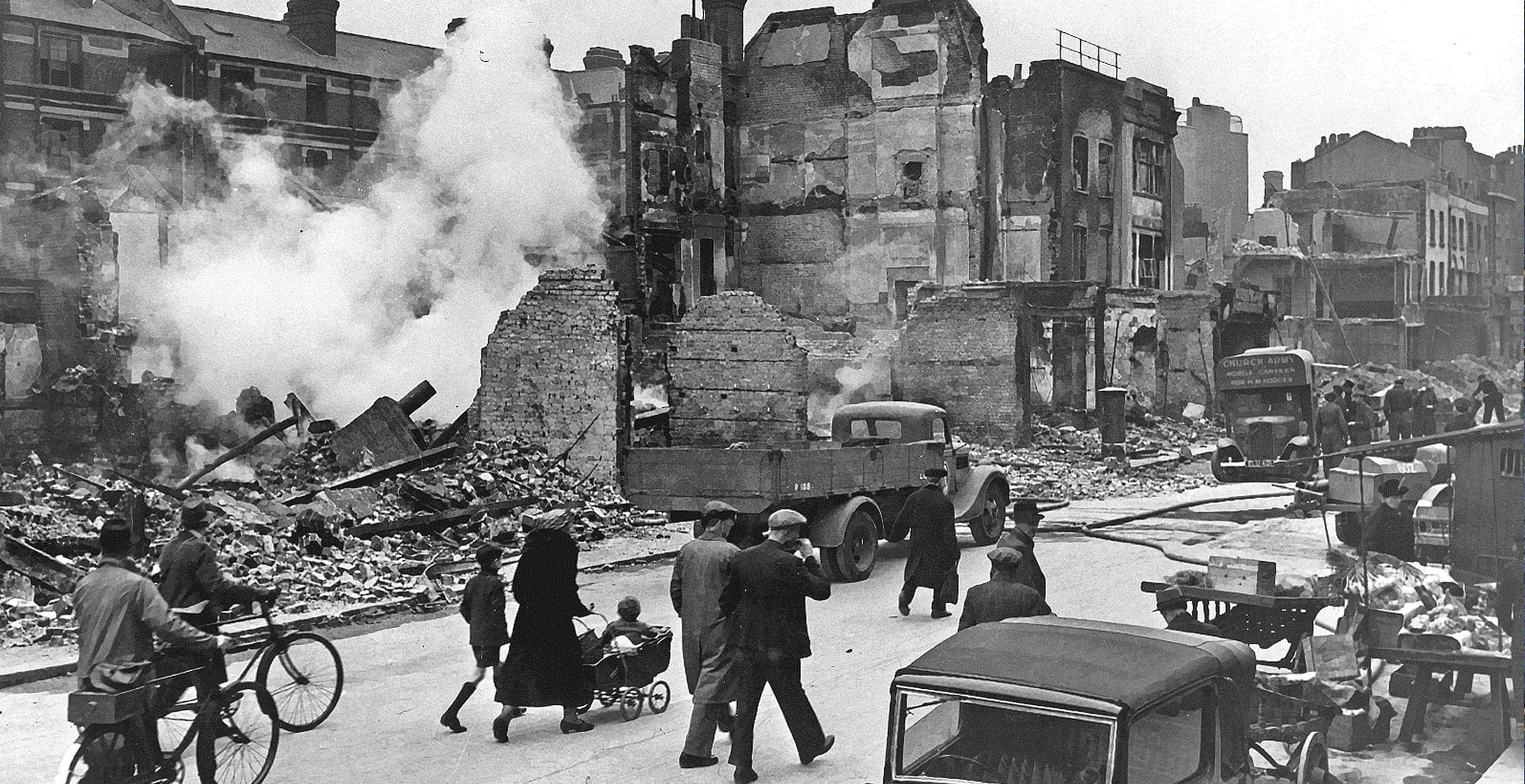
- The Luftwaffe bombed British cities at night, targeting industrial sites.
- This lasted until May 1941, killing 43,000 civilians.
Note
The Luftwaffe The Luftwaffe was the air force of Nazi Germany during World War II. It carried out bombing missions, provided air support for German troops, and defended German airspace. The Luftwaffe was crucial in Germany's early military successes, using fast and powerful attacks to defeat enemies quickly. However, it struggled against the British Royal Air Force during the Battle of Britain and faced increasing challenges as the Allies gained air superiority later in the war.
Life in Wartime Britain
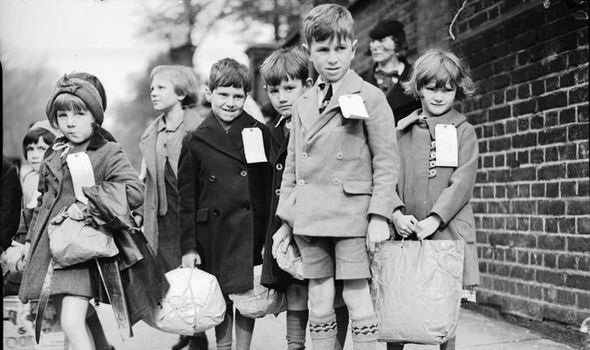
- Evacuation: City children were sent to the countryside.
- Women filled roles left by men at war.
- Rationing: Essential goods were rationed, and campaigns like Dig for Victory encouraged home-grown food.
The Invasion of the Soviet Union
Operation Barbarossa
- In June 1941, Germany launched a three-pronged attack on the Soviet Union.
- The Soviet scorched earth tactic and harsh winter halted German advances.
Note
Soviet Scorched Earth Tactic and Harsh Winter The Soviet Union employed the "scorched earth" tactic. This meant that as they retreated, they destroyed their own resources, such as crops, buildings, and infrastructure, to prevent the Germans from using them for supplies. This tactic aimed to weaken the German army by depriving them of food and shelter.
The harsh Russian winter of 1941-1942 played a significant role in halting the German advance. German troops were not equipped or prepared for the extremely cold temperatures and snowy conditions, which led to equipment failures, frostbite, and reduced fighting capability. Together, these factors halted the German advance into the Soviet Union.
The Battle of Stalingrad
From 1942-1943, the Red Army defended Stalingrad, cutting off German supplies. The German Sixth Army surrendered in February 1943, marking a turning point.
The War Beyond Europe
Topics:
- The United States Enters the War
- War in the Mediterranean
- The Battle of the Atlantic
1. The United States Enters the War
On 7th December 1941, Japan attacked Pearl Harbor, prompting the US to join the war against Japan, Germany, and Italy.
2. War in the Mediterranean
The Allies defeated the German Afrika Korps at El Alamein and launched Operation Torch in North Africa. They invaded Italy in 1943, leading to Mussolini's removal from power.
3. The Battle of the Atlantic
German U-boats targeted Allied shipping. The US Navy and advances in radar, sonar, and codebreaking, including the Enigma code by Alan Turing, helped protect shipments.
The D-Day Landings
D-Day
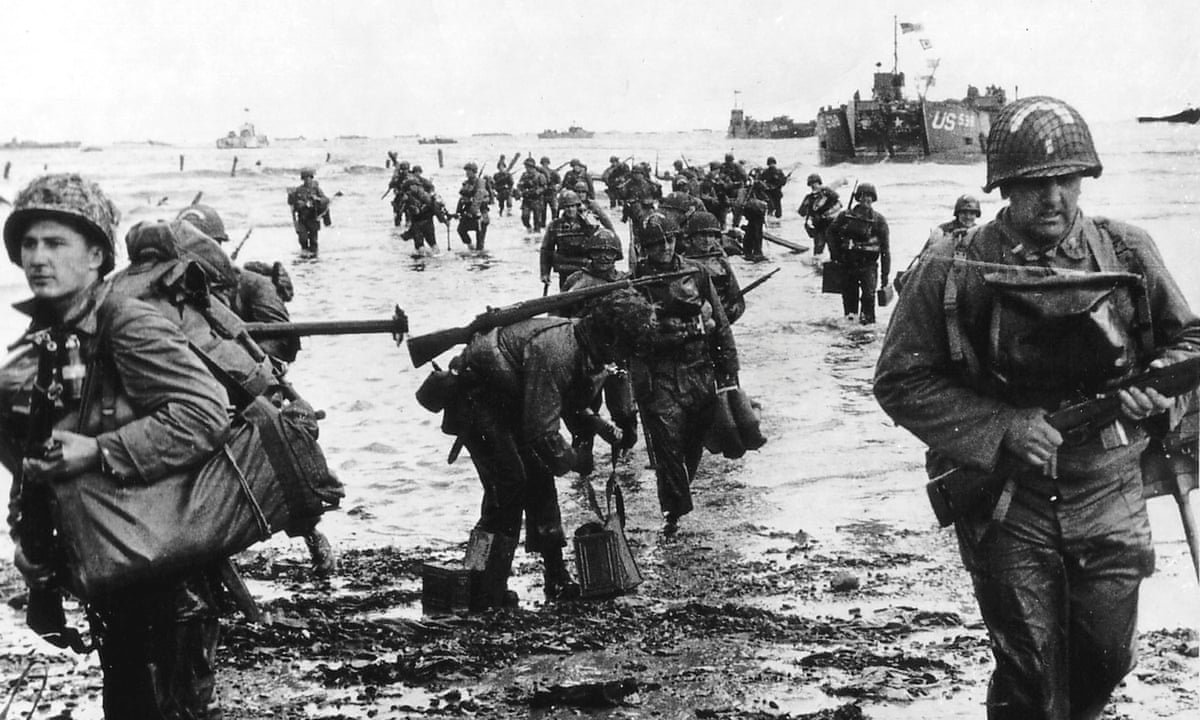
Operation Overlord: On 6th June 1944, Allied forces landed in Normandy, France. By August, the Allies liberated Paris.
The Final Offensives
1. Air Raids on Germany
The Allies bombed German cities, including Dresden, causing massive civilian casualties.
2. Operation Bagration
The Red Army pushed German forces out of the Soviet Union.
3. The Battle of the Bulge
Germany's final offensive in December 1944 failed by January 1945.
The War's End and Its Impact
The End of World War II
- In April 1945, Soviet forces attacked Berlin. Hitler and Eva Braun committed suicide on 30th April. VE Day (Victory in Europe) was celebrated on 8th May.
- Japan surrendered on 15th August 1945 after the US dropped atomic bombs on Hiroshima and Nagasaki.
The Impact of World War II
- Over 60 million people died, and many cities were destroyed.
- The US and the Soviet Union emerged as superpowers.
- The United Nations (UN) was established in 1945.
- The European Economic Community (EEC) was founded in 1957, later becoming the European Union.
Ireland During World War II
Neutrality and the Emergency Powers Act
- Ireland (Éire) remained neutral, not participating in the war.
- The Emergency Powers Act allowed the government to censor information to maintain neutrality.
Note
Emergency Powers Act in Ireland During World War II The Emergency Powers Act was passed by the Irish government in 1939 at the start of World War II. It gave the government special powers to manage the country during "The Emergency," which is what Ireland called its wartime state. These powers included controlling the economy, censorship of media, and restricting personal freedoms to maintain neutrality and security. The act allowed the government to make quick decisions to keep Ireland safe and stable during the war.
Life in Éire During the Emergency
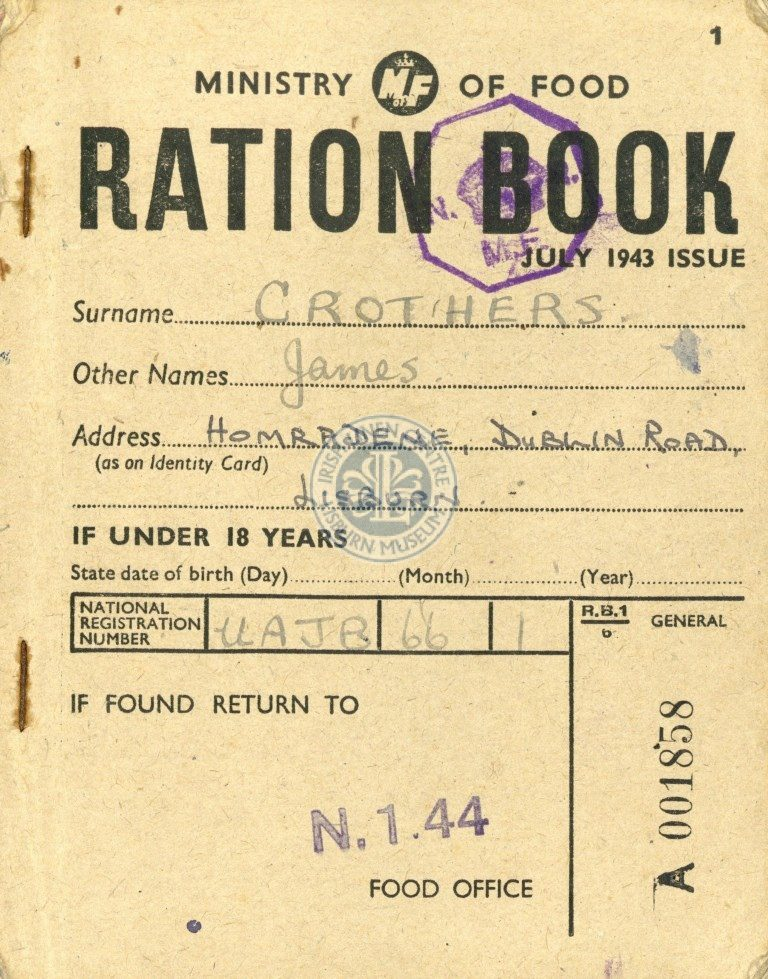
- Shortages and Rationing: Ireland faced shortages of food and fuel.
- Seán Lemass introduced measures like the Compulsory Tillage Scheme to increase food production.
- Fuel Shortages and the Glimmer Men: Fuel shortages led to rationing and the use of turf instead of coal. Glimmer men monitored gas usage.
Life in Northern Ireland During World War II
- Northern Ireland (part of the UK) was involved in the war. Industries boomed, and the region became a base for American troops.
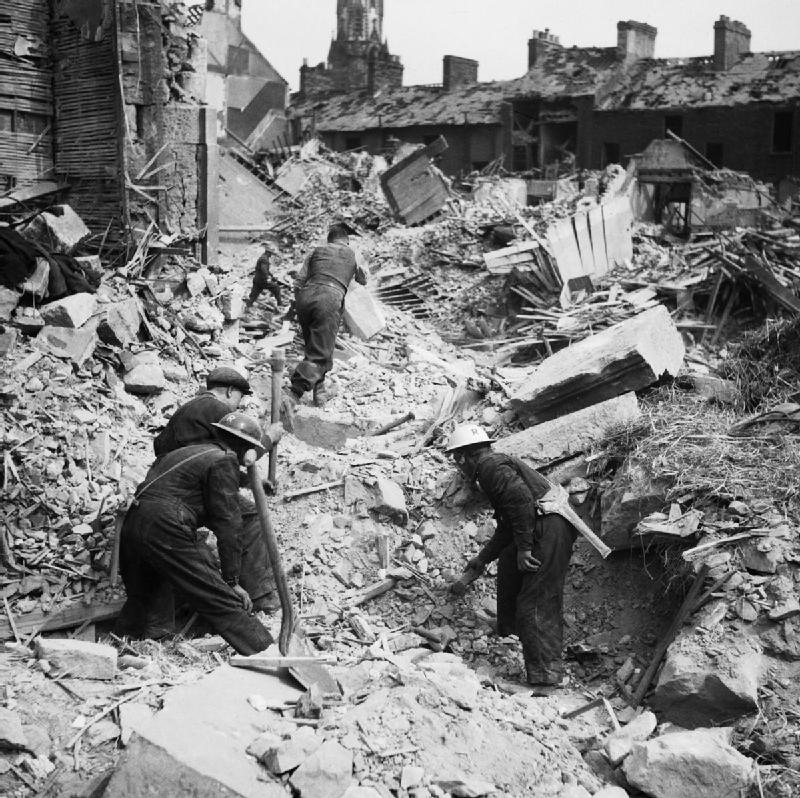
- The Belfast Blitz: In April and May 1941, Belfast was bombed, causing significant damage and loss of life.
Post-War Divide Between North and South
Northern Ireland's economy improved, while the south's suffered. Relations between the two regions and Britain were strained due to the south's neutrality.
Key Terms
- Lebensraum: (Living Space) was a Nazi policy aiming to expand German territory eastward to provide more space and resources for the German people.
- Third Reich: The Third Reich was the term used to describe Nazi Germany under Adolf Hitler's rule from 1933 to 1945, following the First Reich (Holy Roman Empire) and the Second Reich (German Empire).
- Blitzkrieg: also known as 'Lightning War' was a military tactic used by Nazi Germany involving rapid, coordinated attacks with infantry, tanks, and air support to quickly overwhelm the enemy.
- Operation Barbarossa: Operation Barbarossa was the codename for the Nazi invasion of the Soviet Union in June 1941, which marked the largest military operation in World War II.
- Operation Overlord: the code name for the Allied invasion of Normandy, France, on June 6, 1944, aimed at liberating Western Europe from Nazi control.
- D-Day: D-Day refers to June 6, 1944, the day Allied forces landed on the beaches of Normandy, initiating Operation Overlord and beginning the liberation of Nazi-occupied Europe.
- Pearl Harbour: a surprise military attack by the Japanese on the U.S. naval base in Hawaii on December 7, 1941, leading to the United States' entry into World War II.
- The Blitz: a sustained bombing campaign conducted by Nazi Germany against major British cities, especially London, from September 1940 to May 1941 during World War II.
- Nuremberg Trials: The Nuremberg Trials were a series of military tribunals held after World War II to prosecute prominent leaders of Nazi Germany for war crimes, crimes against humanity, and genocide.
- United Nations: an international organisation founded in 1945 to promote peace, security, and cooperation among countries, replacing the League of Nations.
Revision Questions
- What was Hitler's goal with his policy of Lebensraum?
- True or False: The Anschluss was the incorporation of Austria into the Third Reich.
- What was the Blitzkrieg tactic used by Germany?
- Fill in the blank: Operation Barbarossa was the German invasion of the _______.
- What significant event happened on 6th June 1944?
- True or False: The United States remained neutral throughout World War II.
- What was the purpose of the Nuremberg Trials?
- Fill in the blank: The Allies landed on Normandy beaches during _______.
- Which two cities were atomic bombs dropped on in Japan?
- True or False: Ireland (Éire) declared itself neutral during World War II.
Note
Really looking to impress? Here are 3 Key events you can research to get more information on the Second World War:
- Operation Green - The Nazi plan to invade Ireland
- Battle of Britain (1940)
- Pearl Harbour Attack (1941)
- D-Day (1944)
- Atomic Bombings of Hiroshima and Nagasaki (1945)