Food Labelling and Additives (Junior Cert Home Economics): Revision Notes
📚Revision Notes
Food Labelling and Additives
Food Labelling
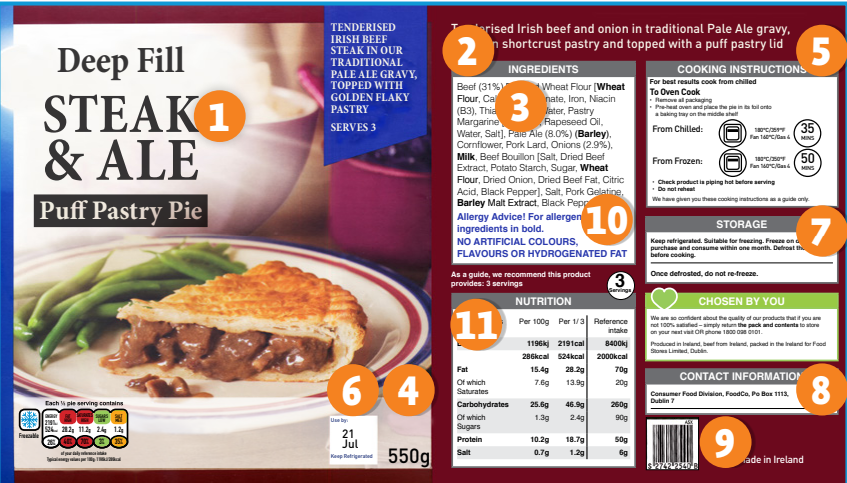
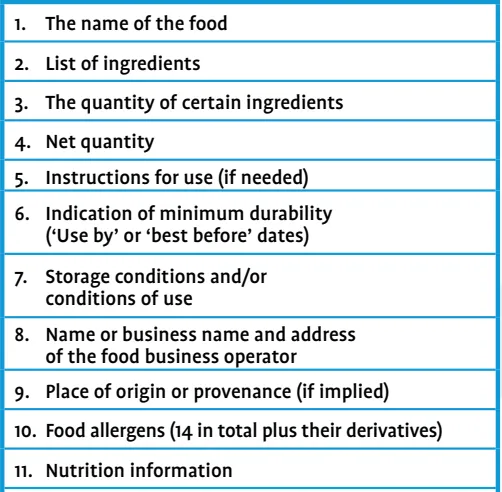
- Purpose: All packaged food must include certain information under EU regulations:
- Name of food
- List of ingredients (main ingredient listed first, with percentage if significant, e.g., beef in burgers).
- Allergen information, e.g., contains nuts.
- Net quantity (weight/volume).
- Best-before or use-by date.
- Storage instructions.
- Manufacturer details (name and address).
- Instructions for use, if needed.
- Nutritional/dietary information (for health claims, e.g., "low fat").
Additives
- Definition: Substances added to improve taste, appearance, preservation, or nutritional value. Approved additives in the EU are given an "E number."
Functions of Additives:
- Colourings (E100-E199): Make food more appealing, e.g., sweets.
- Preservatives (E200-E299): Prevent spoilage, e.g., vinegar in pickles.
- Antioxidants (E300-E399): Prevent fats from going rancid, e.g., butter.
- Emulsifiers & Stabilisers (E400-E499): Help mixtures combine or stabilise, e.g., mayonnaise.
- Flavourings (no E numbers): Add taste, e.g., vanilla.
- Sweeteners (E900-E999): Replace sugar in products, e.g., sugar-free gum.
- Nutritional Additives: Add nutrients, e.g., vitamins to cereals.
Advantages of Additives:
- Extend food shelf life and reduce waste.
- Improve taste, texture, and appearance.
- Add nutrients to improve food quality.
Disadvantages of Additives:
- Potential side effects (e.g., rashes, migraines).
- Mask poor food quality.
- May alter food's natural taste.