Introduction to Geometry (Junior Cert Mathematics): Revision Notes
📚Revision Notes
Introduction to Geometry
Geometry is the branch of mathematics that helps us understand shapes, sizes, and spaces around us. Before we start solving problems, it's important to get familiar with some basic terms. These terms will help you understand and describe different shapes and angles.
1. Lines: The Start of Everything
-
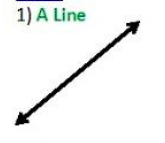
A Line: This is a straight path that goes on forever in both directions. It's like an endless road.
-
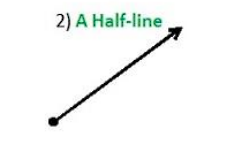
A Half-line (Ray): A ray starts at one point and goes on forever in one direction. Imagine a flashlight beam starting from the light and extending far out.
-
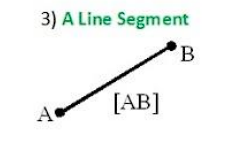
A Line Segment: Unlike a line, a line segment has two endpoints. It's like a rope stretched between two points.
2. Angles: Measuring Turns
- Angles tell us how much one line turns to meet another. You see angles everywhere: in the corners of a book, the bend of your elbow, or even a slice of pizza.
-
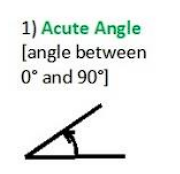
Acute Angle: A small, sharp angle that is between 0° and 90°.
-
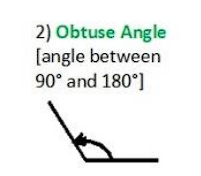
Obtuse Angle: A wider angle, between 90° and 180°, like when a door is partly open.
-
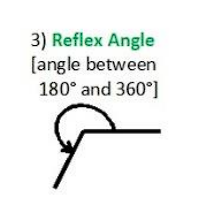
Reflex Angle: This angle is larger than 180° but less than 360°. It bends backwards like a big arc.
-
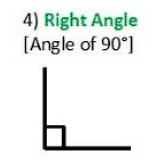
Right Angle: A perfect corner, exactly 90°. You see this in the corners of most rooms.
-
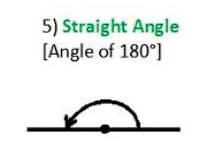
Straight Angle: This angle is exactly 180°, forming a straight line.
-
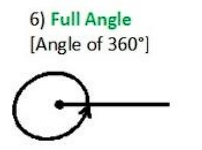
Full Angle: A complete turn that measures 360°, like spinning in a full circle.
-
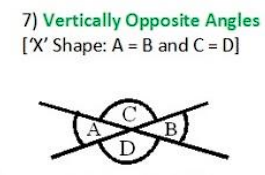
Vertically Opposite Angles: When two lines cross, the angles opposite each other are equal.
-
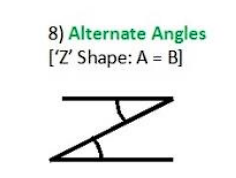
Alternate Angles: These are angles on opposite sides of a line that crosses two parallel lines. They are equal.
-
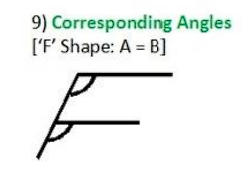
Corresponding Angles: Angles that are in the same position when a line crosses two parallel lines. These angles are equal.
-
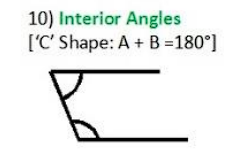
Interior Angles: These are the angles inside a shape. For a triangle, the interior angles always add up to 180°.
-
3. Triangles: The Simplest Shapes with Three Sides
- Triangles are shapes that have three sides and three angles. Each type of triangle has its own special properties.
-
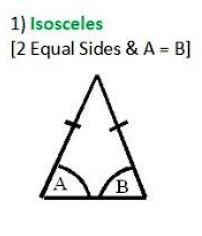
Isosceles Triangle: This triangle has two equal sides and two equal angles.
-
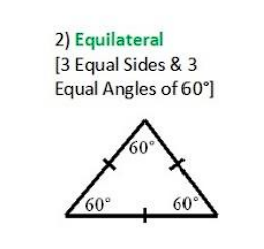
Equilateral Triangle: All three sides and all three angles in this triangle are equal.
-
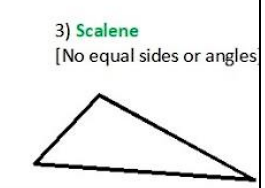
Scalene Triangle: In this triangle, no sides or angles are equal. Everything is different.
-
Why This Matters
Learning these basic terms in geometry is like gathering tools for building something amazing. Once you understand these shapes and angles, solving problems will become much easier.
Note
Tips for Understanding:
- Refer to the Diagrams: Use the diagrams provided to visualise each concept. This will help you remember and understand them better.
- Practice Drawing: Try drawing these lines, angles, and triangles yourself. Seeing and doing are great ways to learn.
- Relate to Real Life: Look around you—can you find examples of these lines and angles in your room or outside?
- Don't Assume: Never assume a triangle is right-angled, equilateral, isosceles etc. unless you're informed in the question, or you prove the angles.