Properties of Quadrilaterals (Junior Cert Mathematics): Revision Notes
📚Revision Notes
Properties of Quadrilaterals
A quadrilateral is any shape with four sides. There are different types of quadrilaterals, and each one has its own special properties. Let's take a closer look at the most common ones: the square, rectangle, parallelogram, and rhombus.
1. Square
- Sides: A square has four sides that are all the same length. No side is longer or shorter than the others.
- Angles: All four corners (angles) of a square are exactly . These are called right angles. Think of the corner of a piece of paper—that's a right angle.
- Opposite Sides: The sides that are across from each other (opposite sides) are parallel. This means they run in the same direction and will never meet, no matter how far you extend them.
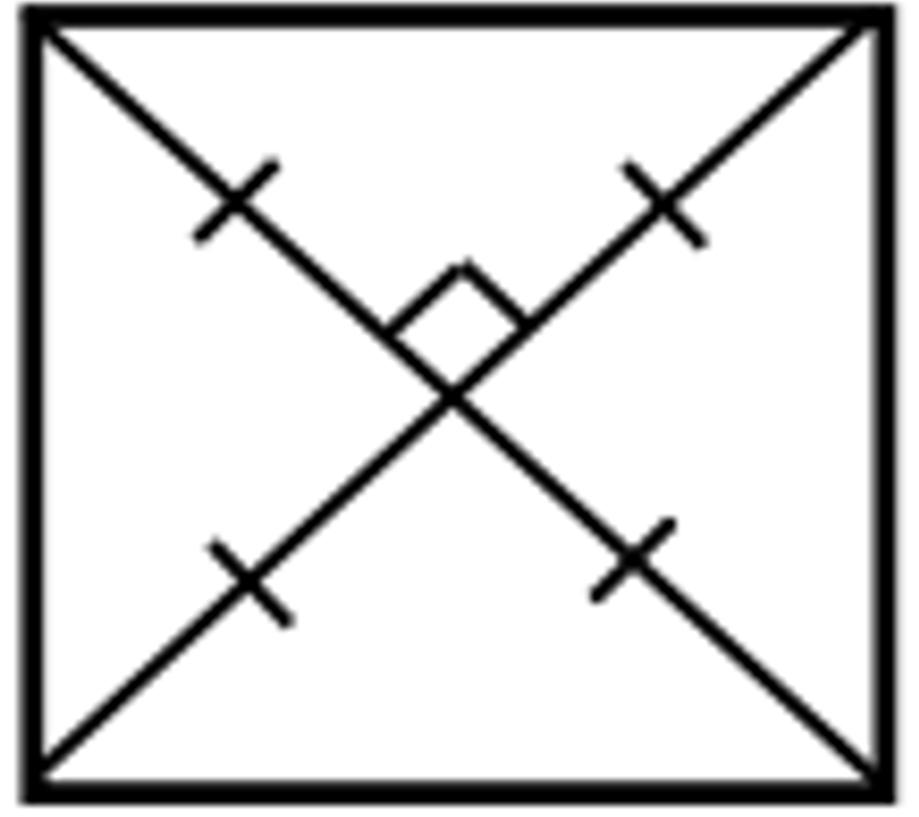
- Diagonals: A diagonal is a line that connects opposite corners of a square. In a square, the diagonals do two important things:
- They cut each other exactly in half (this is called bisecting).
- They cross each other at a angle, forming a right angle where they meet.
- They are equal in length.
2. Rectangle
- Sides: In a rectangle, the opposite sides are equal in length and parallel.
- Angles: Just like a square, all four angles in a rectangle are right angles.
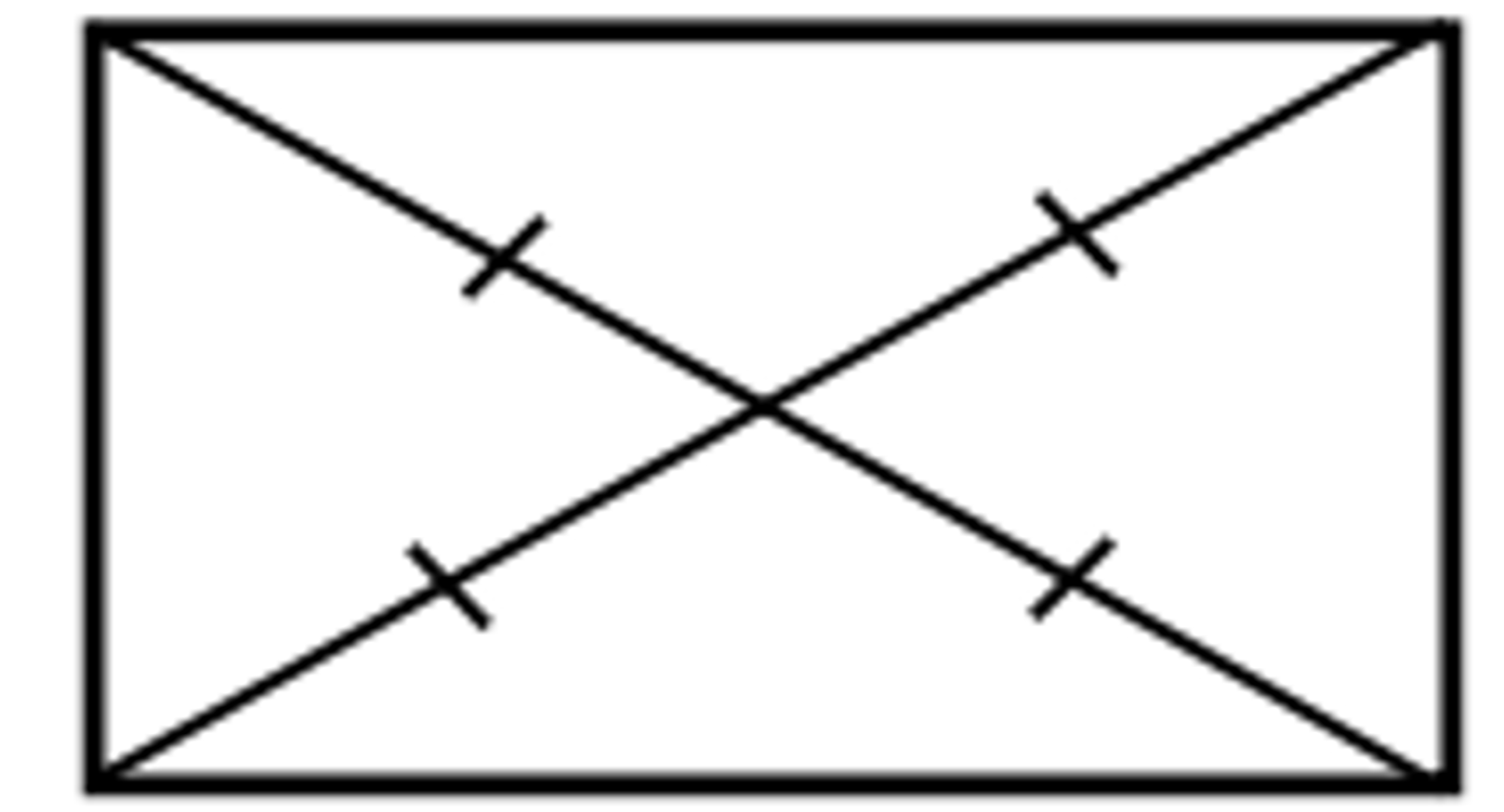
- Diagonals: The diagonals of a rectangle also bisect each other, which means they cut each other in half. However, unlike in a square, the diagonals of a rectangle do not necessarily cross at a angle.
3. Parallelogram
- Sides: In a parallelogram, the opposite sides are equal in length and parallel, just like in a rectangle.
- Angles: The angles that are across from each other (opposite angles) are equal. For example, if one angle is , the opposite angle will also be .
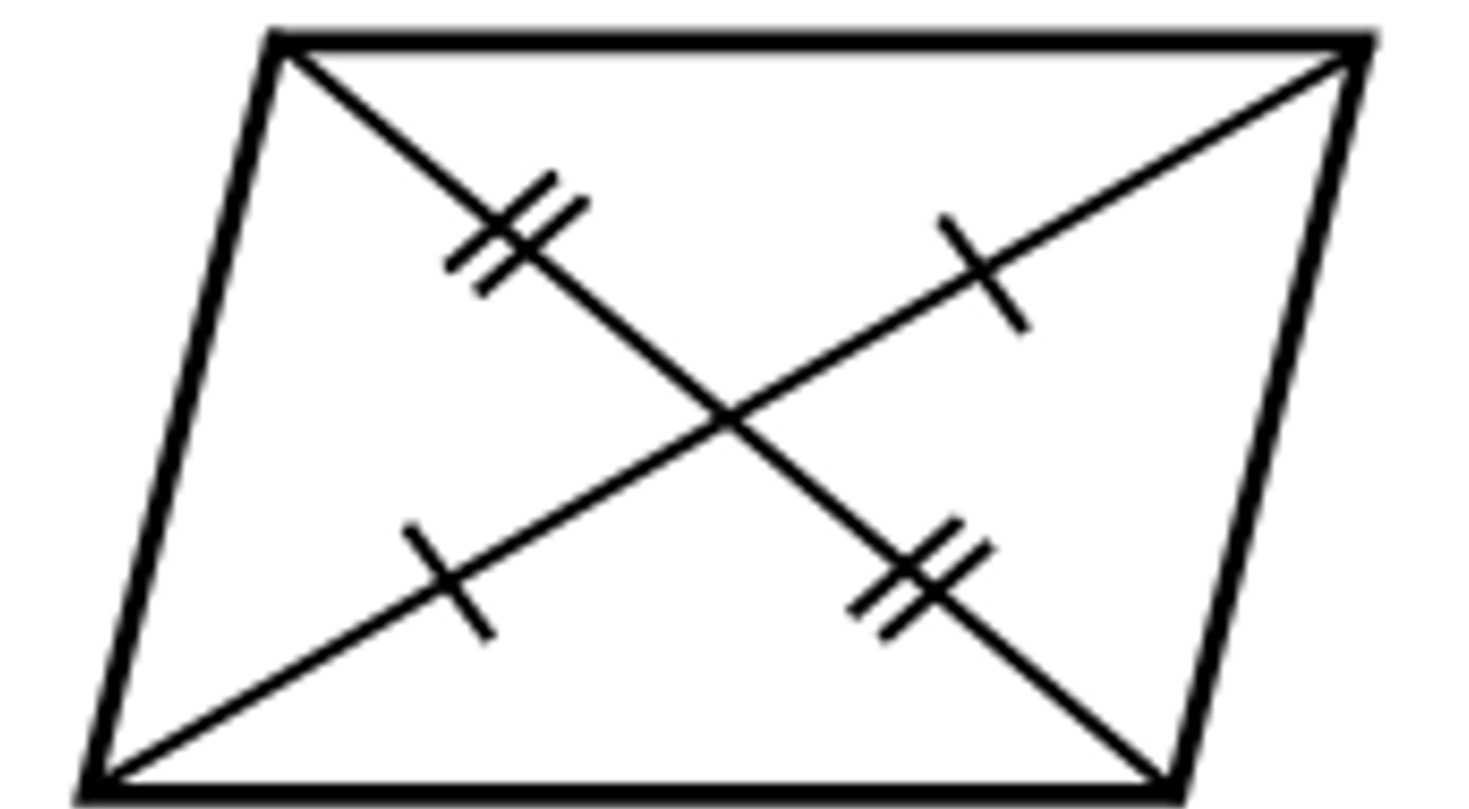
- Diagonals: The diagonals of a parallelogram bisect each other, meaning they cut each other in half. However, they don't form right angles where they cross.
4. Rhombus
- Sides: A rhombus is like a squished square—it has four equal sides, but the angles aren't .
- Angles: The opposite angles in a rhombus are equal, just like in a parallelogram. So if one angle is , the opposite angle will also be .
- Opposite Sides: The opposite sides of a rhombus are parallel.
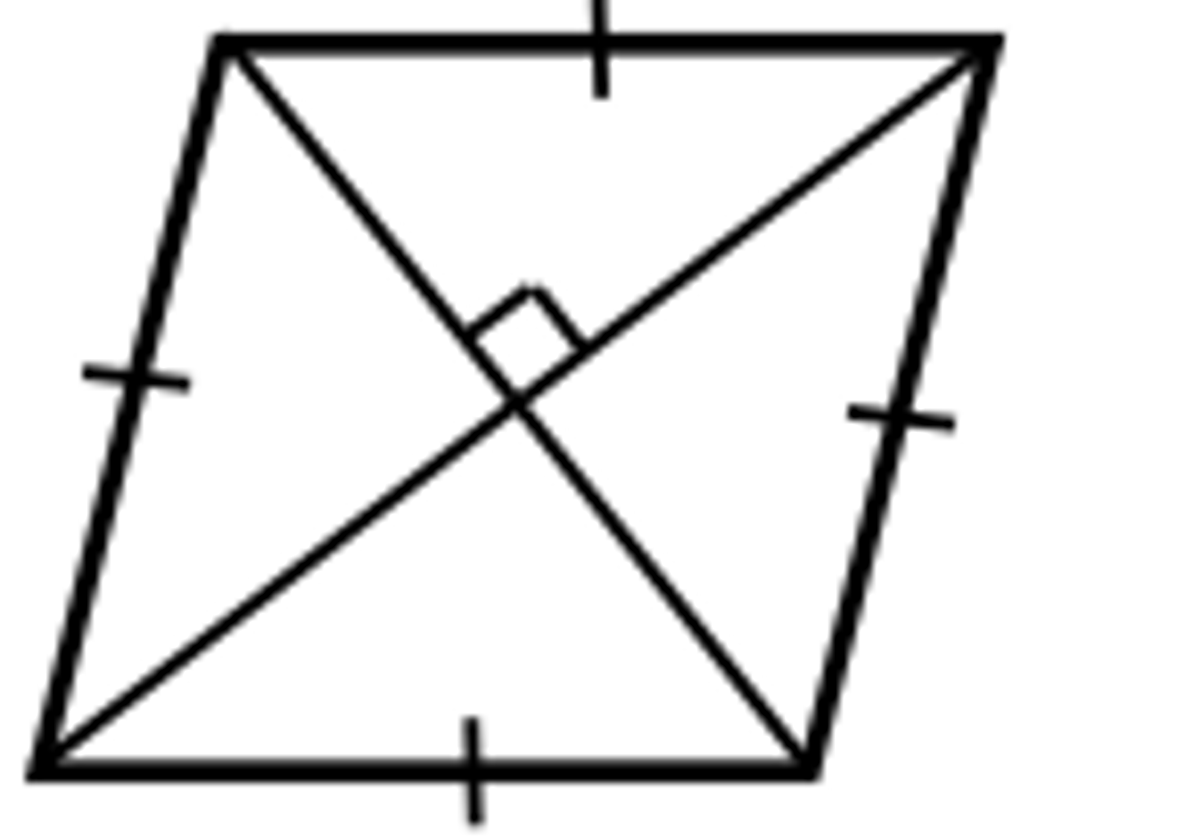
- Diagonals: The diagonals of a rhombus do two special things:
- They bisect each other (cut each other in half).
- They cross at a angle, just like in a square. They also cut the angles of the rhombus in half.
Why This Matters
Knowing these properties is really helpful when solving geometry problems. For example, if you know a shape is a rectangle, you can use its properties to find missing angles or side lengths without doing too much calculation. These properties give you shortcuts that make solving problems easier.
Note
Tips for Understanding:
- Draw and Label: Practice drawing each shape and labelling the sides, angles, and diagonals. This will help you remember their properties better.
- Use Real-Life Examples: Look around your house for examples of these shapes. A book might be a rectangle, and a square tile on the floor is, well, a square!
- Compare and Contrast: Try to notice how some shapes are similar (like squares and rhombuses both having equal sides) and how they are different (like their angles). This will help you understand each shape better.