Expressive Elements of Music (Junior Cert Music): Revision Notes
📚Revision Notes
Expressive Elements of Music
1. What are Expressive Elements?
- Expressive elements change how music sounds and feels.
- They add emotion, mood and character to music by changing volume, speed and how notes are played.
- The main expressive elements include:
- Dynamics (volume changes)
- Tempo (speed changes)
- Articulation (how notes are played)
- Ornamentation (extra details added to melodies).
2. Dynamics (Loud and Soft Sounds)
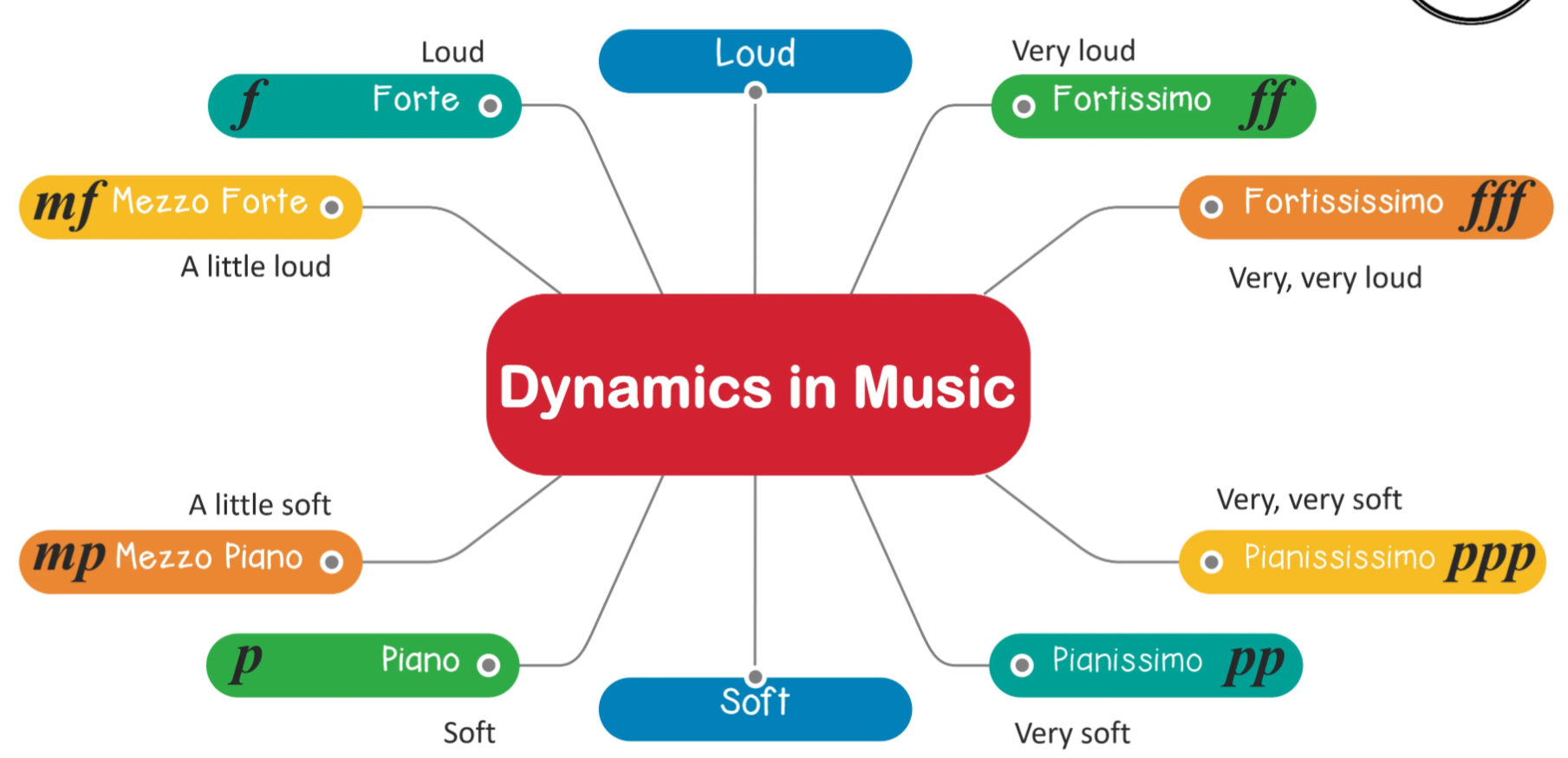
- Dynamics describe how loud or soft a sound is.
- They build tension, excitement, or calmness in music.
- Italian words are used for dynamic markings: | Marking | Definition | |---|---| | pp (pianissimo) | Very soft | | p (piano) | Soft | | mp (mezzo piano) | Medium soft | | mf (mezzo forte) | Medium loud | | f (forte) | Loud | | ff (fortissimo) | Very loud | | Crescendo ( < ) | Gradually getting louder | | Decrescendo ( > ) | Gradually getting softer |
Example
Examples:
- 🎵 Hurt – Johnny Cash → Soft dynamics create sadness.
- 🎵 Symphony No. 5 (Movement 3) – Beethoven → Dramatic use of crescendos and fortes.
3. Tempo (Speed of Music)
Note
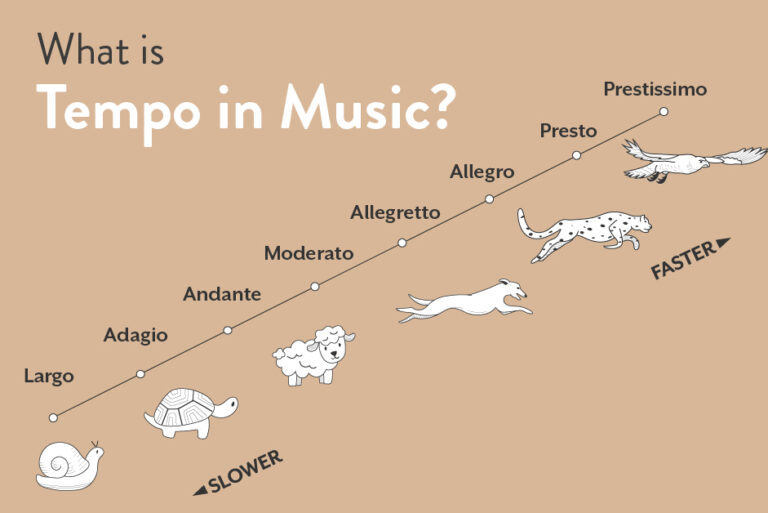
Tempo is the speed or pace of a piece of music. When we talk about tempo, we are talking about how fast the pulse is.
- Tempo controls how fast or slow music is played.
- It affects the energy and mood of a piece. | Marking | Definition | |---|---| | Largo | Very slow | | Adagio | Slow | | Andante | Walking pace | | Moderato | Medium speed | | Allegro | Fast | | Presto | Very fast | | Ritardando (rit.) | Gradually slowing down | | Accelerando (accel.) | Gradually speeding up |
Example
Examples:
- 🎵 Fix You – Coldplay → Slow tempo builds emotional intensity.
- 🎵 In the Hall of the Mountain King – Edvard Grieg → Gradually gets faster (accelerando).
4. Articulation (How Notes are Played)
- Articulation affects how notes sound—smooth, short, or accented.
- Common articulation markings: | Marking | Definition | |---|---| | Staccato (•) | Short and detached notes | | Legato (slur) | Smooth and connected notes | | Accent ( > ) | Strongly emphasised notes | | Tenuto ( • ) | Hold the note for its full value |
Example
Examples:
- 🎵 Viva La Vida – Coldplay → Staccato strings create energy.
- 🎵 Superstition – Stevie Wonder → Accents give a funky feel.
5. Ornamentation (Adding Extra Notes for Expression)
- Ornamentation is when musicians decorate melodies with extra notes.
- Used a lot in jazz, traditional Irish, and classical music. | Type | Definition | |---|---| | Trill | Fast alternation between two notes | | Grace Notes | Very quick extra notes before the main note | | Melisma | Singing several notes on one syllable of text. |
Example
Examples:
- 🎵 Morrison's Jig – Kevin Burke → Irish music with extra fast notes.
- 🎵 Amazing Grace – Traditional hymn → Melisma (several notes on one syllable of text.).
6. How to Describe Expressive Elements in Listening Tasks
- Listen carefully to the volume, speed, and note style.
- Use the correct terms to describe what you hear.
- Think about how the elements affect the mood.
Example
Example:
- "The song Fix You starts piano (soft) and gradually crescendoes (gets louder), creating an emotional build-up."
- "In Viva La Vida, the staccato articulation makes the violins sound lively and punchy."