Other Major Keys (Junior Cert Music): Revision Notes
📚Revision Notes
Other Major Keys
Other Major Keys
- There are many major keys, each with a different tonic note.
- Some major keys use sharps (#) or flats (♭) in their key signatures.
- A sharp sign raises the pitch of a note by a semitone.
- A flat sign lowers a note by a semitone.
- For example, F♯ is one semitone higher than F. B♭ is one semitone lower than B.
- We will look at:
- G Major
- D Major
- F Major
G Major
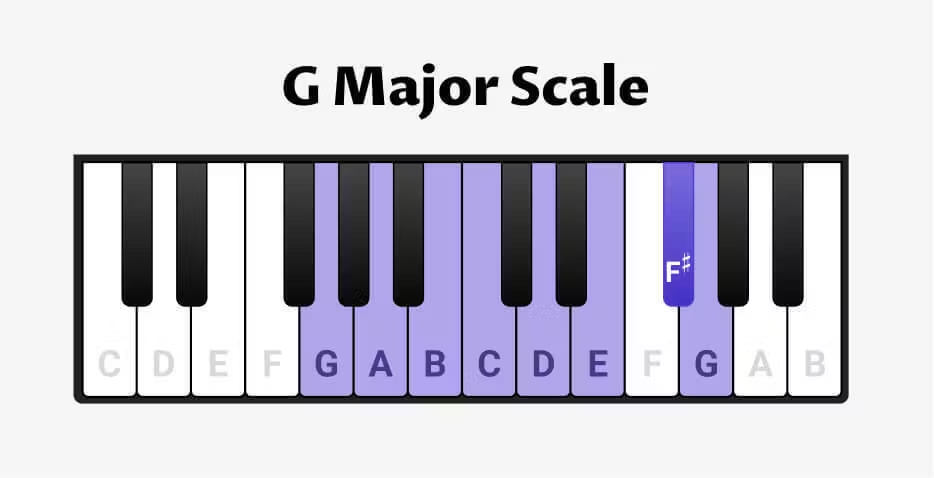
- The pattern of notes in the scale of G major contains one sharp - F sharp (F♯).
- Scale: G – A – B – C – D – E – F♯ – G
- Key Signature: 1 sharp (F♯)
- Instead of writing F♯ every time, the key signature places a sharp on F at the start of the piece.

D Major
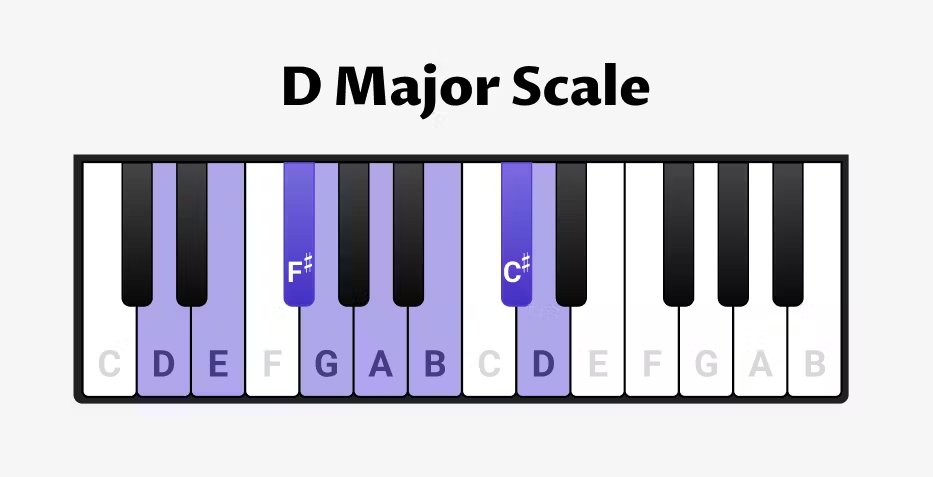
- The pattern of notes in the scale of D major contains two sharps- F sharp (F♯) and C sharp (C♯).
- Scale: D – E – F♯ – G – A – B – C♯ – D
- Key Signature: 2 sharps (F♯, C♯).
- The key signature is inserted on every stave.

F Major
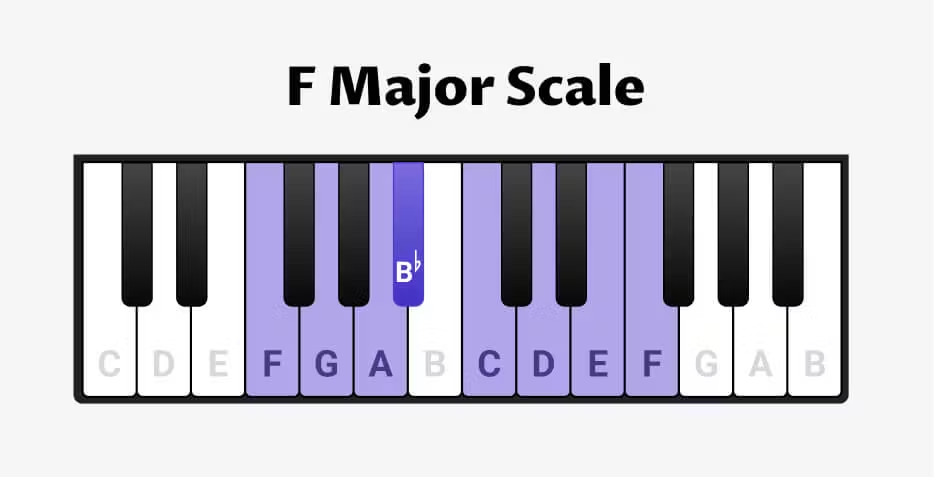
- The pattern of notes in the scale of F major has one note that sits on a black key - B flat (B♭).
- Scale: F – G – A – B♭ – C – D – E – F
- Key Signature: 1 flat (B♭)
- Every B in F major is lowered by a semitone, making it B♭.

B♭ Major
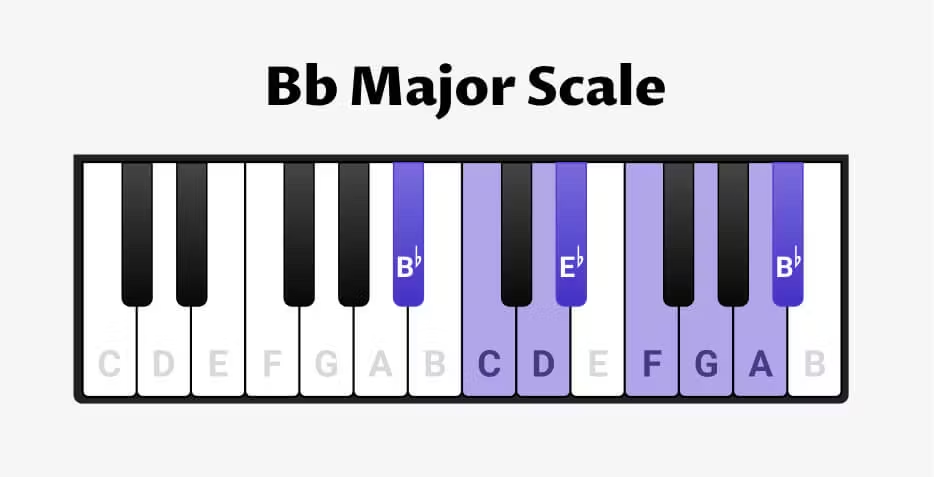
- The pattern of notes in the scale of B♭ major has two notes that fall on a black key – B flat (B♭) and E flat (E♭).
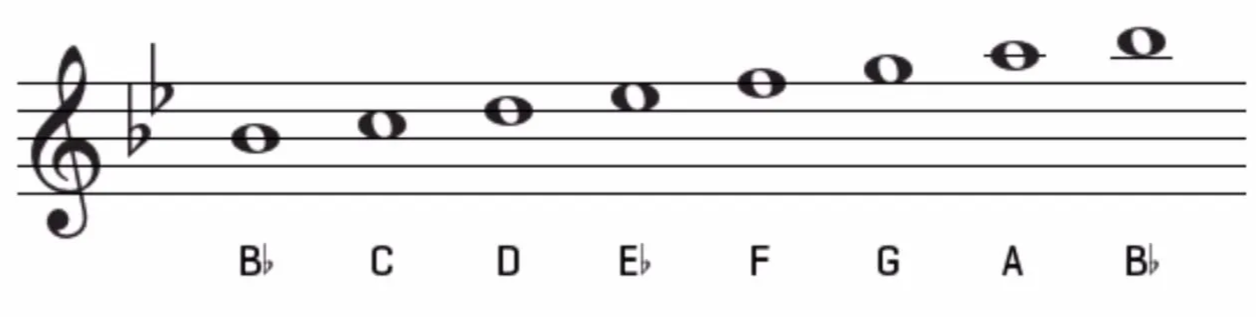
- Scale: B♭ – C – D – E♭ – F – G – A – B♭
- Key Signature: 2 flats (B♭, E♭).
- The key signature is inserted at the beginning of every stave.
- Every B and E note in B♭ major is automatically lowered by a semitone.