Note Values (Junior Cert Music): Revision Notes
📚Revision Notes
Note Values
Note
Note values are symbols used in music to indicate how many beats a sound will last for. Remember: a beat is the basic unit of time in apiece of music.
- Some notes represent long sounds, while others represent short sounds.
- When a series of long and short sounds are heard together, they create a rhythm pattern.
- Understanding note values helps musicians read and play music correctly, ensuring the timing and flow of a piece stay consistent.
- We will study:
- Semibreve
- Minim
- Crotchet
- Quaver
- Semiquaver
Semibreve
- A semibreve symbol represents 4 beats of sound.
- A semibreve is oval in shape and its centre is not coloured in.

Minim
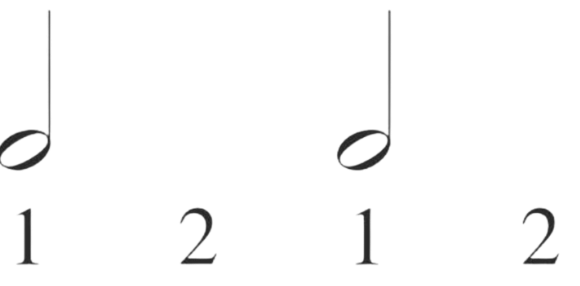
- A minim symbol represents 2 beats of sound.
- A minim has an oval note head and its centre is not coloured in.
Crotchet
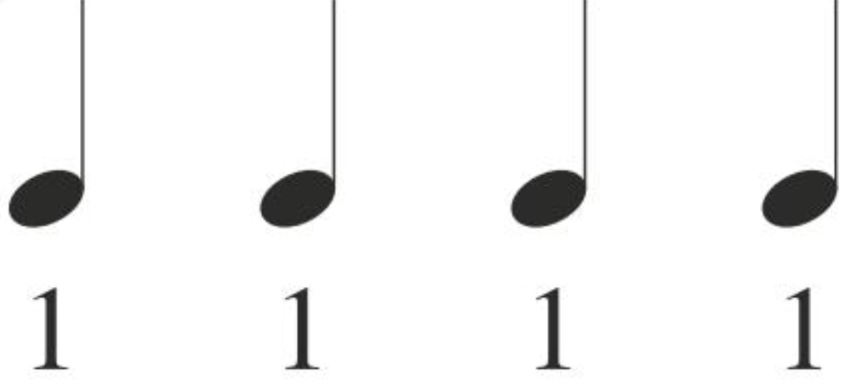
- A crotchet symbol represents 1 beat of sound.
- A crotchet has an oval note head, but its centre is filled in.
- It also has a stem attached to the side of the note head.
Quaver
-
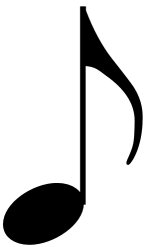
A quaver is worth ½ a beat of sound.
-
A single quaver also has a note head that is filled in and a stem.
-
The stem has a tail attached to it.
-
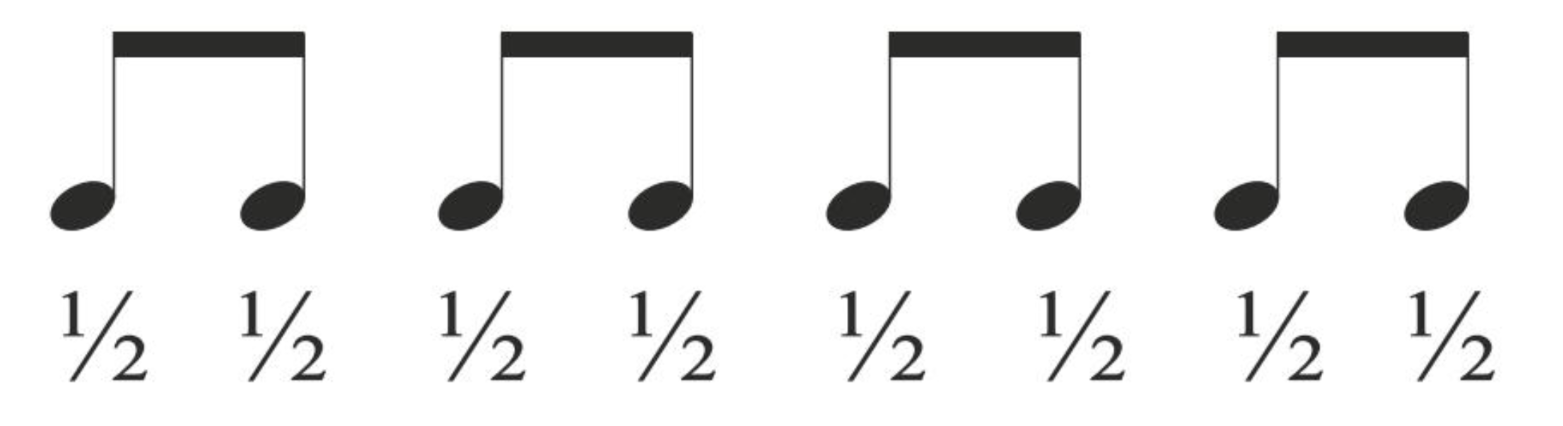
Quavers are often found in pairs.
-
A pair of quavers is equal to 1 beat (½ + ½ = 1).
-
Their tails are joined together using a straight line called a beam.
Semiquaver
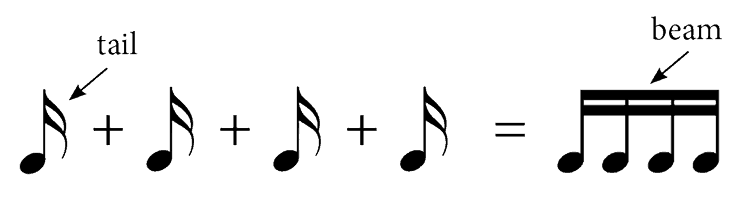
- A semiquaver lasts for a quarter of a beat.
- That means four semiquavers fit into one crotchet beat.
- They look similar to quavers, but they have two tails on their stem instead of one.
- When semiquavers are beside each other, they are often beamed together using two lines across the top.
Note
Rhythm Tip
Semiquavers can be tricky to count when mixed with quavers. A fun way to clap them correctly is to say rhythm syllables:
- "quick se–mi" = 1 quaver + 2 semiquavers
- "se–mi quick" = 2 semiquavers + 1 quaver Try saying these phrases as you clap the rhythms to keep your timing steady.