Brass Family (Junior Cert Music): Revision Notes
📚Revision Notes
Brass Family
- The brass family is one of the four main instrument families in the orchestra.
- Brass instruments are made of metal (usually brass) and produce sound when the player buzzes their lips into a mouthpiece.
- They are often used for bold, dramatic effects in music.
1. Characteristics of Brass Instruments
- Made from brass or metal with a shiny, reflective surface.
- Sound is created by buzzing the lips into a mouthpiece.
- Valves or slides change the pitch by altering the length of tubing.
- Played by controlling airspeed and lip tension to change notes.
- Louder and more powerful than most other instruments.
- Used in orchestras, film scores, jazz, military bands, and pop music.
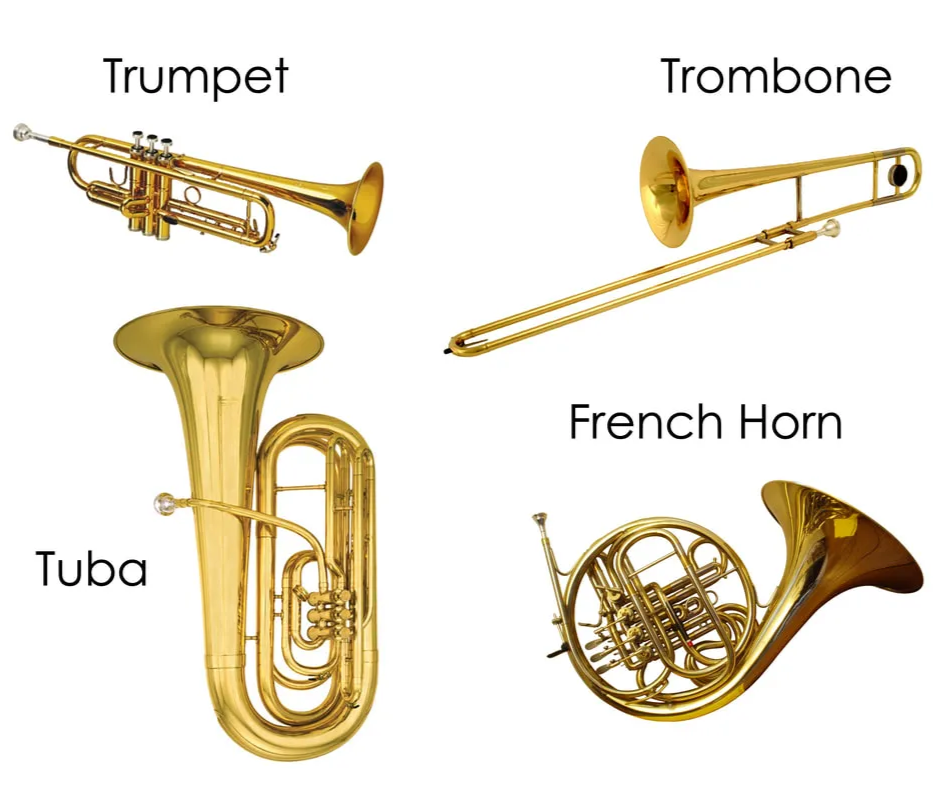
2. Instruments of the Brass Family
Trumpet
- The smallest and highest-pitched brass instrument.
- Has three valves to change notes.
- Used in orchestras, jazz, military bands, and pop music.
- Often plays melody, fanfares, and bright, sharp solos.
- Famous trumpet piece: Haydn's Trumpet Concerto.
French Horn
- Has a coiled tube and a large, flared bell.
- Played with the right hand inside the bell to adjust tone and volume.
- Produces a rich, warm, and mellow tone.
- Typically has three or four valves to change pitch.
- Common in orchestras, film scores, and classical music.
- Famous in Star Wars Theme and Beethoven's Symphony No. 6.
Trombone
- The only brass instrument without valves.
- Uses a slide to change pitch by altering the length of tubing.
- Has a deep, bold, or brassy tone.
- Played in orchestras, jazz, marching bands, and brass ensembles.
- Famous trombone piece: Tchaikovsky's 1812 Overture.
Tuba
- The largest and lowest-pitched brass instrument.
- Has four or more valves to change notes.
- Produces a deep, rich bass sound that provides harmonic support.
- Forms the foundation of the orchestra's brass section.
- Used in orchestras, brass bands, and film music.
- Famous in John Williams' Jaws Theme.
3. How Brass Instruments Work
- Buzzing Lips – The player vibrates their lips inside the mouthpiece.
- Air Control – Airspeed and lip tension control the pitch.
- Valves or Slides – These change the length of tubing, altering the pitch.
- Bell Shape – The large bell at the end of the instrument helps project the sound.
4. Role of Brass Instruments in the Orchestra
- The brass section is powerful and bold.
- Often plays fanfares, loud dramatic parts, or rich harmonies.
- Works with the woodwind and percussion to create dynamic contrasts.
- The trumpets often play the melody.
- The French horns, trombones, and tubas provide harmony, depth, and bass support.