Creation (Junior Cert Religious Education): Revision Notes
📚Revision Notes
Non-Religious Understanding of Creation
Throughout history, humans have sought to understand how the world and universe came to exist. While religious explanations have provided answers for many people, non-religious approaches have also developed to explore these fundamental questions about creation and existence.
Early explanations through myths
In humanity's earliest periods, people used myths to make sense of the world around them. A myth is a story that was used to explain why things happened when scientific knowledge was not available. These stories helped ancient peoples understand natural phenomena like thunderstorms, seasons, and the movement of celestial bodies.
Note
Understanding Myths
Myths served as humanity's first attempt to answer the big questions about existence. A myth is defined as "a story that was used to explain why things happened" during times when scientific knowledge was not available to provide better explanations.
Different cultures developed their own myths, which reflected their particular understanding of the world. Without scientific tools or methods, myths served as important ways for communities to answer the big questions about existence and creation that people naturally ask.
The development of philosophy
As civilisations developed, people began seeking different approaches to understanding the world. Philosophy, meaning 'love of wisdom', emerged in Ancient Greece during the 6th century BCE as a new way to make sense of the world using rational thinking rather than mythical stories.
Early philosophers like Aristotle challenged the mythical understanding of the world that had dominated human thinking. Philosophy introduced a more systematic approach to asking questions about existence, covering areas such as ethics, politics, and biology. These thinkers felt connected to something larger but wanted to understand how it worked through reason rather than accepting traditional mythical explanations.
Important
The Great Shift from Myth to Reason
The philosophical approach represented a significant shift towards using human reasoning and logic to explore fundamental questions about our place in the universe. This marked the beginning of non-religious approaches to understanding creation that relied on rational thought rather than traditional stories.
The rise of scientific thought
As philosophy continued to develop, some thinkers recognised the importance of science as a reliable source of knowledge. The scientific approach differs from both mythical and purely philosophical approaches because it focuses on a different type of question.
While myths and religion typically ask "Why was the world created?", science concentrates on "How was the world created?" The scientific perspective emphasises examining things that can be observed, measured, and tested through direct experience.
This shift towards empirical evidence and measurable data marked a crucial development in non-religious understanding of creation, as it provided a method for investigating the natural world based on observable facts rather than beliefs or stories.
Key scientific figures and their contributions
Galileo Galilei (1564-1642)
Galileo Galilei was an Italian astronomer whose work fundamentally changed our understanding of the universe. During his time, most people believed that Earth was the centre of the universe and all other planets revolved around it.
Example
Galileo's Revolutionary Discovery
Step 1: The Problem The accepted belief was that Earth was the centre of the universe with everything revolving around it.
Step 2: The Tool Galileo invented and used the telescope to observe the night sky more clearly than ever before.
Step 3: The Discovery Through his telescope, Galileo discovered that Jupiter had four moons orbiting around it.
Step 4: The Conclusion This observation proved that not everything in the universe revolved around Earth, supporting the theory that Earth actually orbits around the Sun.
This discovery put Galileo into serious conflict with the Catholic Church, which taught that Earth was the centre of the universe. The Church banned his writings and put him on trial, eventually placing him under house arrest for the rest of his life. His work represents an important moment when scientific evidence challenged established religious teachings about creation.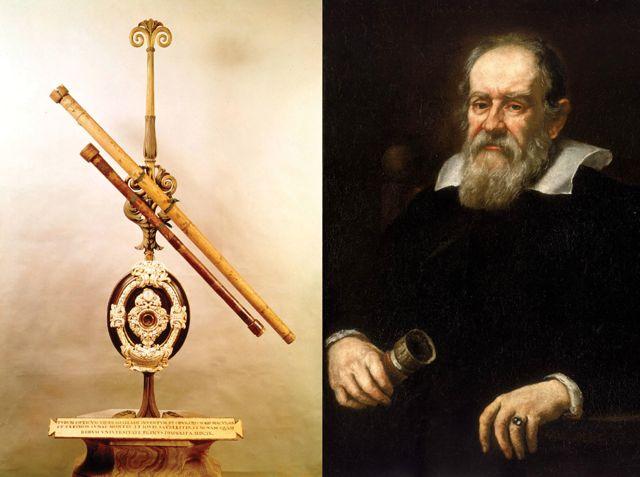
Charles Darwin (1809-1882)
Charles Darwin was a British scientist who developed one of the most significant theories in the history of science. Born into a Christian family in Shropshire, Darwin would eventually propose ideas that fundamentally changed how humans understand their place in the natural world.
Darwin's book "On the Origin of Species" introduced his theory of evolution by natural selection. This theory suggested that human life developed from simpler forms of life over many years through a process of adaptation to different environments. According to this theory, species that adapted successfully to their surroundings had a greater chance of survival.
Important
Darwin's Challenge to Religious Views
Darwin's ideas directly challenged the religious viewpoint that emphasised the special importance of humanity in creation. His theory suggested that humans developed through natural processes rather than being specially created, causing significant controversy and debate that continues in some circles today.
By the time of his death in 1882, however, most people recognised him as a great scientist who had made major contributions to human understanding.
The Enlightenment
The Enlightenment was an intellectual movement that occurred during the late 17th and early 18th centuries. This period emphasised reason and individualism over traditional authority and established beliefs.
The Enlightenment presented a significant challenge to traditional religious views about the world and creation. Before this period, religious explanations of the world were dominant and scientific knowledge was often viewed as competing with religious teachings.
After the Enlightenment, however, the scientific viewpoint began to gain much greater importance within society. This shift helped establish science as a legitimate and valuable way of understanding the natural world alongside religious perspectives.
The Big Bang theory
The Big Bang theory represents one of the most important modern scientific explanations for how the universe began. This theory attempts to explain what happened at the very beginning of the universe, based on discoveries in astronomy and physics that show the universe had a definite moment of beginning.
The theory was developed by Georges Lemaître, a Belgian Catholic priest who was also an astronomer and cosmologist. Born in 1894, Lemaître believed the universe began with a violent explosion from a single point, which then expanded to create everything we observe today.
Note
Science and Religion Working Together
Lemaître's background as both a priest and scientist demonstrates that scientific and religious perspectives don't necessarily conflict. His work laid the foundation for modern cosmology - the scientific study of the universe's origin and development.
Today, organisations like CERN (the European Organisation for Nuclear Research) operate sophisticated equipment that can recreate conditions similar to those immediately after the Big Bang, allowing scientists to study the fundamental processes that shaped our universe.
The relationship between religion and science today
While historical figures like Galileo and Darwin experienced conflict between religious and scientific authorities, the modern relationship between these two approaches to understanding creation has evolved significantly.
Religious and scientific thought represent two distinct branches of knowledge, each addressing different types of questions. Scientific thinking focuses on how the world was created, while religious perspectives explore why the world was created. Both approaches deserve respect as legitimate ways of seeking truth and understanding.
Important
Modern Reconciliation
The Catholic Church has since apologised for its treatment of Galileo and acknowledged Darwin's contributions to human knowledge. Many modern thinkers recognise that science and religion can complement each other, with each contributing valuable insights that the other might not provide.
Both approaches help us understand the world we live in, and both can be important as we work to comprehend our place in the universe and ensure our world remains sustainable for future generations.
Humanism
Humanism represents a completely non-religious approach to understanding the world and finding meaning in life. Humanists do not believe in divine creation and instead look to the power of human reason to answer life's big questions.
This worldview places great importance on human experience and the natural world as sources of knowledge and meaning. Humanists believe that people can find purpose and develop guidelines for living good lives based on reason and human experience rather than religious teachings.
Humanism demonstrates how scientific understanding of the world can provide a complete framework for making sense of existence without requiring religious or supernatural explanations. Well-known humanists include author Margaret Atwood and comedian Ricky Gervais, who both find meaning through scientific rather than religious understanding of creation and existence.
Summary
Key Points to Remember:
- Myths were humanity's first attempts to explain natural phenomena before scientific knowledge developed
- Philosophy emerged in Ancient Greece as a rational, non-religious approach to understanding the world
- The scientific method focuses on "how" questions using observable, measurable evidence
- Key figures like Galileo and Darwin challenged religious teachings with scientific discoveries, sometimes facing serious opposition
- The Enlightenment promoted reason over traditional authority, helping establish science as a legitimate way of understanding the world
- Modern non-religious approaches like the Big Bang theory and humanism provide comprehensive explanations for creation without requiring supernatural beliefs