Tangential Sawing (Junior Cert Wood Technology): Revision Notes
📚Revision Notes
Tangential Sawing
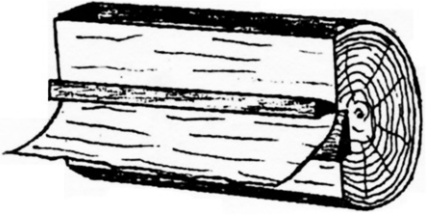
Tangential sawing is a way to cut wood. This technique slices logs parallel to their growth rings and is popular in woodworking for its attractive visual results.
Tangential Sawing Explained
-
Tangential Sawing: This method slices logs along the growth rings to create boards with appealing grain patterns for decoration.

Tangential Sawing Process
- Cutting Method: Logs are sliced along the growth rings to show their natural beauty.
- Grain Patterns: This highlights cool grain patterns for a nice look.
Advantages of Tangential Sawing
- Visual Appeal: Boards have a nice look but might not be as stable as others.
- Beautiful Grain: Important for making furniture and panels look good.
- Uses: Best for projects that focus on looks, like furniture.
Important
Note: Tangential sawing is essential for projects emphasising aesthetics, as it enhances the visual appeal significantly. However, the stability of the boards might be compromised compared to other methods.
Downsides of Tangential Sawing
Note
- Narrow Boards: Cuts near the log edges make narrower boards.
Important
- Higher Costs: Needs special setups, which cost more. This can be a main cause of increased project budgets when using this method.
Note
- More Waste: Irregular cuts lead to more leftover waste, which could affect overall material efficiency.
Summary
Note
Tangential sawing is about slicing along growth rings to create beautiful grain patterns. It looks great, but can be costly and wasteful, making it not the best choice for projects that need efficient use of materials.