What is Conversion? (Junior Cert Wood Technology): Revision Notes
📚Revision Notes
What is Conversion?
Note
Timber conversion is important in wood technology. It turns logs into lumber for different uses, helping us make the best use of wood.
Definitions
- Conversion of Timber: This means turning a round log into planks, boards, or timber of different sizes.
Process of Timber Conversion
- Initial Preparation:
- Remove the bark and cut the logs into shorter pieces.
- Cutting:
- Remove extra wood to get ready for timber use.
- Use saws to cut boards carefully.
- Remnants Use:
- Leftover sawdust and wood pieces can be used to make particleboards or mulch.
Significance of Timber Conversion
- Uses materials fully and lowers waste.
- Increases cost-effectiveness and helps with sustainability.
- Affects how strong, durable, and good-looking timber is, which is important for building and high-quality furniture.
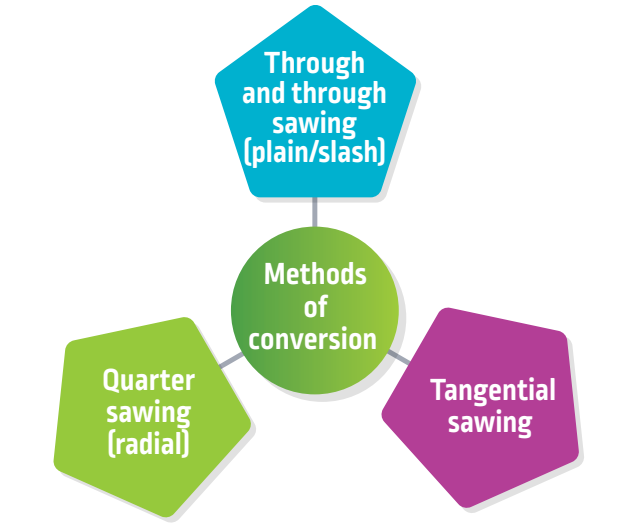
Methods of Timber Conversion
Here are three main methods, each with its benefits and uses:
Through and Through Sawing
- Description: Cut logs straight through in parallel lines, making planks of different widths.
- Benefits: Cheap, fast, and creates less waste.
- Downsides: Can bend and may not be as strong.
Quarter Sawing
- Method: Cut logs into quarters to make nicer grain patterns.
- Benefits: More stable, less bending, and better grain designs.
- Downsides: Takes more work and creates more waste.
Tangential Sawing
- Definition: Cuts follow growth rings' tangents for patterns.
- Uses: Best for top-quality furniture and veneer.
- Drawbacks: Needs more work and costs more.
Summary
Note
- Timber conversion turns raw wood into useful timber.
- Each method has its own advantages for industry.