Forces (Junior Cert Wood Technology): Revision Notes
📚Revision Notes
Forces in Wooden Structures
In wooden structures, understanding forces like tension, compression, shear, and torsion is essential for designing strong and lasting buildings.
Definitions
- Tension: This force tries to stretch or lengthen a material. In woodworking, tension occurs in beams or planks under pulling forces.
- Compression: This force works to compress or shorten a material. It is important in columns or pillars supporting vertical loads.
- Shear: This force causes parts of a material to slide past each other, often affecting joints.
- Torsion: This twisting force can impact beams and rafters by causing them to twist around their axis.
Note
Each of these forces plays a significant role in the design and durability of wooden structures, especially at the joints. Understanding how they operate is crucial.
Forces in Wooden Structures
- Wooden structures are built to handle these forces using specific techniques, especially at the joints.
- For example, mortise and tenon joints are designed to combat shear and tension by creating firm interlocking surfaces.
Impact on Durability and Stability
- Each force affects how long wooden structures last. Ignoring shear forces in a bridge can make it sway and eventually fall.
- If torsion is not considered in circular columns, it may weaken their ability to hold their shape over time.
Important
Neglecting any of these forces in design and calculation can lead to structural failures.
Using Forces in Woodworking
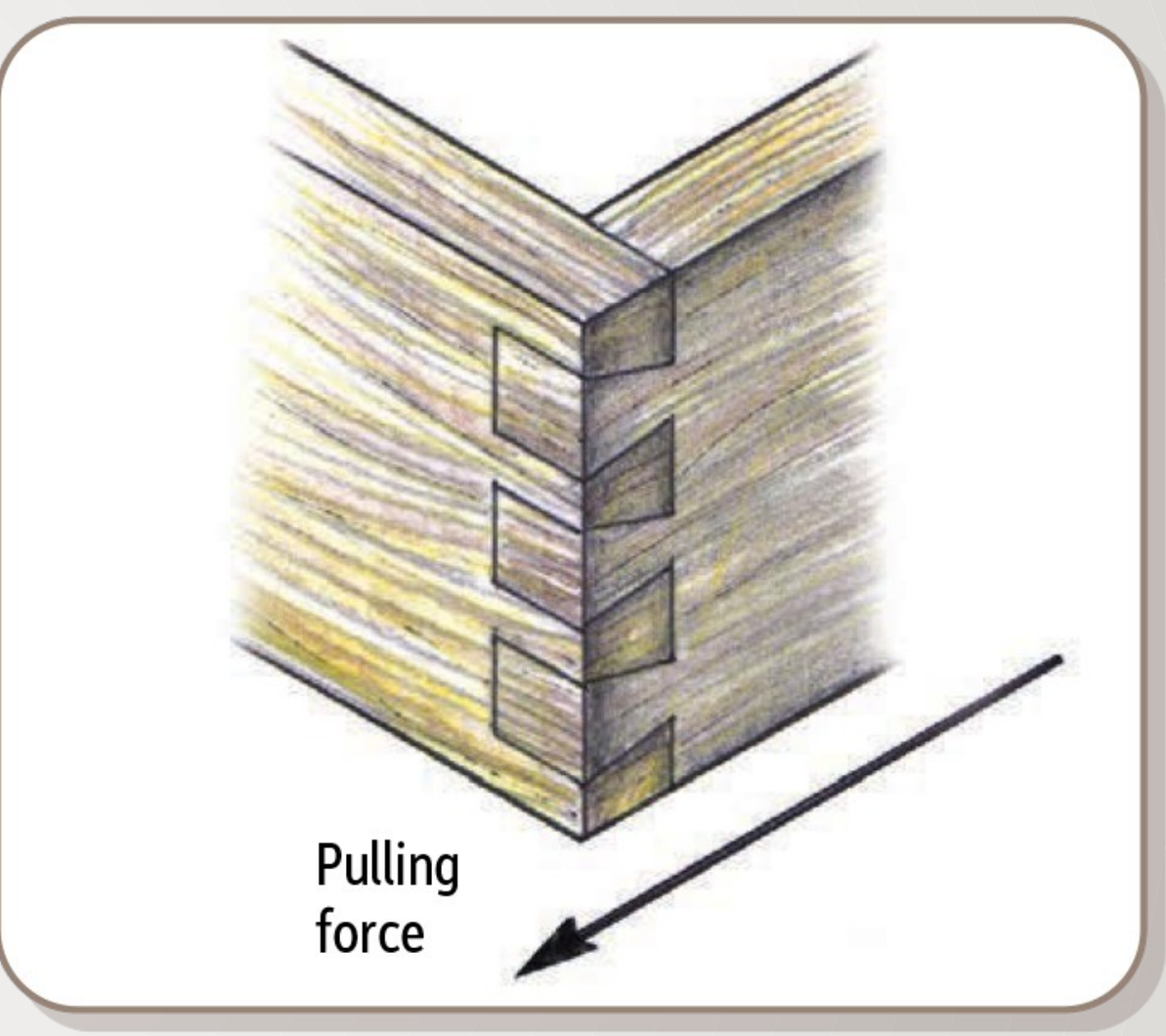
- Designs like dovetail and tenon joints make use of these forces to improve both looks and strength.
- Dovetail joints, for instance, resist tension and shear forces, adding to structural strength.
Ways to Calculate
- You can calculate load capacity and resistance using known methods.
- Empirical formulae and standards, like load-span tables, ensure that beams and columns can handle expected forces.
- Techniques such as lamination, metal brackets, and special joint designs reduce the effects of too much force.
Note
Calculations and reinforcements are essential for managing the effects of forces on structures effectively.
Summary
Note
- Summary key point 1: The main forces affecting wood structures are tension, compression, shear, and torsion.
- Summary key point 2: Understanding these forces is key to stable and durable wood buildings.
- Summary key point 3: Good woodworking designs use or control these forces effectively.
- Summary key point 4: Calculations and reinforcements help manage the effects of forces on structures.