Structures (Junior Cert Wood Technology): Revision Notes
📚Revision Notes
Wood Technology
- Wood technology involves making strong structures like beams, trusses, and bridges using wood. These are known for their compressive and tensile strengths.
Definitions
- Structure: A wood technology framework for support and stability.
- Wooden Structure: Includes compressive and tensile strengths. Examples are beams and trusses.
- Wood Grain: The pattern of fibres in wood, crucial for building.
- Bending: Uses wood's flexibility to make curves, aiding design.
- Laminating: Glueing wood layers to enhance strength.
- Alternative Materials: Steel and concrete, noted for high strength.
Importance of Wood Grain
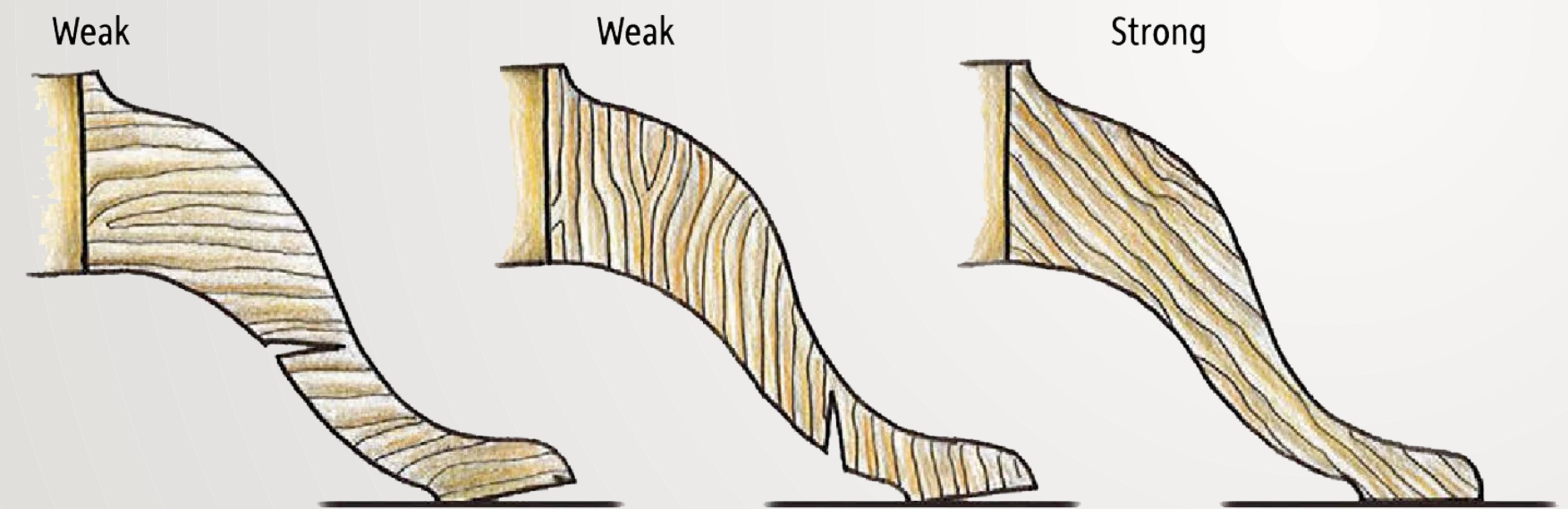
- Grain orientation is key:
- Strength: Vertical grain boosts strength.
- Form: Grain designs improve looks.
Note
Grain alignment impacts strength in significant ways:
- Aligned Grain: Increases strength.
- Opposing Grain: Can create weak spots.
Bending and Laminating
- Bending enables creative shapes for function and design.
- Laminating creates a stronger material for projects like arches.
- Example: Laminated beams in modern buildings offer strength and appeal.
Comparing Alternative Materials
- Wood is strong and flexible, whereas steel and concrete are known for tensile strength.
- Strength: Wood compresses well.
- Flexibility: More flexible than steel and concrete.
- Sustainability: Wood is renewable and less harmful to the environment.
Important
Wood's flexibility and sustainability are essential for eco-friendly construction, but steel and concrete excel in tension strength.
Summary
Note
- Understanding wood structures aids in design.
- Grain orientation affects strength and aesthetics.
- Bending and laminating enhance wood strength and adaptability.
- Wood is flexible and sustainable; steel and concrete excel in tension strength.