Nails (Junior Cert Wood Technology): Revision Notes
📚Revision Notes
Nails for Woodworking
Overview
- Nails are important tools in woodworking, mainly used to join pieces of wood. They work by creating friction and holding the wood together.
Definitions
- Nail: A metal pin with a pointed tip and flat head for attaching pieces of wood.
Types of Nails
Note
Images should highlight differences in head and shank styles.
| Type of Nail | Specific Uses | Advantages | Illustrative Example |
|---|---|---|---|
| Common Nail | Used for heavy construction like framing and large projects. | Strong holding power | [Image of Common Nail] |
| Finishing Nail | Ideal for trim work and furniture where a smooth finish is needed. | Can be hidden easily | [Image of Finishing Nail] |
| Box Nail | Suitable for lighter projects to prevent wood splitting. | Reduces wood damage | [Image of Box Nail] |
Properties of Nails
- Material: Made from steel (strong), aluminium (resistant to rust), or brass (decorative and corrosion-resistant).
- Sizes: Available in different lengths and widths for various tasks.
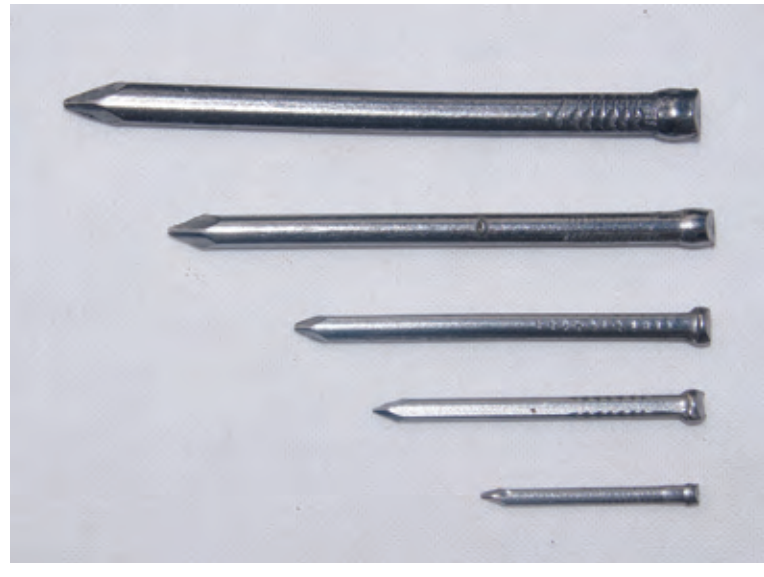
- The diagram shows nail sizes from small to large, suitable for different uses.
Advantages and Disadvantages
Important
Pay attention to potential pitfalls when using nails such as:
- Can split wood if not used carefully
- Can rust over time, especially in damp areas
| Advantages | Disadvantages |
|---|---|
| Easy to use | Can split wood if not used carefully |
| Low cost(essential for budget projects) and easy to find | Can rust over time, especially in damp areas |
Tips for Selection
- Pick the nail based on the type of wood, environmental conditions, and load needs.
- Use finishing nails for a neat appearance.
- For outdoor projects, use galvanised nails to avoid rust.
- A decision diagram can be helpful to match the right type of nail with the task.
Summary
Note
- Nails are key for connecting wood in woodworking projects.
- Different types like common, finishing, and box nails suit various jobs.
- Choosing the right nail depends on material and size.
- Consider the nail advantages and disadvantages like cost and the risk of wood damage.
- Selection should consider the wood and the specific project needs.