Table Saw (Junior Cert Wood Technology): Revision Notes
📚Revision Notes
Table Saw Essentials
Introduction
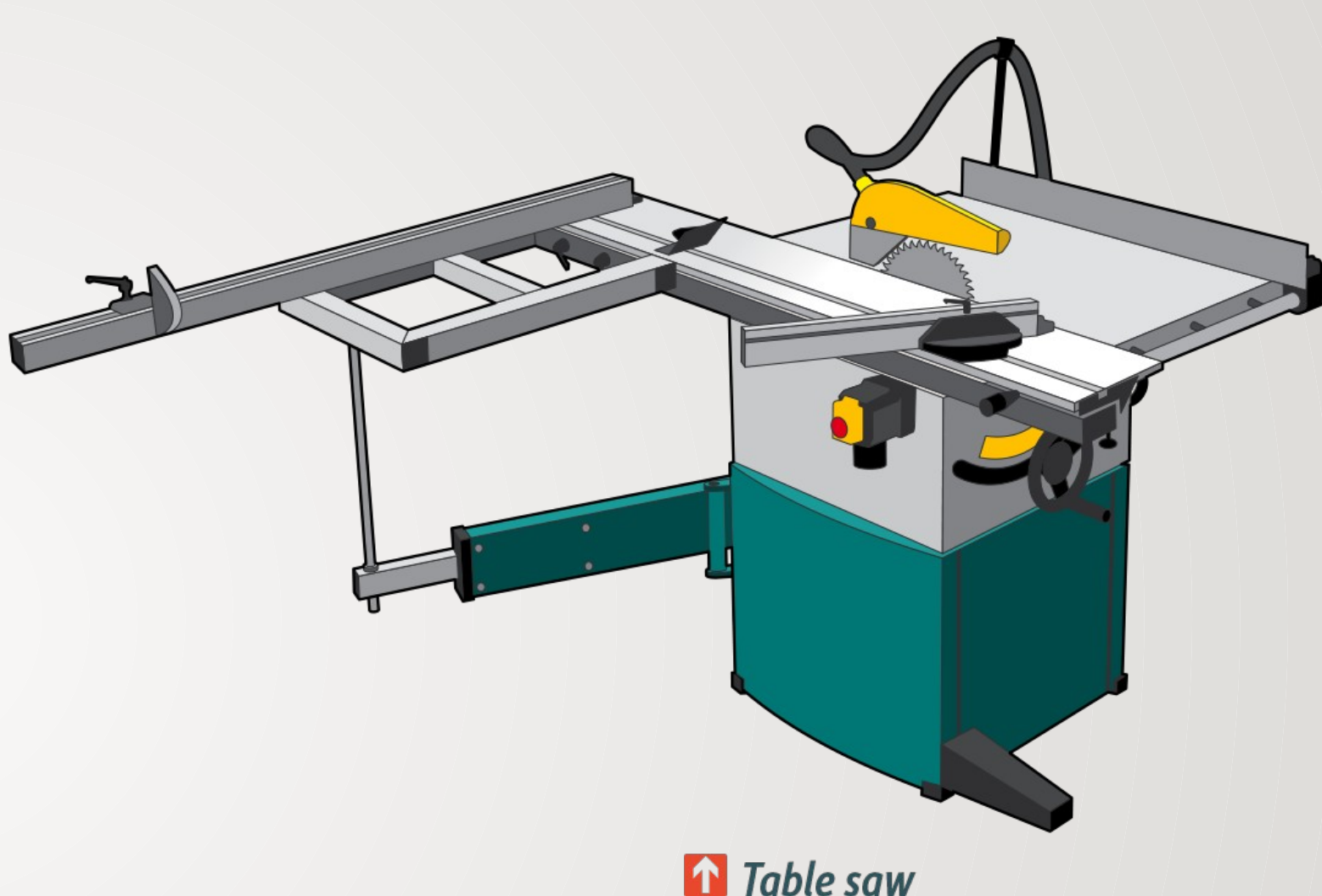
A table saw is a critical tool in woodworking shops, valued for its accuracy and versatility. It includes a circular saw blade that sticks out from a table's surface and is powered by an electric motor, allowing for precise cuts essential in woodworking.
Uses
- Straight Cuts: Created for constructing table tops and panels.
- Angled Cuts: Necessary for mouldings and pieces requiring accuracy.
- Depth Cuts: Used for grooves and changes in panel structure.
Structure and Components
A table saw includes several key parts:
- Circular Saw Blade: Composed of durable metal with sharp tips to cut.
- Motor: Allows the blade to rotate rapidly for exact cuts.
Note
Functionality and efficiency are driven by both the blade and motor.
- Rip Fence: Stabilises materials for uniform width cuts.
- Miter Gauge: Adjusts to achieve specific angle cuts.
Safety Measures
Important
Safety is paramount when using a table saw:
- Wear safety goggles and ear protection to avert hazards.
- Double-check all settings before starting operations.
- Always employ the blade guard to ensure safety.
- Disconnect the power supply when making adjustments.
Common Applications
- Cabinetry: Essential in accurately fitting doors and panels.
- Flooring: Precisely fits wooden planks for seamless coverage.
- Framing: Ensures components are correctly sized, ensuring structural integrity.
Summary
- Table saws are essential in woodworking for precise and versatile cutting.
- They enable various cuts needed for crafting and building.
- Understanding their parts enhances usage and safety.
- Following safety protocols ensures a safe work area.
- Table saws are crucial in creating detailed and diverse wood products.
Note
Remember: Safe practices and proper handling of the table saw not only prevent accidents but also extend the tool's lifespan.