Woodturning Lathe (Junior Cert Wood Technology): Revision Notes
📚Revision Notes
Woodturning Laith
Introduction
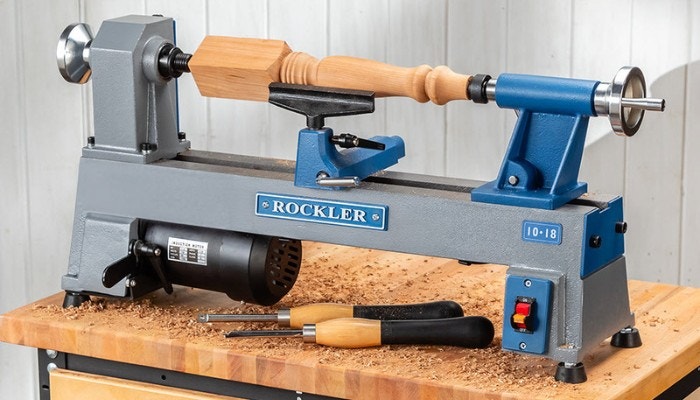
A woodturning lathe is a crucial machine in woodworking, used to make things like table legs, bowls, and ornaments. The laith works by spinning a piece of wood against a fixed cutting tool to shape it precisely and evenly.
Turning Types
There are two main types of woodturning:
- Spindle Turning: This turns long, narrow pieces between the headstock and tailstock, like chair legs.
- Faceplate Turning: This is for larger pieces attached to a faceplate on the headstock, often for bowls and plates.
Note
Understanding the differences between spindle and faceplate turning is essential for choosing the right technique for your project.
Components
A woodturning laith has several key parts:
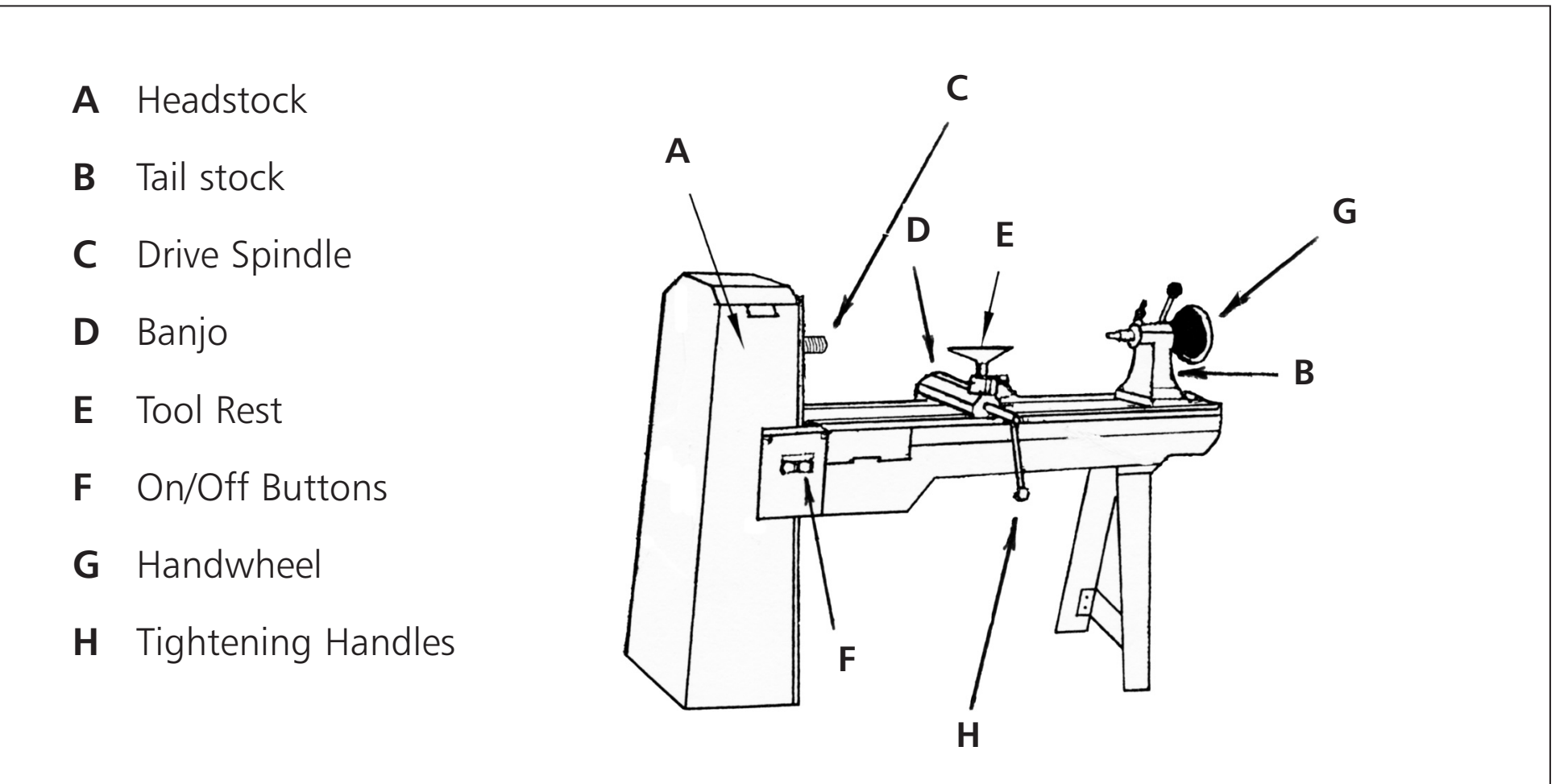
- Headstock: Contains the motor to spin the wood.
- Tailstock: Supports the other end of the wood. It can move along the laith bed.
- Gouges: Main tools for removing large amounts of wood and making rough shapes.
- Chisels: Used to smooth and refine the shape after gouging.
Techniques
Basic woodturning involves these steps:
- Selecting Tools: Choosing the right gouges and chisels.
- Mounting the Wood: Securing the wood properly on the laith.
- Carving Shape: Controlling speed and pressure is key to shaping the wood.
- Finishing: Sanding and polishing to achieve smoothness.
Safety Tips
Important
- Wear protective gear like gloves and goggles.
- Tie back loose clothes and hair.
- Regularly maintain and check the laith.
- Stay alert while the laith is operating.
Summary
Note
- Key Point 1: Get to know a woodturning laith and its role in shaping objects.
- Key Point 2: Understand the differences between spindle and faceplate turning.
- Key Point 3: Use the laith's parts correctly for successful woodturning.
- Key Point 4: Gain skills in basic techniques for high-quality results.
- Key Point 5: Follow safety advice to avoid accidents.