Grinding Chisels and Plane Blades (Junior Cert Wood Technology): Revision Notes
📚Revision Notes
Grinding Chisels and Plane Blades
In this subtopic, you will learn about the tools and techniques involved in effectively grinding chisels and plane blades. Understanding the grinding process is crucial for maintaining the sharpness and efficiency of these woodworking tools.

Definitions
- Grindstone: A rotating solid stone wheel used for sharpening, shaping, or smoothing hard materials.
- Bevel: The angled surface formed on the edge of a tool by grinding.
- Honing: A process used to sharpen the cutting edge of a tool to increase sharpness and precision.
- Primary Bevel: The initial angle ground on a chisel or plane blade, generally around 25 degrees.
- Overheating: Excessive heat buildup during grinding that can affect the hardness of the tool.
Introduce the Tools Used for Grinding
- Electric Grindstones:
- Typically feature stone size, motor power, and speed diversity, often with variable speed settings.
- Suitable for producing a 25° bevel on blades to prepare them for further sharpening.
- Specialised Sharpening Systems:
- Offer precise angle control and consistency, including angle adjustment capabilities and examples like water-cooled systems.
- Useful in both grinding and honing stages.
Outline the Purpose of Grinding
- Grinding is essential to create a primary bevel (approximately 25°) as a preparatory step for honing.
- This precise angling helps maintain tool readiness and effectiveness, making the subsequent honing process more efficient by setting up the correct blade geometry.
Note
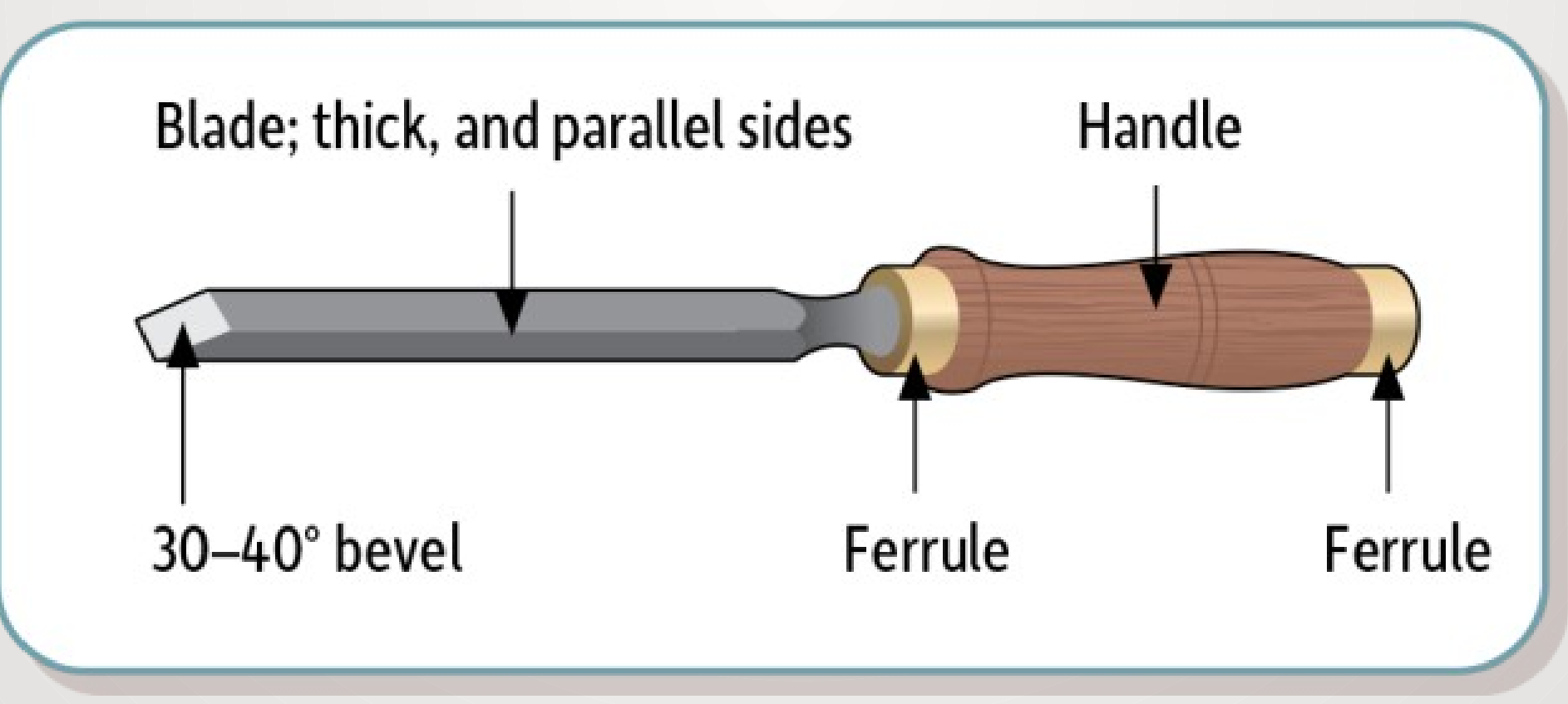
Diagram: Chisel and Bevel Illustration depicts a chisel with a properly ground bevel.
Explain the Basic Steps of Grinding
- Positioning: Proper alignment of the chisel or blade on the grindstone, ensuring tools are securely fastened before starting.
- Angle Maintenance: Techniques to maintain a consistent 25° angle during grinding, with regular checks using angle guides or protractors.
- Pressure Application: Ensuring even pressure to avoid tool damage. Uneven pressure can lead to an uneven edge or bevel.
- Consistency in practice is key for developing correct techniques.
Note
- Check the grindstone condition before beginning to ensure it's in good working order.
Note
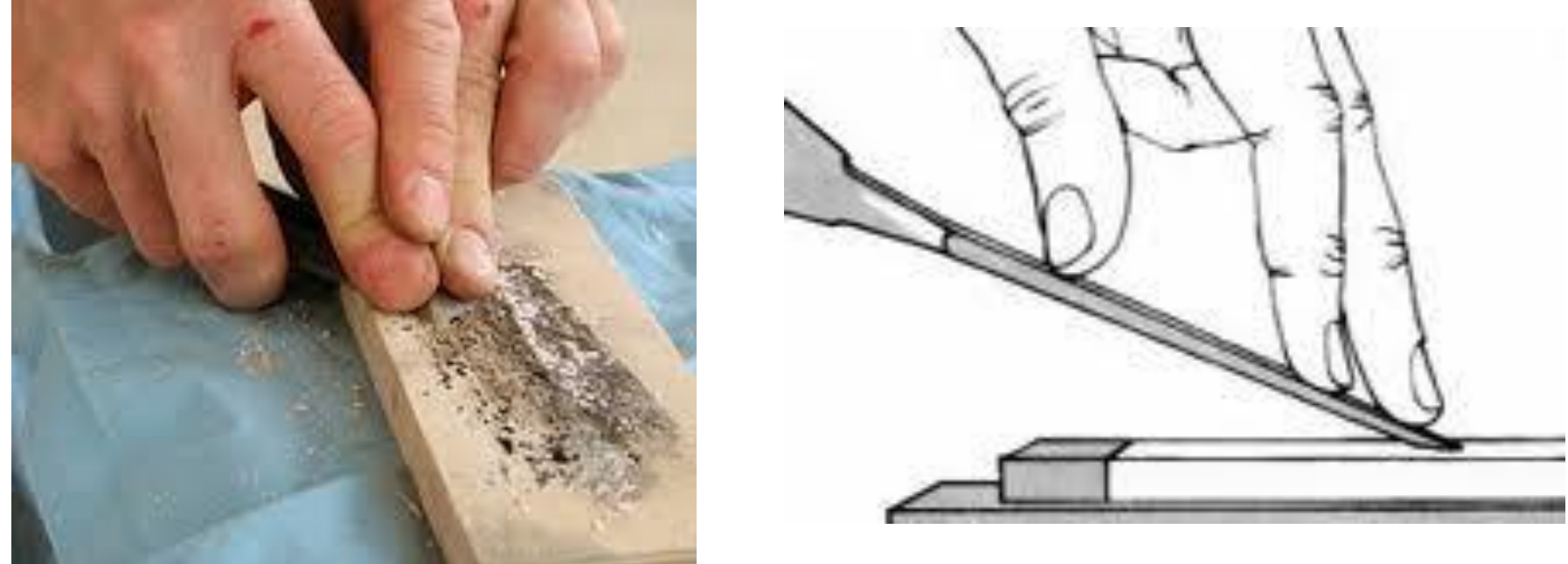
Diagram: Sharpening Technique shows the correct technique for sharpening a chisel.
Safety Precautions
- Use of personal protective equipment like goggles and gloves.
- Ensure the work environment is clear of flammable materials.
- Regularly check and maintain equipment condition to prevent accidents, e.g., ensuring grindstones aren't cracked.
- Regular training or reviewing of safety practices is beneficial to maintain safety standards.
Checklists style table enumerating safety gear and actions:
- Goggles: Protect eyes from sparks.
- Gloves: Protect hands from sharp edges.
- Clear Workspace: Avoid flammable materials near grinding tools.
Common Issues and Solutions
Important
- Overheating: Prevent it through short, interrupted grinding sessions and consider tools that allow for water cooling.
- Incorrect Angles: Use of angle guides to maintain consistency; regular checks with a protractor or angle guide ensure accuracy.
- Inconsistent Bevels: Address through balanced pressure and regular checks.
- Periodically check the grindstone itself for any damage or wear that could cause issues like uneven grinding.
Note
- Regular tool reviews, such as using checks on sharpening jigs, can prevent angle errors.
Note
Summary
- Use appropriate equipment to ensure proper technique in grinding.
- Understand the purpose of the primary bevel for further tool sharpening.
- Follow a disciplined step-by-step approach for precision in grinding.
- Prioritise safety with protective equipment and safe working environments.
- Be prepared to troubleshoot common grinding issues and apply corrective measures.