Transpiration (Junior Cert Wood Technology): Revision Notes
📚Revision Notes
Transpiration
Transpiration is a key process where water moves through a tree and then into the air. It is important in biological systems because it maintains water balance and supports the transport of nutrients, which are vital for tree health.
Definitions
- Transpiration: This process moves moisture from roots to small pores under leaves, changes it to vapour, and releases it into the air. It cools the tree and aids the movement of water and nutrients needed for photosynthesis and growth.
- Tree Physiology: The study of life activities in trees that are needed for their growth and survival.
- Water Uptake: When roots soak up water from the soil and it travels upward in the tree.
- Nutrient Transport: Moving important substances like minerals from roots to other parts of the tree for growth and development.
- Environmental Factors: Things like temperature, humidity, and wind that affect tree processes.
The Process of Transpiration
Note
Transpiration starts with water absorption by roots. This water then moves up the stem and exits as vapour from stomata in the leaves.
The cohesion-tension theory explains this movement through xylem vessels.
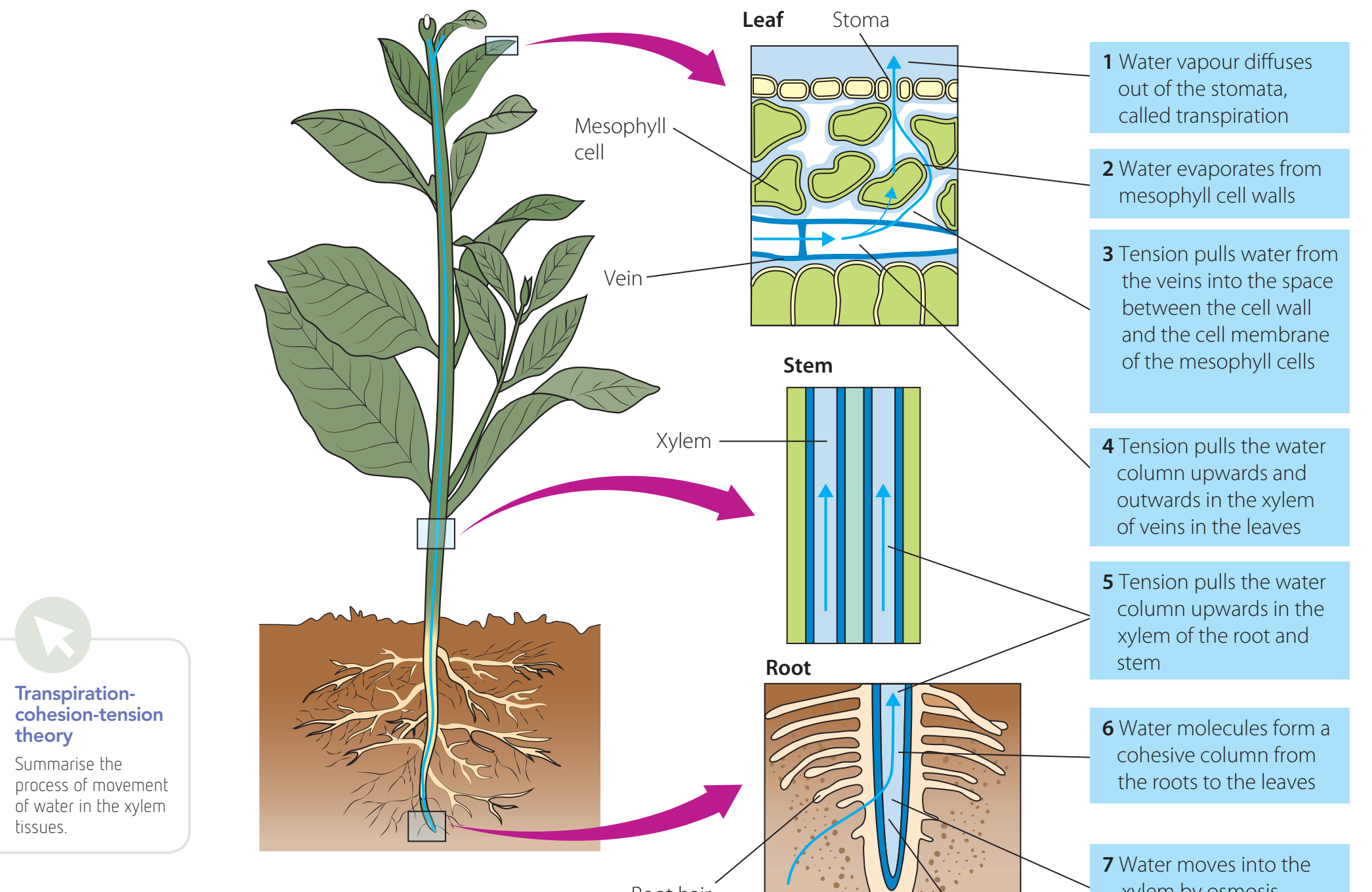
- Water Movement Process: Water is taken in by root hairs, goes into the xylem, and is pulled upward by cohesion-tension. Capillary action helps this, powered by evaporation of water at the leaves, creating a pull for water and minerals.
Influences on Transpiration
Transpiration influences how water and nutrients move because it creates a pull to move water from the roots to the leaves, helping distribute minerals.
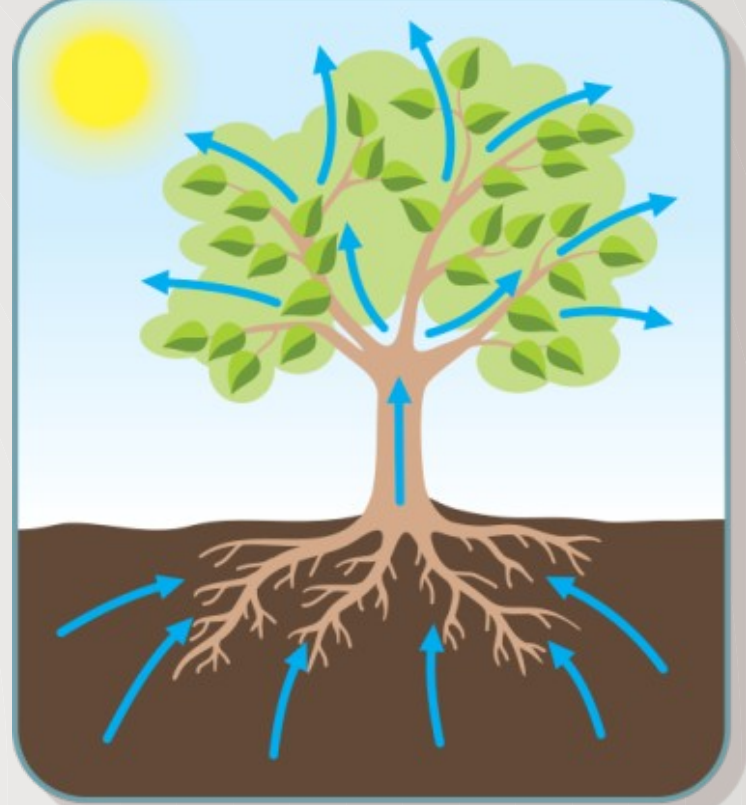
- Transpirational Pull: This creates negative pressure in the xylem vessels, aiding in moving water and nutrients from roots to shoots. Efficient transpiration improves nutrient uptake, supporting healthy growth.
Environmental Factors Affecting Transpiration
Temperature, humidity, and wind affect how fast transpiration occurs.
- Temperature speeds up evaporation and may cause stomata to open faster.
- Humidity reduces transpiration; higher humidity slows it.
- Wind speeds up transpiration by moving water vapour away from leaves, leading to more evaporation.
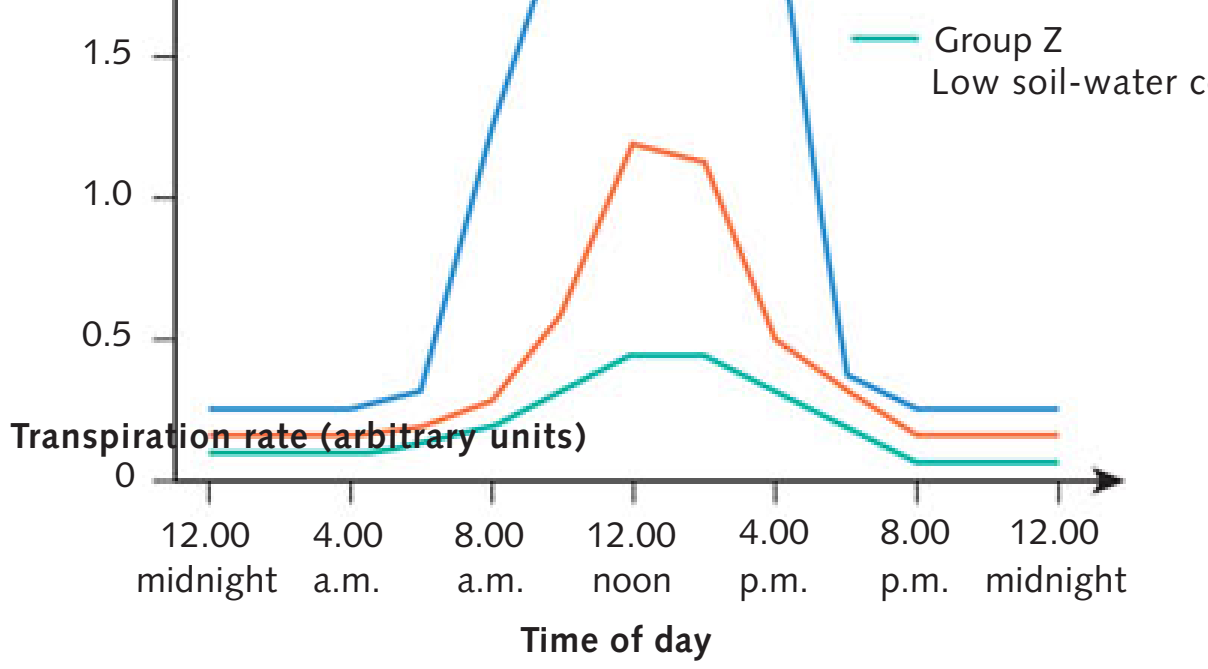
- Environmental Impact on Transpiration: Knowing these impacts helps predict changes in tree health and ecosystem balance. Extreme conditions can stress trees, harming their ability to regulate transpiration and maintain proper functions.
Note
Summary
- Transpiration is essential for moving water and nutrients.
- The cohesion-tension theory explains how water moves in trees.
- Environmental factors like temperature greatly affect transpiration.
Understanding how conditions affect transpiration is key to managing tree health and productivity.