Laminating, Scroll Saw Work and Pyrography (Junior Cert Wood Technology): Revision Notes
📚Revision Notes
Laminating in Wood Technology
Important
Laminating is an essential technique in wood technology, crucial for the creation of durable and flexible wooden structures. By employing layered compositions, it significantly boosts the strength and shape adaptability of wood products.
Definitions
- Laminating: This process forms a robust material by combining thin wood strips with adhesive, essential for crafting specific shapes and enhancing structural strength.
Overview of Materials
- Materials Suitable for Laminating:
- Flexible hardwoods such as ash, oak, yew, beech, and elm are optimal due to their excellent grain patterns and flexibility.
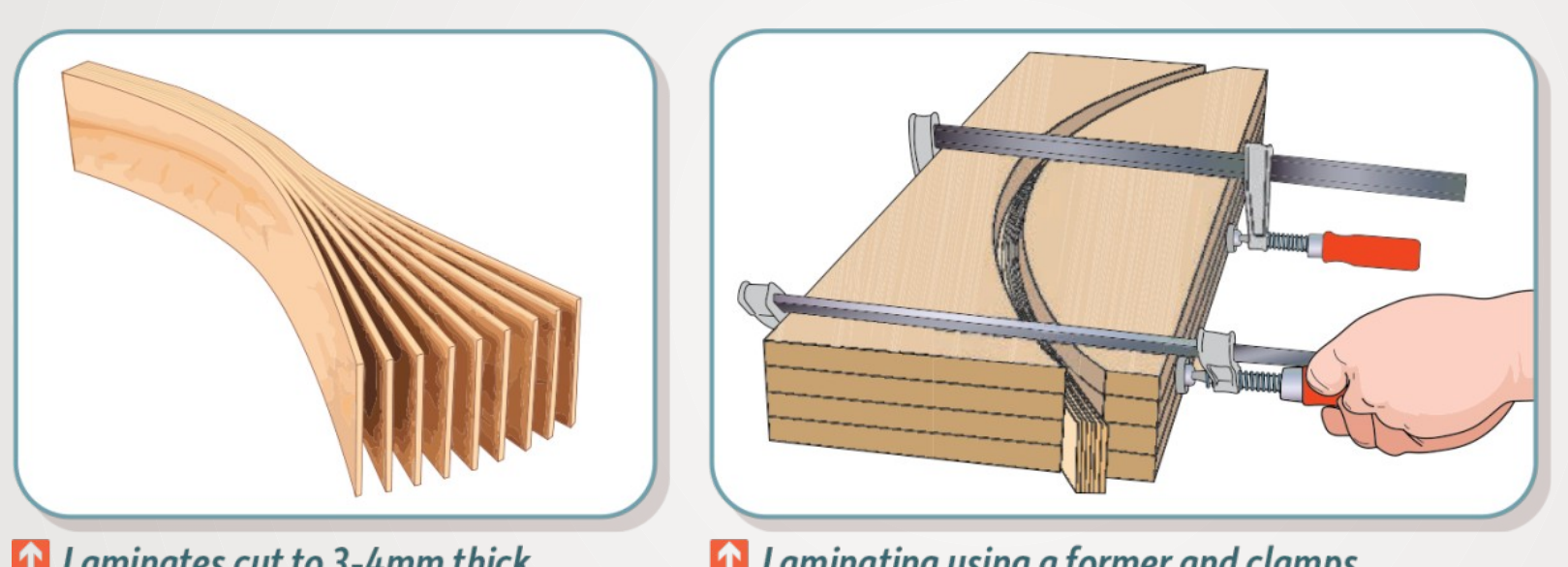
- These woods can bend efficiently when cut to a thickness of about 3-4 mm.
Laminating Process
- Cutting: Hardwood is divided into thin layers using precision tools like a bandsaw or table saw.
- Gluing:
- Apply adhesives carefully, ensuring no glue is present on the outer surfaces to prevent sticking to moulds.
- Finishing Edges: Smooth edges using planes or sanders to conceal seams.
- Water Soaking: Immerse the thin wood pieces to enhance flexibility. Complete drying is essential to prevent issues during glueing and clamping.
- Optimal Thickness: A thickness of 3-4 mm is ideal for bending without cracking.
Note
The optimal thickness is crucial for successful bending without causing cracks.
Equipment Overview
- Equipment Used:
- Bandsaw or table saw: For accurate cutting of thin wood strips.
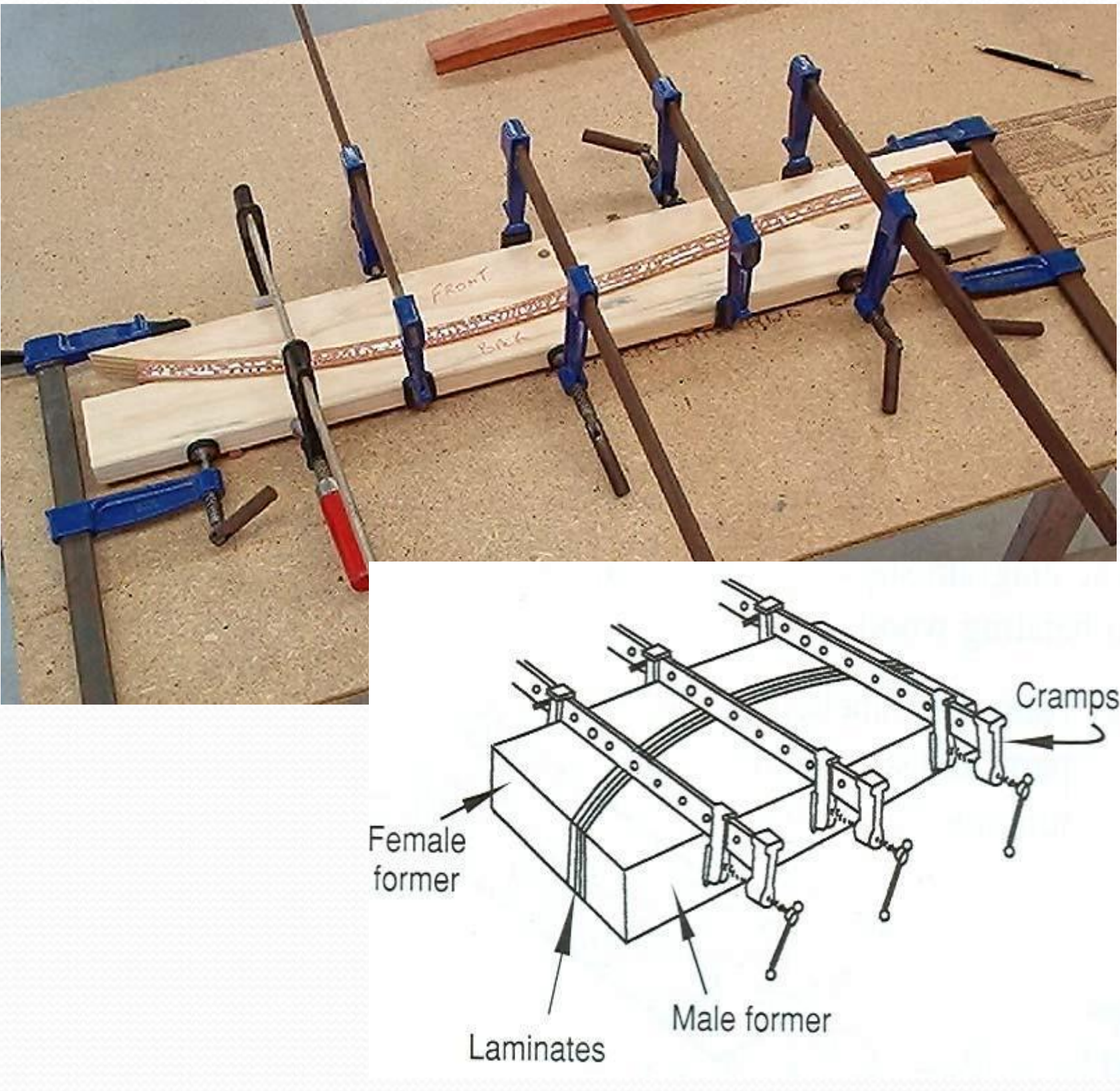
- Moulds: To shape the strips.
- Clamps: To hold strips securely in place.
- Planes/Sanders: For smoothing completed pieces.
- Drying racks: To ensure full drying after soaking.
Note
Proper equipment setup enhances the efficiency and quality of the lamination process.
Time Considerations
- Time Allocation:
- Cutting: Dependent on the wood type and complexity.
- Gluing: Requires 8-12 hours for adhesive setting.
- Finishing Edges: Duration depends on the tools employed.
- Soaking and Drying: Crucial for effective clamping, ensuring reinforced flexibility.
Summary
Note
- Laminating is vital for forming composite wooden materials.
- Key materials include flexible hardwoods like ash, oak, yew, beech, and elm.
- The process involves cutting, glueing, soaking, clamping, and finishing.
- Precision woodworking machines are pivotal.
- Effective time management is crucial for efficient lamination.