Microbiology Overview (Leaving Cert Agricultural Science): Revision Notes
📚Revision Notes
Microbiology Overview
What is microbiology?
Microbiology is the study of tiny living things called micro-organisms. These organisms are so small that you need a microscope to see them properly. The main types of micro-organisms include bacteria, fungi, and viruses.
Most micro-organisms are actually harmless, and many are even helpful to us. However, some can cause diseases. An important concept in microbiology is symbiosis.
Note
Symbiosis occurs when two different species have a close relationship that benefits both organisms. A great example is the bacteria living in a cow's stomach that help break down grass and cellulose - the bacteria get a safe place to live and food, while the cow gets help digesting tough plant material.
Bacteria (Monera)
Basic structure of bacteria
Bacteria are fascinating single-celled organisms with some unique characteristics:
- They are unicellular (made of just one cell)
- They have a protective cell wall
- They are prokaryotic - this means they don't have a nucleus or other membrane-enclosed structures inside their cells
- They contain a single loop of DNA (genetic material)

Functions of bacterial cell parts
Each part of a bacterial cell has an important job:
- Cell wall - Acts like armour, protecting the bacteria from swelling up and bursting when surrounded by water
- Cell membrane - Controls what goes in and out of the cell
- Cytoplasm - A jelly-like substance that holds all the cell parts in place
- Ribosomes - Tiny factories that make proteins the bacteria needs
- Storage granules - Store food or water for later use
- DNA - Contains all the genetic instructions for the bacteria
Some bacteria also have optional extras:
- Capsule - An extra slimy protective layer around the outside
- Flagella - Whip-like tails that help bacteria swim and move around
- Plasmid - Extra bits of DNA that can be shared with other bacteria
Types of bacteria
Scientists group bacteria into three main shapes, which helps identify them:
Round bacteria (Coccus)
- These sphere-shaped bacteria are called coccus (plural: cocci)
- They can stick together in pairs, chains, or clusters
- Example: Streptococcus bacteria can cause high cell counts in milk and udder inflammation in cows
Rod-shaped bacteria (Bacillus)
- These cylinder-shaped bacteria are called bacillus (plural: bacilli)
- Examples include E. coli (causes diarrhoea and dehydration) and Clostridium chauvoei (causes high fever, loss of appetite, and can be fatal to animals)
Spiral bacteria (Spirillum)
- These corkscrew-shaped bacteria are called spirillum (plural: spirilla)
- Examples include syphilis and cholera bacteria
- This shape is the least common
How bacteria reproduce
Bacteria reproduce through a process called binary fission, which is a type of asexual reproduction (meaning they don't need a partner).

Example
Worked Example: Binary Fission Process
Step 1: The bacterial cell grows to a certain size and its DNA makes an exact copy of itself
Step 2: The cell becomes longer, with one copy of DNA positioned at each end
Step 3: The cell membrane pinches inward, dividing the cell into two identical cells
Step 4: Two new bacteria are formed - this process happens very quickly, allowing bacteria populations to grow rapidly
Endospores - bacterial survival mode
Important
Endospores: The Ultimate Survival Strategy
Some bacteria have developed an incredible survival mechanism called endospore formation:
- When conditions become harsh (no food, extreme temperatures, toxic chemicals), bacteria create a protective shell called an endospore
- The bacterial chromosome makes a copy of itself, and one copy gets surrounded by an extremely tough wall
- The original bacterial cell breaks down, leaving behind the dormant endospore
- Endospores can survive boiling water, lack of food and water, high temperatures, and most poisons
- Some endospores can remain dormant for many years
- When conditions improve, the endospore absorbs water, breaks open, and forms a normal bacterium again
Bacterial nutrition
Bacteria get their food in different ways. Scientists group these feeding methods into two main categories: autotrophic and heterotrophic.
Autotrophic bacteria Autotrophic means "self-feeding" - these bacteria can make their own food. They get the energy to do this in two ways:
- From sunlight (photosynthesis) - like purple sulphur bacteria
- From chemical reactions (chemosynthesis) - like nitrifying bacteria that are important in soil
Heterotrophic bacteria Heterotrophic means these bacteria must take in food made by other organisms. Most bacteria fall into this category. They release enzymes into their surroundings to break down food, then absorb the digested nutrients.
Note
Understanding Parasites
Heterotrophic bacteria include two important sub-groups:
Saprophytes - Feed on dead organic matter (decomposers that recycle nutrients in nature)
Parasites - Take food from living hosts and usually cause harm. Examples include tuberculosis (TB), botulism, cholera, food poisoning bacteria, and pneumonia
Bacterial respiration
Bacteria can breathe in different ways:
Aerobic respiration - These bacteria use oxygen to release energy from food, just like we do.
Anaerobic respiration - These bacteria don't need oxygen. Instead, they use a process called fermentation. Examples include bacteria that make beer or produce lactic acid in milk.
Fungi
Fungi are a diverse group of organisms with over 100,000 different species. Examples include moulds, yeasts, and mushrooms.
Characteristics of fungi
- Fungi have membrane-enclosed nuclei and mitochondria, making them eukaryotic cells (more complex than bacteria)
- Mycology is the scientific study of fungi
- Their cell walls are made of chitin, which is a tough carbohydrate (different from plant cell walls)
- Fungi do not have chlorophyll, so they cannot photosynthesise
Fungal nutrition
Since fungi can't make their own food, they are all heterotrophic. They can be either parasitic or saprophytic.
Parasitic fungi Most parasitic fungi get their food from plants. There are two types:
- Obligate parasites - These can only get food from living hosts (examples: athlete's foot fungus, ringworm)
- Facultative parasites - These are more flexible and can get food from either living or dead hosts (example: fungi causing soft rots in fruit)
Saprophytic fungi These make up the majority of fungi and are found in soil, on dead animals, and on rotting leaves. They act as decomposers, which is vital for the environment. Examples include mushrooms and moulds.
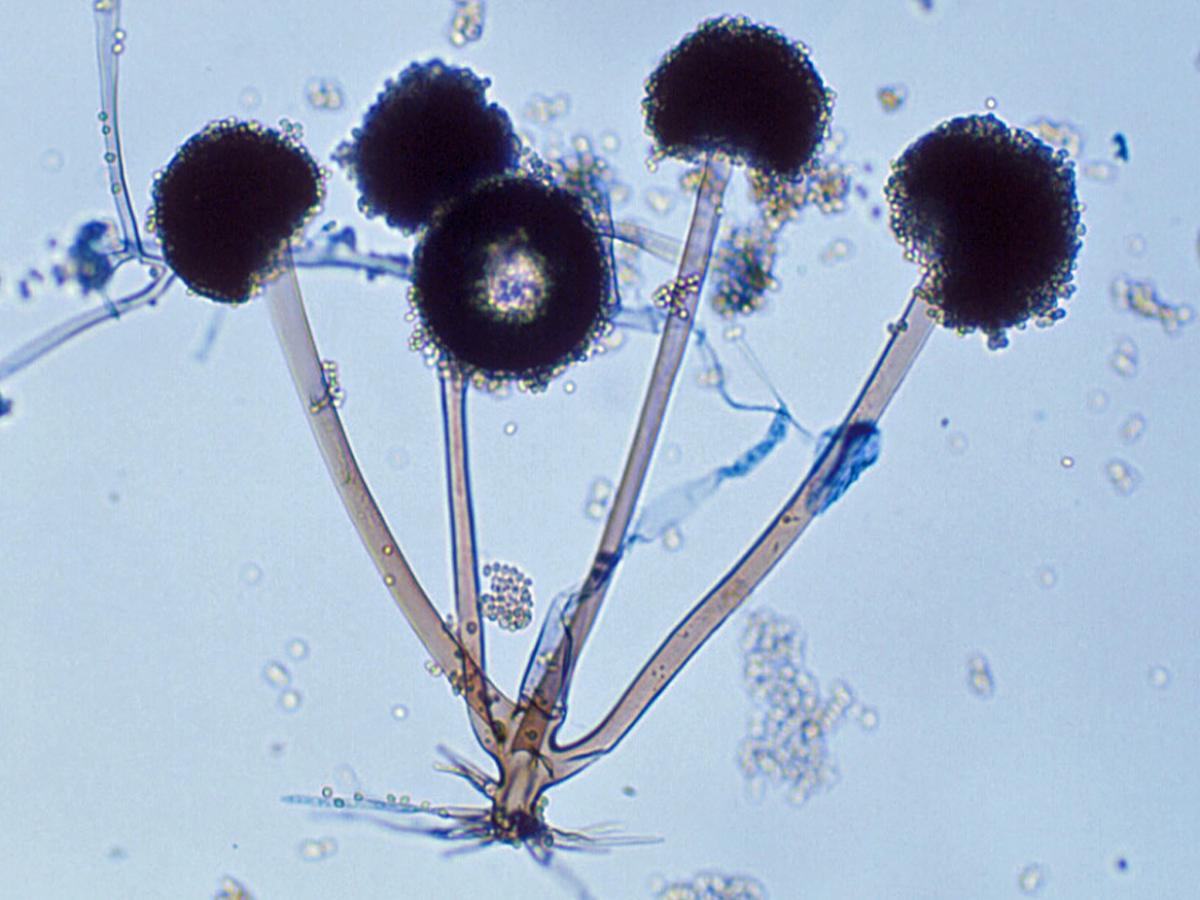
Common bread mould (Rhizopus)
The common bread mould is a good example of a saprophytic fungus that feeds on starchy foods like bread and vegetable peelings.
Example
Worked Example: How Bread Mould Functions
Step 1: The fungus releases enzymes onto the starchy food
Step 2: These enzymes break down the starch outside the fungus
Step 3: The fungus then absorbs the digested nutrients
Key structures:
- Appears as black circular patches
- Hyphae - thread-like structures (singular: hypha)
- Mycelium - a mass of hyphae
- Stolons - aerial hyphae that allow rapid spreading
- Rhizoids - hyphae that provide extra surface area for nutrient absorption
Viruses
Viruses are extremely small infectious agents - much smaller than bacteria. Examples include bird flu, rabies, and BVD (Bovine Viral Diarrhoea).
Virus structure
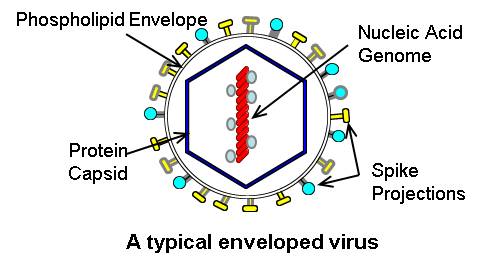
Viruses have a very simple structure:
- They have an outer protein coat called a capsid
- Inside the capsid is nucleic acid - either DNA or RNA (but never both)
- They contain very few genes
- Viruses do not have ribosomes, mitochondria, or other cellular structures
- They cannot carry out metabolic reactions on their own
How viruses reproduce
Viruses are obligate parasites - they cannot reproduce independently and must use another living cell's machinery to reproduce. They require the organelles and enzymes of a host cell to carry out their limited number of reactions.
Disease management in agriculture
Types of diseases
Infectious diseases are caused by pathogens (disease-causing organisms) like bacteria, fungi, or viruses.
Non-infectious diseases are not caused by pathogens but usually by environmental factors. Examples include milk fever (calcium deficiency) and grass tetany (magnesium deficiency).
Important disease terms
Important
Critical Disease Classifications
Zoonoses are diseases that can transfer between animals and plants or between different animal species. An example is avian influenza (bird flu).
Notifiable diseases are extremely serious diseases that must be immediately reported to the district veterinary office. Examples include potato blight, BVD, bird flu, rabies, and bovine TB.
Note
Why Notifiable Diseases Are So Serious
These diseases are concerning because they are:
- Highly contagious and/or dangerous
- Can cause significant economic losses
- May require slaughter of both affected and unaffected animals to prevent spread
- Not easily treated or controlled
- Can result in prison sentences if not reported
- Prevent livestock sales for months after the disease is eliminated
Biosecurity measures
Prevention is always better than trying to cure diseases. Here are important biosecurity measures farmers should follow:
Important
Essential Biosecurity Measures
Herd management:
- Keep a closed herd and only buy animals from disease-free farms
- Quarantine all new animals for thorough inspection before mixing with the herd
- Don't house cattle and sheep together
- Conduct annual herd testing
Farm security:
- Use proper fencing to prevent livestock mixing with neighbouring farms
- Limit access to the farm
- Provide appropriate medicines when needed
- Ensure bedding is kept clean
Summary
Key Points to Remember:
- Microbiology studies tiny organisms including bacteria, fungi, and viruses - most are harmless but some cause diseases
- Bacteria are single-celled prokaryotic organisms that reproduce by binary fission and can be classified by shape (round, rod, spiral)
- Bacterial nutrition is either autotrophic (make own food) or heterotrophic (take food from others, including saprophytes and parasites)
- Fungi are eukaryotic organisms that are always heterotrophic and can be parasitic or saprophytic decomposers
- Prevention through biosecurity is more effective than treating diseases, especially for serious notifiable diseases that must be reported to authorities