Catch Crops (Leaving Cert Agricultural Science): Revision Notes
📚Revision Notes
Catch Crops
What are catch crops?
Catch crops are alternatively referred to as fodder crops and represent an important agricultural practice in modern farming systems. These crops develop quickly and are typically cultivated during gaps between two main crops, such as the period between harvesting one crop and sowing the next, like barley.
The primary purpose of catch crops is to provide animal feed, making them a valuable source of nutrition for livestock during times when other feed sources may be limited. These crops are commonly integrated into crop rotation systems, helping farmers maximise land use efficiency throughout the growing season.
Two prominent examples of catch crops are stubble turnip and kale, both of which belong to the Cruciferae family. This plant family is known for producing crops that are both nutritious and relatively easy to grow in various conditions.
Note
The Cruciferae family includes many common vegetables and crops, making these catch crops part of a well-established and reliable plant group that farmers are familiar with managing.
Benefits and drawbacks
Understanding the advantages and disadvantages of catch crops helps farmers make informed decisions about incorporating them into their farming systems.
Advantages of catch crops include:
- Rapid development allows for quick establishment and harvest
- Excellent yields provide substantial amounts of feed
- Supply additional winter fodder when other feed sources are scarce
- Help reduce winter feed costs significantly
- Provide fully traceable feed sourced directly from the farmer's own land
- Often contain high protein levels, particularly crops like kale
- Support crop rotation practices that benefit soil health
- Help prevent nitrogen leaching from the soil
Disadvantages of catch crops include:
- Labour-intensive management when strip or zero grazing methods are used
- Many varieties are low in fibre content, requiring silage supplementation
- Risk of land poaching when livestock graze during wet winter conditions
- Can inhibit iodine uptake in animals, potentially causing health issues
- Vulnerable to attack from various pests and diseases
Summary
Key Economic Impact: Catch crops provide significant cost benefits through reduced winter feed expenses and efficient land utilisation, but require careful management to avoid labour intensification and soil damage.
Stubble turnip
Stubble turnip represents a particularly valuable catch crop option for farmers seeking nutritious livestock feed. This crop is fast-growing, highly nutritious, and offers excellent palatability for animals. Additionally, stubble turnip helps reduce the potential for soil erosion, providing environmental benefits alongside its feeding value.
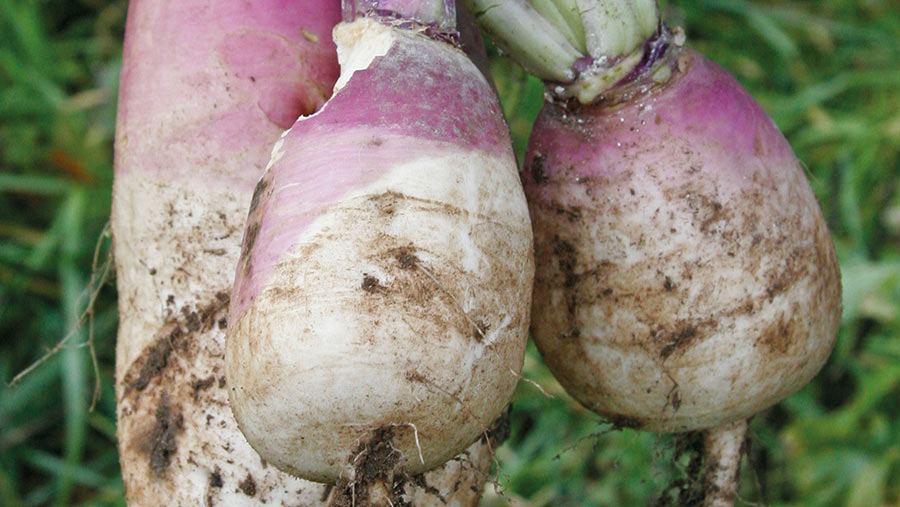
Cultivation practices and feeding
Soil suitability and sowing requirements: Stubble turnip performs best in free-draining loam soil conditions with a pH of approximately 6.5. The crop is most suitable for grazing rather than harvesting, as it cannot typically be mechanically harvested effectively.
Soil preparation is relatively minimal, with ploughing and harrowing being optional and often kept to a minimum. The crop can be sown during spring, summer, or early autumn, providing flexibility in timing.
The timing of sowing determines the primary use of the crop. When sown in spring, stubble turnip can be utilised to finish lambs, whilst autumn sowing results in crops used primarily as winter feed for various livestock.
Note
The flexibility in sowing times makes stubble turnip particularly valuable for filling gaps in the cropping calendar and responding to specific feed requirements throughout the year.
Rotation considerations
Stubble turnip is vulnerable to club root, which is an airborne fungus that can significantly impact crop health and yield. This fungal disease can be effectively prevented through proper crop rotation practices, emphasising the importance of planning crop sequences carefully.
Pest management
The primary pest concern for stubble turnip is the flea beetle. This small insect creates characteristic small round holes in the seed leaves, whilst their larvae feed on the plant roots, potentially causing significant damage.
Management of flea beetle typically involves spraying with appropriate insecticide at the correct timing to protect the developing crop.
Livestock feeding guidelines
When feeding stubble turnip to livestock, several important considerations must be observed:
- Gradual introduction to the livestock diet is essential (similar to the approach used with kale and red water prevention)
- Both leaves and roots are edible and nutritious
- Strip grazing with electric fencing helps minimise waste and ensures efficient utilisation
- Silage or hay must be provided alongside stubble turnip due to the crop's lack of sufficient fibre
- The crop helps maintain proper pH levels within the rumen
Important
Critical Feeding Restriction: Dairy cows should not consume stubble turnip as it can taint the milk, affecting product quality and marketability.
Kale
Kale offers a longer growing season compared to stubble turnip, typically requiring 5-6 months from sowing to harvest. This crop has gained considerable popularity among farmers due to its exceptionally high protein content, making it a valuable feed supplement.

The optimal sowing period for kale is from June to July, allowing for harvest or grazing during the autumn and winter months when other feed sources may be limited.
Cultivation practices
Soil requirements and sowing: Kale prefers free-draining loam or sandy loam soils with a pH range of 6-7. The crop offers flexibility in utilisation, as it can be either strip grazed or zero harvested during August to September.
Soil preparation requirements are minimal, with little ploughing and cultivation typically needed, making it a relatively low-input crop in terms of soil preparation.
Rotation considerations
Similar to stubble turnip, kale is prone to club root disease, making proper crop rotation planning essential for successful cultivation.
Pest management
Kale faces threats from flea beetle and aphids, requiring monitoring and appropriate treatment when pest populations reach damaging levels.
Livestock feeding guidelines
Feeding kale to livestock requires careful management due to several important health considerations:
Feeding methods and precautions:
- Strip grazing by livestock follows similar principles to stubble turnip management
- Critical requirement: Kale must be fed in moderation to prevent health problems
- Excessive kale consumption can cause anaemia in cows
Important
Red Water Condition
Kale can cause red water in livestock, a serious condition that occurs when the crop contains a non-protein amino acid. This compound converts to a harmful substance in the rumen, damaging red blood cells. The damaged cells release haemoglobin, which leaves the body through urine, creating a red water-like appearance similar to red water fever.
Critical Prevention Rules:
- Kale should never be grazed when in flower - the risk of red water is significantly higher during flowering
- Gradual introduction of kale into the livestock diet is essential
- Careful monitoring of livestock is required during the introduction period
Nutritional considerations: Kale is high in calcium but low in phosphorous, manganese, and iodine. Therefore, mineral supplements must be provided when feeding kale to livestock to ensure balanced nutrition and prevent deficiency-related health problems.
Note
The mineral imbalance in kale highlights the importance of supplementation programmes when using catch crops as a significant portion of livestock diets.
Summary
Key Points to Remember:
-
Catch crops are fast-growing fodder crops grown between main crops, primarily for animal feed, with stubble turnip and kale being key examples from the Cruciferae family
-
Major advantages include rapid growth, excellent yields, reduced winter feed costs, and support for crop rotation, whilst disadvantages include labour intensity and potential land poaching during wet conditions
-
Stubble turnip requires free-draining loam soil (pH 6.5), gradual introduction to livestock diets, and protection from flea beetle, but must never be fed to dairy cows due to milk tainting
-
Kale needs careful management due to red water risks - it must be fed in moderation, never when flowering, with gradual introduction and mineral supplementation required
-
Both crops are vulnerable to club root disease, emphasising the importance of proper crop rotation in preventing fungal problems