Scheduling (Leaving Cert Applied Maths): Revision Notes
📚Revision Notes
Scheduling
What is scheduling?
Scheduling is the process of assigning workers to various activities in a project to achieve specific objectives. In project management, this involves determining when each task should start and finish, which workers should perform each activity, and how to optimise the use of available resources.
Note
Scheduling problems are essential in many real-world situations, from construction projects to manufacturing processes, where efficient resource allocation can save both time and money.
Types of scheduling problems
There are two main types of scheduling problems you need to understand:
a) Minimum time scheduling - Finding the shortest possible time to complete a project when you have unlimited workers available
b) Having less than the required number of workers - Scheduling when you have fewer workers than needed for minimum time completion
Minimum time scheduling
This approach focuses on completing a project in the shortest possible time when worker availability is not a constraint. The process involves several key steps that work together to identify the most efficient schedule.
Step 1: Calculate early and late times
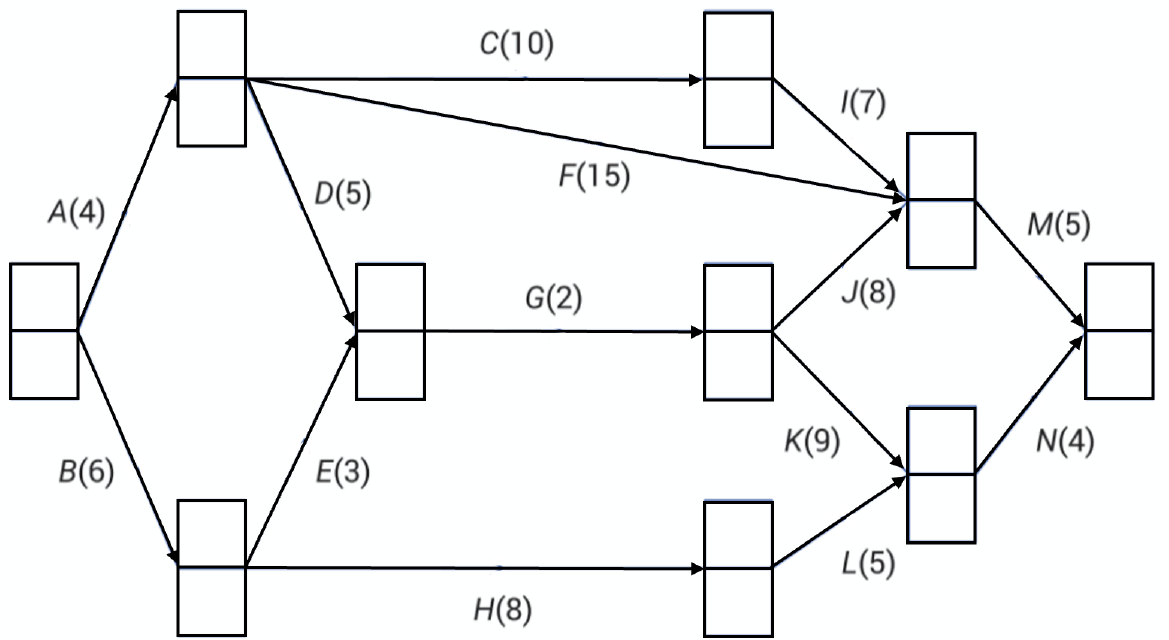
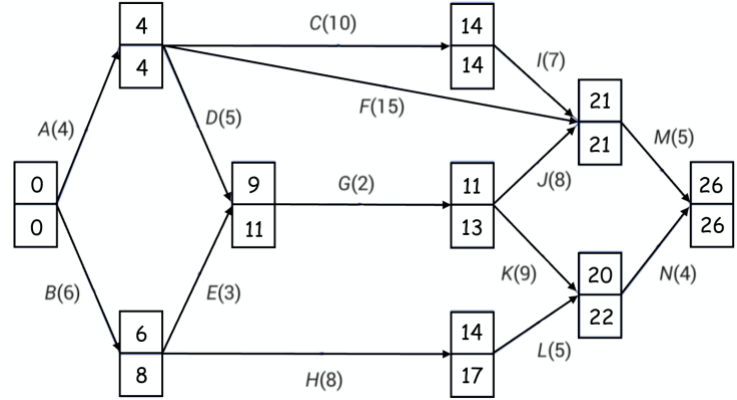
Start with a network diagram showing all activities and their durations. The numbers in brackets represent the time (usually in days) required to complete each activity.
Note
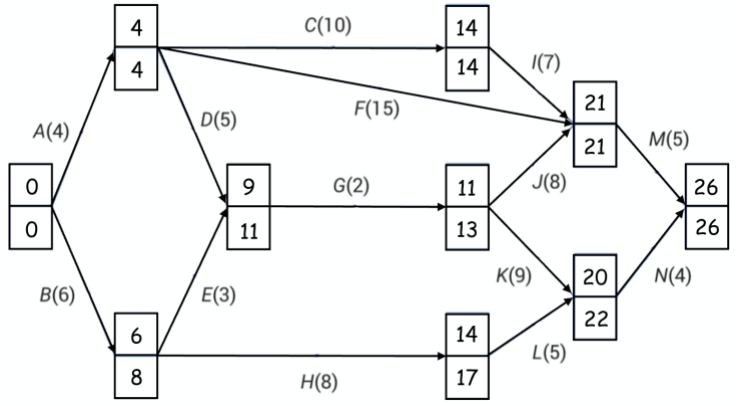
You need to calculate two important values for each event (node) in the network:
- Early time: The earliest possible time an event can occur
- Late time: The latest time an event can occur without delaying the project
Step 2: Find critical activities and the critical path
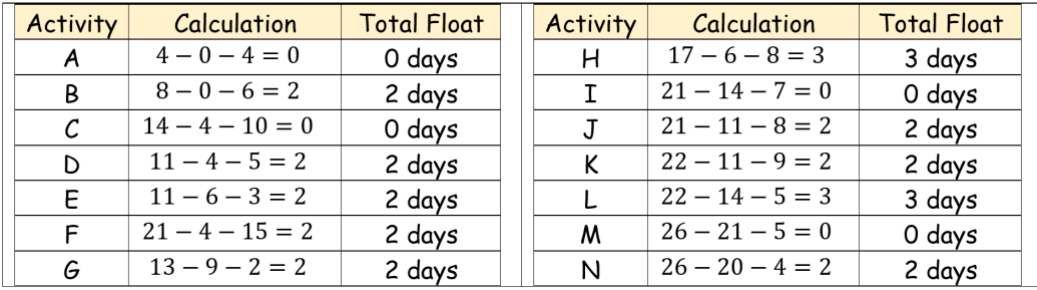
Critical activities are those with zero total float - they cannot be delayed without affecting the overall project completion time. To find them, calculate the total float for each activity using:
Example
Worked Example: Identifying the Critical Path
Activities with 0 days total float form the critical path. In this example, activities A, C, I, and M are critical, creating the critical path ACIM with a total duration of 26 days.
Step 3: Create a Gantt chart
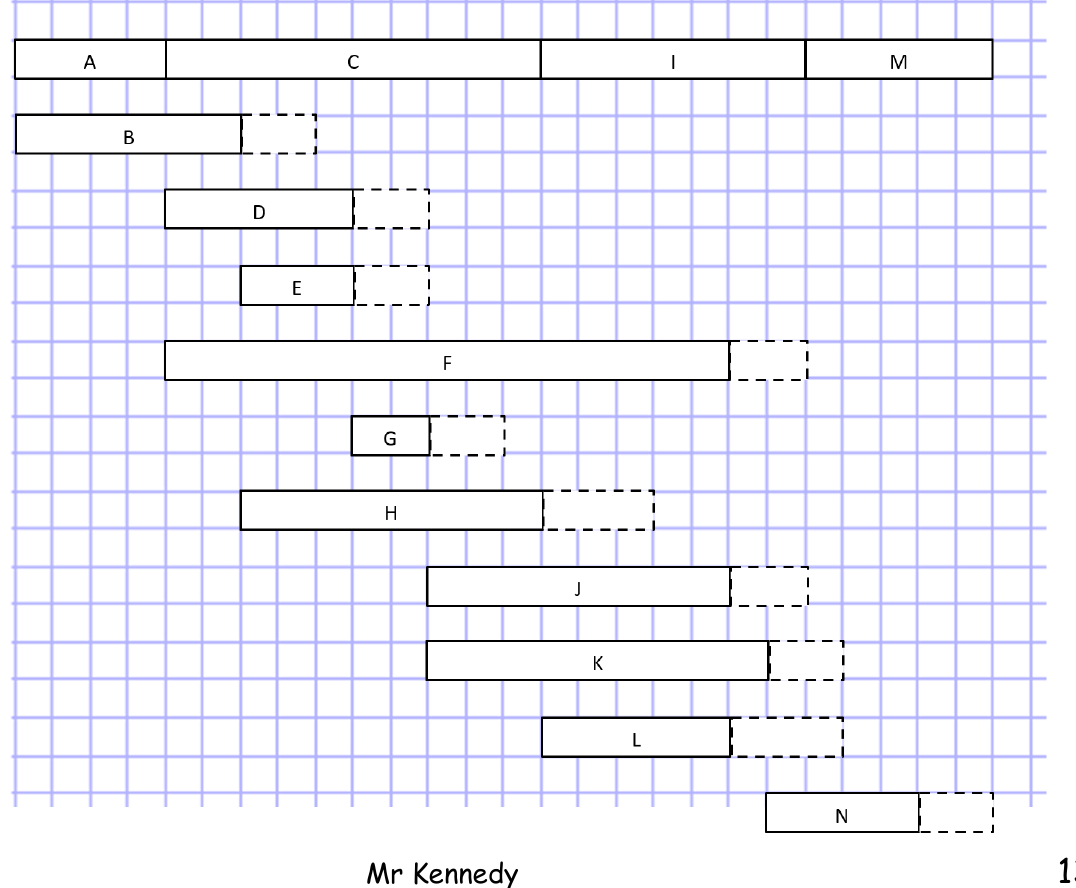
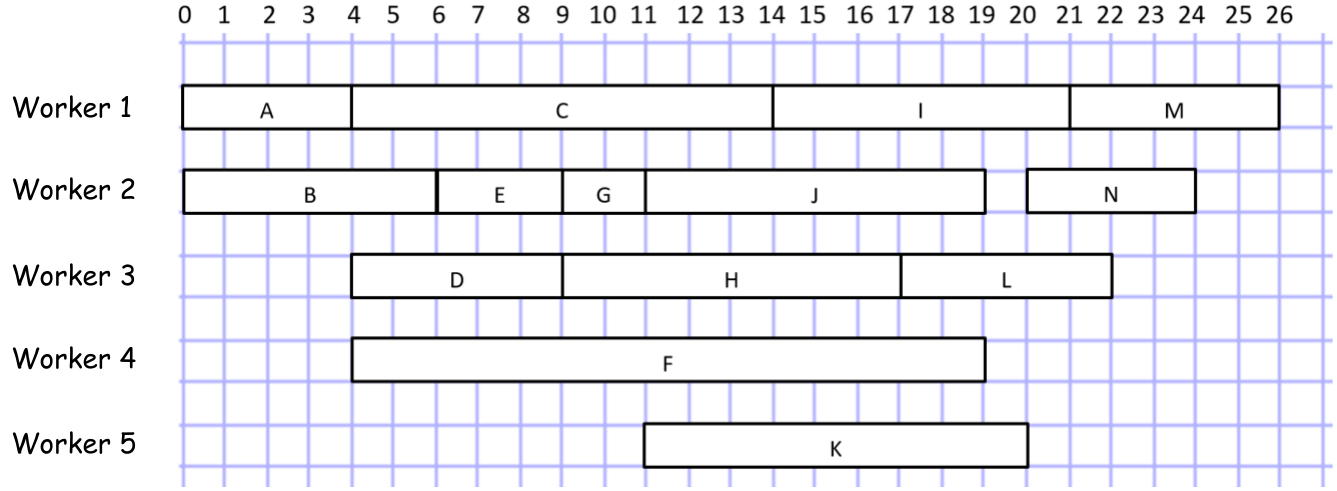
A Gantt chart visually displays when each activity should be scheduled. It shows the timeline horizontally and lists activities vertically, with bars representing the duration and timing of each task.
Step 4: Determine minimum number of workers
Note
From your Gantt chart, count the maximum number of activities happening simultaneously. This tells you the minimum number of workers needed to complete the project in minimum time.
Scheduling with limited workers
When you don't have enough workers for minimum time completion, you need a different approach. This situation is common in real-world projects where resources are constrained.
Calculate the lower bound
Before starting, calculate the theoretical minimum number of workers needed using:
Example
Worked Example: Calculating the Lower Bound
Step 1: Sum all activity times days
Step 2: Divide by critical time
Step 3: Round up to get the theoretical minimum 4 workers as the theoretical minimum
Important
Due to dependencies and scheduling constraints, you may need more workers in practice than the theoretical minimum suggests.
Systematic scheduling approach
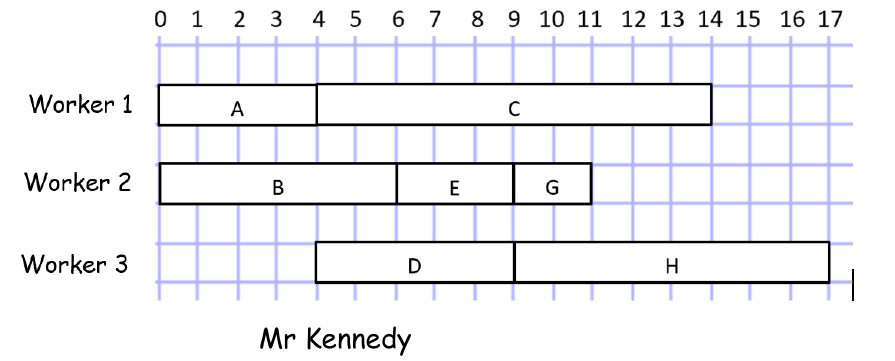
When scheduling with limited workers (for example, only 3 workers available), follow these steps:
Step 1: Assign activities in order of lowest late times, using alphabetical order to break ties
Step 2: Start by assigning the first available activities to each worker
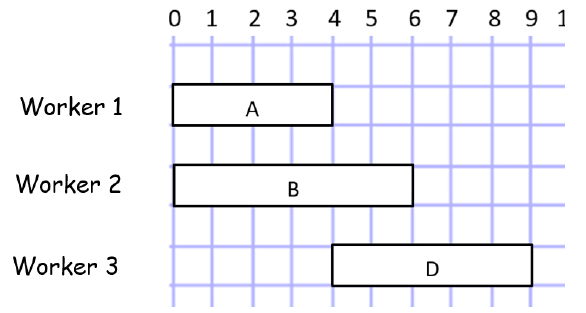
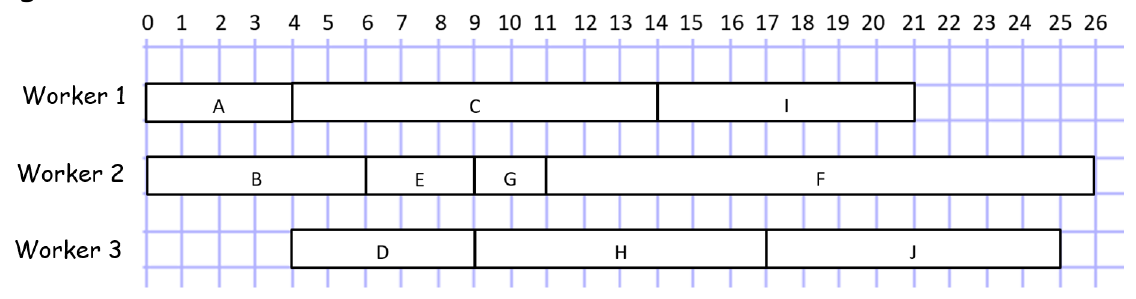
Step 3: As workers finish their current tasks, assign them the next available activity with the lowest late time
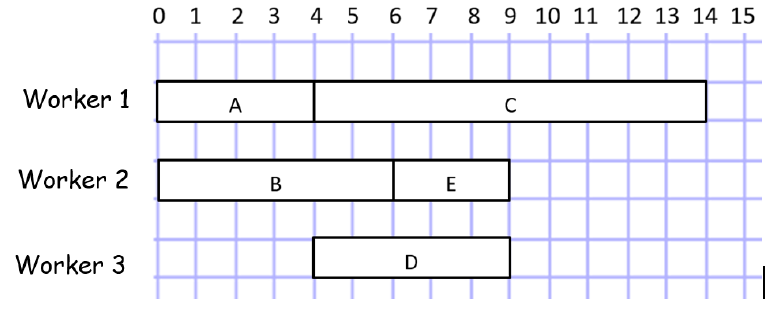
Step 4: Continue this process systematically, always prioritising activities with the earliest late times
Step 5: Complete the remaining activities following the same principle
Note
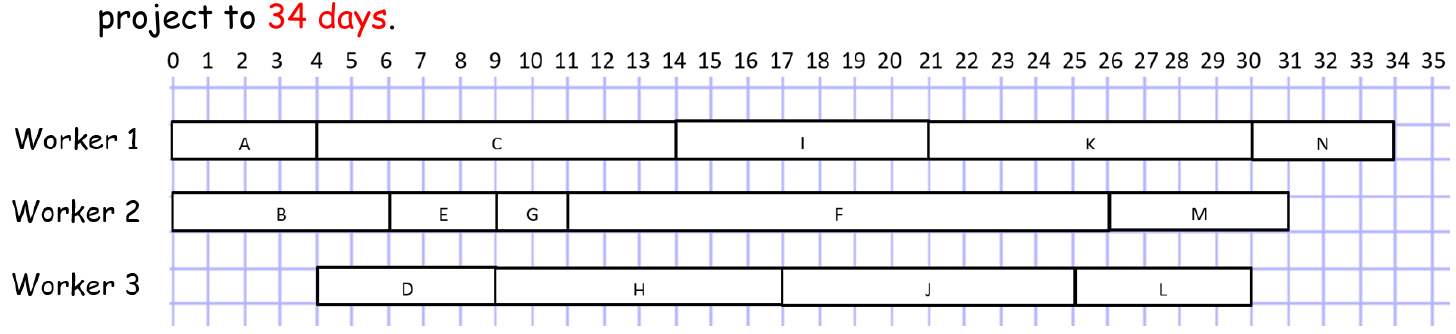
The final schedule shows how the project extends to 34 days when using only 3 workers instead of the 5 workers needed for minimum time completion.
Key scheduling principles
Understanding these fundamental principles will help you approach any scheduling problem systematically:
- Critical activities must be scheduled as early as possible to avoid project delays
- Non-critical activities have flexibility (float time) and can be delayed without affecting the overall project timeline
- When resources are limited, prioritise activities by their late times to minimise project extension
- Gantt charts provide a visual way to see worker allocation and identify potential scheduling conflicts
- The lower bound formula gives you a theoretical minimum for resource requirements, but practical scheduling may require more resources due to dependencies
Summary
Key Points to Remember:
- Scheduling is about assigning workers to activities efficiently to meet project objectives
- Critical path activities have zero float and determine the minimum project duration
- Calculate total float to identify which activities have scheduling flexibility
- Use the lower bound formula when working with limited resources:
- When scheduling with limited workers, assign activities in order of lowest late times (alphabetical order for ties)
- Gantt charts help visualise schedules and identify the minimum number of workers needed
- Limited resources will typically extend project duration beyond the critical path time