Modern Irish Artists (Leaving Cert Art): Revision Notes
📚Revision Notes
Modern Irish Artists
Introduction to modern Irish art
Irish art has undergone remarkable transformation over the past century and a half. Modern Irish artists have successfully bridged traditional Irish cultural heritage with international artistic movements, creating works that feel both distinctly Irish and universally appealing. These artists have made significant contributions to global art movements whilst maintaining their connection to Irish landscapes, culture, and identity.
Note
Modern Irish art represents a unique cultural phenomenon where local traditions and global influences merged to create distinctive artistic expressions that gained international recognition.
Modern Irish art is characterised by its ability to blend old traditions with new ideas. From peaceful countryside scenes to bold experimental designs, Irish artists have explored diverse themes including human vulnerability, cultural identity, political change, and environmental concerns. Their work demonstrates how art can inspire people and spark important conversations about society and human experience.
Early pioneers of modern Irish art (1870s-1920s)
Jack Butler Yeats (1871-1957)
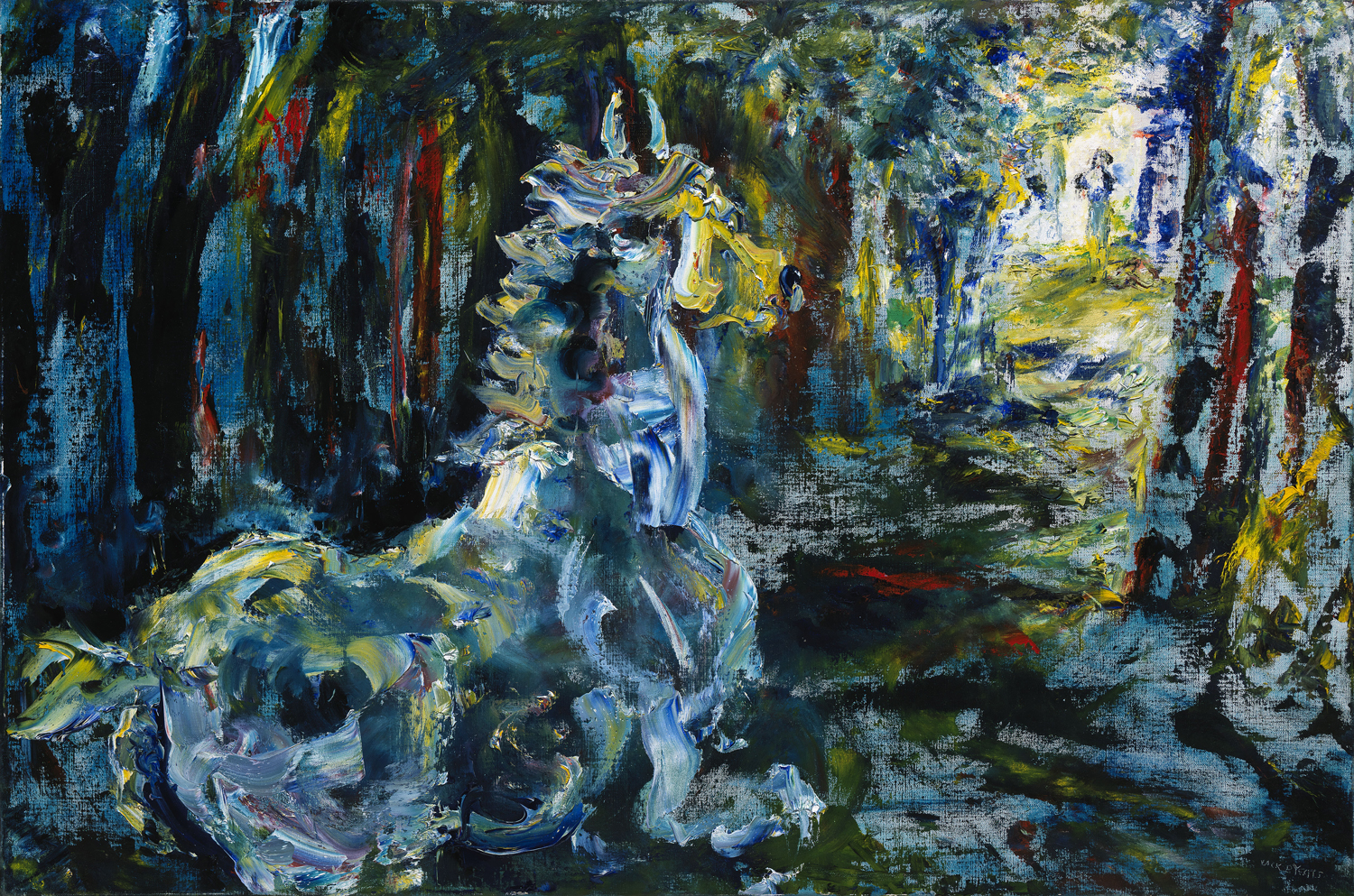
Jack Butler Yeats, brother of the renowned poet W.B. Yeats, became celebrated for his expressive landscapes and portraits that captured the spirit of Ireland. His artistic approach blended realism with emotional intensity, creating paintings that resonated with Irish cultural pride. Works such as "The Liffey Swim" demonstrate his deep connection to Irish culture and tradition. Yeats developed a distinctive style that moved from illustration towards increasingly expressive painterly techniques, making him a symbol of Irish artistic identity on the global stage.
William Orpen (1878-1931)
William Orpen gained international recognition for his exceptional skill in portraiture and realistic painting. His works, including "The Signing of Peace in the Hall of Mirrors", showcase his ability to capture historical moments with remarkable attention to detail. Orpen's technical mastery and precise brushwork established him as one of Ireland's most accomplished realist painters. His attention to detail continues to inspire contemporary artists seeking to master traditional painting techniques.
Mary Swanzy (1882-1978)
Mary Swanzy holds the important distinction of being the first Irish artist to experiment with Cubism and Fauvism. Her pioneering work introduced these revolutionary European art movements to Ireland, making her a trailblazer in Irish art history. Swanzy's artistic education in Paris exposed her to cutting-edge artistic developments, which she then adapted and brought back to Ireland. Her bold experimentation with geometric forms and vibrant colours laid crucial groundwork for future generations of Irish modernist artists.
Important
Mary Swanzy's introduction of Cubism and Fauvism to Ireland was revolutionary, as it marked the first time these European avant-garde movements were practised by an Irish artist, fundamentally changing the direction of Irish art.
Mainie Jellett (1897-1944)
Mainie Jellett played a fundamental role in introducing abstract art to Ireland. Her works, often inspired by her studies in Paris, combined spiritual themes with bold geometric patterns. Initially, her innovative approach faced criticism from traditional art circles, but her persistence helped establish abstract art as a legitimate form of artistic expression in Ireland. Jellett's contributions created the foundation for modern art movements in Ireland, paving the way for future abstract artists.
John Lavery (1856-1941)
John Lavery's paintings successfully bridged Irish and British cultures, particularly through his elegant portraits of the elite. His artistic ability to balance aesthetic beauty with compelling storytelling made his work timeless and widely appreciated. Lavery's portraits, landscapes, and historical scenes earned him widespread acclaim across both Ireland and Britain. His sophisticated technique and ability to capture personality in portraiture established him as a master of his craft.
Mid-century masters (1900s-1970s)
Francis Bacon (1909-1992)
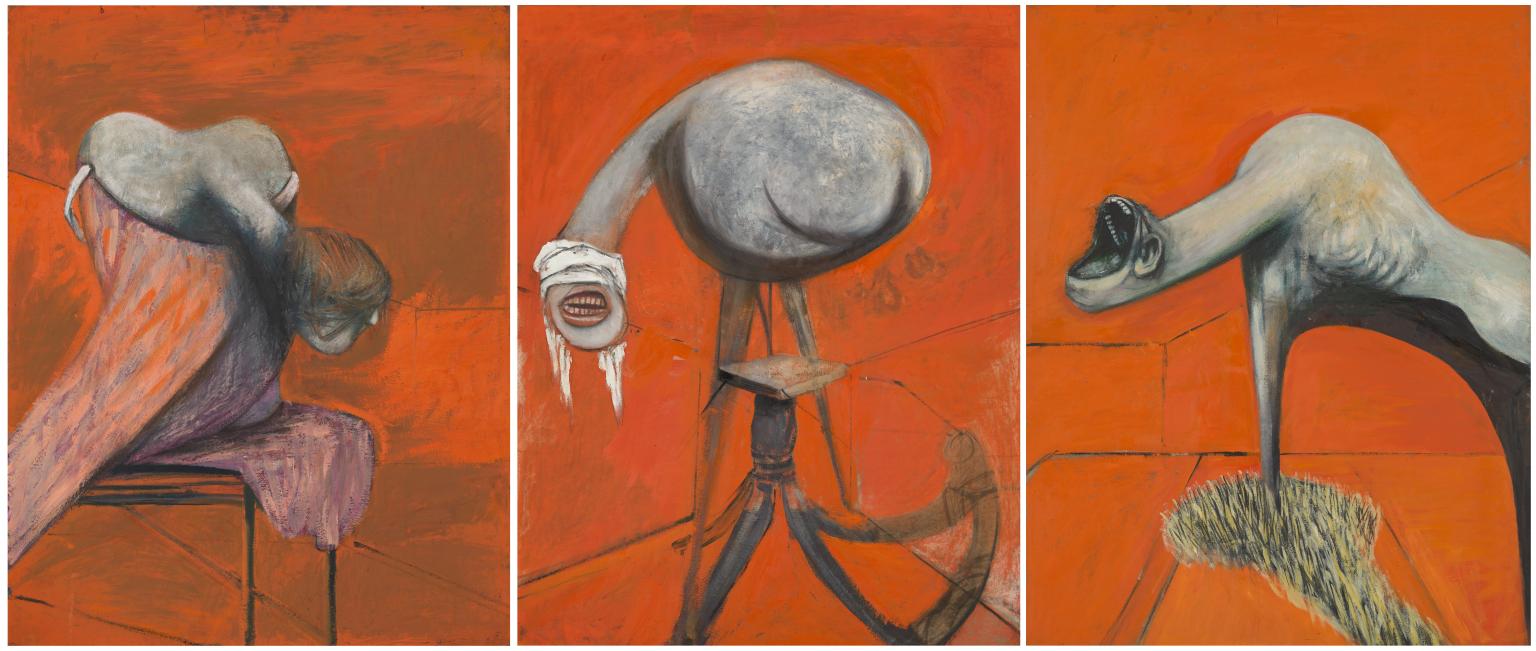
Francis Bacon stands as one of the most influential figures in modern art history. Born in Dublin, Bacon revolutionised abstract expressionism through his raw and emotionally powerful paintings. His work explored themes of human vulnerability, often using vivid colours and distorted figures to convey intense psychological states. Notable works such as "Three Studies for Figures at the Base of a Crucifixion" shocked the art world and established his reputation as a revolutionary artist. Bacon's fearless approach to depicting human emotion and suffering continues to influence contemporary artists worldwide.
Example
Key Work Analysis: "Three Studies for Figures at the Base of a Crucifixion"
This groundbreaking work demonstrated Bacon's revolutionary approach:
- Used distorted, almost monstrous figures to represent human suffering
- Combined religious imagery with modern psychological themes
- Employed vivid oranges and reds to create emotional intensity
- Shocked viewers with its raw depiction of human vulnerability
Louis le Brocquy (1916-2012)
Louis le Brocquy developed a unique artistic style that brought him international recognition, particularly through his evocative Head Series. These portraits captured the essence of his subjects, including iconic figures like W.B. Yeats and Samuel Beckett. Le Brocquy's work masterfully blends abstraction with realism, creating instantly recognisable imagery. His exploration of identity and cultural roots through his distinctive painting technique made him a cornerstone of modern Irish art and established his reputation as a master of lyrical abstraction.
Gerard Dillon (1916-1971)
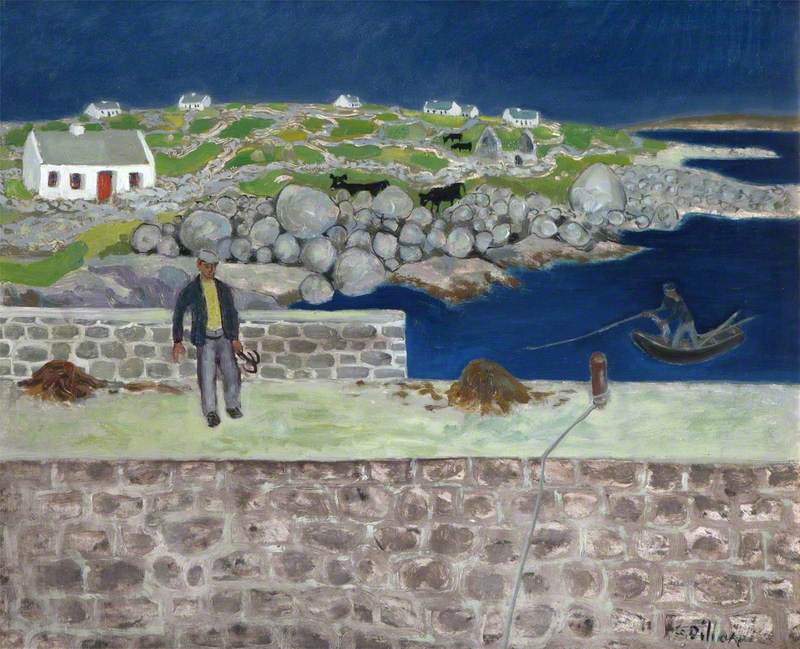
Gerard Dillon's artistic work celebrated Irish folklore and traditions whilst incorporating modern artistic techniques. His paintings often featured rural Irish life, traditional customs, and cultural heritage, presented through a contemporary artistic lens. Dillon's ability to honour Irish cultural traditions whilst embracing modern artistic approaches made his work both culturally significant and artistically innovative.
Patrick Scott (1921-2014)
Patrick Scott's minimalist designs and geometric abstractions reflected his fascination with simplicity and form. His "Gold Paintings" series became particularly iconic, demonstrating his mastery of balance and harmony in composition. Scott's work continues to inspire contemporary artists who explore minimalism and geometric abstraction. His approach to reducing artistic elements to their essential forms created powerful visual impact through deliberate simplicity.
Contemporary voices (1930s-present)
Bridget Riley (1931-present)
Although born in London to Irish parents, Bridget Riley has become renowned for her leading role in the Op Art movement. Her optical illusions use precise patterns and vibrant colours to challenge viewers' perceptions and create dynamic visual experiences. Riley's work, including pieces like "Movement in Squares", continues to influence both art and design on a global scale. Her innovative approach highlights the importance of experimentation in modern art, demonstrating how mathematical precision can create compelling artistic experiences.
Note
Op Art, short for Optical Art, creates visual illusions through precise geometric patterns and contrasting colours, making the artwork appear to move or vibrate when viewed.
Sean Scully (1945-present)
Sean Scully's abstract paintings are characterised by bold stripes and layered textures that create remarkable visual depth. Born in Dublin, Scully's works often explore profound themes of love, loss, and human connection through abstract means. His art has been exhibited in major galleries worldwide, establishing him as one of Ireland's most celebrated contemporary artists. Through Scully's work, viewers can understand how abstraction effectively conveys deep emotional experiences and human relationships.
Dorothy Cross (1956-present)
Dorothy Cross creates innovative multimedia works that examine themes of identity, nature, and human connection to the environment. Her use of diverse materials, including bronze and found objects, results in thought-provoking artistic pieces. Cross's contributions to modern Irish art have gained global recognition, with her works displayed in prominent international exhibitions. Her interdisciplinary approach demonstrates how contemporary artists can address environmental and social concerns through innovative artistic methods.
Rita Duffy (1959-present)
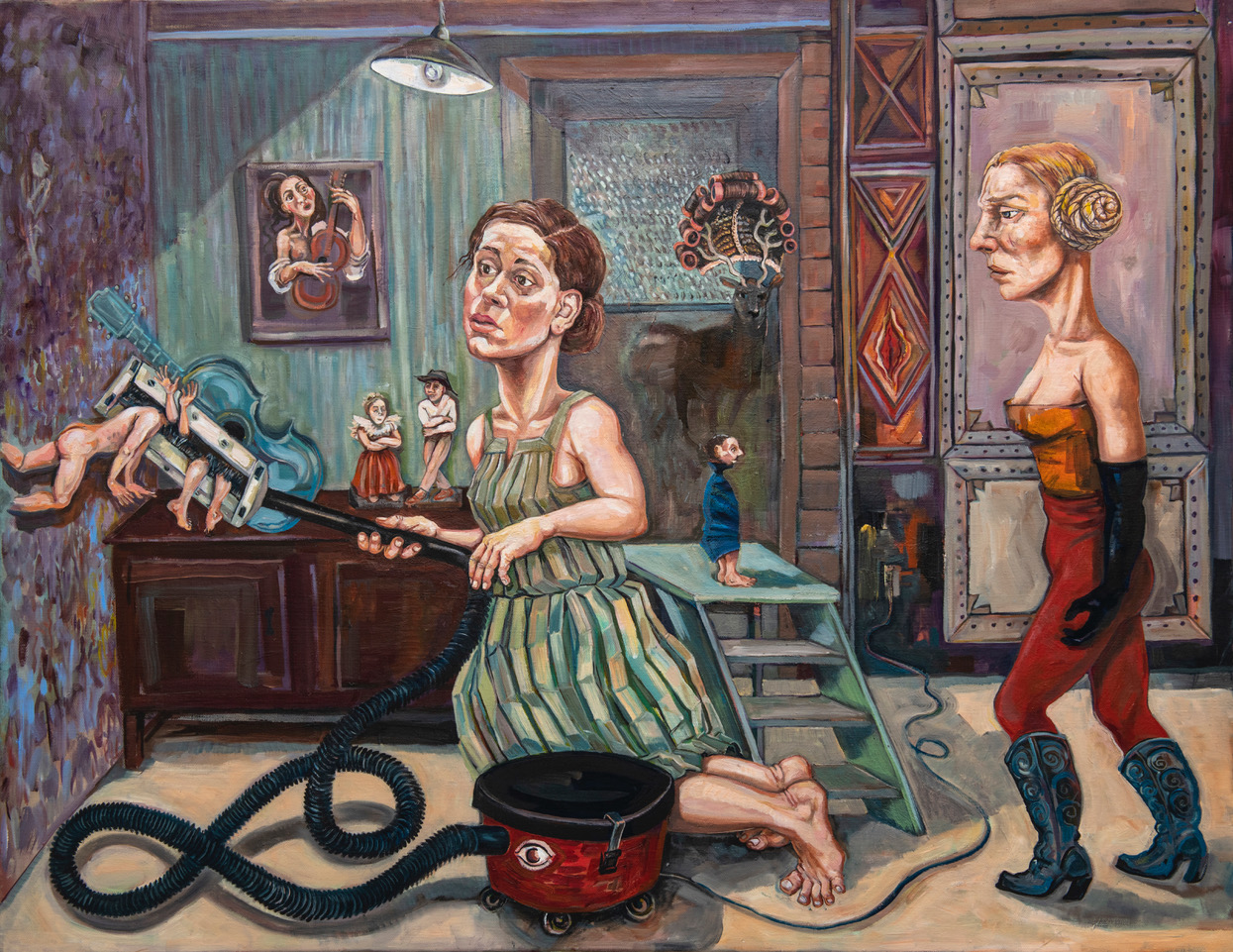
Rita Duffy's contemporary art boldly explores themes of politics, identity, and social change in modern Ireland. Her works frequently challenge societal norms and encourage viewers to reflect critically on current social issues. As one of Ireland's leading contemporary artists, Duffy continues to push artistic boundaries, ensuring that Irish art remains relevant and impactful in addressing contemporary social concerns. Her work demonstrates how art can serve as a powerful tool for social commentary and political discourse.
Key art movements in Irish context
Note
Abstract Expressionism emerged through artists like Francis Bacon, who used bold colours and distorted forms to express intense emotions and psychological states.
Note
Cubism was pioneered in Ireland by Mary Swanzy, who introduced geometric forms and multiple perspectives to Irish artistic practice.
Note
Op Art gained prominence through Bridget Riley's optical illusions that challenge viewers' visual perceptions through precise patterns and colours.
Note
Minimalism found expression in Patrick Scott's simplified geometric forms that achieve maximum impact through deliberate reduction of artistic elements.
Note
Contemporary Art in Ireland addresses current social, political, and environmental issues through diverse media and innovative approaches.
Summary
Key Points to Remember:
-
Irish artists successfully blend tradition with innovation - Modern Irish artists maintain connections to Irish culture whilst embracing international art movements
-
Key pioneers include Bacon, le Brocquy, and Swanzy - These artists introduced major international movements to Irish art practice
-
Multiple art movements flourished in Ireland - From Cubism and Abstract Expressionism to Op Art and Minimalism, Irish artists contributed to diverse artistic developments
-
Contemporary Irish artists address current issues - Modern Irish art engages with politics, identity, environment, and social change
-
Irish art achieved global recognition - Irish artists have gained international acclaim whilst maintaining distinctive cultural identity in their work