The Birth of Modernism in Irish Art (Leaving Cert Art): Revision Notes
📚Revision Notes
The Birth of Modernism in Irish Art
Introduction to Irish modernism
The period from 1920 to 1960 marked a revolutionary time in Irish art history. During these decades, Ireland experienced the slow but significant arrival of modernist artistic movements that had already transformed European art in the early 20th century. Due to Ireland's geographic position on the western edge of Europe, these innovative artistic ideas took time to reach Irish shores and gain acceptance.
Note
Understanding Modernism in Art
Modernism in art refers to the movement away from traditional realistic representation towards more experimental approaches, including abstraction, expressionism, and cubism. This artistic revolution challenged established ways of seeing and creating art, emphasising innovation over tradition.
Historical and political context
The formation of the Irish Free State in 1922 created a crucial backdrop for artistic development. The new nation sought to establish its own cultural identity, separate from British influence. This political independence movement had significant implications for the art world:
- The government and emerging Catholic middle classes favoured nationalistic but culturally conservative art
- Traditional subjects like Irish cottages, peasants at work, and rural landscapes were preferred
- The Royal Hibernian Academy (RHA) promoted this conservative approach
- Male-dominated exhibitions at the RHA showcased primarily social realist works depicting Irish life
Important
The Conservative-Nationalist Paradox
While Ireland sought political independence from Britain, the new state's artistic preferences remained deeply conservative. This created tension between the desire for cultural identity and openness to international artistic innovation.
European influences and early pioneers
French impressionism and post-impressionism
Several Irish artists travelled to France and brought back new artistic ideas:
- Roderic O'Conor - considered Ireland's only true impressionist, he moved to Paris in 1886 and became friends with Paul Gauguin
- Mary Swanzy - studied and exhibited at the Salon des Indépendants in Paris as early as 1914
- These artists introduced impressionist techniques emphasising light, colour, and loose brushwork
Note
The connection to Paris was crucial for Irish artists seeking exposure to modernist movements. The city served as a bridge between Ireland and the broader European avant-garde scene.
Key artistic groups and movements
The Society of Dublin Painters (1920)
This progressive group was founded in 1920 by artists seeking alternatives to the conservative RHA approach. Founding members included:
- Jack Butler Yeats - Irish expressionist painter
- Mary Swanzy - pioneer of modernist styles
- Paul Henry and Grace Henry - landscape painters
- Letitia Hamilton - impressionist artist
Example
Jack Butler Yeats and Expressionism
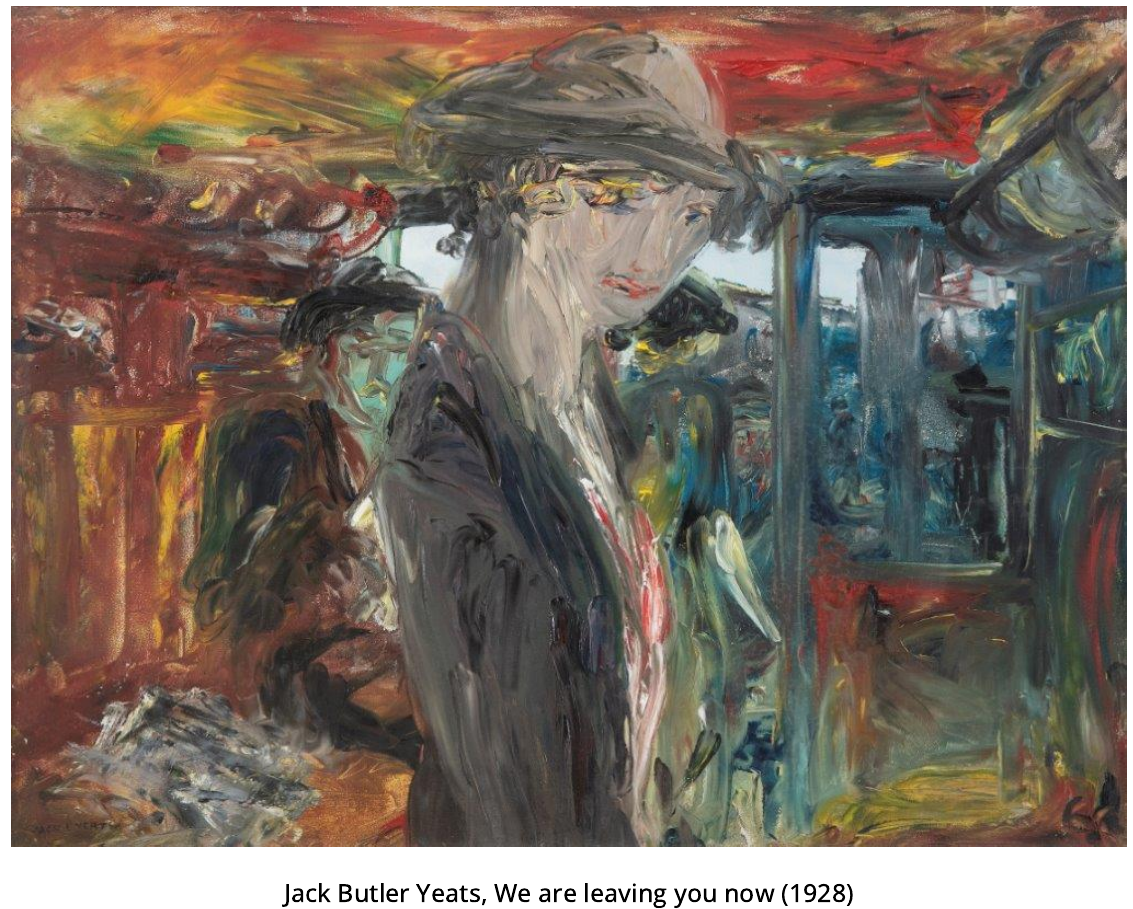
Jack Butler Yeats became famous for his expressionist paintings that captured emotional intensity through loose, gestural brushwork and vibrant colours. His work "We are leaving you now" (1928) exemplifies this approach with its dynamic paint application and emotional depth, showing how Irish artists could adapt international styles to express distinctly Irish experiences.
Mainie Jellett and abstract art
Mainie Jellett emerged as one of Ireland's most important modernist pioneers. Her work represented a radical departure from traditional Irish art:
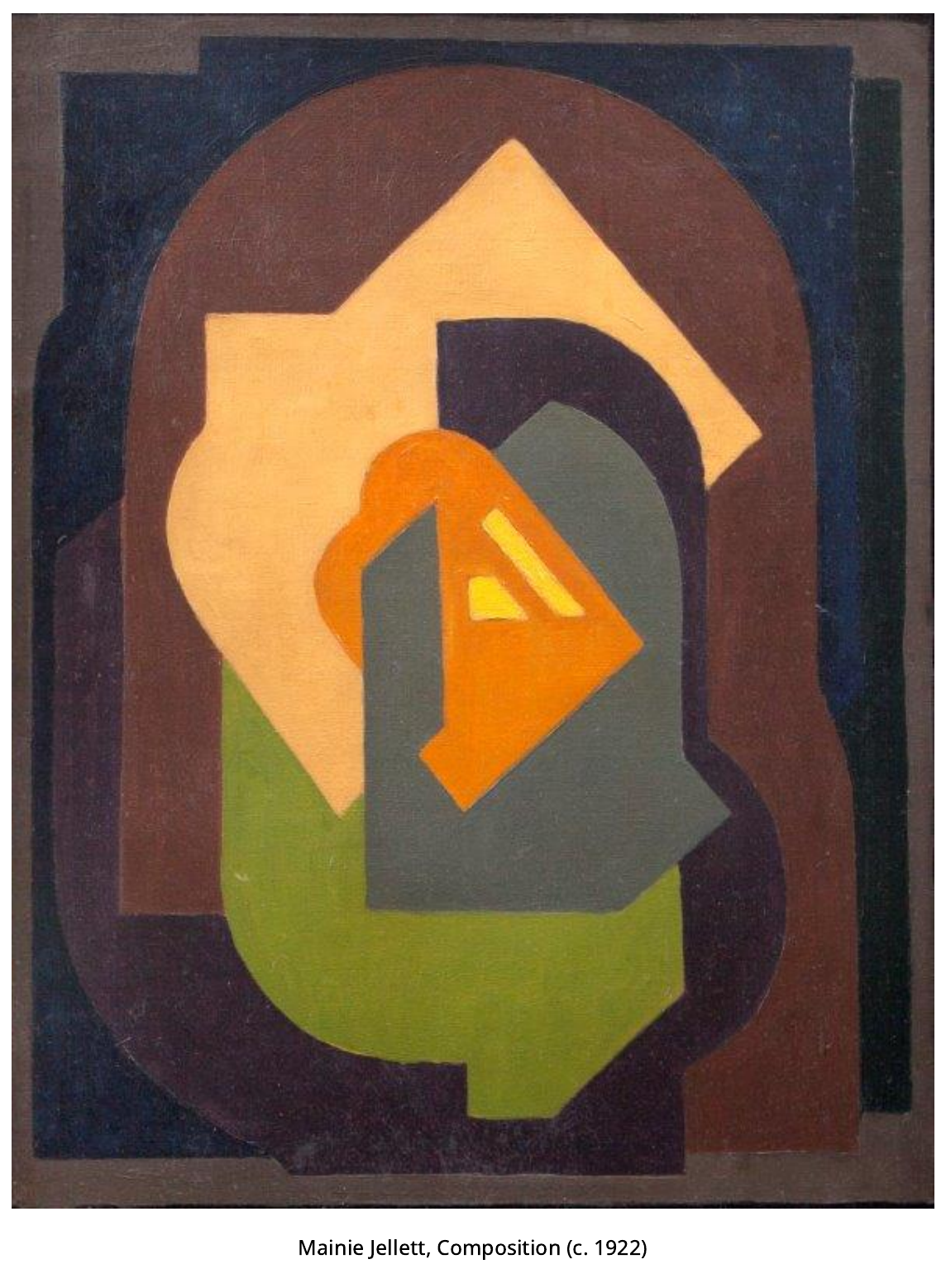
- Her abstract geometric compositions introduced cubist influences to Ireland
- When she first exhibited pure abstract work in 1923, it caused controversy and public debate
- George (AE) Russell wrote hostile reviews that appeared in national newspapers
- Despite criticism, Jellett became an enthusiastic champion of modernism through writing, lectures, and teaching
- She was a founding member of the Irish Exhibitions of Living Art (IELA) in 1943
Note
Understanding Abstract Art
Abstract art uses colour, form, and line to create compositions independent of realistic representation. Jellett's work showed influence from European synthetic cubism, using overlapping geometric shapes and bold colour relationships.
The traditional versus modernist conflict
The 1920s and 1930s saw intense debate between traditional and modernist approaches:
Traditional approach (favoured by RHA and government):
- Realistic depiction of Irish subjects
- Rural scenes and peasant life
- Conservative techniques
- Male-dominated exhibitions
- Supported by nationalist ideology
Modernist approach (championed by progressive artists):
- European-influenced styles
- Abstract and expressionist techniques
- Focus on artistic innovation over subject matter
- Strong female participation
- International outlook
Example
Bridging Traditional and Modern
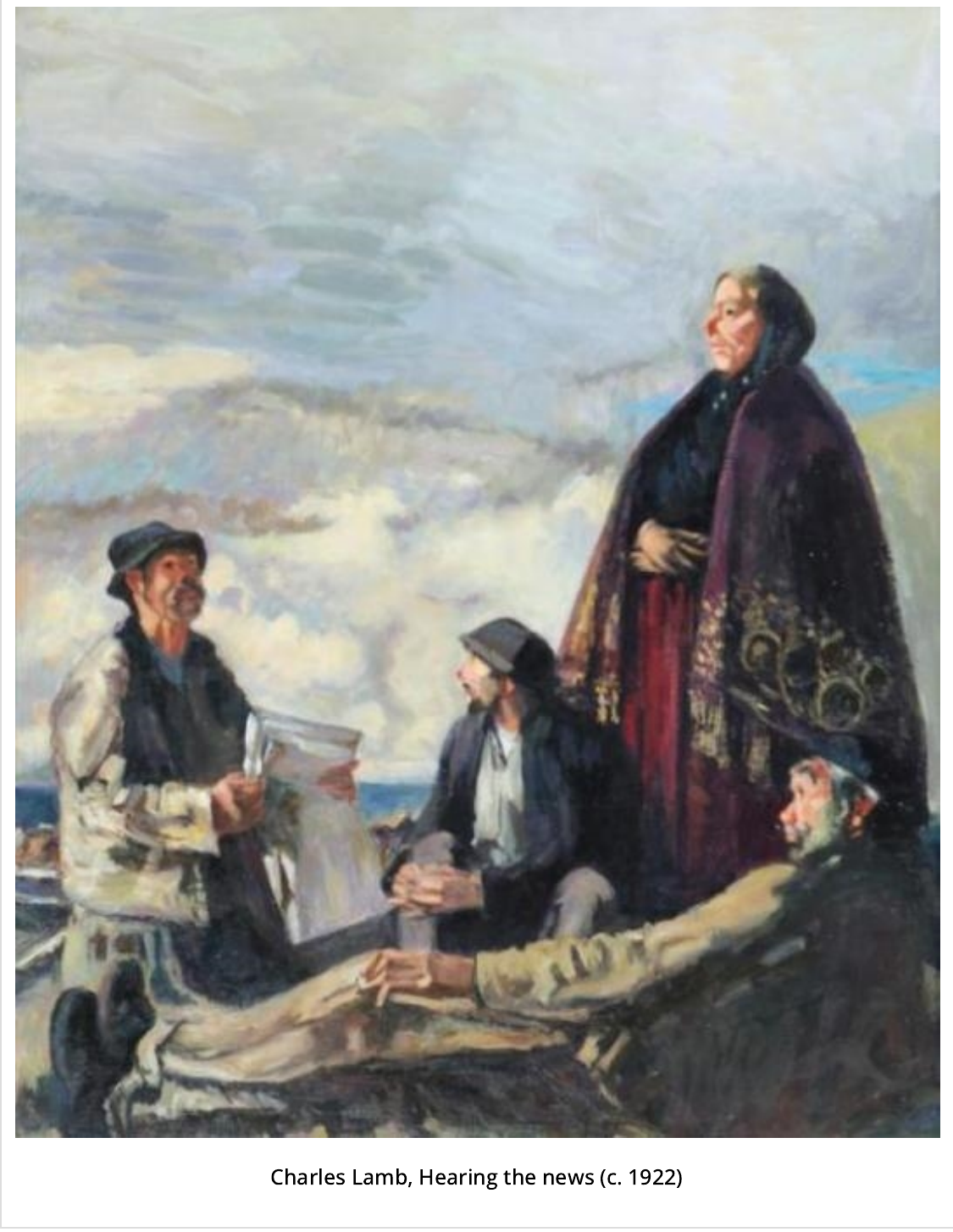
Artists like Charles Lamb in works such as "Hearing the news" (c. 1922) represented a middle ground, using dramatic realist techniques while incorporating more expressive elements in their treatment of Irish subjects. This showed how modernist influences could be adapted rather than completely replacing traditional approaches.
The dominance of women artists
By the late 1920s, the Society of Dublin Painters became dominated by women artists, many with Anglo-Irish backgrounds. These exhibitions became synonymous with the best avant-garde painting in Ireland:
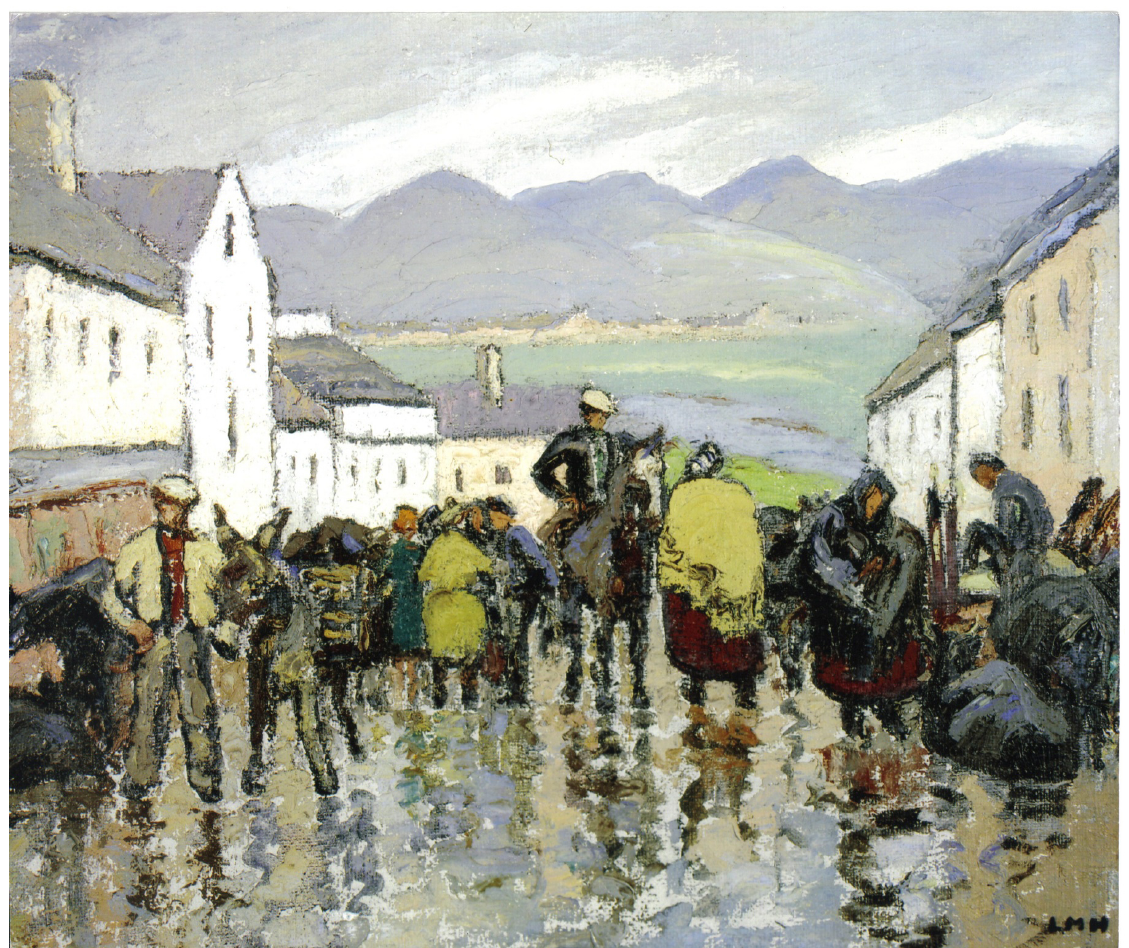
- Letitia Hamilton created impressionist works like "A fair day Clifden" showing Irish rural life through modernist techniques
- Their influence continued until the early 1940s
- Women artists played crucial roles in promoting modernist ideas against conservative opposition
Important
Women Leading Artistic Change
The predominance of women in Ireland's modernist movement was remarkable for its time. These artists not only championed new styles but also created alternative exhibition spaces and networks that supported experimental art.
The White Stag Group (1940-1945)
The 1940s brought new international influences with the arrival of foreign artists escaping World War II:
- Basil Rákóczi and Kenneth Hall formed the White Stag Group
- They brought non-academic approaches to painting
- Their dynamic new ideas influenced a generation of young Irish artists including Patrick Scott, Thurloe Conolly, and Gerard Dillon
- The group flourished between 1940-1945, offering alternatives to established artistic institutions
Surrealism in Irish art
Surrealism - an artistic movement emphasising dreams, the unconscious mind, and fantastic imagery - also found expression in Irish art:
- Colin Middleton - his work "The Bride" (1938) exemplified surrealist approaches
- Nevill Johnson - created apocalyptic post-war visions like "Year of Grace" (1945)
Note
The arrival of European artists during WWII created an unexpected opportunity for Irish art. These refugee artists brought direct experience of continental avant-garde movements and helped accelerate Ireland's artistic modernisation.
The Irish Exhibitions of Living Art (IELA)
In 1943, Mainie Jellett was instrumental in organising the first IELA exhibition:
- Established as a direct response to the perceived conservatism and stagnation of the RHA
- Provided a platform for avant-garde and experimental art
- By the end of the 1940s, became dominated by artists from Northern Ireland
- Included internationally successful artists like Daniel O'Neill, Gerard Dillon, George Campbell, and Colin Middleton
Important
IELA's Revolutionary Impact
The Irish Exhibitions of Living Art represented a fundamental shift in Irish art culture. By providing an alternative to the conservative RHA, IELA created space for experimental work and international dialogue that transformed the Irish art scene.
Notable individual artists
William Scott
- Born in Scotland but raised in Enniskillen, Northern Ireland
- Studied at Belfast College of Art
- Became one of the most internationally successful post-war Irish artists
- Early important work: "Lemon and Funnel" (1949)
Norah McGuinness
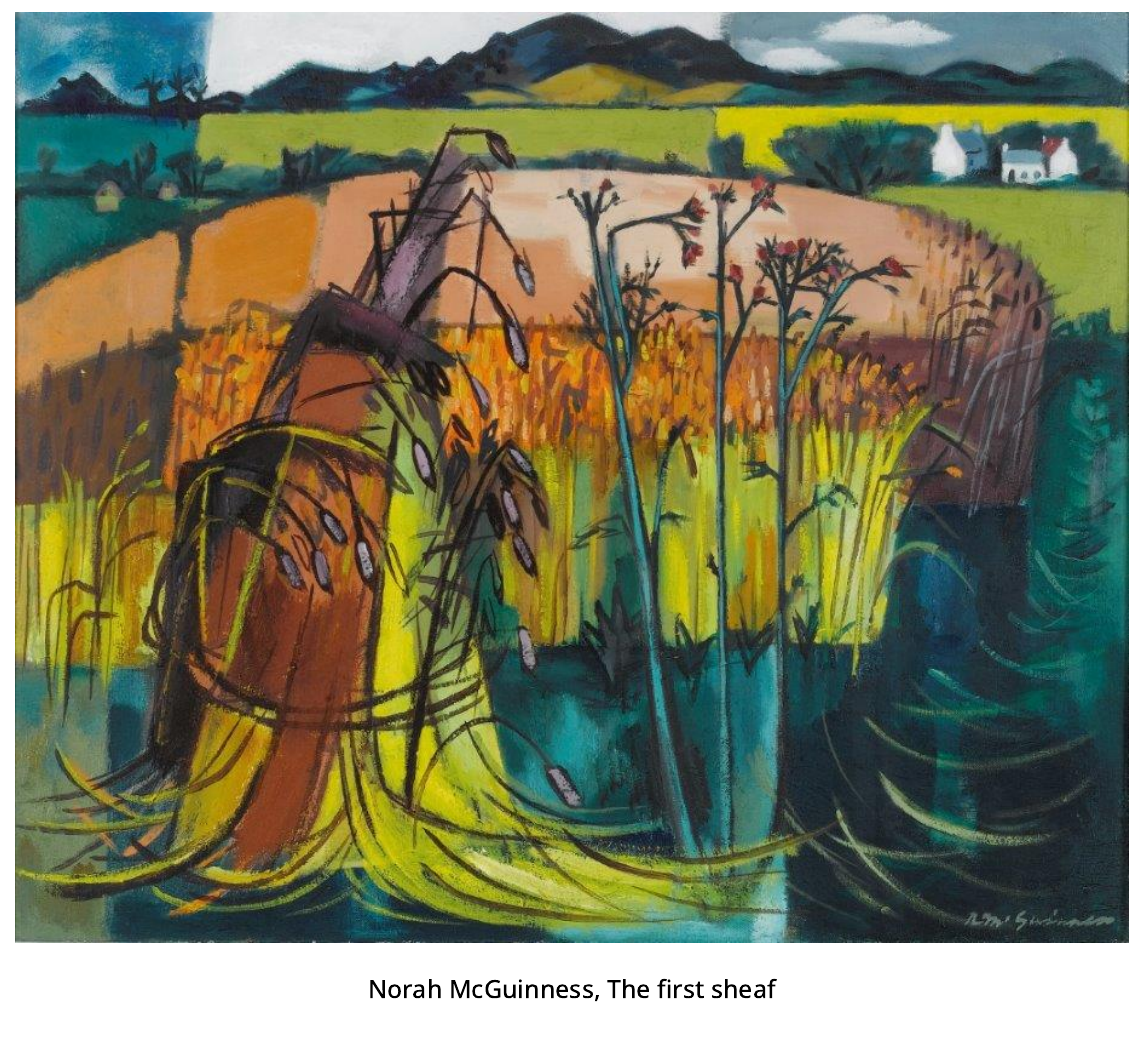
- Involved in all aspects of Irish art from 1920 until her death in 1980
- Encouraged many young Irish artists
- Along with Nano Reid, represented Ireland at the Venice Biennale 1950
- This was Ireland's first participation in this prestigious international exhibition
- Significant that two female modernist artists were chosen to represent the new Irish Republic (1948)
Note
Venice Biennale Significance
The Venice Biennale is one of the world's most prestigious contemporary art exhibitions, held every two years in Venice, Italy. Ireland's participation marked its full acceptance into the international art community.
Nano Reid
- Developed her own individualistic style influenced by ancient monuments along the Boyne valley near Drogheda
- Her unique approach combined modernist techniques with Celtic and pre-Christian Irish influences
International recognition
By 1950, Irish modernist art was gaining international recognition:
- Ireland's participation in the Venice Biennale marked acceptance on the world stage
- The choice of two female modernist artists to represent Ireland showed how far attitudes had changed since the 1920s
- Irish artists were now exhibiting both in Dublin and abroad to critical acclaim
Note
The transformation from artistic isolation to international recognition took just three decades, showing how rapidly modernist ideas, once accepted, could reshape a national art scene.
Legacy and impact
By 1960, the birth of modernism in Irish art was complete:
- European modernist influences had been successfully integrated into Irish artistic practice
- Women artists had played crucial leadership roles in this transformation
- Alternative exhibition spaces like IELA provided platforms for experimental art
- International recognition confirmed Ireland's place in contemporary art movements
- The conflict between traditional and modernist approaches had largely resolved in favour of artistic innovation
Summary
Key Points to Remember:
- Modernism arrived slowly in Ireland due to geographic isolation, taking from 1920-1960 to fully establish
- Political context mattered - the formation of the Free State (1922) initially favoured conservative, nationalistic art over European modernist influences
- Women artists were crucial leaders - figures like Mainie Jellett, Mary Swanzy, Norah McGuinness, and Letitia Hamilton championed modernist approaches against conservative opposition
- Key institutions emerged - the Society of Dublin Painters (1920) and Irish Exhibitions of Living Art (1943) provided alternatives to the traditional Royal Hibernian Academy
- International recognition came by 1950 - Ireland's participation in the Venice Biennale with two female modernist artists showed how completely attitudes had transformed