Pablo Picasso (Leaving Cert Art): Revision Notes
📚Revision Notes
Pablo Picasso
Pablo Picasso stands as one of the most influential and revolutionary artists of the 20th century. This Spanish master transformed the way we understand and create art, pioneering movements that continue to shape artistic expression today.

Note
Picasso's impact extended far beyond his own artwork - he fundamentally changed how artists approach creativity, proving that an artist could reinvent their style throughout their career while maintaining their unique vision.
Basic information
Full name: Pablo Ruiz Picasso Born: 25 October 1881, Málaga, Spain Died: 8 April 1973, Mougins, France Profession: Painter, sculptor, printmaker, and draughtsman
Picasso famously declared that "Art is a lie that makes us realise the truth" - a philosophy that guided his revolutionary approach to artistic creation.
Note
This famous quote encapsulates Picasso's belief that art doesn't simply copy reality but instead reveals deeper truths about human experience through creative interpretation and transformation.
Artistic movements and influence
Picasso's career spanned multiple artistic movements, and he played a crucial role in developing several of them:
- Symbolism: Early influence on his work
- Cubism: Co-founded with Georges Braque
- Surrealism: Later influence, though he never fully embraced it
Major artistic periods
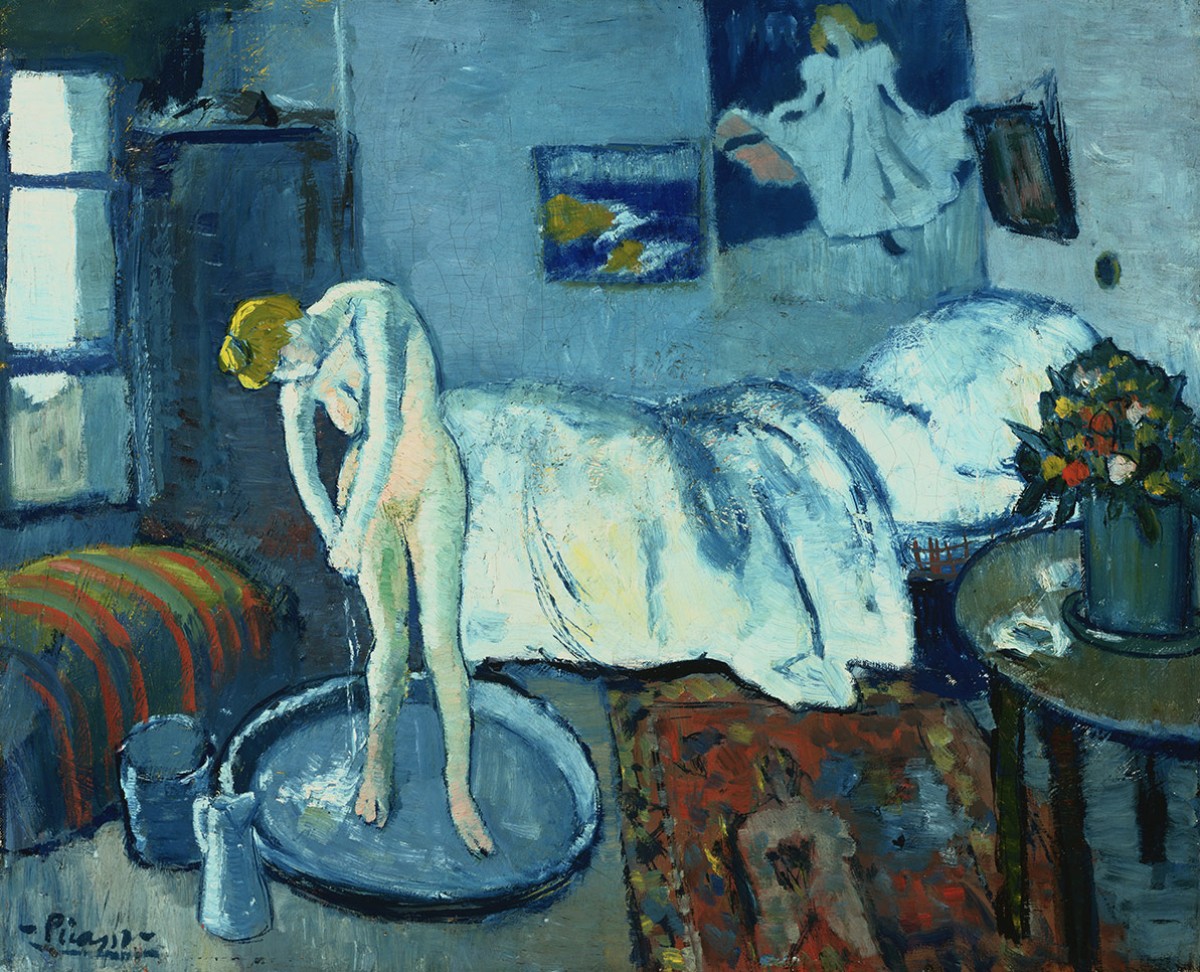
Blue period (1901-1904)
During this melancholic phase, Picasso painted predominantly in shades of blue and blue-green. This period reflected his personal sadness following the suicide of his close friend Carlos Casegemas.
Example
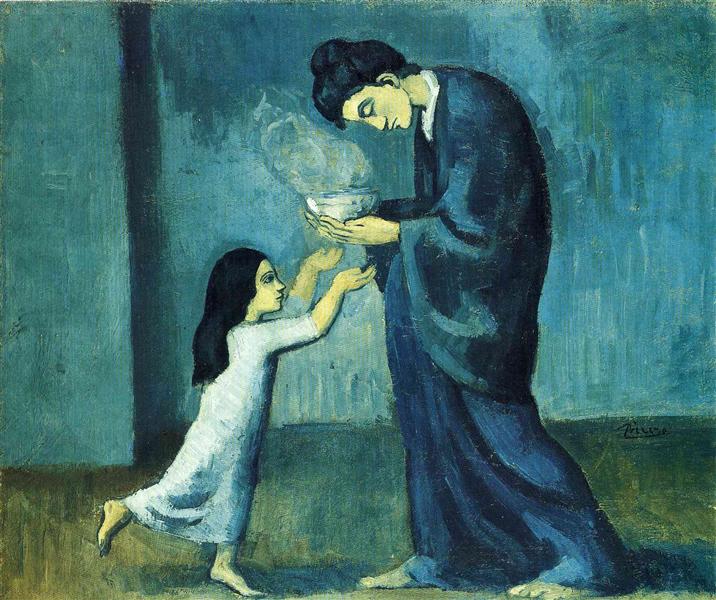
Artistic Analysis: "The Soup" (1902-03)
This painting exemplifies the Blue Period's characteristics:
- Dominant blue palette creates an atmosphere of solemnity and melancholy
- Two figures depicted in sombre tones
- Themes of poverty and human suffering reflect Picasso's concerns during his early years in Spain
- Emotional depth conveyed through colour choice and composition
Transitional works
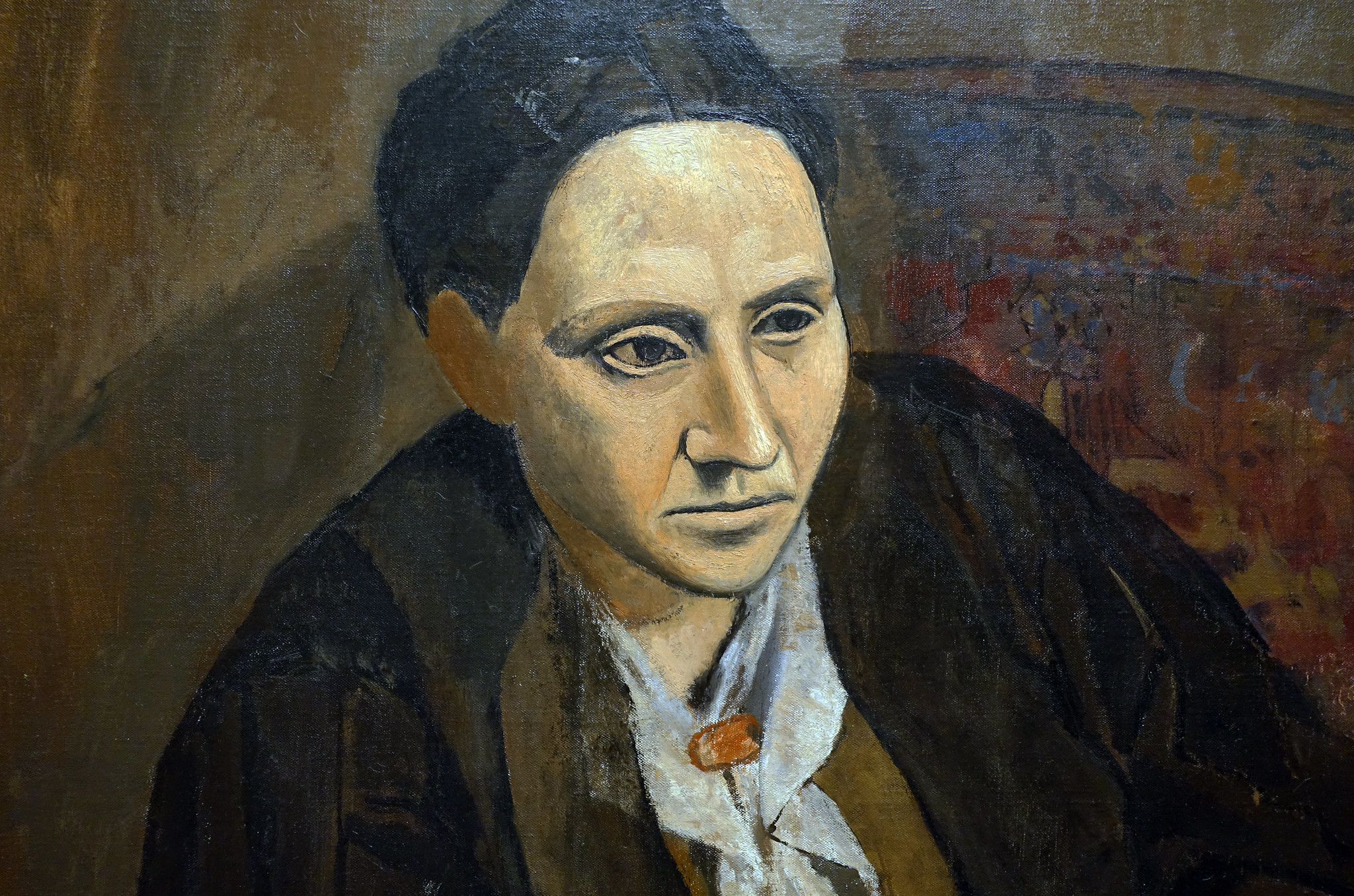
Portrait of Gertrude Stein (1905) marks an important stage in Picasso's evolving style. Gertrude Stein was an author and close friend who supported Picasso's artistic development. This portrait shows the influence of archaic Iberian sculpture, with forms that appear almost sculptural. The painting represents Picasso's movement away from his Blue Period towards the revolutionary developments that would follow.
Revolutionary cubism
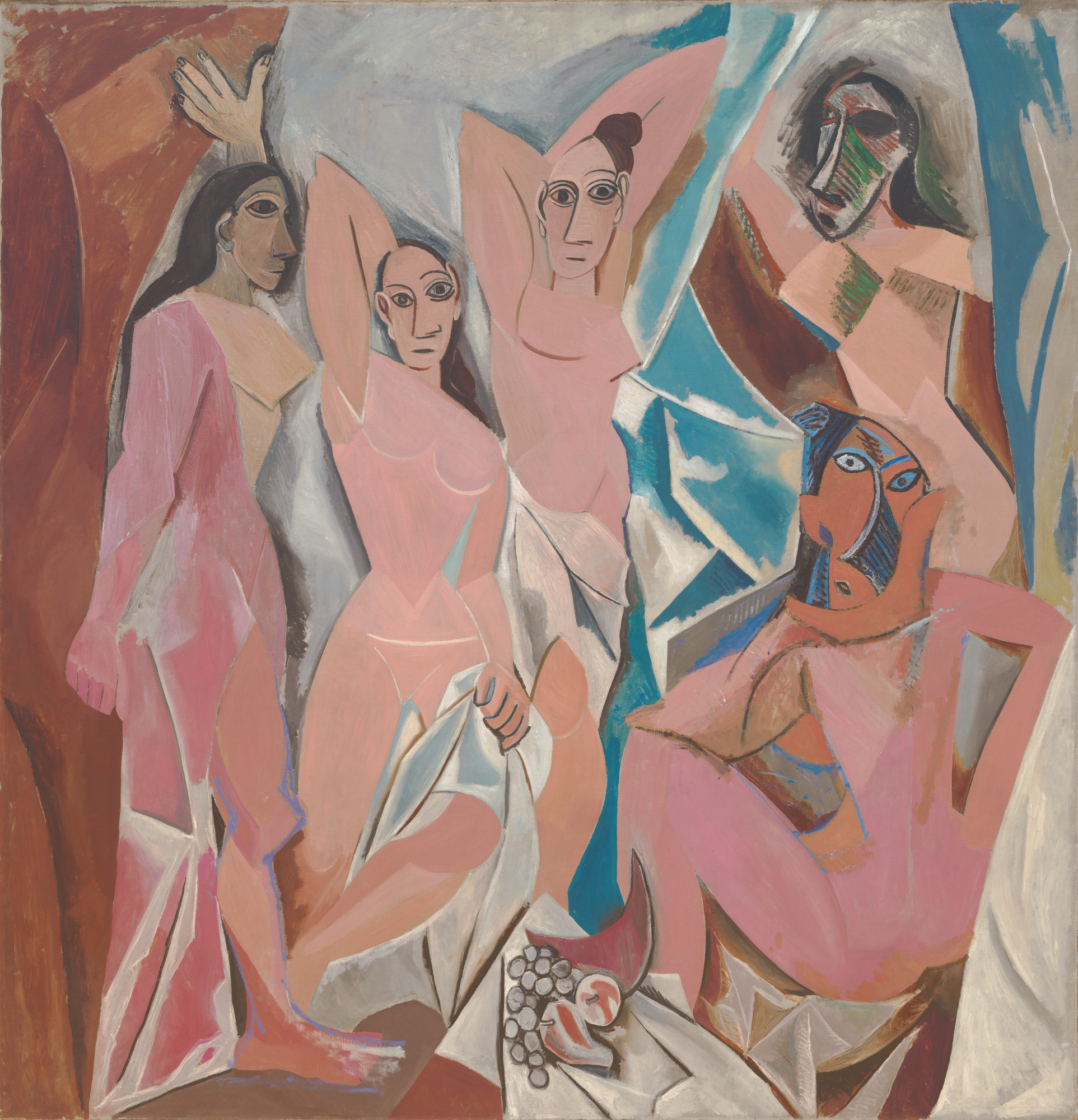
Les demoiselles d'Avignon (1907)
Important
This groundbreaking painting shocked even Picasso's closest friends with both its subject matter and execution. It is considered the birth of modern art and completely abandoned traditional Renaissance perspective, paving the way for the entire Cubist movement.
The work depicts five nude women in an aggressive, geometric style. Key features include:
- Geometric fragmentation: The human form is broken down into angular, geometric shapes
- Multiple perspectives: Different parts of each figure are shown from various viewpoints simultaneously
- African art influence: The mask-like faces show inspiration from African tribal art
- Flat picture plane: Traditional depth is replaced with a flattened, fragmented surface
This work is considered proto-Cubist and laid the foundation for the Cubist movement.
Cubist innovations
Three-dimensional cubism

Picasso extended Cubist principles beyond painting into sculpture. This cardboard guitar sculpture demonstrates how he applied geometric fragmentation to three-dimensional forms, breaking down the traditional guitar shape into abstract planes while maintaining its recognisable elements.
Analytical cubism
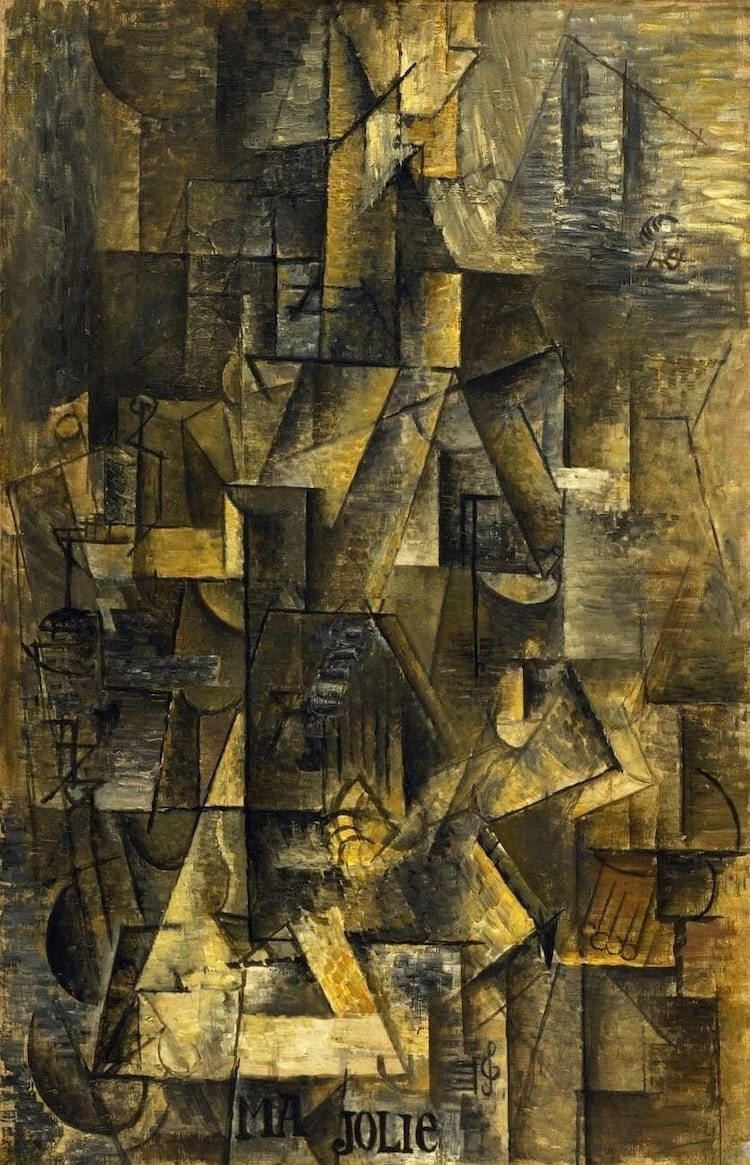

Example
Artistic Analysis: "Ma Jolie"
This painting demonstrates Picasso's mature Cubist technique through:
Step 1: Text incorporation - The words "MA JOLIE" appear on the canvas
Step 2: Geometric breakdown - The guitar is fragmented into overlapping geometric planes
Step 3: Earth tone palette - Browns, ochres, and muted colours create unity
Step 4: Multiple viewpoints - The instrument is shown from several angles simultaneously
This blurred the line between high art and popular culture, a revolutionary concept at the time.
Synthetic cubism

The Three Musicians (1921) represents Picasso's later Cubist period. This work shows:
- Simplified geometric forms: Figures are constructed from basic geometric shapes
- Clearer composition: Less fragmented than earlier Cubist works
- Recognisable subjects: Musicians with instruments are clearly identifiable despite stylisation
- Flat, decorative quality: The painting emphasises pattern and design over realistic representation
Collage innovation
Important
Picasso invented the artistic technique of collage, where he incorporated real materials like newspaper, rope, and other objects directly onto the canvas. This revolutionary approach challenged traditional ideas about what constituted a painting and opened up entirely new possibilities for artistic expression.
Anti-war masterpiece
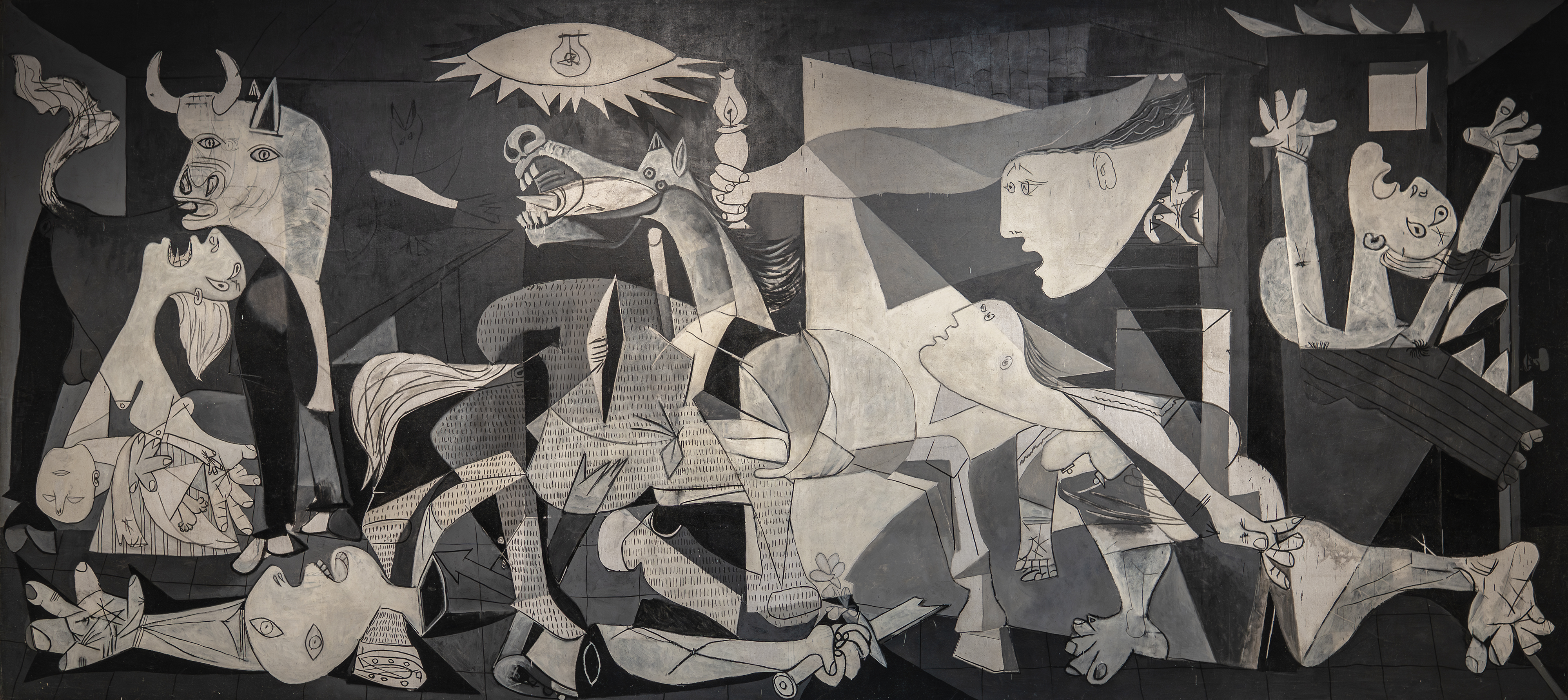
Important
Guernica (1937) stands as Picasso's most famous political statement and one of the most powerful anti-war artworks ever created. This monumental work transcends its specific historical context to become a universal symbol against violence and war.
Guernica was created in response to the bombing of Guernica during the Spanish Civil War. This monumental work features:
- Monochromatic palette: Black, white, and grey tones emphasise the tragedy
- Symbolic imagery: Bull, horse, light bulb/eye, and fragmented human figures represent the chaos of war
- Cubist technique: Geometric fragmentation conveys the destruction and suffering
- Universal anti-war message: The painting transcends specific political events to become a timeless protest against violence
Artistic techniques and innovations
Note
Picasso's technical innovations were as important as his artistic vision. He didn't just create new artworks - he invented entirely new ways of seeing and representing the world.
Multiple perspectives
Picasso revolutionised how we represent three-dimensional objects on a two-dimensional surface by showing subjects from multiple viewpoints simultaneously. Instead of a single fixed perspective, he would combine front, side, and other angles in one composition.
Geometric fragmentation
Traditional smooth, rounded forms were broken down into angular, geometric shapes. This technique forced viewers to actively reconstruct the subject matter, engaging them more directly with the artwork.
Collage and mixed media
By incorporating real materials into his paintings, Picasso challenged the traditional boundaries between different art forms and questioned what constituted "fine art."
Later life and continued innovation
Throughout his career, Picasso continued to explore emotional themes through his distinctive visual language. This painting shows two contrasting figures - one triumphant, one dejected - demonstrating how he used simplified forms and colour to convey complex human emotions.
Even in his later years, Picasso remained a vital creative force, continuing to innovate and experiment until his death in 1973.
Legacy and recognition

Picasso's influence was recognised worldwide, as shown by this Soviet commemorative stamp issued in 1973. His impact on modern art cannot be overstated:
- Cubism establishment: Co-founded one of the most influential art movements
- Technical innovations: Invented collage and pioneered new approaches to form and space
- Artistic freedom: Demonstrated that artists could constantly reinvent their style
- Cultural impact: Influenced not just visual arts but design, architecture, and popular culture
Summary
Key Points to Remember:
- Picasso pioneered Cubism alongside Georges Braque, revolutionising how we represent reality in art
- His Blue Period (1901-1904) reflected personal melancholy through predominantly blue-toned paintings
- Les Demoiselles d'Avignon (1907) broke traditional artistic conventions and launched the Cubist movement
- He invented collage, incorporating real materials into paintings and challenging artistic boundaries
- Guernica remains his most famous work, serving as a powerful anti-war statement that transcends its historical context
Note
Exam Success Tips:
When studying Picasso for examinations, focus on these essential areas:
- Focus on key periods: Blue, Rose, and Cubist periods show clear stylistic development
- Understand Cubism: Be able to explain multiple perspectives and geometric fragmentation
- Know major works: Les Demoiselles d'Avignon, Guernica, and Ma Jolie are essential
- Recognise innovations: Collage invention and three-dimensional Cubist sculptures
- Connect to context: Link his Blue Period to personal tragedy, Guernica to historical events