Francis Bacon (Leaving Cert Art): Revision Notes
📚Revision Notes
Francis Bacon
Introduction
Francis Bacon (1909-1992) was an Irish-born British figurative painter who became one of the most important and disturbing artists of the 20th century. Known for his raw and unsettling imagery, Bacon focused primarily on the human form, creating powerful works that explored themes of suffering, isolation, and existential anxiety.
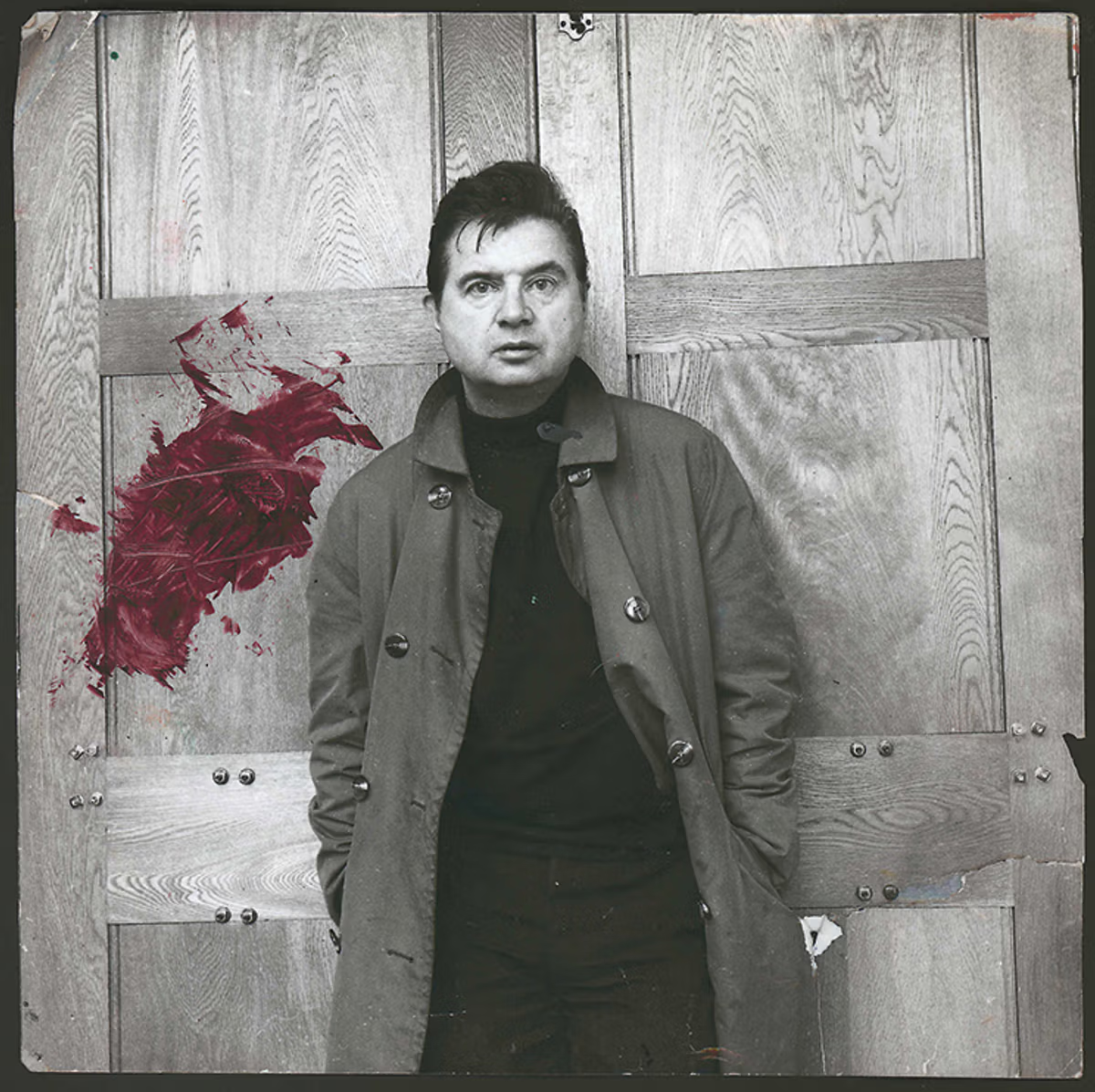
Note
Key Facts:
- Born: 28 October 1909, Dublin, Ireland
- Died: 28 April 1992, Madrid, Spain (aged 82)
- Nationality: Irish-British
- Movement: Figurative Expressionism
- Famous for: Distorted human figures, screaming mouths, Pope paintings
Biography and artistic development
Early life and influences
Bacon experienced a troubled childhood that would profoundly influence his later artistic vision. Born into a military family, he faced rejection from his father due to his homosexuality and effeminate behaviour. This early experience of alienation and displacement became central themes in his work.
Note
His artistic education was largely self-taught. Bacon didn't begin painting seriously until his late twenties, having spent time in London, Berlin, and Paris in the 1920s.
During this period, he was exposed to influential works including Picasso's biomorphic paintings and Sergei Eisenstein's film Battleship Potemkin, both of which would deeply impact his artistic development.
The breakthrough work
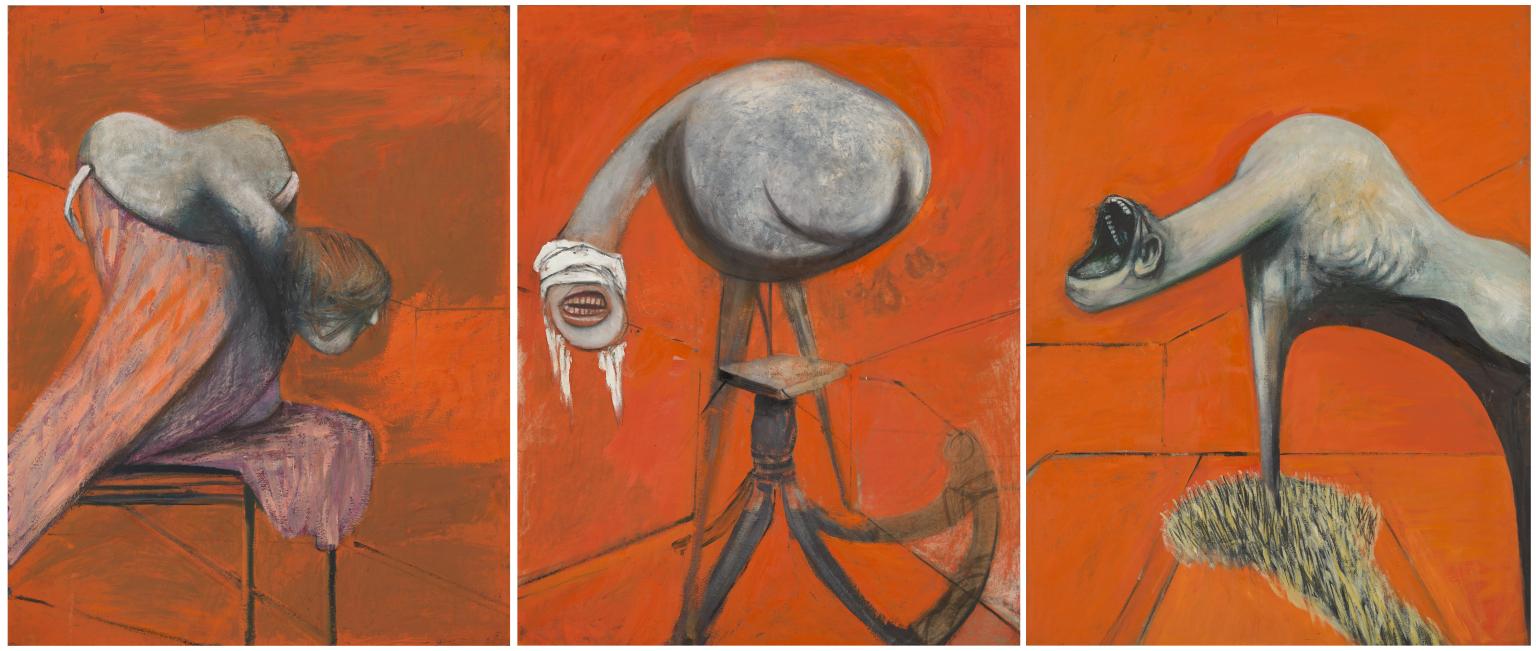
Bacon's artistic breakthrough came with Three Studies for Figures at the Base of a Crucifixion (1944). This triptych established his reputation and introduced many themes that would dominate his career.
Example
Breakthrough Work: Three Studies for Figures at the Base of a Crucifixion, 1944
This revolutionary work features three panels showing distorted, creature-like figures against vivid orange backgrounds. The painting shocked audiences with its raw emotional power and established Bacon as a major post-war British artist.
Major periods and developments
1940s - Early success:
- Focus on single figures in abstract settings
- Influence of Picasso's biomorphic forms
- Development of the triptych format
- Exploration of crucifixion themes
1950s - Mature style: Bacon's work during this decade showed increased confidence and the development of his signature approach:
- Figures isolated in geometric cage-like spaces
- Flat, non-descriptive backgrounds
- Focus on portraits of friends and drinking companions
- Development of the "screaming mouth" motif
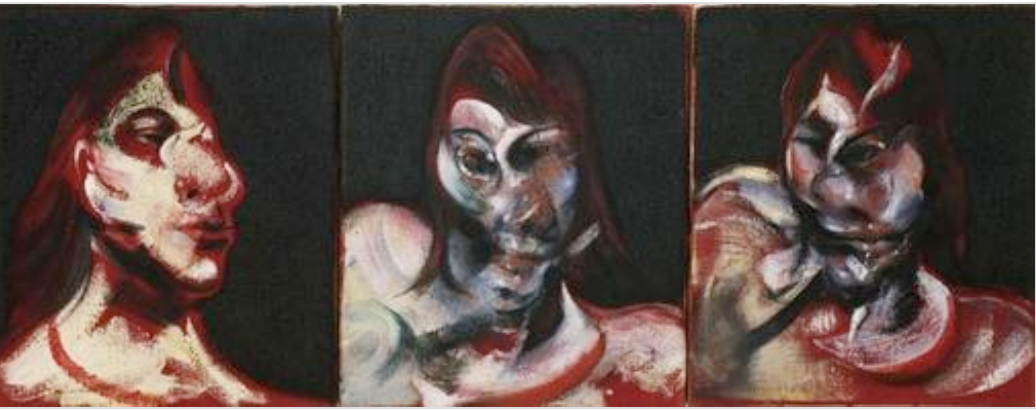
1960s-1970s - Later development:
- Relationship with George Dyer became central to his work
- More sombre, inward-looking paintings
- Creation of the "Black Triptychs" series
- Continued exploration of human suffering and mortality
Major themes and subjects
The crucifixion
The crucifixion was a recurring theme throughout Bacon's career, though he approached it from a secular rather than religious perspective. He saw it as "a magnificent armature on which you can hang all types of feeling and sensation."
Important
Key aspects of Bacon's crucifixion theme:
- Used as a framework to explore human suffering
- Influenced by Old Masters like Grünewald and Velázquez
- Combined with modern psychological insights
- Stripped of traditional religious meaning
The Pope paintings
One of Bacon's most famous series was inspired by Velázquez's Portrait of Pope Innocent X (1650). Bacon created numerous variations of this work, transforming the authoritative papal figure into a symbol of human vulnerability.
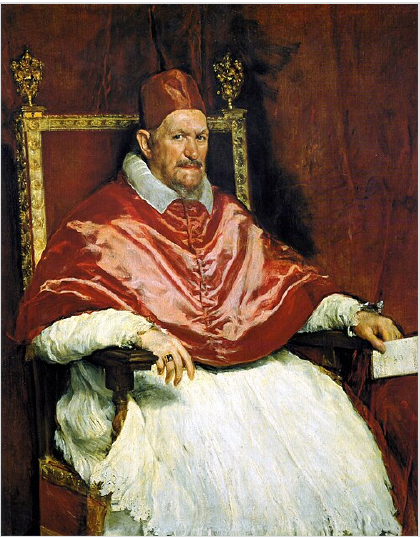
Velázquez's Portrait of Pope Innocent X, 1650 - Bacon's inspiration
Note
Characteristics of Bacon's Pope paintings:
- Figures shown screaming or in distress
- Seated in undefined, claustrophobic spaces
- Stripped of hierarchical power
- Expressions of human suffering and isolation
Reclining figures
Many of Bacon's paintings feature reclining figures, often distorted and fragmented. These works were influenced by:
- Sculptural works of Michelangelo
- Contemporary photography
- Medical textbooks and X-ray images
- Moving images from cinema
The screaming mouth
The screaming mouth became one of Bacon's most recognisable motifs, appearing throughout his career.
Sources of inspiration:
- Medical textbooks showing oral diseases
- Sergei Eisenstein's Battleship Potemkin (1925)
- Personal experiences of trauma and anxiety
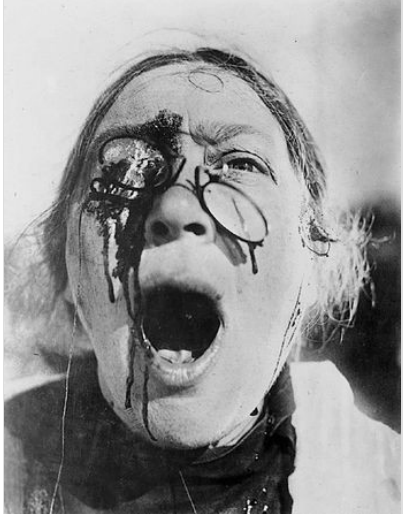
Still from Eisenstein's Battleship Potemkin - key influence on Bacon's screaming mouths
Important
Bacon kept a photograph from this film in his studio and used it as constant inspiration. He described the screaming mouth as a catalyst for his work and incorporated its shape when painting figures.
Artistic techniques and working methods
Studio practice
Bacon worked in a famously chaotic studio, surrounded by photographs, torn books, and art materials scattered across the floor.
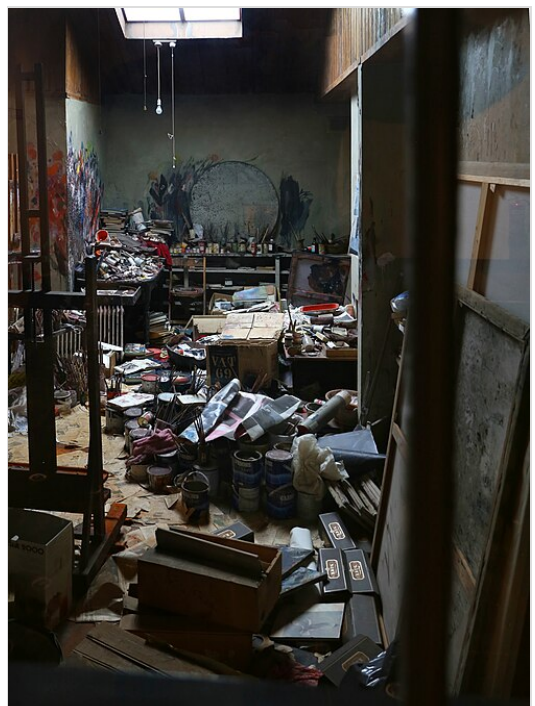
Bacon's studio - a creative chaos that inspired his work
Key techniques
Note
Paint application:
- Used thick, gestural brushwork
- Often painted on the unprimed side of canvas
- Incorporated chance and accident into his process
- Worked primarily in oil paint
Compositional methods:
- Frequent use of triptych and diptych formats
- Isolation of figures in geometric spaces
- Bold, contrasting colour schemes
- Integration of photographic source material
Influences and sources
Artistic influences:
- Pablo Picasso (especially the biomorphic period)
- Diego Velázquez (papal portraits)
- Old Masters (Grünewald, Rembrandt)
- Surrealist movement
Non-artistic sources:
- Medical textbooks and X-ray photographs
- Cinema (particularly Eisenstein)
- Photography (Eadweard Muybridge's motion studies)
- Literature and philosophy (Nietzsche, existentialism)
Legacy and significance
Francis Bacon's impact on modern art cannot be overstated. His unflinching examination of human suffering and psychological states created a new visual language for expressing the anxieties of the modern world.
Important
Key contributions:
- Reinvented figurative painting for the modern era
- Influenced countless contemporary and subsequent artists
- Created iconic images that define post-war British art
- Challenged traditional approaches to portraiture and religious subjects
Market significance: Bacon's works command some of the highest prices in the art market, with major paintings selling for tens of millions of pounds, reflecting his enduring importance and appeal.
Critical reception: Art critic John Russell observed that there was "painting in England before the Three Studies, and painting after them, and no one could confuse the two." This statement captures the revolutionary impact of Bacon's work on British and international art.
Summary
Key Points to Remember:
-
Francis Bacon revolutionised figurative painting by creating emotionally powerful works that captured post-war anxieties and human suffering
-
Key recurring themes include crucifixions (secular interpretations), Pope paintings (based on Velázquez), reclining figures, and the screaming mouth motif
-
His breakthrough work Three Studies for Figures at the Base of a Crucifixion (1944) established his reputation and introduced his signature style of distorted figures against bold backgrounds
-
Working methods involved a chaotic studio environment, use of photographic sources, and incorporation of chance and accident into the painting process
-
Major influences included Picasso, Velázquez, medical imagery, and cinema (particularly Eisenstein's Battleship Potemkin)