AI and Art (Leaving Cert Art): Revision Notes
📚Revision Notes
AI and Art
Introduction
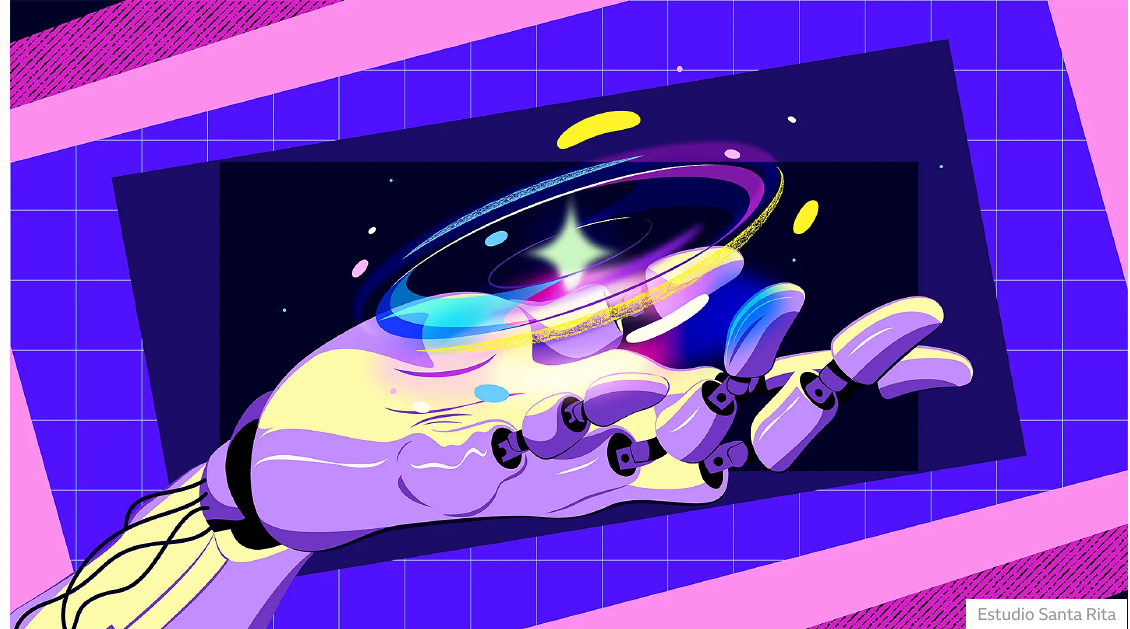
Artificial intelligence is revolutionising the art world in ways we never imagined. AI systems can now create paintings, sculptures, and digital artworks that sell for thousands of pounds. This technological shift raises fundamental questions about creativity, authorship, and what we consider to be "art."
Note
The central question facing the art world today is whether AI represents the end of human creativity or the beginning of an exciting new artistic movement. As AI-generated artworks appear in galleries alongside traditional pieces, we must reconsider our understanding of artistic creation and the role of the artist.
What is AI art?
AI art refers to artworks created with the assistance of artificial intelligence systems. These systems use complex algorithms to generate images, sculptures, or other artistic forms based on data they have been trained on.
Key characteristics of AI art include:
- Generated content: Created by computer algorithms rather than direct human hand
- Data-driven: Based on analysis of existing artworks and visual information
- Algorithmic creativity: Uses mathematical processes to make artistic decisions
- Human-AI collaboration: Often involves human input in prompts, curation, or refinement
Popular AI art tools include text-to-image generators like Dall-E and Midjourney, which create images from written descriptions. These tools can produce highly sophisticated artworks in various styles within seconds.
AI-Da: The robot artist
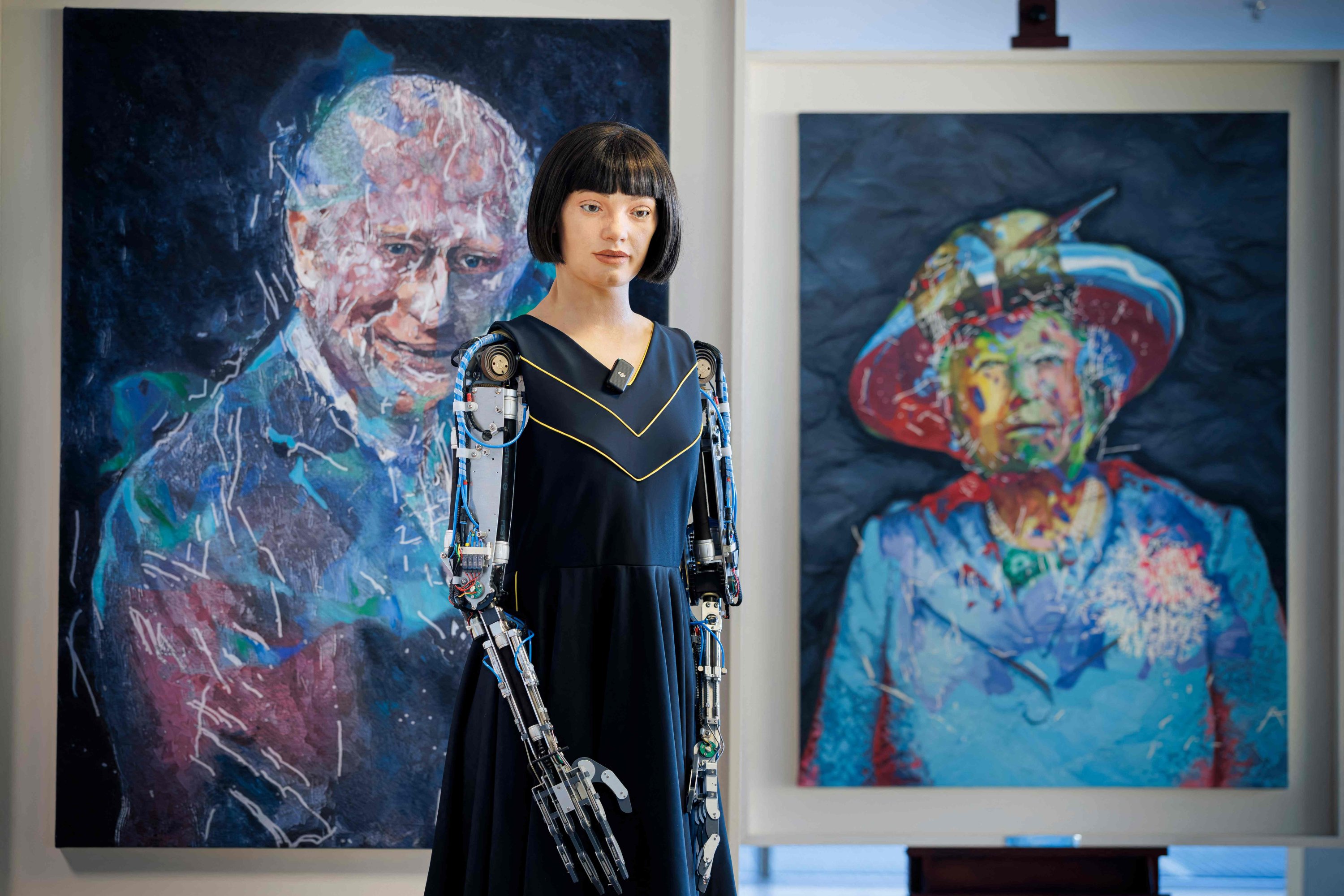
AI-Da represents a groundbreaking development in AI art. She is recognised as the world's first humanoid robot artist, capable of creating self-portraits and other artworks using cameras in her eyes and robotic arms.
Important
AI-Da's significance extends far beyond novelty - she represents a fundamental challenge to our understanding of artistic consciousness and creativity. Unlike purely software-based AI systems, her physical presence in galleries forces us to confront questions about what it means to be an artist.
AI-Da's significance lies in several key areas:
- Physical embodiment: Unlike software-based AI, she has a physical presence in the art world
- Self-portraiture: Can create artworks of herself, raising questions about self-awareness
- Exhibition presence: Her works are displayed in galleries alongside human-created art
- Cultural zeitgeist: Represents society's current fascination and fears about artificial intelligence
Her artistic process involves using cameras to capture visual information, which feeds into algorithms that guide her robotic hands in creating drawings and paintings. This raises complex questions about creativity, authorship, and artistic intent.
Historical context: Challenging art definitions
The debate around AI art echoes historical challenges to artistic conventions. Marcel Duchamp's revolutionary work in the early 20th Century provides crucial context for understanding today's AI art debates.
When Duchamp presented a porcelain urinal as art in 1917, he fundamentally challenged existing definitions of what could be considered artistic. His argument was radical: anything could be art if chosen and labelled as such by an artist.
Note
This historical precedent is crucial for understanding why AI art generates such passionate debates. Duchamp's readymades weren't accepted immediately - they required time for the art world to expand its definitions and embrace new possibilities.
This historical precedent helps us understand why AI art is controversial:
- Precedent for disruption: New technologies have always challenged artistic norms
- Definitional flexibility: Art definitions have evolved throughout history
- Cultural reflection: Artistic movements reflect society's preoccupations and concerns
- Institutional acceptance: What galleries and museums exhibit shapes public perception of art
Just as photography initially threatened painting but eventually became accepted as legitimate art, AI may follow a similar path towards recognition and acceptance.
How AI creates art
Understanding the technical processes behind AI art creation helps demystify this new medium. AI systems use several key technologies to transform data into artistic works.
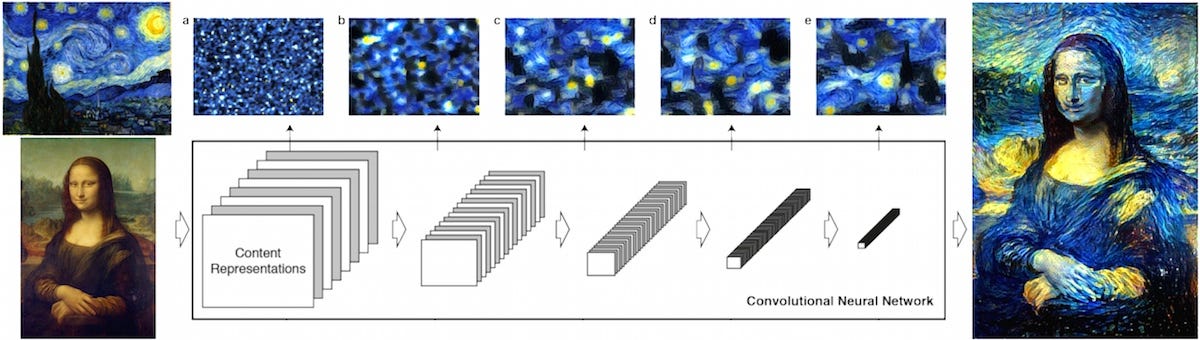
Machine learning forms the foundation of AI art creation. These systems analyse vast databases of existing artworks to learn patterns, styles, and visual relationships. The process involves:
- Training data: AI systems study millions of existing images and artworks
- Pattern recognition: Algorithms identify common elements, styles, and techniques
- Generative capability: Systems learn to create new combinations based on learned patterns
Creative Adversarial Networks (CANs) represent an advanced form of AI specifically designed for artistic creation. Unlike standard systems, CANs are programmed to deliberately break patterns and create unexpected results, potentially leading to more surprising and innovative artworks.
Example
How AI Art Generation Works: A Step-by-Step Process
Step 1: Data Collection - The AI system is fed thousands of existing artworks and images
Step 2: Pattern Analysis - Algorithms identify common visual elements, colour schemes, and compositional techniques
Step 3: Learning Phase - The system builds mathematical models representing different artistic styles and approaches
Step 4: Generation - When prompted, the AI combines learned patterns in new ways to create original compositions
Step 5: Refinement - Advanced systems can iterate and improve their outputs based on feedback
Generative algorithms can evolve and mutate during the creation process, similar to how human artists might experiment and refine their work. This means the final artwork may differ significantly from the original programming, raising questions about authorship and creative responsibility.
The creativity debate
One of the most contentious aspects of AI art concerns whether machines can truly be creative or merely imitate existing works.
Margaret Boden, a leading researcher in cognitive science, defines creativity as:
By this definition, AI systems like AI-Da could indeed be considered creative, as their works often produce novel and unexpected results.
Important
The creativity debate isn't just academic - it has real implications for how we value AI art, determine authorship rights, and understand the future relationship between humans and machines in creative endeavours.
However, critics argue that true creativity requires:
- Intentionality: The conscious desire to create and express ideas
- Emotional content: Personal experiences and feelings that inform artistic choices
- Cultural understanding: Awareness of social and historical contexts
- Self-awareness: Recognition of one's own creative process and artistic identity
The debate centres on whether AI systems possess these qualities or simply simulate them through sophisticated programming.
Questions of authorship and ownership
AI art raises complex legal and ethical questions about who can claim authorship of AI-generated works. These questions become increasingly important as AI art gains commercial value and cultural recognition.
Multiple stakeholders may have claims to AI artworks:
- The programmers who created the AI system
- The artists whose works were used to train the algorithm
- The person who provided the prompt or input
- The AI system itself (though this remains legally problematic)
Important
Legal Uncertainty Ahead
Current copyright laws weren't designed for AI-generated content, creating a legal grey area that courts and legislators are only beginning to address. This uncertainty affects both artists and collectors investing in AI artworks.
Plagiarism concerns are particularly relevant, as AI systems learn from existing artworks without explicit permission from original creators. This raises questions about:
- Fair use in machine learning contexts
- Compensation for artists whose work trains AI systems
- Copyright protection for AI-generated content
Data ownership becomes crucial when considering that AI systems are trained on vast collections of human-created art, often without explicit consent from the original artists.
Is art uniquely human?
The emergence of AI art challenges long-held beliefs about art as an exclusively human endeavour. This philosophical question forces us to examine our fundamental assumptions about creativity and consciousness.
Traditional views of art emphasise its human origins:
- Art as emotional expression and communication between humans
- Creative works as reflections of human experience and consciousness
- Artistic appreciation as a fundamentally human capacity
Expanding definitions suggest creativity might not be limited to humans:
- Animals demonstrate creative behaviours in nest-building and mating displays
- Machines can produce works that humans find aesthetically pleasing
- Collaboration between humans and non-human entities has historical precedents
Note
Consider this perspective: "Creativity cannot come from nothing – all artists whether human, robot or algorithm, build upon the works of others." This suggests that the source of inspiration may be less important than the final creative output.
Intent and consciousness remain central to the debate. Some argue that without conscious intention and emotional depth, AI creations cannot be considered true art, regardless of their aesthetic merit.
The question ultimately depends on how we choose to define both "art" and "creativity" in an age of advancing artificial intelligence.
The future of AI art
The integration of AI into the art world appears to be accelerating, with significant developments reshaping how we create, exhibit, and appreciate artistic works.
Institutional recognition is growing, with major galleries beginning to exhibit AI artworks alongside traditional pieces. The world's first AI art gallery is planned to open soon, dedicated exclusively to "ethical AI" art.
Collaborative potential between humans and AI systems offers exciting possibilities:
- Artists using AI as a sophisticated tool, similar to digital software
- AI systems augmenting human creativity rather than replacing it
- New hybrid forms of art that combine human intention with machine generation
Note
Many artists now view AI as "a new outlet for their own creativity – a fresh medium they can wield much like a brush or palette knife." This perspective suggests collaboration rather than competition between human and artificial intelligence.
Educational impact is already emerging, as art schools begin incorporating AI tools into their curricula and students explore new forms of creative expression.
Market development shows AI artworks commanding significant prices at auctions, suggesting commercial viability and collector interest.
The future likely involves continued collaboration between human artists and AI systems, with each contributing their unique strengths to the creative process.
Remember!
Summary
Key Points to Remember:
-
AI art uses artificial intelligence algorithms to generate creative works, raising fundamental questions about creativity, authorship, and artistic value
-
AI-Da is the world's first humanoid robot artist, creating self-portraits and challenging our understanding of artistic consciousness and physical presence in art
-
Historical precedent exists for new technologies disrupting art definitions, as seen with Duchamp's readymades and photography's emergence - suggesting AI art may follow a similar path to acceptance
-
Technical processes like machine learning and Creative Adversarial Networks enable AI systems to create genuinely surprising and novel artworks by learning from vast databases of existing art
-
The future likely involves collaboration between humans and AI rather than replacement, with both contributing unique strengths to artistic creation and expanding the boundaries of creative expression