Andy Warhol (Leaving Cert Art): Revision Notes
📚Revision Notes
Andy Warhol
Who was Andy Warhol?
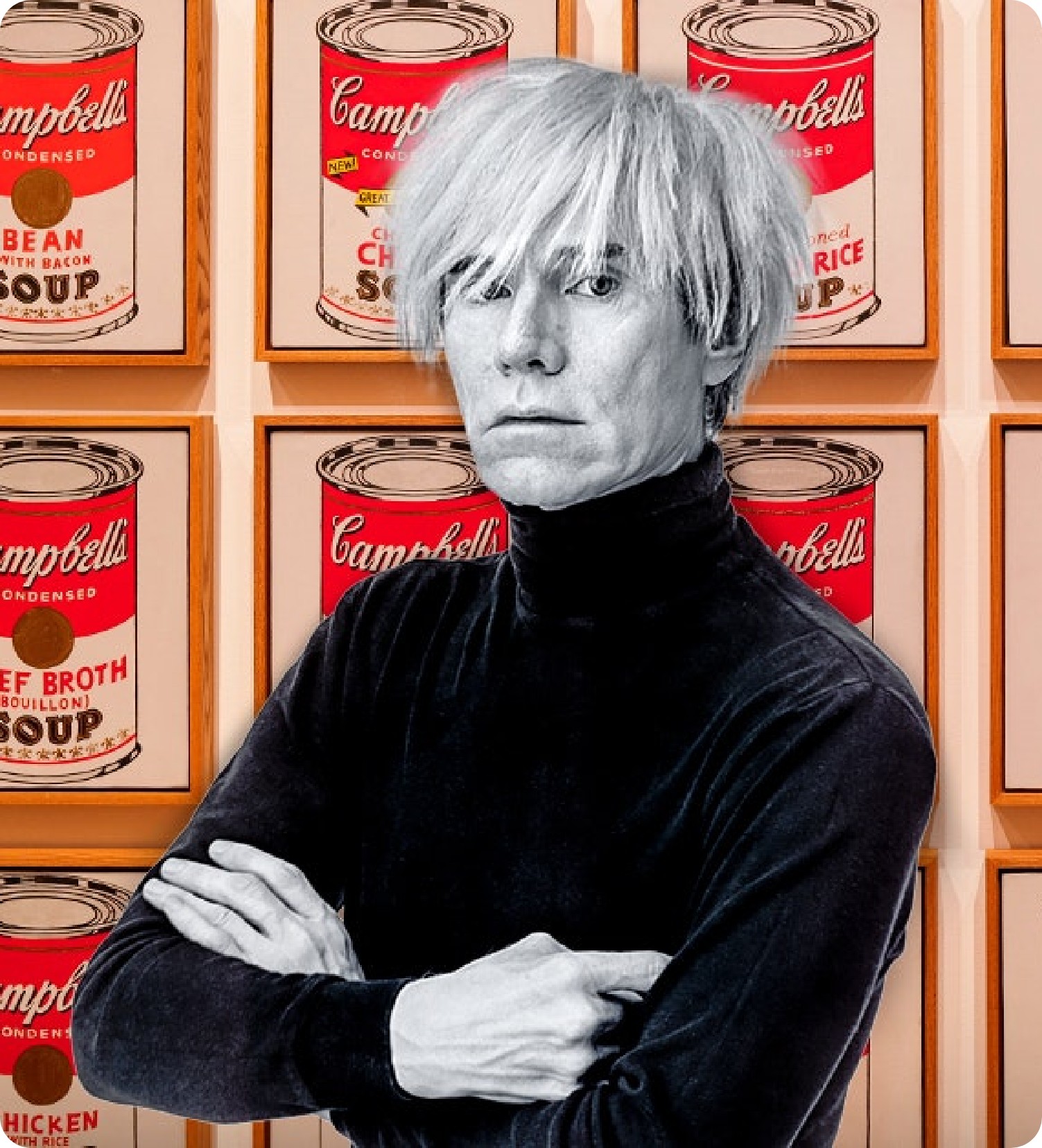
Andy Warhol was one of the most influential artists of the 20th century and a leading figure in the Pop Art movement. Born in Pennsylvania to immigrant parents, he transformed from a commercial illustrator into an internationally recognised fine artist who challenged traditional ideas about what art could be.
Note
Warhol's unique background as both a commercial artist and fine artist allowed him to bridge the gap between everyday consumer culture and high art in ways that no artist had done before.
Key Facts:
- Full name: Andrew Warhola
- Born: 6th August 1928, Pittsburgh, Pennsylvania
- Died: 22nd February 1987, New York City
- Nationality: American
- Art movements: Pop Art, Video Art, Postmodernism
- Media: Painting, printmaking, sculpture, film, photography
Career timeline and development
Warhol's artistic career spanned several decades, with his most productive period occurring from the 1960s onwards. He began as a successful commercial artist before transitioning to fine art in the early 1960s.
Early career (1950s):
- Worked as a commercial illustrator in New York
- Created advertisements and magazine illustrations
- Developed his distinctive blotted line technique
Pop Art breakthrough (1960s):
- Began incorporating popular culture imagery into paintings
- Developed his signature silkscreen printing method
- Created iconic works featuring consumer products and celebrities
Experimental period (1960s-1970s):
- Expanded into filmmaking and performance art
- Established "The Factory" - his famous studio space
- Collaborated with musicians, actors, and other artists
Important
Warhol's transition from commercial to fine art was revolutionary because he brought commercial techniques and subjects into the gallery space, challenging the traditional separation between "high" and "low" art.
Understanding Pop Art
Pop Art was an art movement that emerged in the 1950s and 1960s, primarily in Britain and America. It challenged the boundaries between "high art" and popular culture by incorporating imagery from advertising, comic books, and mass media.
Key characteristics of Pop Art:
- Use of everyday objects and commercial imagery
- Bright, bold colours often inspired by advertising
- Repetition and mass production techniques
- Commentary on consumer culture and celebrity
- Accessible subject matter that ordinary people could recognise
Warhol became the most famous Pop artist because he perfectly captured the spirit of American consumer culture in the 1960s. His work reflected society's growing obsession with brands, celebrities, and mass-produced goods.
Note
Pop Art was radical because it said that a painting of a soup can could be just as valid as a traditional landscape or portrait. This democratised art by making it about subjects everyone could understand.
Famous works and artistic techniques
Campbell's Soup Cans (1962)
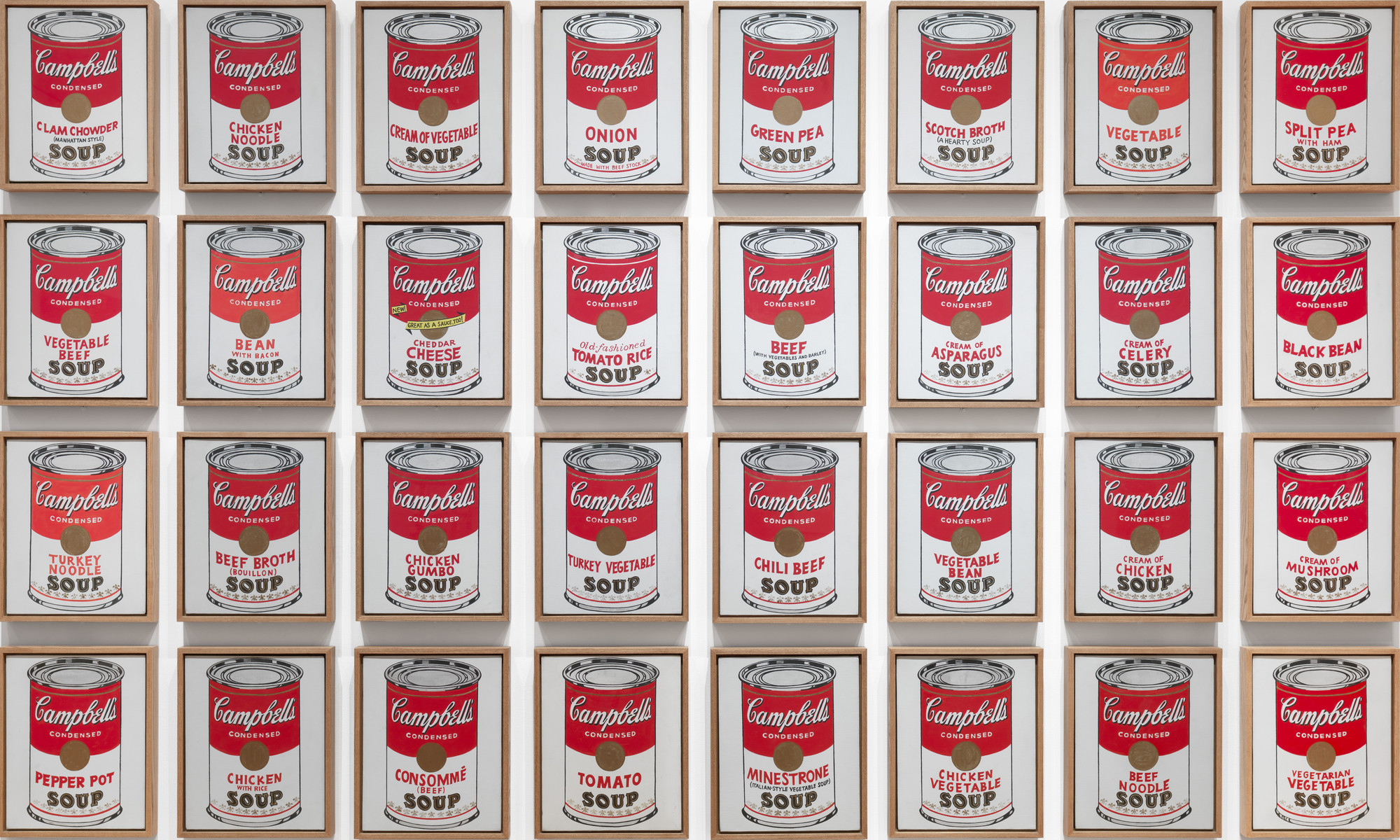
Warhol's breakthrough work featured 32 paintings of Campbell's soup cans, each showing a different flavour. This series revolutionised art by elevating an everyday grocery item to the status of fine art.
Example
Artistic Revolution: From Grocery Store to Gallery
Warhol took something as mundane as a soup can - an object people saw every day in supermarkets - and presented it exactly as it appeared on the shelf. By doing this, he asked: "What makes something art?" Is it the skill of the artist, the beauty of the subject, or simply the context in which we view it?
The 32 cans represented every flavour Campbell's made at the time, displayed in a grid like products on a supermarket shelf.
Why soup cans?
- Warhol claimed he ate Campbell's soup for lunch every day
- Represented the standardised, mass-produced nature of American food culture
- Challenged traditional still life painting by using commercial packaging
Marilyn Monroe series (1962)
Created shortly after Monroe's death, these works became some of Warhol's most recognisable pieces. Using a publicity photograph, he created multiple versions in different colour combinations.

Artistic significance:
- Explored themes of celebrity, beauty, and death
- Used repetition to mirror how media images are reproduced
- Bright colours contrasted with the tragedy of Monroe's death
- Commented on how celebrities become commercial products
Other significant works
Coca-Cola bottles: Represented American consumer culture and global brand recognition
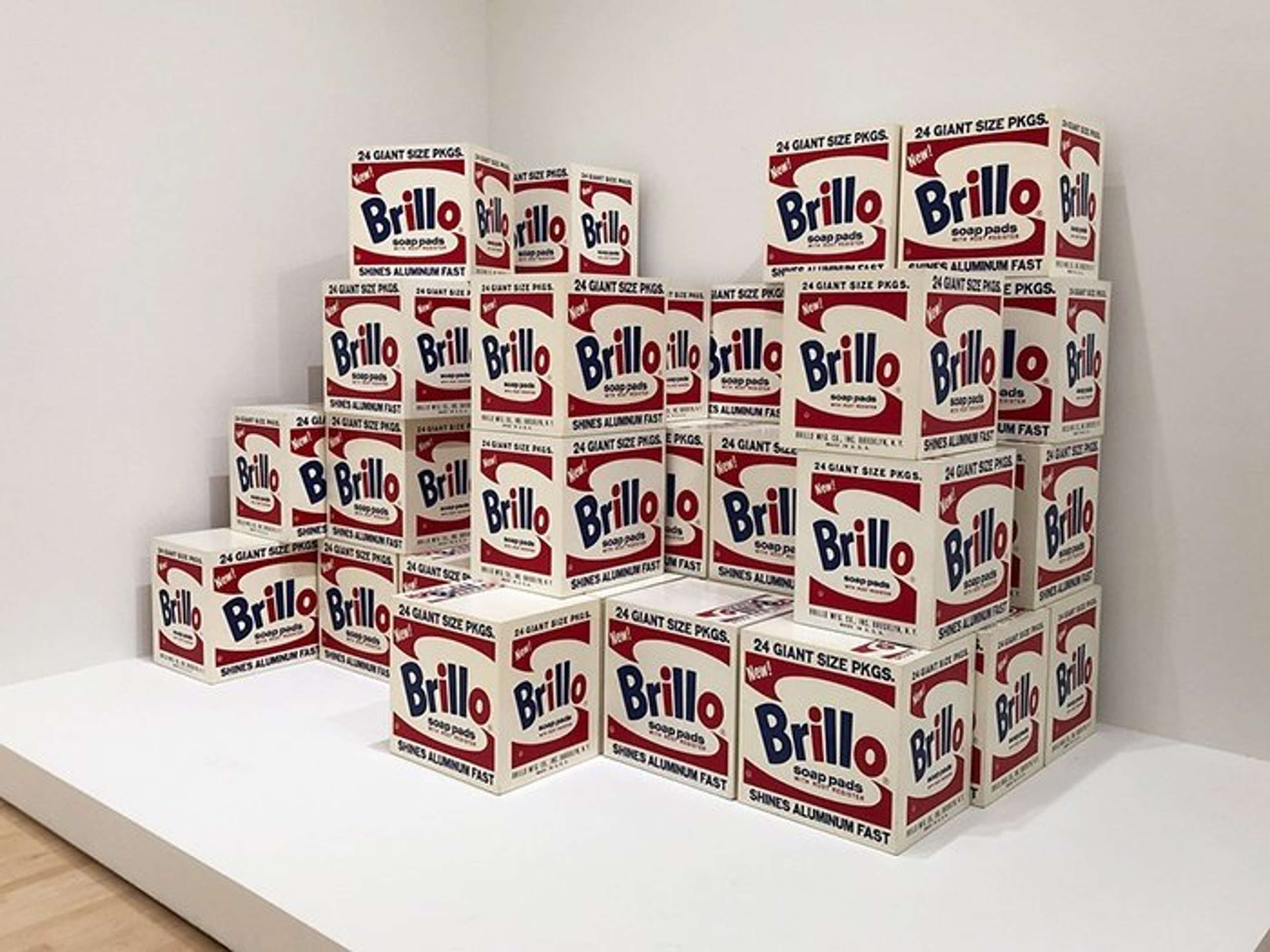
Brillo Boxes: Exact replicas of soap pad packaging, questioning what makes something "art"
Silkscreen printing technique
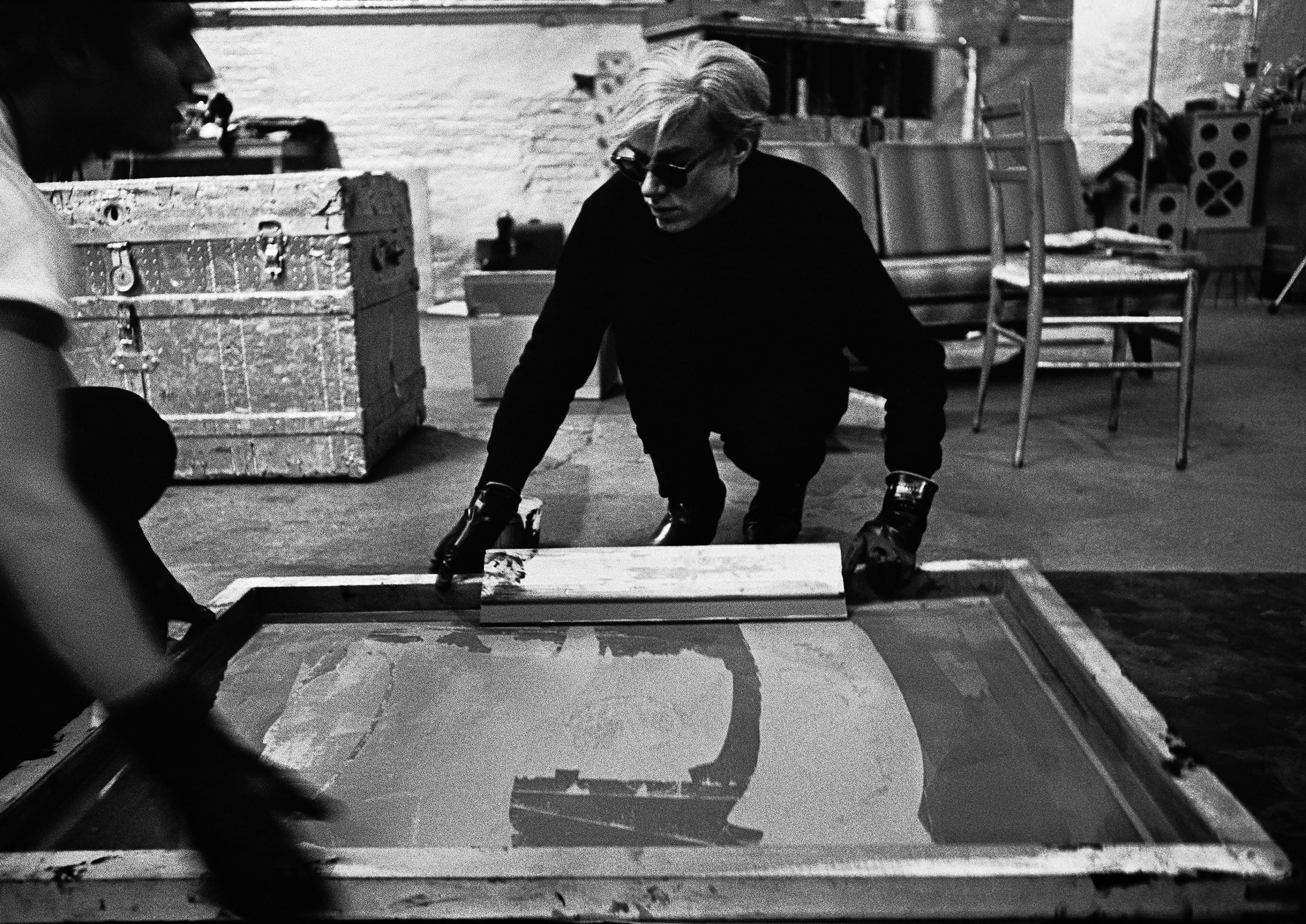
Silkscreen printing (also called serigraphy) was Warhol's signature technique. This commercial printing method allowed him to create multiple identical images quickly and efficiently.
Example
Step-by-Step: The Silkscreen Process
Step 1: A photograph is transferred onto a fine mesh screen Step 2: Paint or ink is pushed through the screen onto canvas using a squeegee Step 3: Multiple copies can be made from the same screen Step 4: Different colours can be applied in layers to create variations
This process meant Warhol could create dozens of nearly identical images, just like a factory producing consumer goods.
Why Warhol used this technique:
- Reflected his interest in mass production
- Removed the traditional "artist's hand" from the work
- Allowed for quick reproduction of images
- Connected his art to commercial printing processes
Note
Silkscreen printing was already being used in commercial advertising and textile printing. By bringing this industrial technique into fine art, Warhol further blurred the lines between commercial and artistic production.
Key themes and concepts
Consumer culture
Warhol was fascinated by America's consumer society and the way products were marketed and sold. His art celebrated and critiqued the abundance of branded goods available to consumers.
Celebrity and fame
He explored how the media creates and destroys celebrities, treating famous people like consumer products. His studio, "The Factory," became a meeting place for celebrities, musicians, and socialites.
Death and tragedy
Many of Warhol's works dealt with death, from car crashes to electric chairs. He often juxtaposed tragic subjects with bright, commercial-style colours.
Repetition and mass production
The repeated images in his work mirrored the way products are manufactured and how media images are endlessly reproduced.
Important
Understanding these themes is crucial because they predicted many aspects of our current culture: our obsession with brands, celebrity worship, and the way tragic events become media spectacles.
Art philosophy and approach
Warhol famously said: "Business art is the step that comes after Art." This quote reveals his belief that art and commerce could work together successfully.
Important
Warhol's Revolutionary Philosophy
Warhol challenged the romantic notion of the artist as a tortured, solitary genius. Instead, he embraced:
- Art as a business venture
- Collaboration over individual creation
- Mechanical reproduction over hand-crafted uniqueness
- Popular subjects over elite themes
This was radical thinking that changed how we understand artistic creation.
Key aspects of his philosophy:
- Art should be accessible to everyone, not just the elite
- There's beauty in everyday, ordinary objects
- The process of making art can be mechanical rather than emotional
- Artists can be businesspeople as well as creators
"The Factory" concept: Warhol's studio was called "The Factory" because he wanted to mass-produce art like a factory produces goods. He employed assistants to help create works, challenging the traditional idea of the artist as a solitary genius.
Legacy and influence
Warhol's impact on art and culture extends far beyond the Pop Art movement:
Artistic influence:
- Bridged the gap between commercial and fine art
- Influenced contemporary artists who use commercial techniques
- Pioneered the use of photography in printmaking
- Expanded the definition of what could be considered art
Cultural impact:
- Predicted society's obsession with celebrity culture
- Influenced fashion, music, and popular culture
- His "15 minutes of fame" concept became part of everyday language
- The Andy Warhol Foundation continues to support visual arts
Continuing relevance: Today, in our image-saturated social media world, Warhol's exploration of celebrity, repetition, and consumer culture seems remarkably prophetic. His work anticipated many aspects of contemporary digital culture.
Note
Consider how Warhol's predictions about celebrity culture and mass media have come true in the age of Instagram, TikTok, and viral content. His art feels more relevant today than ever before.
Remember!
Summary
Key Points to Remember:
-
Andy Warhol (1928-1987) was the leading figure of the Pop Art movement, transforming everyday consumer goods into fine art
-
Silkscreen printing was his signature technique, allowing him to mass-produce images and remove the traditional "artist's hand" from his work
-
Key works include Campbell's Soup Cans, Marilyn Monroe series, and Coca-Cola bottles - all exploring themes of consumer culture and celebrity
-
"The Factory" was his studio where he mass-produced art with assistants, challenging traditional ideas about artistic creation
-
His philosophy blended art and business, famously stating "Business art is the step that comes after Art" and predicting our modern celebrity-obsessed culture