The Bronze Age (c. 2500-500 BC) (Leaving Cert Art): Revision Notes
📚Revision Notes
The Bronze Age (c. 2500-500 BC)
Introduction and context
The Bronze Age represents a revolutionary period in Irish prehistory when new technology and cultural practices transformed society. This era began around 2500 BC when bronze technology and more communal living patterns developed in Ireland, marking a significant departure from Stone Age practices.
Note
Bronze Age technology served as the foundation for early civilisations developing around the Eastern Mediterranean, though Ireland's pastoral farming communities and smaller social groups initially followed a different developmental path.
The sophisticated metalworking that emerged during this period would not reach the same level of complexity as Mediterranean civilisations until much later.
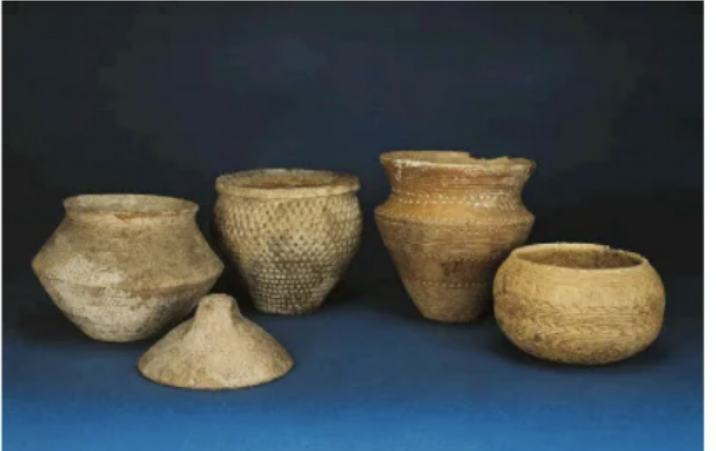
During the early Bronze Age in Ireland, Stone Age culture persisted in some areas, particularly in the south and west. Meanwhile, the Beaker people (named after their distinctive cremation burial pots shaped like inverted beakers) brought new influences to other regions.
Innovation and invention
Understanding bronze and metalworking
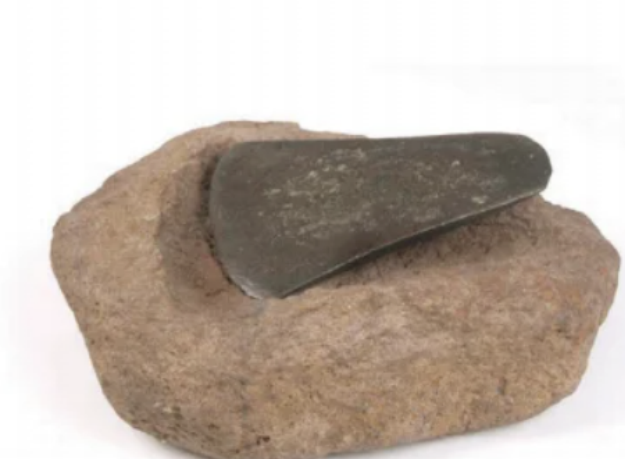
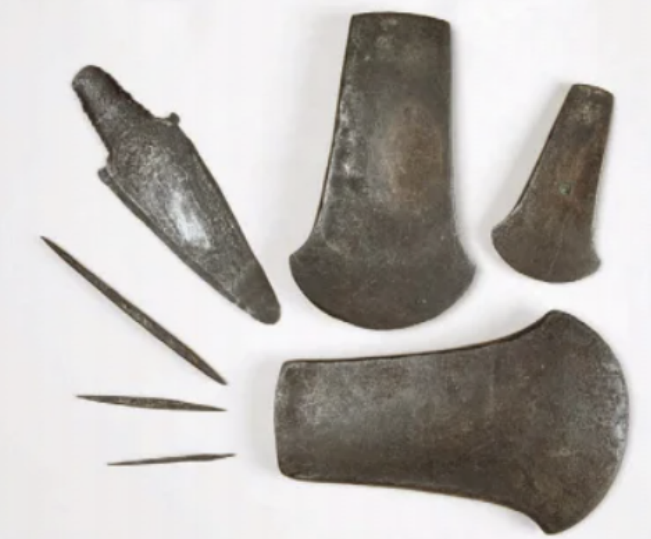
Bronze is an alloy created by combining copper and tin. This mixture produces a material harder and more durable than copper alone, making it superior for tools and weapons. The development of bronze technology marked a crucial advancement in human craftsmanship and daily life.
Gold working techniques
Gold was probably discovered in nuggets or through panning alluvial deposits in rivers. Ancient metalworkers developed sophisticated techniques for processing this precious metal:
Example
Worked Example: Gold Panning Process
Step 1: Panning technique - A mixture of sand, gravel and gold particles was placed in a pan with water
Step 2: Separation - The heavier gold particles settled to the bottom while lighter materials were washed away
Step 3: Processing - Gold particles could then be melted and cast into suitable shaped pieces for further metalwork
Copper processing
Copper working involved roasting ore-bearing rock with fire, then throwing cold water on it. The thermal shock broke the stone, which was then processed using wooden shovels and crushed with stone hammers. Areas with high copper oxide concentrations were selected over charcoal fires, and the resulting molten copper was poured into stone or bronze moulds.
Bronze production and use
Bronze combined the best qualities of both copper and tin. Many Bronze Age tools and weapons were made entirely of copper, while bronze (the harder alloy) gradually replaced copper in tools and weapons as the technology developed.
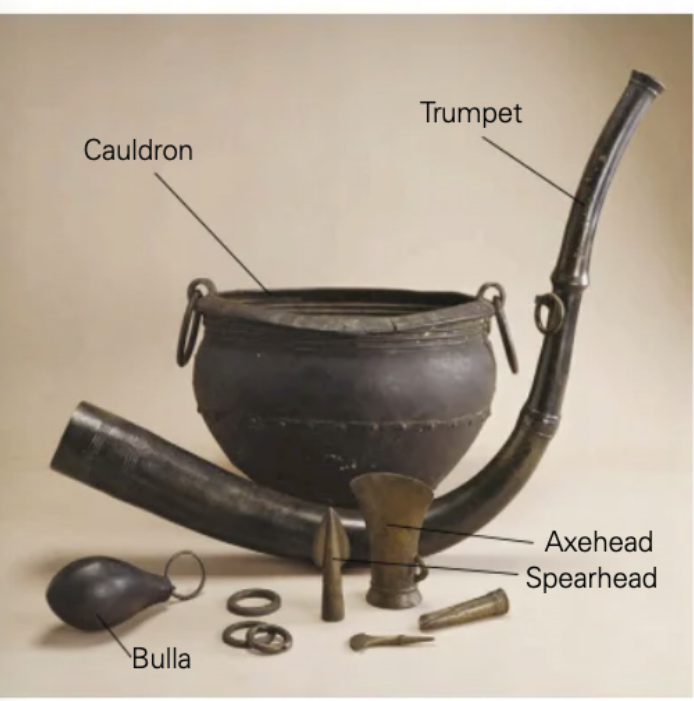
Bronze was used to create a wide variety of practical and decorative objects including tools, weapons, cauldrons, trumpets, spear heads, axe heads, and ornamental pieces like torcs and fibulae.
Decorative techniques and patterns
Bronze Age craftspeople developed sophisticated methods for decorating their metalwork. These techniques created beautiful surface patterns and textures that demonstrated both technical skill and artistic vision.
The repoussé technique
Repoussé was a technique used to create raised designs on flat sheets of thin metal, particularly gold. The process involved:
Example
Worked Example: Repoussé Process
Step 1: Preparation - Placing a thin gold sheet face-down on a firm surface
Step 2: Working the metal - Working from the back to create hollow, raised patterns
Step 3: Tool application - Using various tools to achieve different textures and shapes
Step 4: Pattern creation - Creating intricate geometric patterns including concentric circles, beading, and linear designs
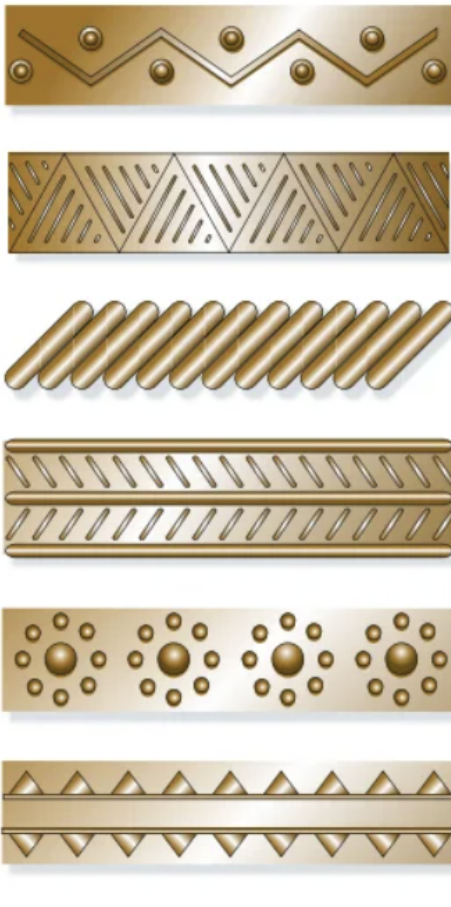
Common decorative patterns
Bronze Age metalworkers employed various decorative elements including:
- Parallel ridges: Straight, raised linear patterns
- Rope or string patterns: Twisted, cord-like textures
- Rows of beads: Linear arrangements of raised spherical forms
- Circular bead arrangements: Beads arranged in circular formations
- Raised cone shapes: Three-dimensional conical protrusions
- Punch marks: Systematic patterns of small circular indentations
Note
These basic patterns were often combined to create more complex decorative schemes on curved and angular metalwork surfaces.
Art elements and design principles
Early Bronze Age artists developed distinctive approaches to decoration and design that evolved significantly throughout the period.
Early Bronze Age (2500-1500 BC)
During this period, gold objects featured simple abstract geometric patterns including circles, triangles, dots and straight lines. These elements were repeated and combined in various ways to create the first sophisticated decorative schemes used by Irish goldsmiths.
Architecture and stone structures
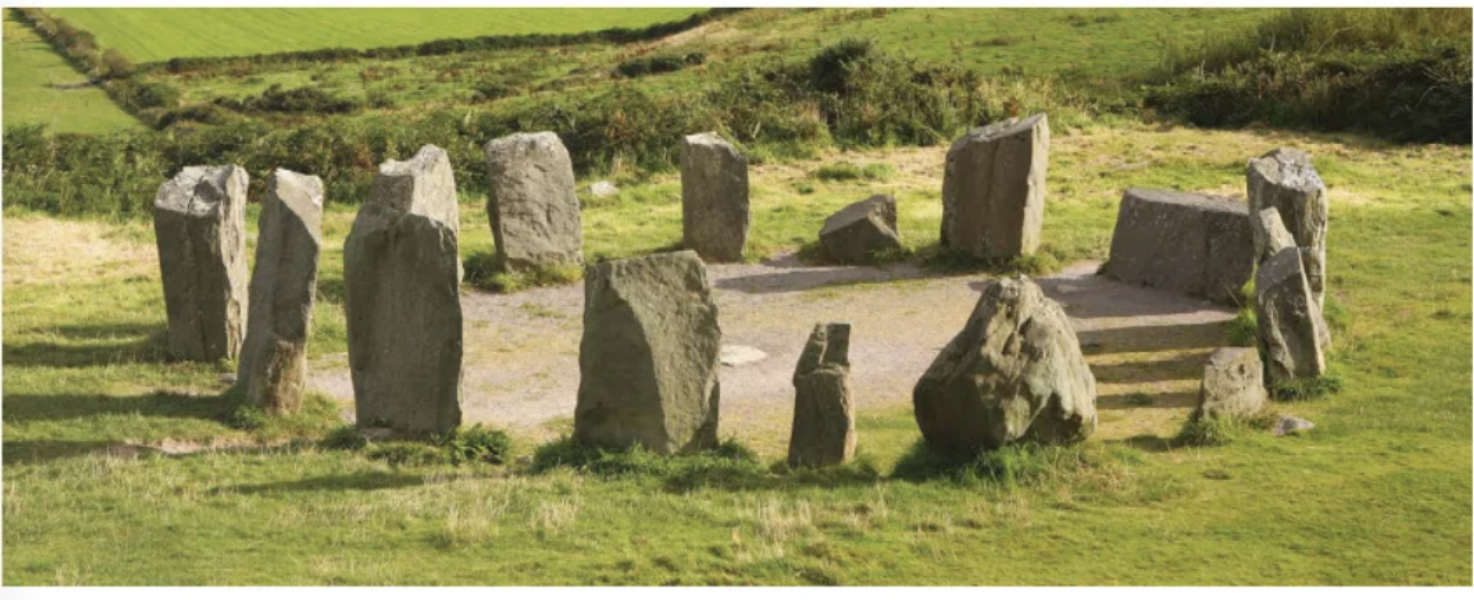
Bronze Age communities continued using circular earthen banks and standing stones, building on traditions from the Stone Age but incorporating new ceremonial practices. The Drombeg stone circle in County Cork exemplifies this architectural continuity, featuring arrangements of standing stones that may have served astronomical or ritual purposes.
Note
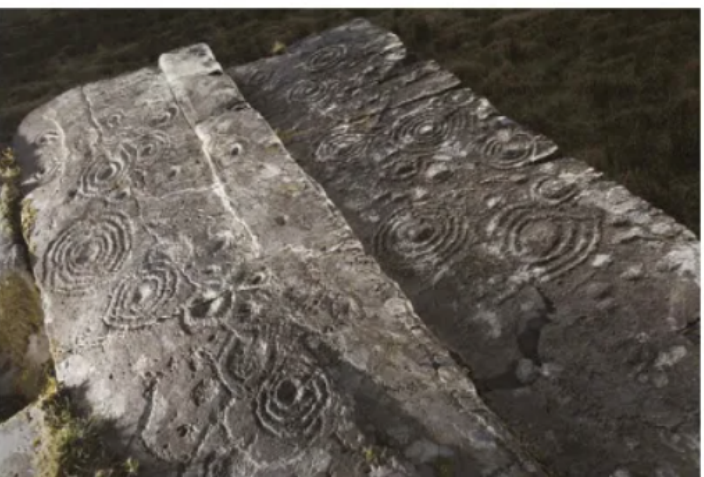
Stone carving became more sophisticated during this period, with complex geometric patterns including spirals, concentric circles, and intricate symbolic engravings appearing on large stone monuments throughout the landscape.
Tedavnet sun discs
The Tedavnet Sun Discs, dating from about 2000 BC, represent important examples of Early Bronze Age craftsmanship:
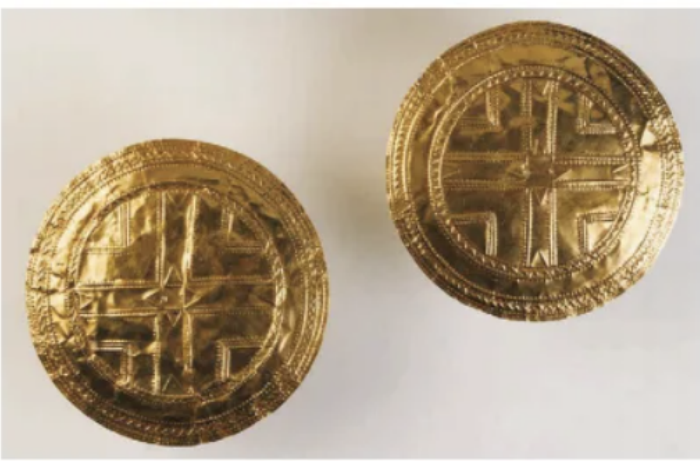
Form: Made from sheets of gold beaten to less than a millimetre thick, these discs were cut into perfect circles measuring 11 cm in diameter.
Function: Two holes near the centre suggest they may have been sewn onto belts or garments, possibly serving as status symbols or having religious significance related to sun worship.
Technique: The decorative designs were applied using the repoussé technique, creating raised patterns that caught and reflected light beautifully.
The middle Bronze Age: Bishopsland phase (1500-1200 BC)
Torcs - revolutionary ornamental design
Around 1400 BC, a completely new form of ornament largely replaced sheet gold work. Torcs were decorative neck, arm, or waist ornaments created by twisting gold into various spiral forms.
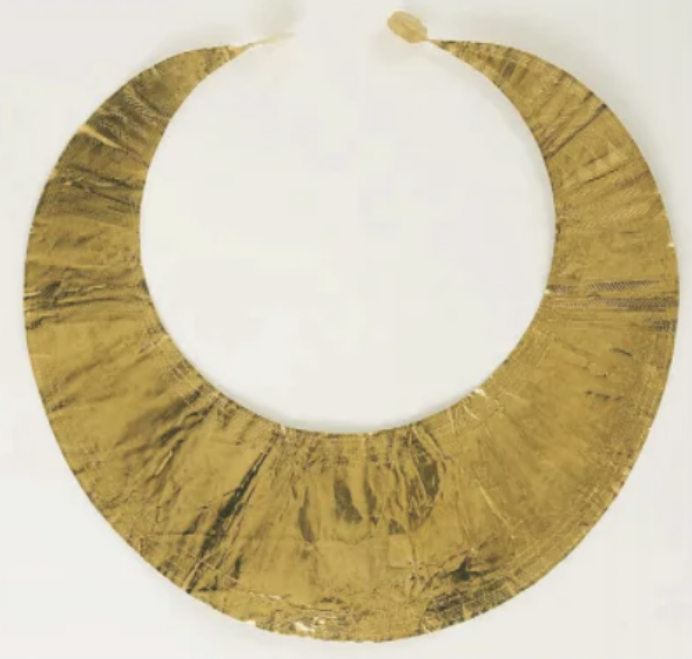
Bar and flanged torcs
Form: Torcs came in various shapes and sizes - square, triangular, circular, or cross-shaped in section, available in different lengths.
Function: These ornaments were designed to fit around the neck, arms, waist, and could serve as earrings. They likely indicated social status or had ceremonial significance.
Technique: By varying the size of flanges, the length of the bar, and the degree of twist applied, craftsmen could create diverse decorative effects. Some featured simple hooks or more elaborate catches at the ends.
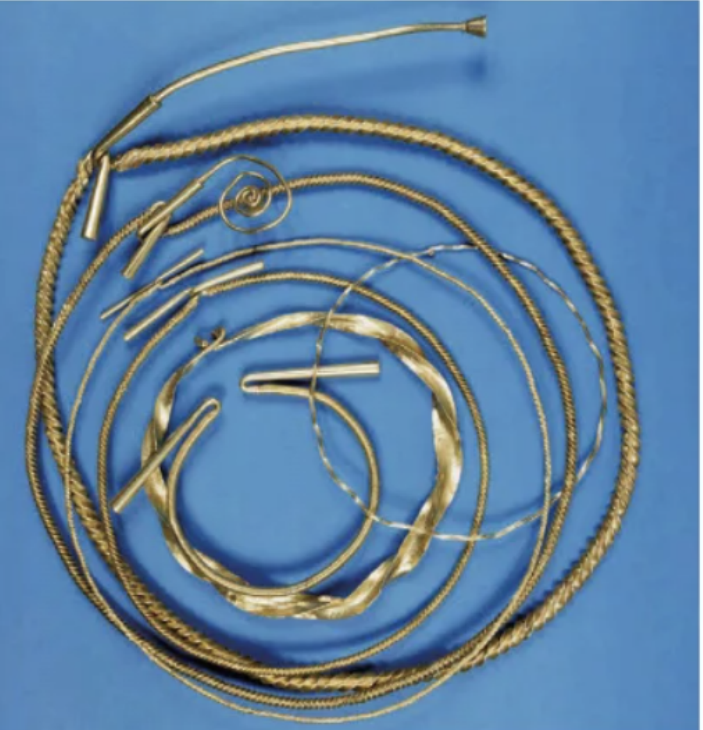
Important
All torcs were made from single pieces of gold, with twisted forms providing both structural strength and visual appeal. Some incorporated decorative catches or terminals that demonstrated advanced metalworking skills.
The late Bronze Age: the Dowris phase (1200-500 BC)
After 800 BC, there was a significant surge in metalwork production throughout Ireland. This period, known as the Golden Age or Dowris Phase, saw the creation of Ireland's most sophisticated Bronze Age craftsmanship.
The Derrinaboy armbands
These impressive pieces of metalwork were created during the Bishopsland Phase and demonstrate advanced repoussé techniques:
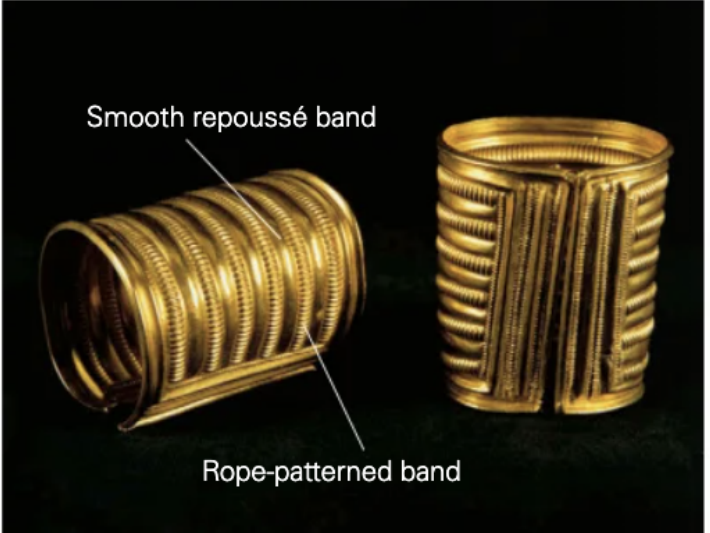
Form: The armbands were made using gold sheet metal, curved to form cylindrical bands.
Function: Worn on the upper arms or wrists, probably as status symbols or ceremonial items.
Technique: Featuring alternating rows of smooth and string-patterned ridges created through repoussé work, these pieces show sophisticated pattern-making abilities.
Clones fibula
A fibula is essentially a Bronze Age dress fastener or brooch, similar to a modern safety pin:
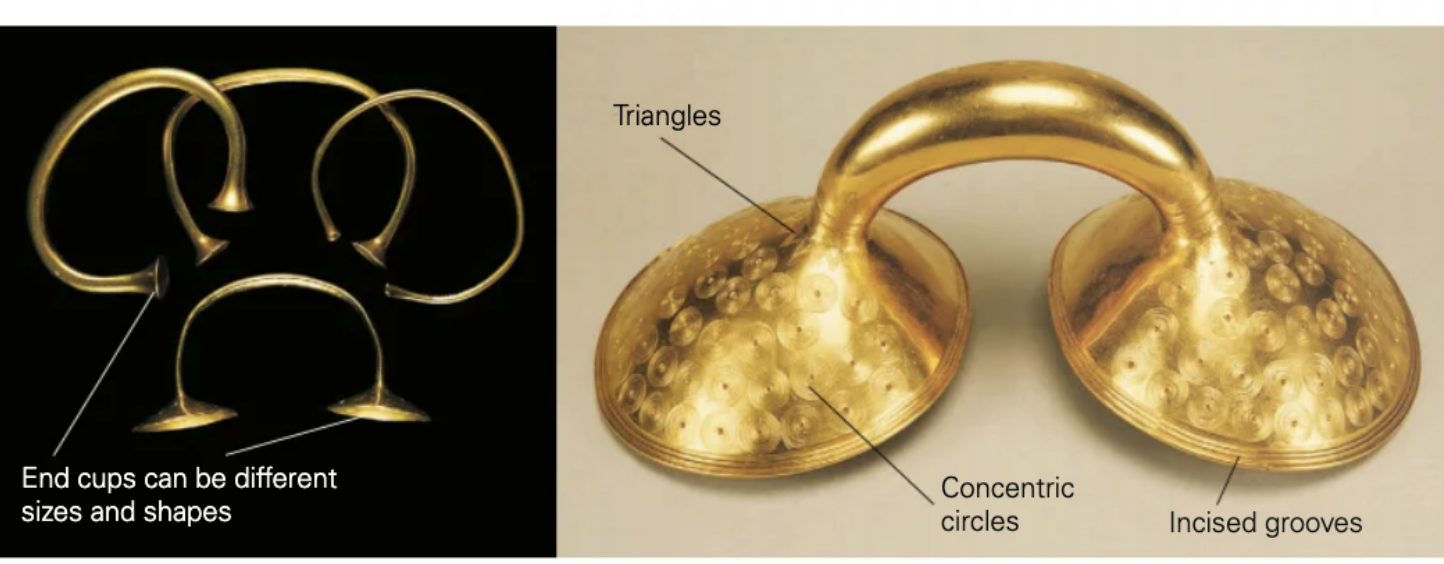
Form: Made from solid gold, the Clones Fibula features large open-cup ends connected by a bow or handle.
Function: These fasteners were used to secure clothing, with the button-like ends passing through fabric holes on cloaks or tunics.
Technique: Some fibulae show evidence of being used as trading items or status symbols, demonstrating the sophistication of Bronze Age social structures.
The Gleninsheen gorget
Gorgets were perhaps the most skilfully crafted objects from the Bronze Age, representing the pinnacle of metalworking achievement:
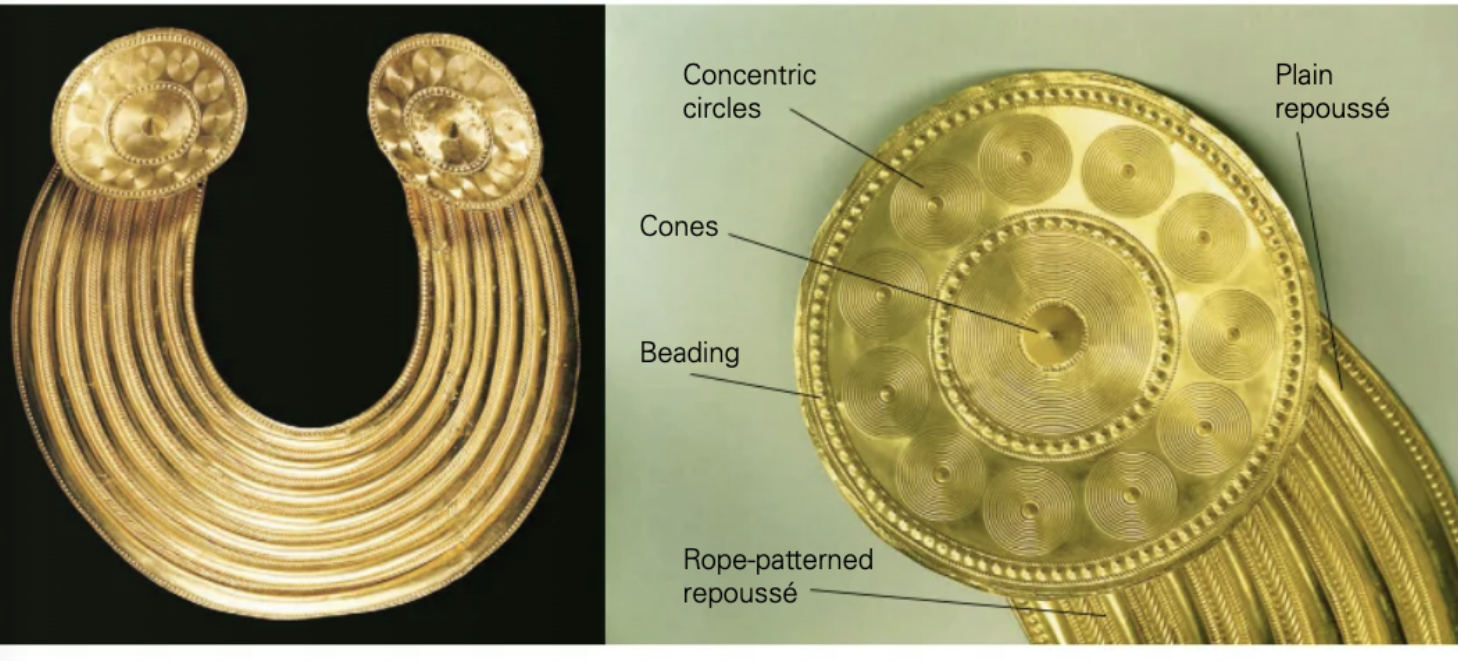
Form: U-shaped gold collars with ornate decorative terminals at each end.
Function: Worn around the neck as high-status ceremonial items, these pieces demonstrated wealth and social position.
Technique: The Gleninsheen Gorget features sophisticated repoussé decoration, with alternating plain and patterned areas. The terminals contain intricate concentric circles, conical bosses, and beading details arranged in complex geometric patterns.
Note
The construction involved connecting individual discs to collar sections using fine goldworking techniques that required exceptional skill and precision.
The Gorteenareagh lock rings
These remarkable objects represent some of the most advanced Bronze Age goldwork in Ireland:
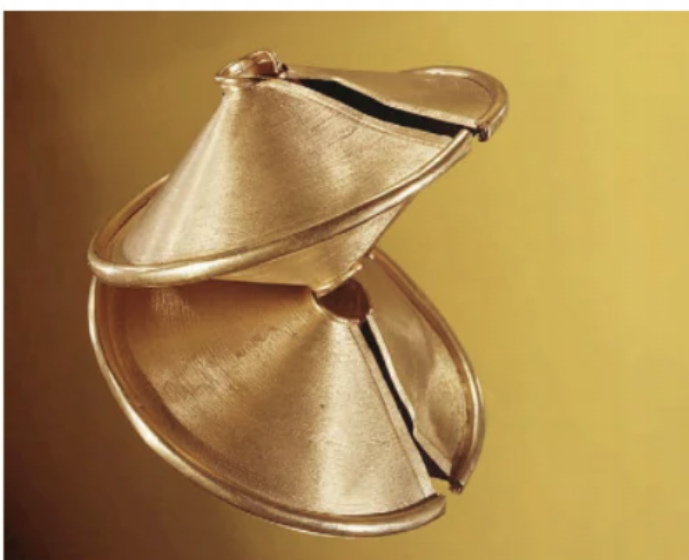
Form: Lock rings consisted of cone-shaped sections made from fine gold wires soldered together into intricate geometric forms.
Function: These pieces may have served as hair ornaments or had ceremonial significance, though their exact use remains debated by archaeologists.
Technique: The gold wires were individually crafted and then joined at precise angles to create tubular, cone-shaped structures. The technical complexity of joining multiple fine wires while maintaining structural integrity demonstrates exceptional metalworking skills.
Bronze cauldrons
Large bronze vessels represent another major achievement of Late Bronze Age craftsmanship:
The bronze cauldron from Castlederg, County Tyrone, measures 56 centimetres in diameter and demonstrates sophisticated metalworking techniques. These vessels were created by hammering bronze sheets and joining them with rivets, showing that Bronze Age craftspeople could produce both decorative ornaments and practical objects of considerable size and complexity.

Pottery and other crafts
Bronze Age pottery showed significant evolution from earlier Stone Age traditions. The characteristic "beaker" pottery gives this culture its name, featuring distinctive inverted pot shapes used in cremation burials.
Note
Pottery techniques became more sophisticated during the Bronze Age, with potters developing new firing methods and decorative approaches that complemented the advancing metalwork traditions.
Remember!
Summary
Key Points to Remember:
-
Bronze technology transformed Irish society after 2500 BC, introducing new tools, weapons, and artistic possibilities through the combination of copper and tin.
-
Metalworking techniques evolved from simple hammering to sophisticated methods including repoussé, twisting, casting, and precision joining of multiple components.
-
Three main phases characterise the Bronze Age: Early (2500-1500 BC) with geometric gold work, Middle/Bishopsland (1500-1200 BC) featuring twisted torcs, and Late/Dowris (1200-500 BC) representing the pinnacle of craftsmanship.
-
Key artefact types include lunulae (crescent-shaped collars), torcs (twisted ornaments), fibulae (dress fasteners), gorgets (neck collars), and elaborate cauldrons, each demonstrating different aspects of Bronze Age skill and artistry.
-
Social significance of metalwork extended beyond practical use to include status symbols, ceremonial objects, and possible religious items that reflected the developing complexity of Bronze Age Irish society.