Romanesque Architecture & Sculpture (Leaving Cert Art): Revision Notes
📚Revision Notes
Romanesque Architecture & Sculpture
Introduction to Romanesque style
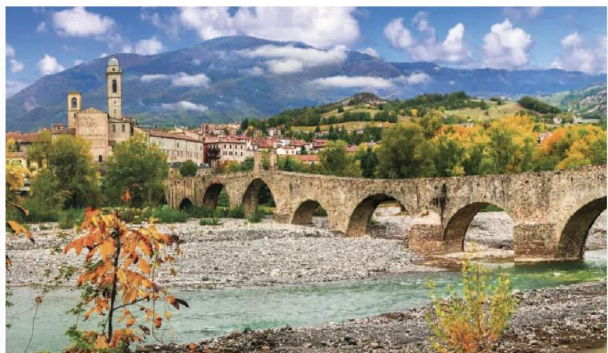
The Romanesque period emerged around 1000 CE and lasted until the 1500s, representing a major development in mediaeval European art and architecture. The name 'Romanesque' literally means 'Roman-like', reflecting how this style drew inspiration from ancient Roman building techniques whilst developing its own distinctive characteristics.
Note
The term "Romanesque" was coined in the 19th century by art historians who recognised the style's debt to Roman architectural traditions, particularly in its use of round arches and massive stone construction.
During this period, Europe was recovering from the instability of the Early Middle Ages. The rise of monasticism, increased pilgrimage, and the power of the Christian Church created a demand for new religious buildings. This led to an extraordinary period of church construction across Europe.
Historical context
The feudal system and monasteries
Mediaeval Europe was organised around the feudal system, a hierarchical structure where land ownership determined social status. At the heart of this system were monasteries, which became centres of learning, culture, and artistic production.
Monasteries played a crucial role in preserving knowledge and fostering artistic development. They were often wealthy institutions that could fund ambitious building projects. The most influential was the Benedictine monastery system, which spread across Europe.
Pilgrimage and the Camino de Santiago
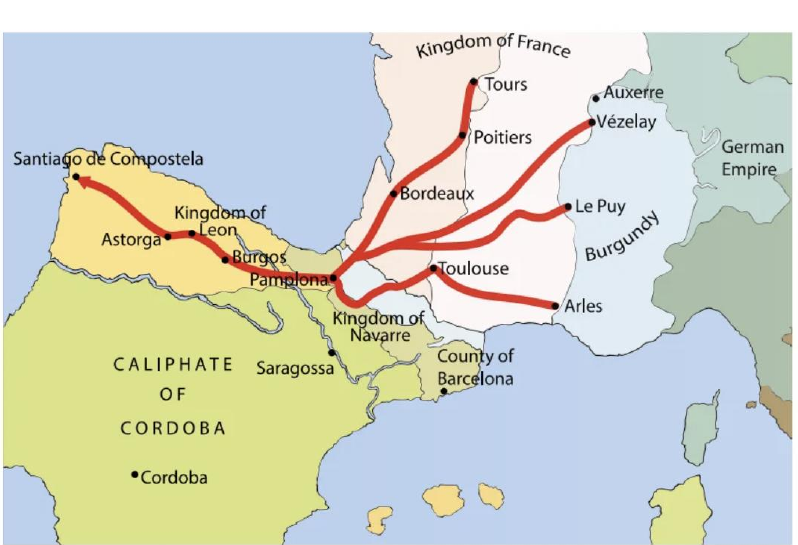
The practice of pilgrimage - long journeys made for religious purposes - significantly influenced Romanesque architecture. The most important pilgrimage destination was Santiago de Compostela in northwest Spain, where the remains of St James the Apostle were believed to be buried.
Important
The pilgrimage routes fundamentally shaped Romanesque church design. Churches needed to accommodate large numbers of pilgrims while allowing continuous flow around sacred spaces, leading to innovations like ambulatories and radiating chapels.
The Camino de Santiago (Way of St James) created a network of pilgrimage routes across Europe. These routes required churches that could accommodate large numbers of pilgrims, leading to specific architectural innovations.
Romanesque architectural features
Church layout and design
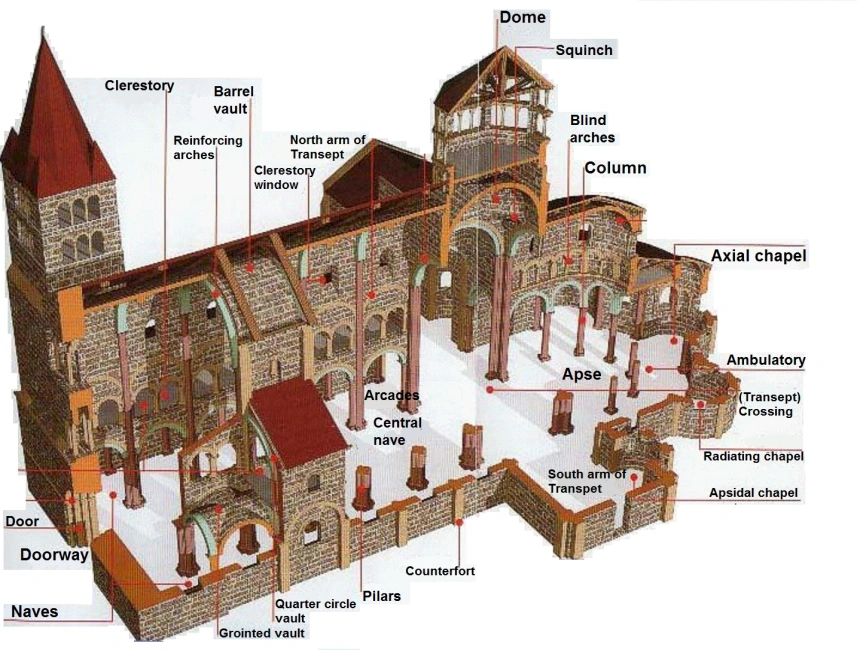
Romanesque churches were typically based on the Roman basilica plan but adapted for Christian worship. The standard layout included:
- Nave: The main body of the church where the congregation gathered
- Transept: The cross-arms that created a cruciform (cross-shaped) plan
- Choir: The area around the altar reserved for clergy
- Apse: The curved eastern end containing the altar
- Ambulatory: A walkway around the choir allowing pilgrims to move freely
- Radiating chapels: Small chapels extending from the ambulatory
Note
The cruciform (cross-shaped) plan was not just symbolic but also practical, providing additional space for altars and allowing better crowd control during religious ceremonies and pilgrim visits.
Structural innovations
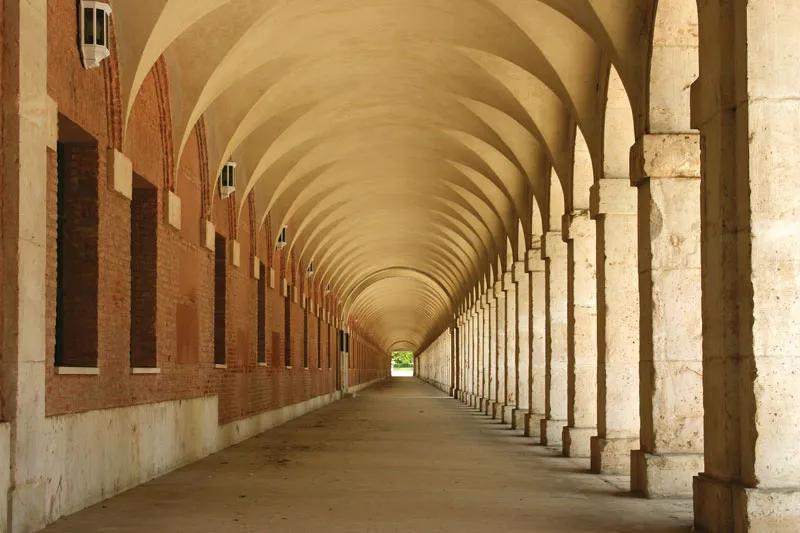
Barrel vaulting was the defining structural feature of Romanesque architecture. A barrel vault is an arched ceiling that runs the length of a space, providing both structural support and aesthetic appeal.
Important
Structural Challenge: Barrel vaults created significant engineering problems. The outward thrust of the curved ceiling required extremely thick walls and massive supporting elements to prevent collapse. This is why Romanesque buildings have such distinctive heavy, fortress-like appearances.
However, barrel vaults created significant structural challenges. The outward thrust of the curved ceiling required extremely thick walls and massive supporting elements to prevent collapse.
Key structural characteristics included:
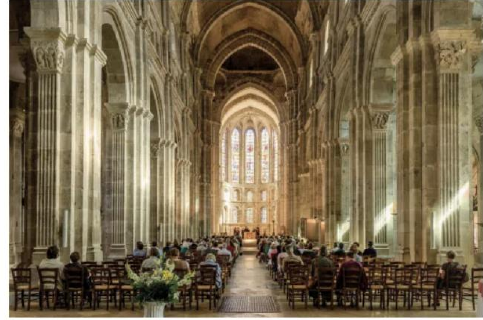
- Round arches: Derived from Roman architecture, these provided strength and stability
- Thick walls: Necessary to support the weight of stone vaulting
- Small windows: Limited by structural requirements, creating dim interiors
- Sturdy piers: Massive supporting columns, often clustered for additional strength
Architectural elements
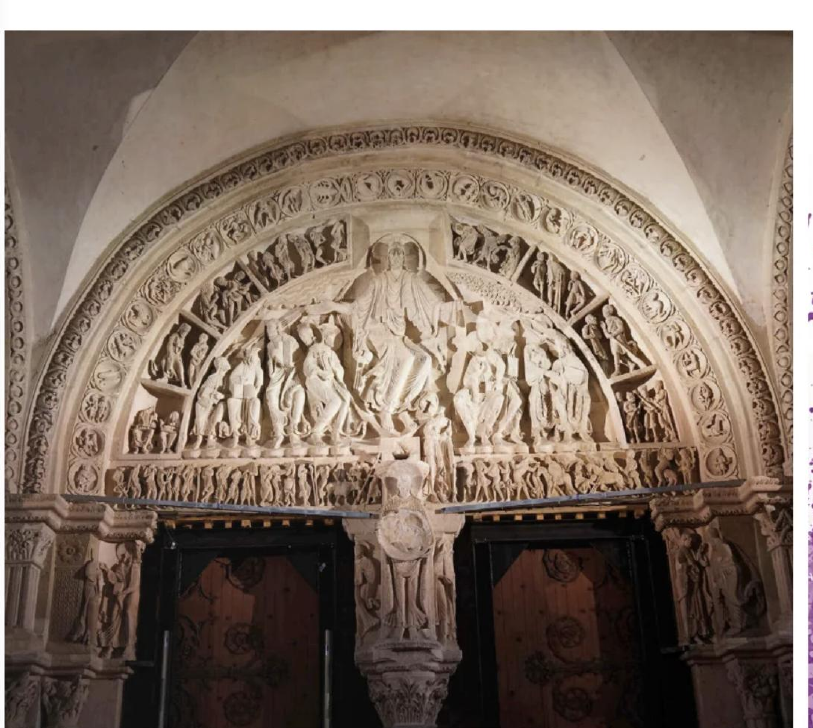
Portals (doorways) became major focal points for decoration. The most important elements included:
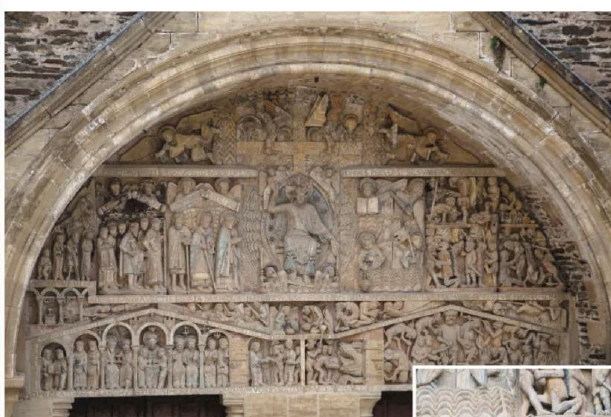
- Tympanum: The semicircular space above the doorway, often filled with sculpture
- Archivolts: Decorative bands surrounding the arched opening
- Jamb figures: Sculptures attached to the sides of doorways
Romanesque sculpture
Relief sculpture and architectural decoration
Romanesque sculpture was primarily architectural sculpture - decoration that formed an integral part of the building structure. Unlike free-standing statues, these carvings were designed to complement and enhance the architectural framework.
Relief sculpture - where figures are carved so they project from a flat background - was the dominant sculptural form. This technique allowed artists to create complex narrative scenes whilst maintaining the structural integrity of the building.
Note
Dual Purpose: Romanesque architectural sculpture served both aesthetic and educational functions. In an age of widespread illiteracy, these carved narratives were essential for communicating religious stories and moral lessons to the general population.
Historiated capitals
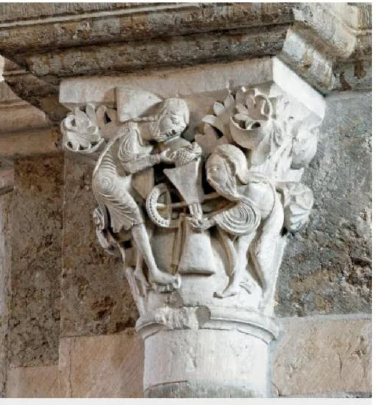
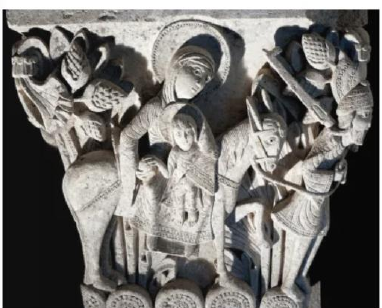
Historiated capitals - carved column tops depicting biblical stories or saints' lives - were a distinctive feature of Romanesque architecture. These served both decorative and educational functions, telling religious stories to largely illiterate congregations.
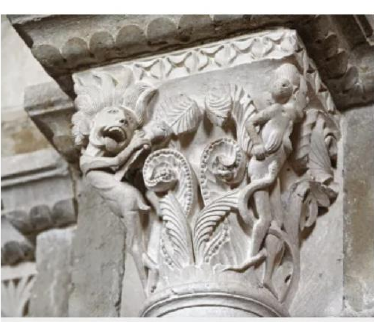
The capitals often featured:
- Biblical narratives
- Lives of saints
- Fantastic creatures and monsters
- Stylised foliage patterns
Tympanum sculpture
The tympanum provided the largest surface for sculptural decoration. Common themes included:
- Christ in Majesty: Christ shown as divine ruler
- The Last Judgement: Depicting the weighing of souls
- Biblical narratives: Stories from the Old and New Testaments
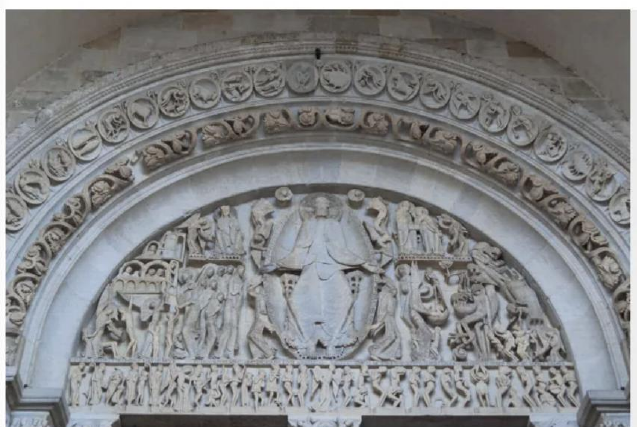
The sculptural style was characterised by:
- Stylised figures: Not naturalistic but symbolic
- Hierarchical scale: Important figures shown larger
- Expressive faces: Emphasising spiritual rather than physical beauty
- Flowing drapery: Creating rhythmic patterns
Major examples
Example
Major Example: Cluny Abbey, France
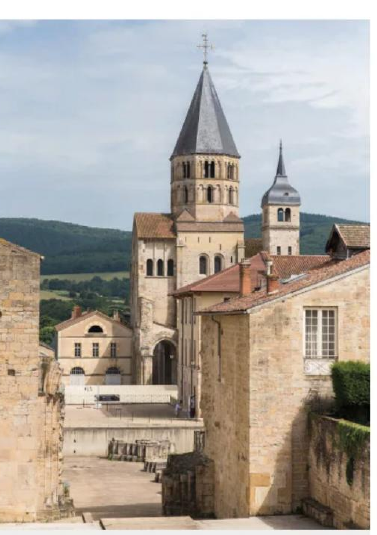
Cluny Abbey was the most influential monastery in mediaeval Europe. Although largely destroyed, it established the template for Romanesque pilgrimage churches. Cluny III, built in the late 11th century, was the largest church in Christendom until the rebuilding of St Peter's in Rome.
Key innovations:
- Established the standard pilgrimage church layout
- Pioneered the use of pointed arches in some areas
- Created the prototype for elaborate sculptural programmes
Example
Major Example: St Foy de Conques, France
This pilgrimage church exemplifies Romanesque design principles. Its famous tympanum depicts the Last Judgement with extraordinary detail and dramatic imagery.
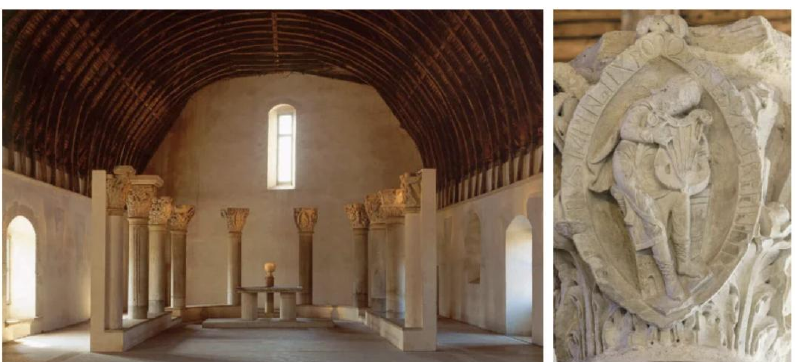
The church features:
- A barrel-vaulted nave
- Radiating chapels for pilgrims
- Elaborate sculptural decoration
- Historiated capitals throughout
Example
Major Example: Basilica Church of St Magdalene, Vézelay
Vézelay became a major pilgrimage destination and departure point for the Camino de Santiago. The church demonstrates innovative structural solutions and sophisticated sculptural programmes.
The central tympanum depicts Christ sending out his apostles, with remarkable attention to detail in both composition and carving technique.
Example
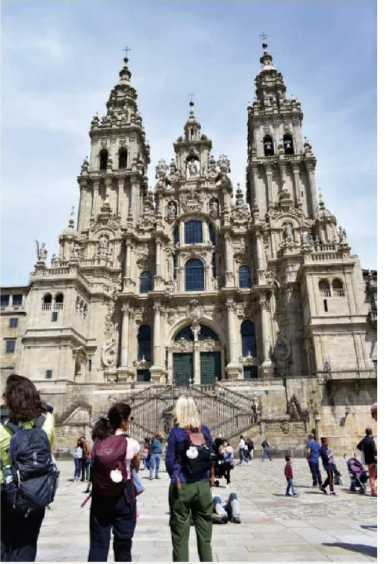
Major Example: Santiago de Compostela Cathedral
As the ultimate destination of mediaeval pilgrimage, Santiago de Compostela represents the culmination of Romanesque church design. The cathedral was specifically planned to accommodate thousands of pilgrims.
Innovative features:
- Multiple entrances for crowd control
- Spacious ambulatory for pilgrim circulation
- Comprehensive sculptural programme
- Integration of architectural and decorative elements
Style and characteristics
Artistic expression
Romanesque art prioritised symbolic meaning over naturalistic representation. Artists followed established conventions to ensure religious messages were clearly communicated:
- Figures were stylised rather than realistic
- Scale indicated importance - Christ and saints appeared larger than ordinary people
- Narrative clarity was more important than accurate proportions
- Decorative patterns filled available spaces
Materials and techniques
Romanesque builders primarily used local stone, which varied considerably across regions. The most common materials were:
- Limestone: Easy to carve and readily available
- Sandstone: Softer stone allowing detailed sculpture
- Granite: Extremely durable but difficult to work
Ashlar masonry - precisely cut rectangular stone blocks - was used for the finest buildings, while rougher construction used rubble fill between dressed stone faces.
Note
Regional Material Influence: The choice of local stone significantly influenced regional architectural styles. For example, the availability of high-quality limestone in France allowed for more elaborate sculptural decoration, while areas with harder stone developed different aesthetic approaches.
Regional variations
While sharing common characteristics, Romanesque architecture developed regional variations:
- Norman Romanesque: Characterised by austere, powerful forms
- French Romanesque: More decorative with elaborate sculptural programmes
- Spanish Romanesque: Influenced by Islamic architectural traditions
- Italian Romanesque: Maintained stronger connections to classical Roman models
Art elements and design principles
Architecture
Shape: Romanesque architecture emphasised geometric forms and symmetrical compositions. Churches were designed on cruciform plans with clearly defined spaces.
Typical characteristics included:
- Rounded arches on doors, windows and towers
- Thick walls to support heavy stone vaulting
- Sturdy piers supporting round arches
- Small windows at upper levels to admit light whilst maintaining structural integrity
Sculpture
Form: Sculpture was carved in both high and low relief, with figures often arranged in hierarchical compositions that emphasised religious importance.
Decorative elements and motifs drew from various sources:
- Foliage patterns based on classical acanthus leaves
- Animal forms including both realistic and fantastic creatures
- Geometric patterns creating rhythmic decorative schemes
- Biblical narratives told through sequential scenes
Style characteristics
Romanesque sculpture exhibited distinctive stylistic features:
- Elongated figures with spiritual rather than naturalistic proportions
- Expressive faces conveying religious emotion
- Flowing drapery creating rhythmic linear patterns
- Symbolic attributes identifying saints and biblical figures
Summary
Key Points to Remember:
- Romanesque means 'Roman-like' - this style drew inspiration from ancient Roman architecture whilst developing distinctive mediaeval characteristics
- Barrel vaults and round arches were the defining structural features, requiring thick walls and massive supports
- Pilgrimage churches needed special architectural features like ambulatories and radiating chapels to accommodate large numbers of visitors
- Architectural sculpture served both decorative and educational functions, telling religious stories through carved capitals, tympana, and portals
- Regional variations developed across Europe whilst maintaining common structural and stylistic principles