Rembrandt (Leaving Cert Art): Revision Notes
📚Revision Notes
Rembrandt
Introduction to Rembrandt and his era
Rembrandt Harmenszoon van Rijn (1606-1669) stands as one of the most celebrated artists of the Dutch Golden Age. This remarkable period, spanning from 1581 to 1672, marked an era when Dutch art, science, and commerce reached extraordinary heights, producing legendary painters like Johannes Vermeer, Jan Lievens, and most notably, Rembrandt himself.
Note
The Dutch Golden Age was a period of unprecedented prosperity and cultural achievement in the Netherlands. During this time, the Dutch Republic became the wealthiest nation in the world, with Amsterdam serving as a major centre for international trade, banking, and artistic innovation.
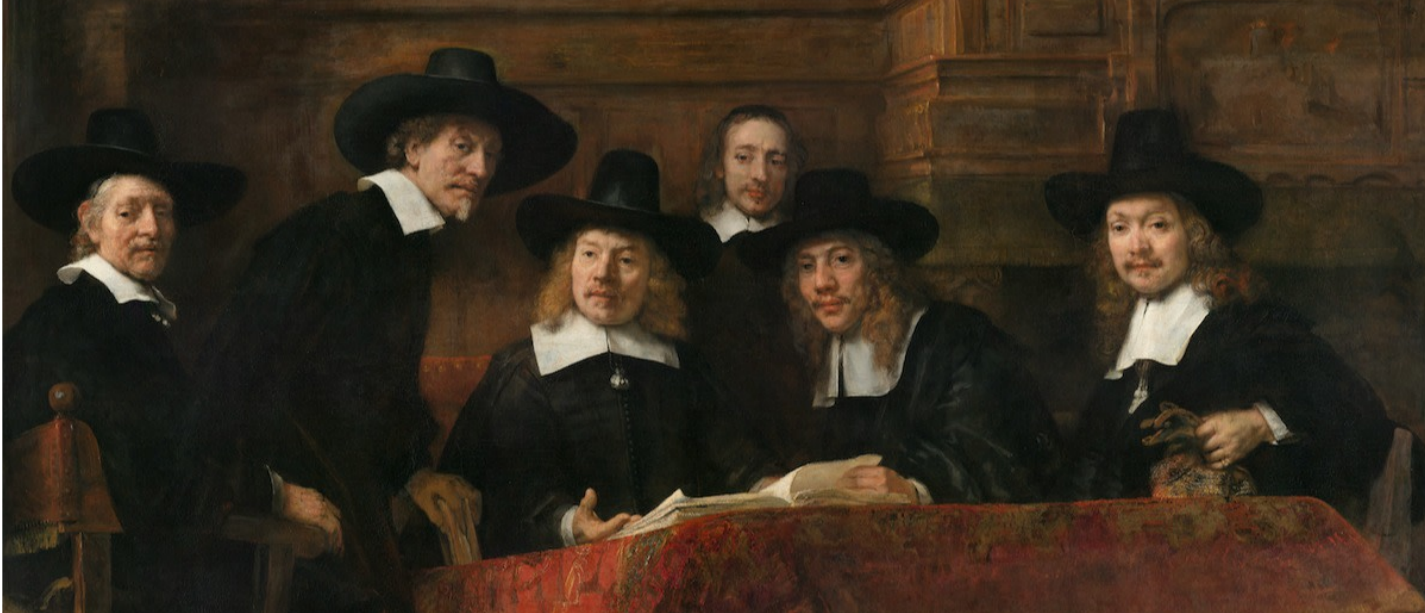
The image above demonstrates the sophisticated group portraiture style that flourished during this period, showing the formal elegance and attention to detail characteristic of Dutch Golden Age painting.
Who was Rembrandt?
Rembrandt was a seventeenth-century Dutch artist who gained international recognition for his exceptional portraiture work. His artistic journey encompassed multiple subjects and styles, though he became most renowned for his deeply emotional and honest portraits, particularly his numerous self-portraits, alongside his powerful depictions of Biblical narratives.
While Rembrandt's oil paintings remain his most famous works, he was equally skilled as an etcher (a printmaking technique involving metal plates) and printmaker. His most celebrated pieces include The Night Watch, The Return of the Prodigal Son, and an extensive collection of self-portraits that offer insight into his personal journey.
Note
Rembrandt's versatility as an artist set him apart from many of his contemporaries. He mastered multiple mediums and could seamlessly transition between intimate portraits, grand historical scenes, and detailed etchings, demonstrating remarkable technical skill across all forms.
A brief overview of Rembrandt's life
Early life and education
Born into a prosperous family in Leiden (in what is now the Netherlands), Rembrandt's upbringing was marked by religious diversity. His father belonged to the Dutch Reformed Church whilst his mother was Roman Catholic, an influence that would later inform the religious themes prominent throughout his artistic career.
After attending Latin school and studying at the University of Leiden, Rembrandt was apprenticed to several accomplished Dutch painters, including Jacob van Swanenburgh, Pieter Lastman, and Jacob Pynas. Despite never travelling internationally, he studied works by renowned Italian masters such as Titian and Caravaggio, as well as Flemish painter Peter Paul Rubens.
Early success and career development
By 1624, Rembrandt had established his first studio, and within just a few years, he had gained recognition for his sophisticated brushwork and detailed historical paintings. His reputation grew rapidly, leading to prestigious commissions, including work for the royal court.
Later relocating his studio to Amsterdam, Rembrandt flourished as a portraitist, achieving considerable fame and financial success. During this period, he also mentored several pupils, including Ferdinand Bol, Govert Flinck, and Gerrit Dou.
Personal life and relationships
In 1634, Rembrandt married Saskia van Uylenburgh, who was the cousin of art dealer Hendrick van Uylenburgh. Their early marriage faced tragedy with the loss of several children - an infant son and two infant daughters - before their fourth child, Titus, survived to adulthood.
Following Titus's birth, Saskia's health deteriorated significantly, and she passed away in 1642 from tuberculosis. The terms of her trust prevented Rembrandt from remarrying legally, though he later entered into a relationship with his former maid, Hendrickje Stoffels.
Financial difficulties and later career
Important
Rembrandt's extravagant lifestyle and poor financial decisions eventually forced him to sell his house and much of his art collection. His financial troubles became so severe that Amsterdam's painters' guild implemented new regulations preventing artists with significant financial problems from working as painters.
To circumvent these restrictions, Titus and Stoffels established an art-dealing company with Rembrandt as their sole employee.
Final years and legacy
Despite his financial struggles, Rembrandt maintained his prolific output throughout his later years, creating numerous paintings, etchings, commissions, and personal works. His later paintings displayed more expressive and rough brushwork, featuring quieter yet emotionally powerful scenes. He continued working until his death, completing one of his most celebrated paintings, The Return of the Prodigal Son, shortly before passing away.
Although Rembrandt's financial troubles and personal drama were widely known during his lifetime, he was still regarded as a master artist. His burial took place at Westerkerk church, and his artistic legacy continues to flourish. Today, his works can be found in prestigious museums worldwide, including the National Gallery, the Rijksmuseum, and museums in The Hague.
What are the characteristics of Rembrandt's artwork?
Rembrandt demonstrated remarkable versatility and experimentation throughout his extensive career. However, several consistent principles defined his artistic approach:
Light and shadows (chiaroscuro)
Perhaps the most distinctive feature of Rembrandt's work was his masterful use of chiaroscuro - a dramatic lighting technique popularised by the Baroque painter Caravaggio. This approach created striking contrasts between light and dark areas within his compositions.
Note
Chiaroscuro Definition: A Baroque technique for dramatic lighting that uses strong contrasts between light and dark to create three-dimensional effects and psychological depth in paintings.
Whether creating portraits, narrative scenes, or landscapes, Rembrandt arranged his subjects so that certain areas appeared to glow with inner light whilst other sections remained shrouded in deep shadow. Many of his portraits position the subject's nose as a dividing line between the illuminated and shadowed halves of the face, creating a powerful sense of three-dimensionality and psychological depth.
Movement and emotion
Rembrandt's treatment of movement evolved significantly throughout his career. In his earlier works, movement appeared through physical action - such as ships battling stormy seas in The Storm on the Sea of Galilee. However, in his mature works, the physical action became more subtle, with Rembrandt instead conveying movement through his subjects' nuanced emotional expressions.
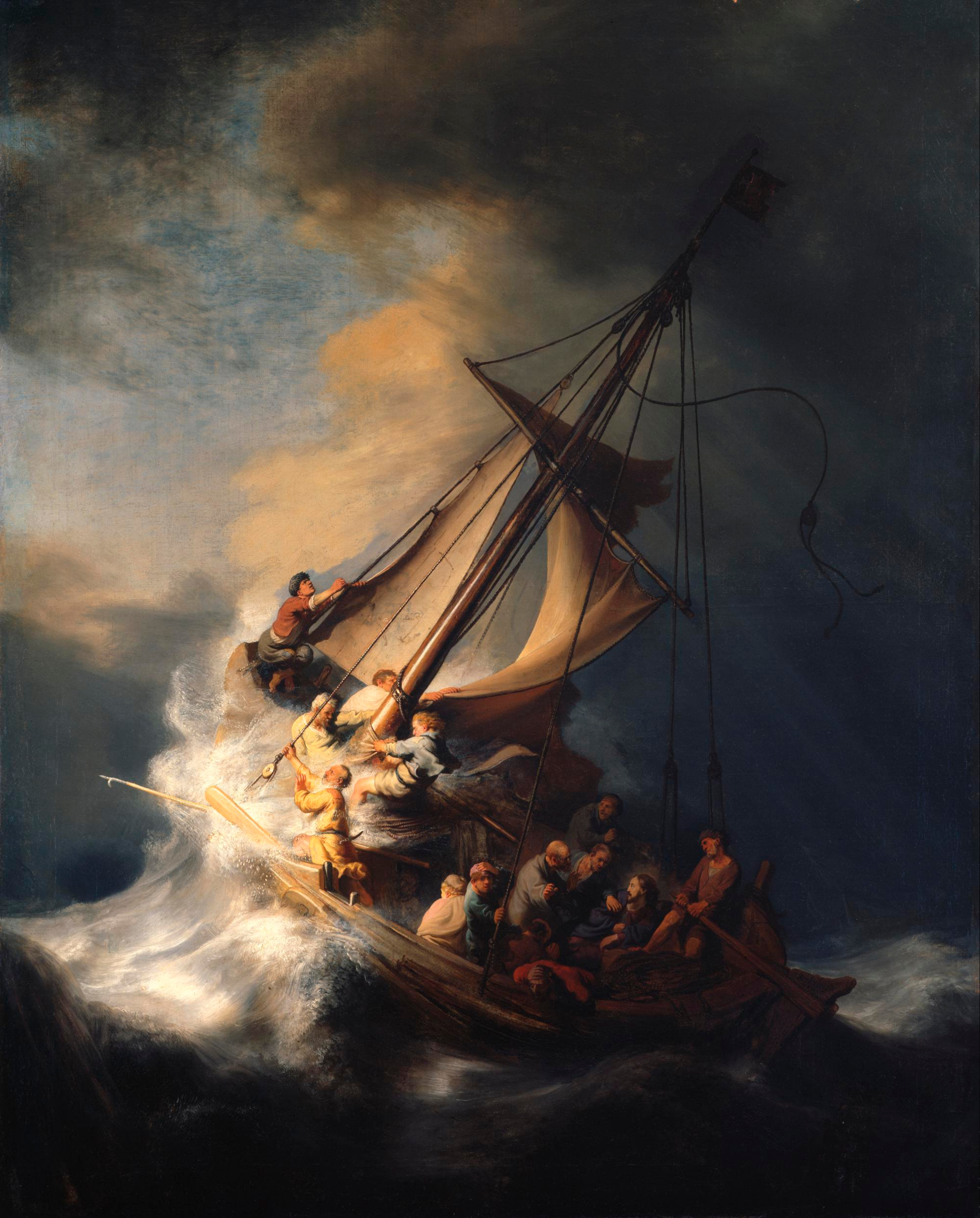
This dramatic seascape demonstrates Rembrandt's early approach to movement, showing a vessel struggling against turbulent waters with dynamic brushwork and dramatic lighting.
Allusion and narrative content
Rembrandt drew significant inspiration from various sources when creating his paintings and etchings. Many of his works illustrate Biblical stories or Greek mythology, such as The Blinding of Samson and Andromeda Chained to the Rocks. These narrative pieces demonstrate his ability to translate complex stories into compelling visual compositions.

Portraiture mastery
Portrait painting formed the cornerstone of Rembrandt's career, resulting in numerous portraits displayed in museums worldwide. His self-portraits are particularly renowned, offering viewers insight into his psychological state and artistic development over time.
Note
Rembrandt created approximately 100 self-portraits throughout his career, making him one of the most prolific self-portraitists in art history. These works serve as both artistic achievements and a visual autobiography spanning his entire adult life.
Beyond his self-portraits, Rembrandt frequently included himself within his narrative paintings. For example, in The Stoning of Saint Stephen, careful observers can spot Rembrandt's face in the crowd, positioned directly beneath the left elbow of the central stone-throwing figure.

Famous artworks by Rembrandt
 Self-Portrait with Two Circles (exact date uncertain): Painted when Rembrandt was 19 years old, this work represents his first self-portrait and demonstrates his early ability to incorporate himself as an observer within his compositions.
The Anatomy Lesson of Dr. Nicolaes Tulp (1632): Commissioned by Amsterdam's Guild of Surgeons, this painting shows a surgeon demonstrating human arm muscles to a group of doctors. The work stands out as a mise-en-scène painting - a term describing the careful staging of all compositional elements, from lighting to subject placement.
The Storm on the Sea of Galilee (1633): This seascape represents the only known maritime scene Rembrandt painted, depicting the Biblical story of Christ calming stormy waters from the New Testament. The painting gained notoriety when it was stolen from the Isabella Stewart Gardner Museum in Boston during a 1990 art heist.
Danaë (1636): This work portrays the Greek mythological figure Danaë, likely welcoming Zeus into her bedroom. Geertje Dircx, Rembrandt's lover at the time, served as the model. The painting is considered one of his finest narrative works due to its exceptional detail, dramatic light and shadow contrasts, and impressive scale (measuring eight by ten feet in the original).

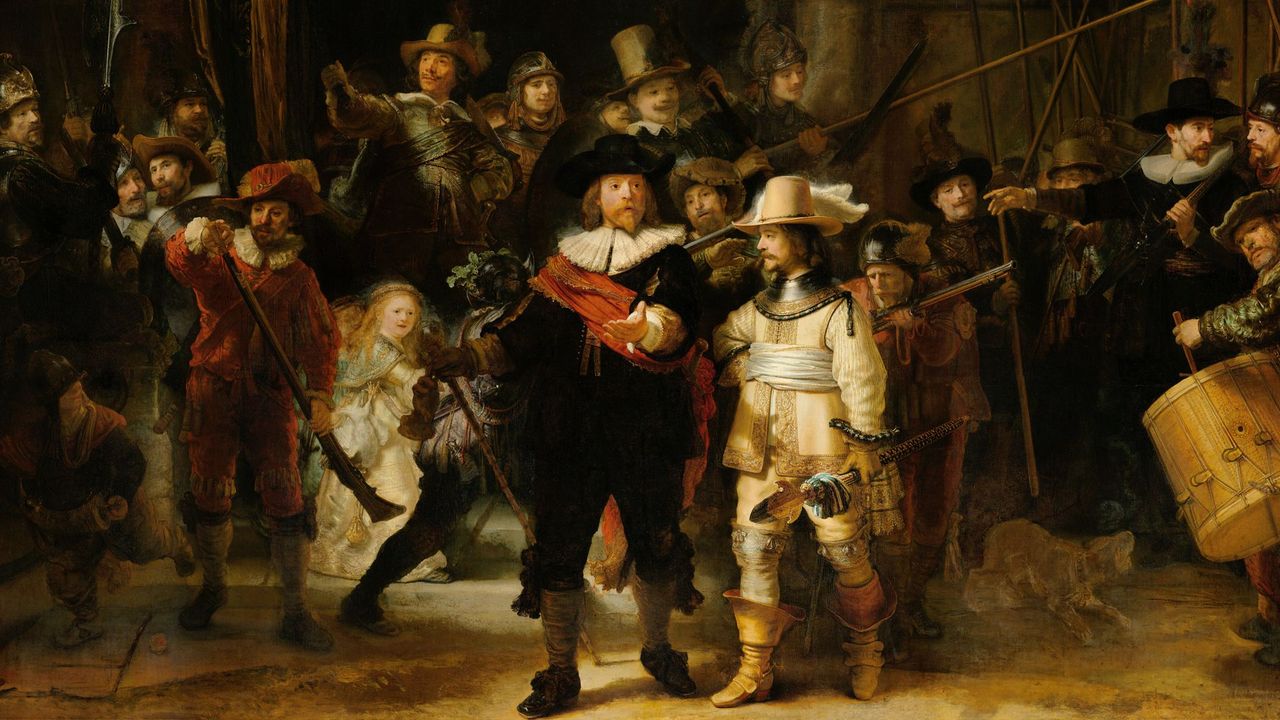
The Night Watch (1642): Arguably Rembrandt's most famous painting, this commissioned piece depicts a group of musketeers preparing for a mission. The work's official title is Militia Company of District II under the Command of Captain Frans Banninck Cocq. It earned the nickname "The Night Watch" because ageing and dimming made the scene appear to occur at night, though originally it showed the troop emerging from a shadowy courtyard into bright sunlight. Rembrandt completed this masterpiece in 1642, the same year his wife Saskia died.
The Syndics of the Drapers' Guild (1662): Also known as The Sampling Officials, this group portrait features men responsible for assessing cloth quality for their guild.
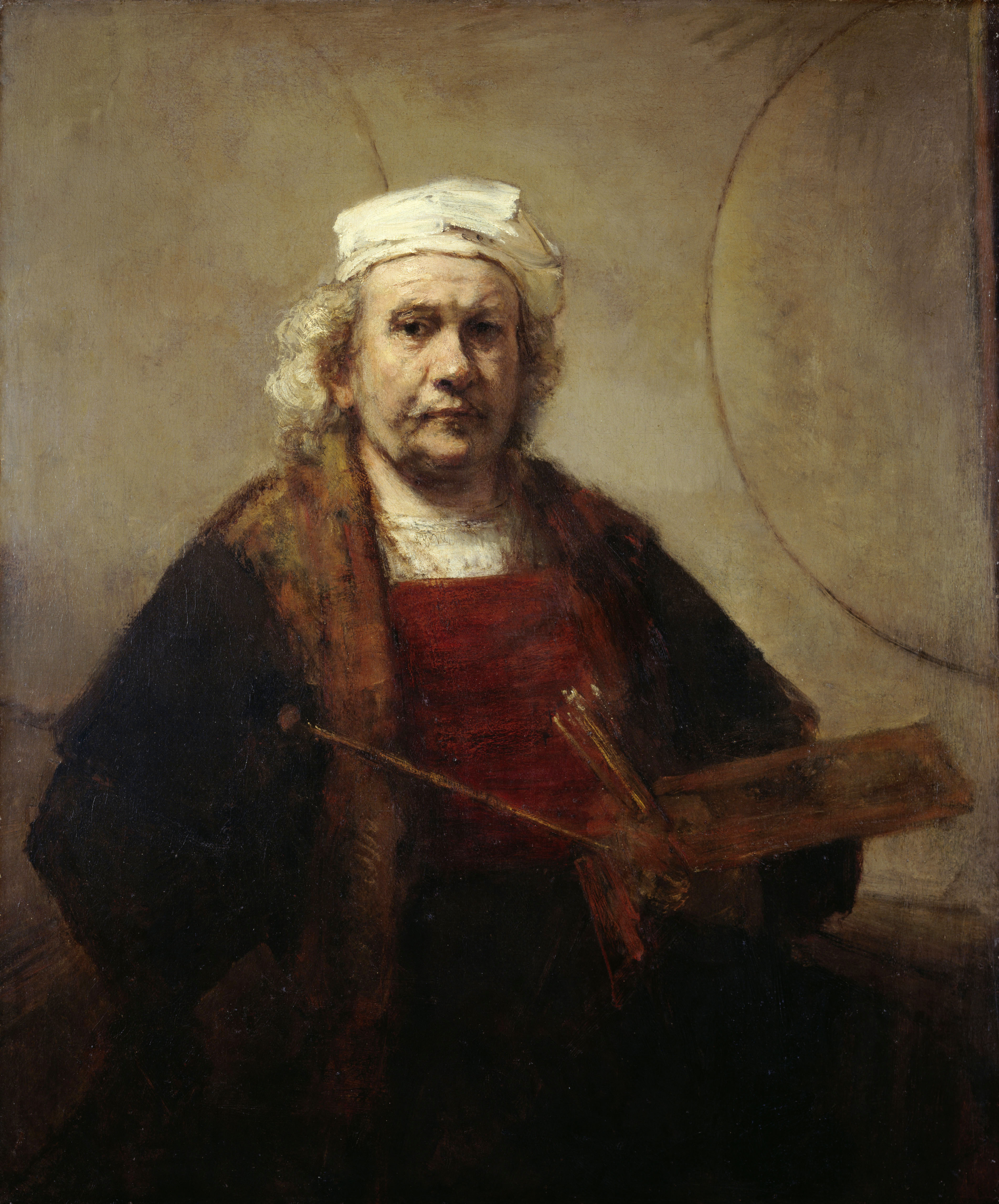
Self-Portrait with Two Circles (precise date unknown): This later self-portrait shows Rembrandt working in his studio and includes a mysterious background with two large circles. Art historians continue to debate the significance of these circles without reaching a definitive conclusion.
 The Return of the Prodigal Son (1669): Completed as one of Rembrandt's final paintings, The Return of the Prodigal Son is often considered among his most emotionally powerful works. Though it depicts the quiet moment of a wayward son's return home (from the New Testament), Rembrandt imbued the scene with profound emotional depth that reveals the subjects' inner feelings.
Important
Many of Rembrandt's most famous works can be viewed today in major museums worldwide. However, The Storm on the Sea of Galilee remains missing since the infamous 1990 Gardner Museum heist, making it one of the most sought-after stolen artworks in history.
Remember!
Summary
Key Points to Remember:
-
Rembrandt lived during the Dutch Golden Age (1581-1672), a period when Dutch art, science, and trade dominated European culture
-
Chiaroscuro was Rembrandt's signature technique - the dramatic contrast between light and shadow that created psychological depth and three-dimensional effects in his paintings
-
He was a master of multiple art forms, excelling not only in oil painting but also as an accomplished etcher and printmaker
-
His most famous works include The Night Watch and The Return of the Prodigal Son, along with numerous self-portraits that chronicle his artistic and personal journey
-
Despite financial troubles in later life, Rembrandt continued working prolifically until his death and is now recognised as one of history's greatest artists, with works displayed in major museums worldwide