Georgian Architecture of Dublin (Leaving Cert Art): Revision Notes
📚Revision Notes
Georgian Architecture of Dublin
Introduction to Georgian Dublin
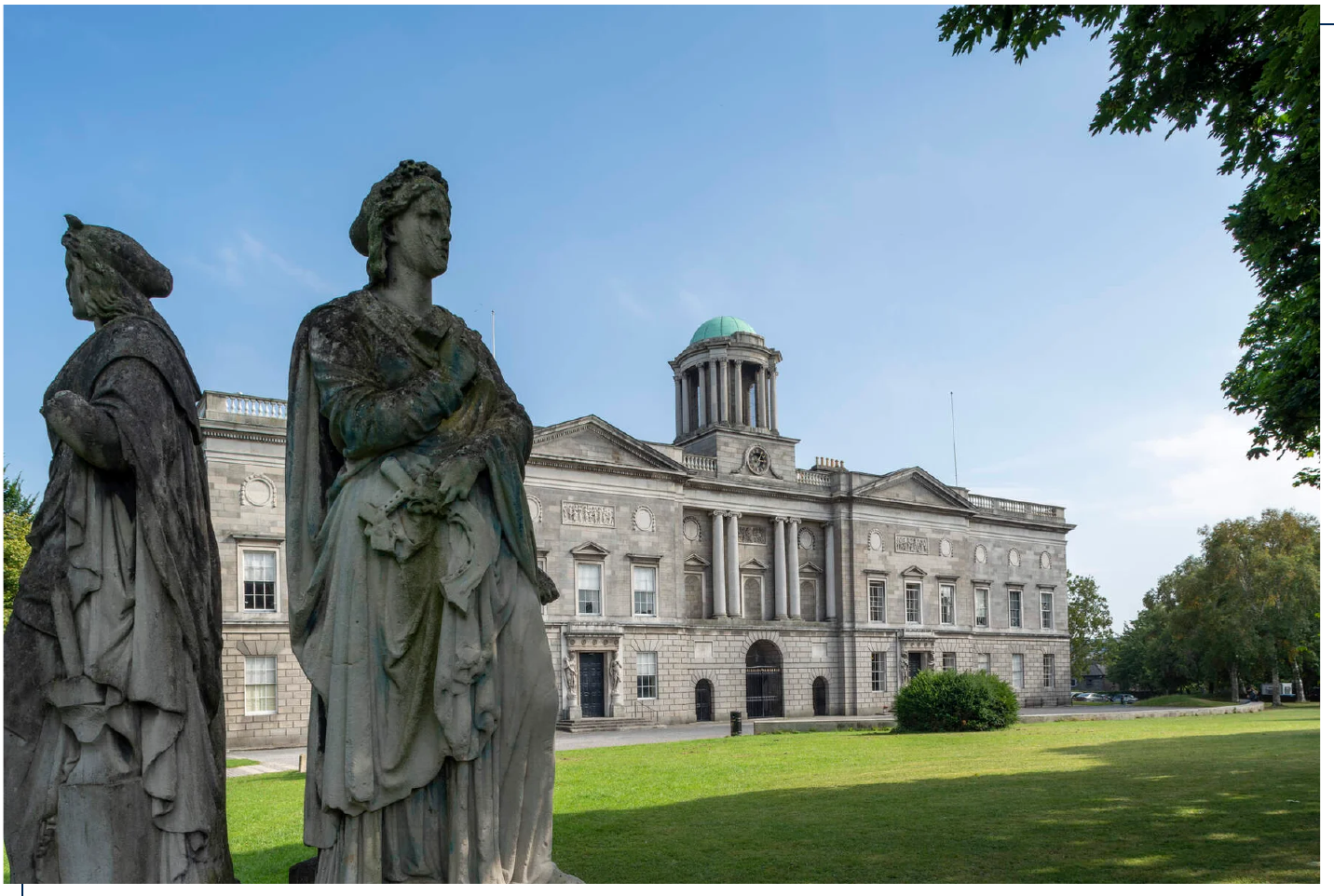
Georgian architecture represents one of Ireland's most significant architectural periods, spanning from approximately 1720 to the 1800s. Dublin's Georgian heritage remains remarkably well-preserved, creating an extraordinary architectural landscape that transports visitors back to the 18th century.
Note
The term "Georgian" derives from the four Hanoverian monarchs of England, all named George, who ruled during this period. This naming convention helps us remember the timeframe when this architectural style flourished.
During the 18th century, Dublin emerged as one of Europe's largest and most important cities, with Georgian architecture becoming the dominant architectural style that shaped the city's character.
Historical context and development
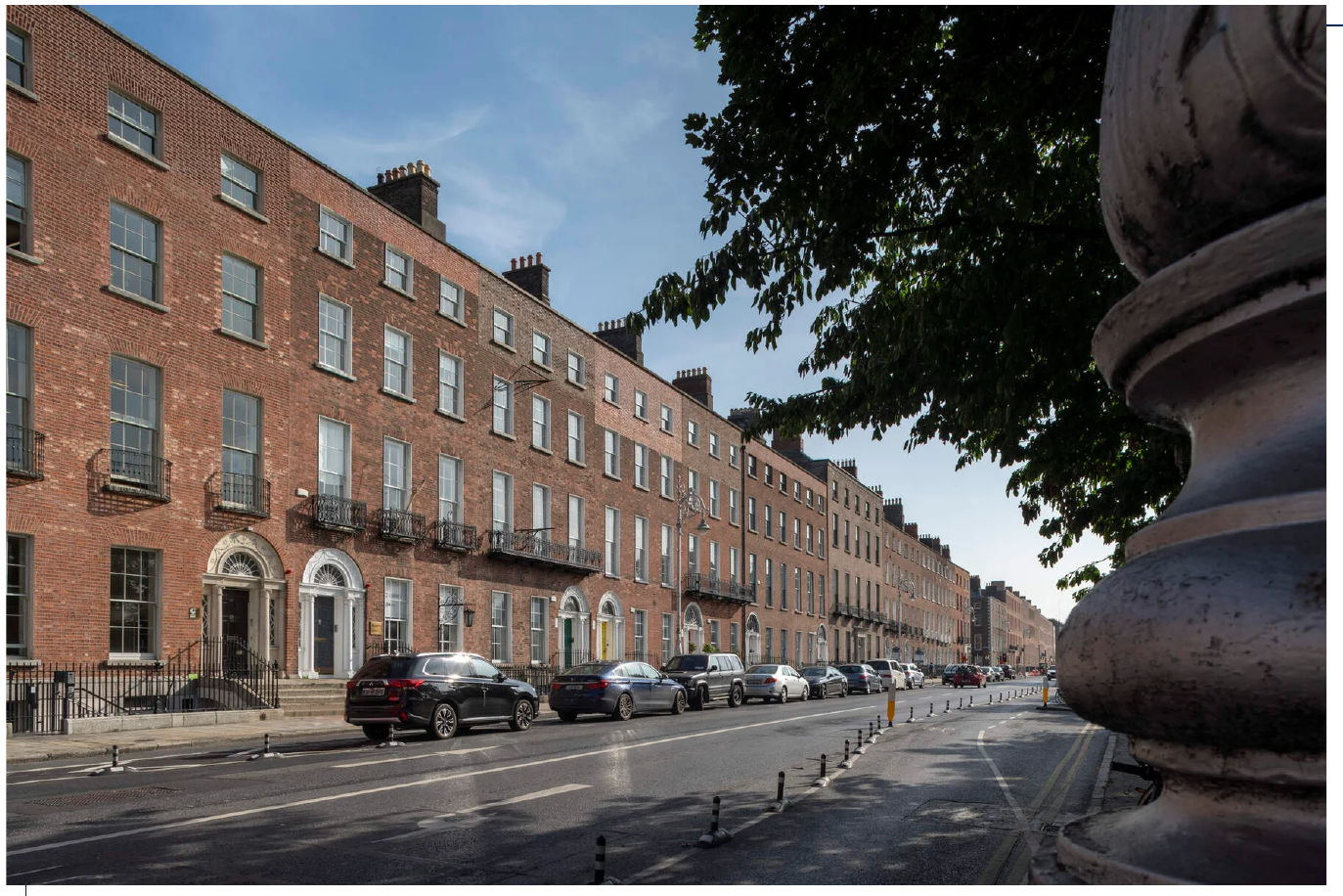
The Georgian period coincided with Dublin's golden age of prosperity and expansion. The city's growth during this era was carefully planned, with developers using a lease system that granted building rights for periods ranging from 60 to 100 years. This system explains why Georgian buildings, whilst following similar architectural principles, often display subtle variations in their facades and details.
Note
The development wasn't constructed all at once but evolved over decades, with different builders responsible for different sections of streets and squares. This organic growth created the charming variations we observe today in Dublin's Georgian streetscapes.
Key characteristics of Georgian architecture
Georgian architecture in Dublin exhibits several distinctive features that make it instantly recognisable:
Exterior features
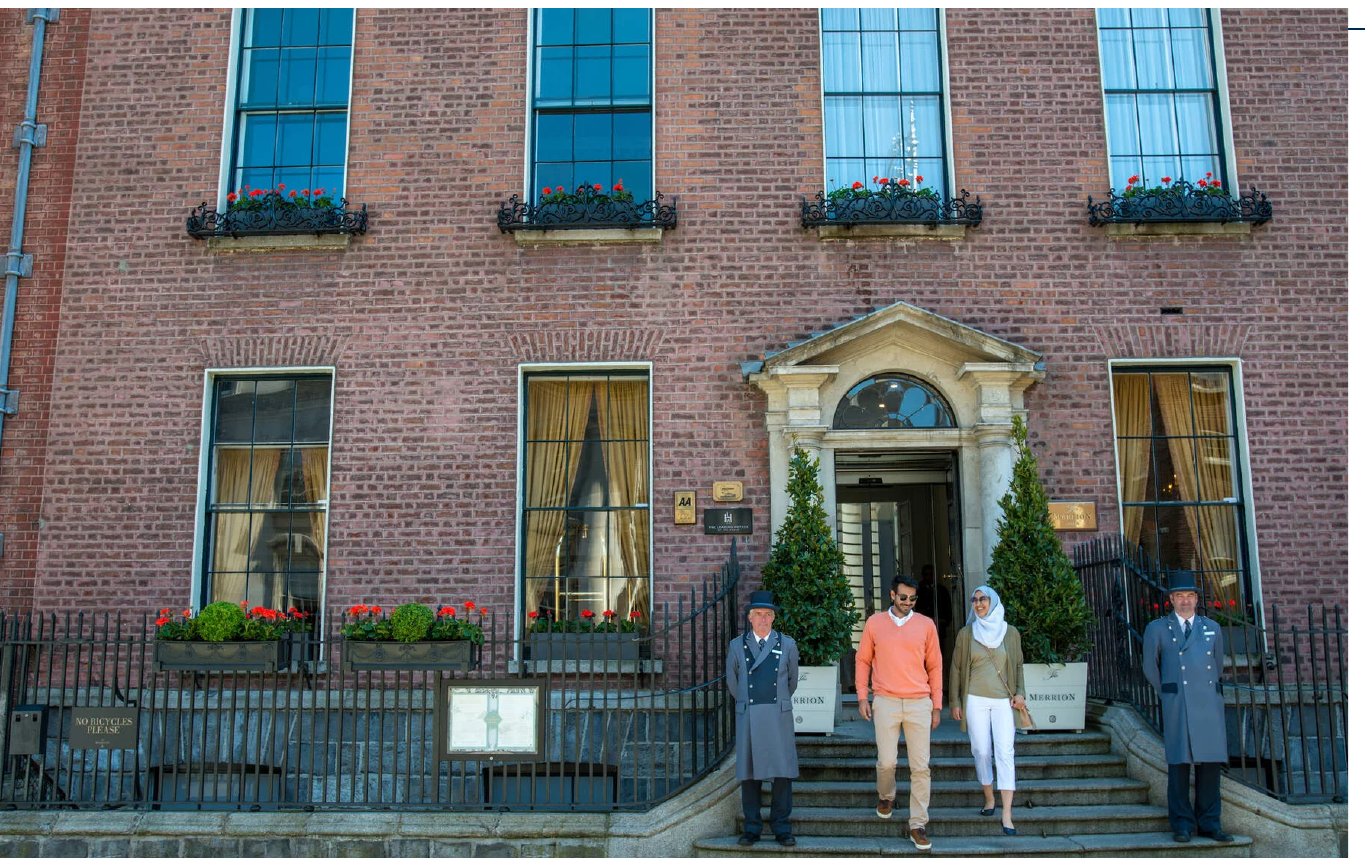
- Redbrick facades: The characteristic warm red brick construction that defines Dublin's Georgian streets
- White sash windows: Multi-paned windows that decrease in size from ground floor to top floor
- Classical proportions: Carefully calculated ratios that create pleasing visual harmony
- Granite steps: Sweeping stone steps leading to front entrances
- Coloured doors: Distinctively painted front doors in various hues
- Wrought iron railings: Decorative metalwork featuring Georgian motifs
Architectural elements
- Symmetrical design: Perfect balance and proportion in building facades
- Classical columns: Often Corinthian or Ionic in style
- Triangular pediments: Classical architectural features above doors and windows
- Stone balustrades: Decorative parapets and balconies
- Uniform rooflines: Consistent building heights creating harmonious streetscapes
Important
The key to identifying Georgian architecture lies in recognising the combination of symmetrical design, redbrick facades, and classical proportions. These elements work together to create the distinctive visual harmony that characterises Dublin's Georgian streets.
Major Georgian buildings and locations
Merrion Square
Merrion Square represents Dublin's finest Georgian residential development. The square showcases the典型 characteristics of Georgian urban planning, with elegant townhouses surrounding a central garden space.
The square demonstrates the lease system's impact on architectural development. Individual builders were responsible for different sections, creating subtle variations in building details whilst maintaining overall architectural harmony. The Irish Architectural Archive, located at 45 Merrion Square, houses extensive documentation about Georgian Dublin's development.
Leinster House
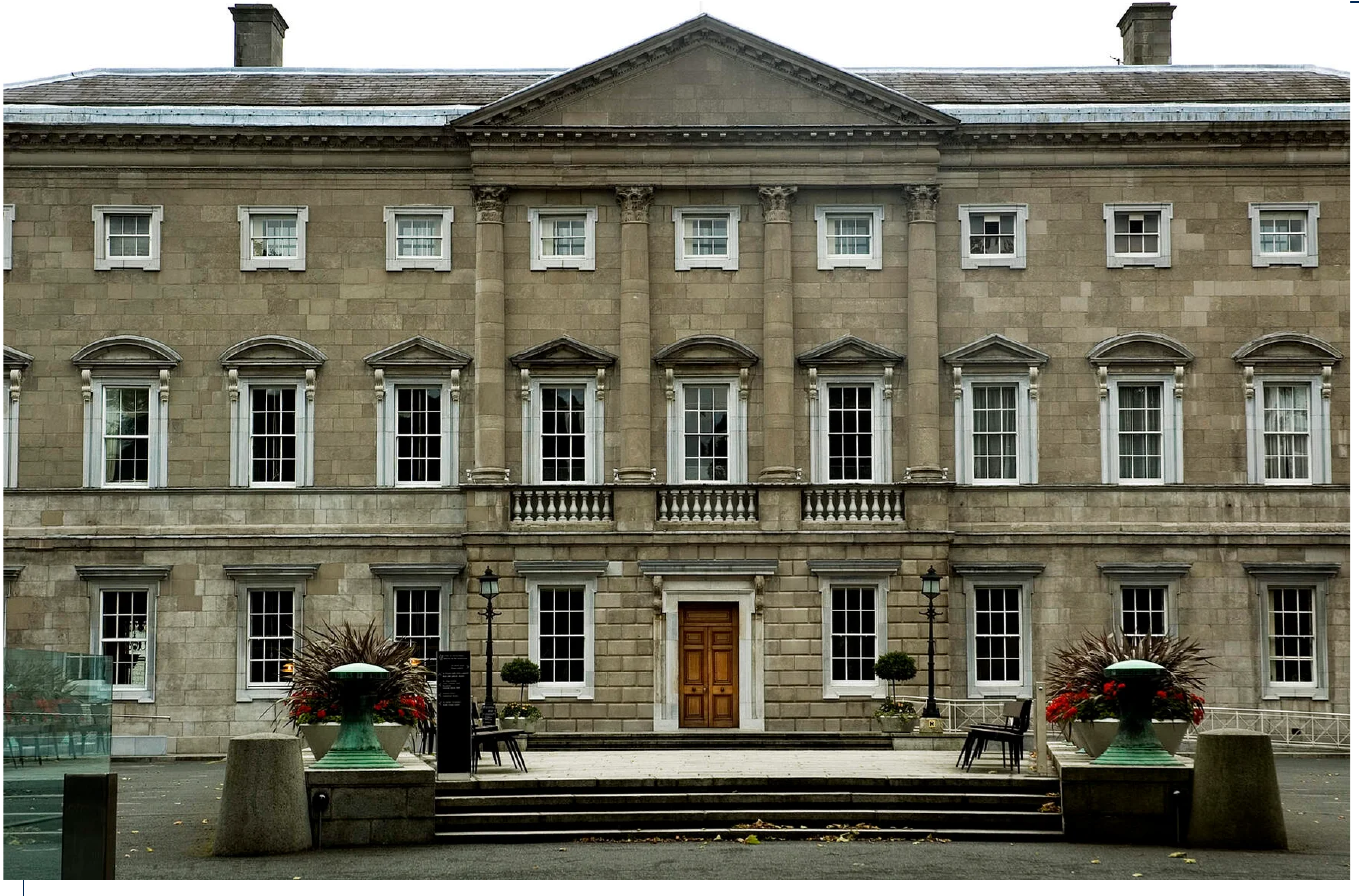
Leinster House serves as the seat of the Irish Parliament and stands as one of Dublin's most significant Georgian buildings. Constructed in 1747 on what was then known as Molesworth's Field, the building was designed by Richard Castle (also known as Cassels).
Example
Architectural Influence: Leinster House
The design reflects the influence of 16th-century Italian architect Andrea Palladio, whose classical principles shaped much of Georgian architecture. Leinster House's design was so influential that it served as the architectural model for the White House in Washington DC, designed by Irish architect James Hoban.
Áras an Uachtaráin
Located in Phoenix Park, Áras an Uachtaráin serves as the official residence of Ireland's President. Originally called the Viceregal Lodge, the building exemplifies Georgian architectural principles through its perfect symmetrical design.
The building was designed by park ranger and amateur architect Nathaniel Clements, who received assistance from established architects Richard Castle and Edward Lovett Pearce. The residence demonstrates how Georgian architecture could be adapted for grand country houses whilst maintaining classical proportions.
Custom House
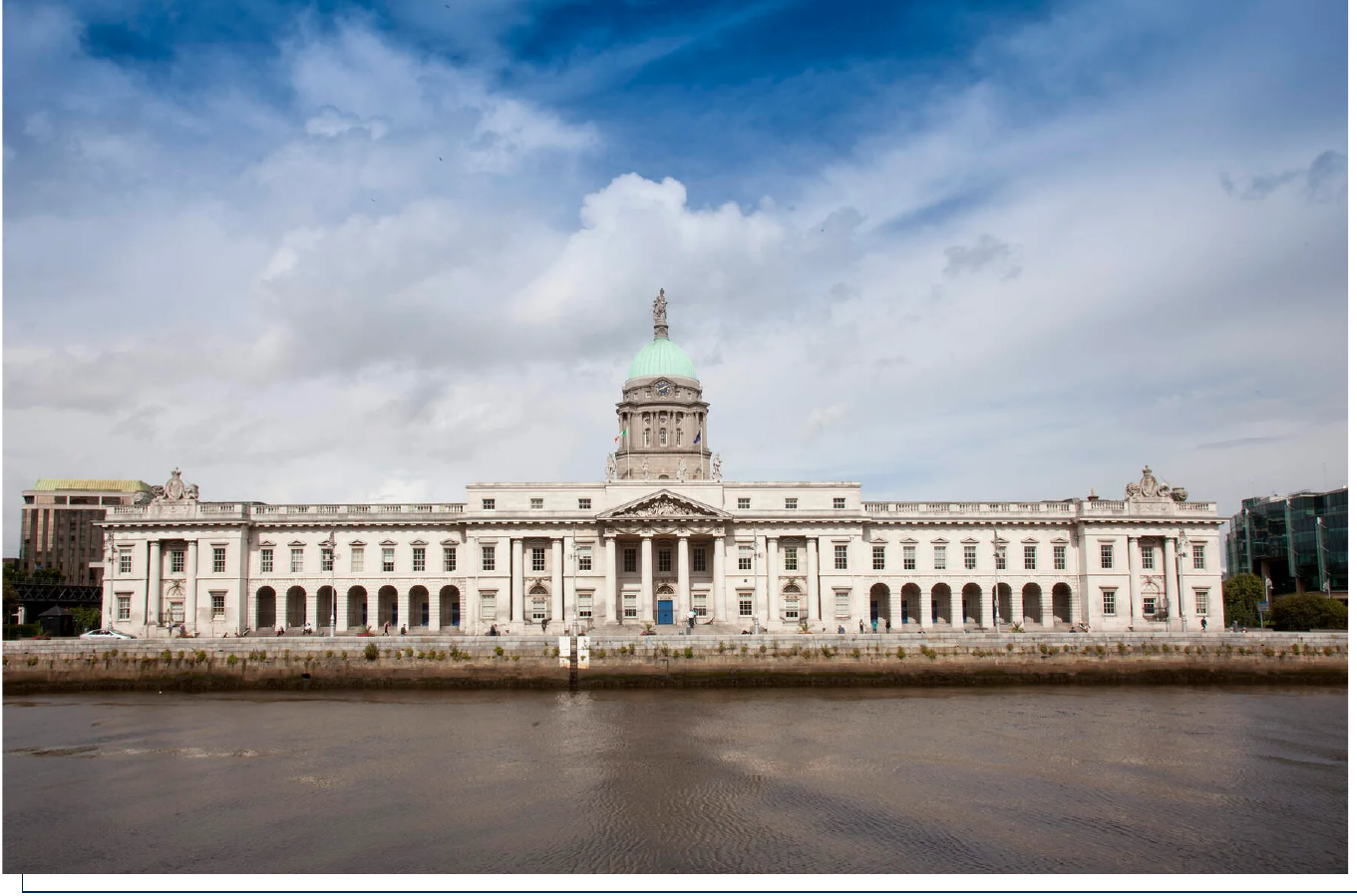
The Custom House represents one of Dublin's most spectacular Georgian buildings, designed in the Palladian style by architect James Gandon. Located on the River Liffey, this magnificent structure showcases the grandest expression of Georgian architectural ambition.
Note
The building suffered significant damage when it was burned by the Irish Republican Army in 1921, but underwent meticulous restoration. The Custom House features elaborate sculptural decoration, including carvings of thirteen river gods plus one representing the Atlantic Ocean, created by sculptor Edward Smyth.
Contemporary observers praised Gandon's talents as being "equal to Michelangelo".
Bank of Ireland Cultural & Heritage Centre
This remarkable building at College Green holds the distinction of being the world's first purpose-built Parliament House, constructed in 1803. Designed by Edward Lovett Pearce, the building featured revolutionary semi-circular architecture that occupied almost an acre and a half of land.
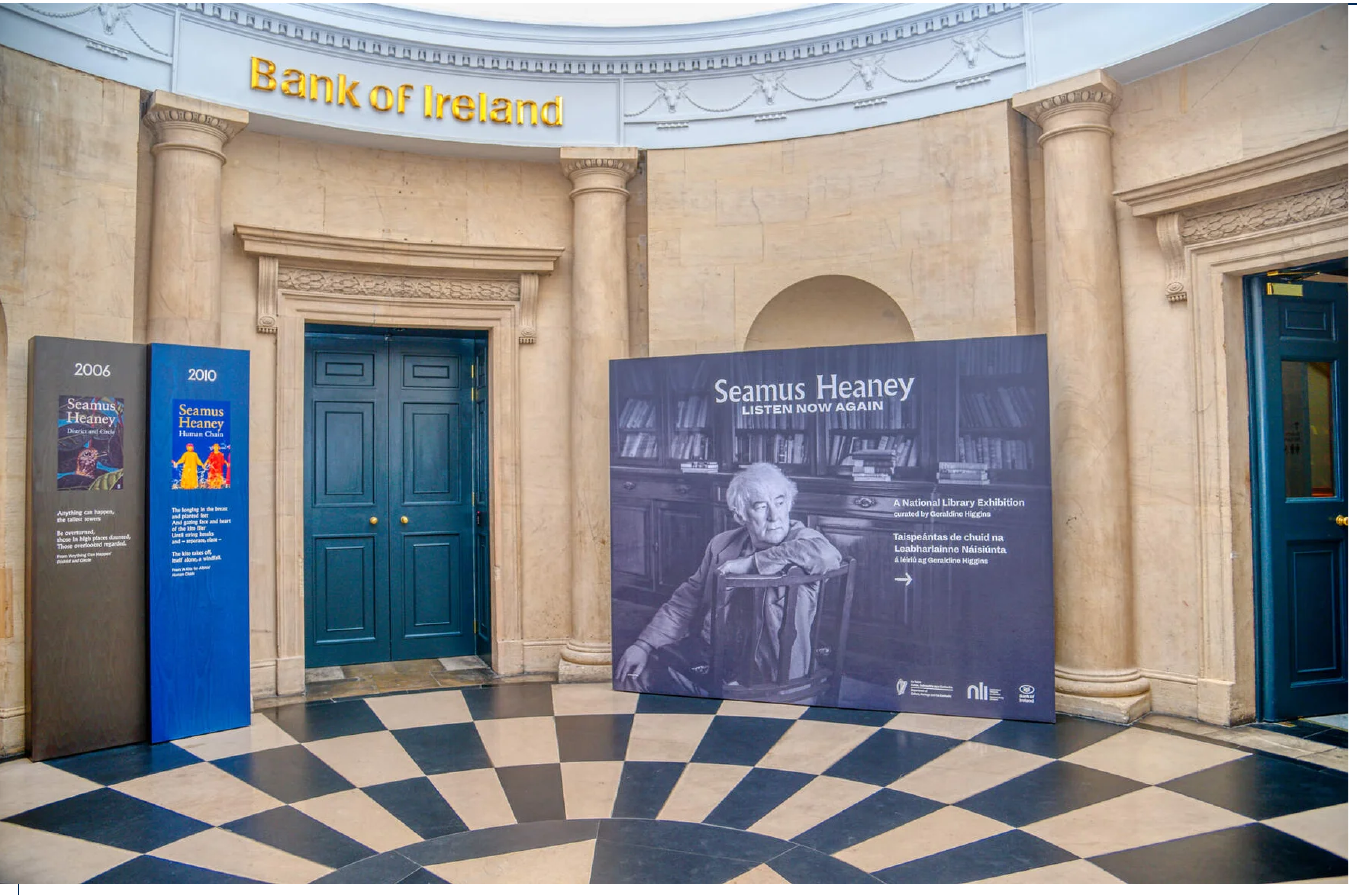
The building's innovative design broke new ground in parliamentary architecture, with its curved interior spaces designed to accommodate legislative functions. Today, it houses cultural exhibitions and maintains its historical significance as a pioneering example of Georgian institutional architecture.
14 Henrietta Street
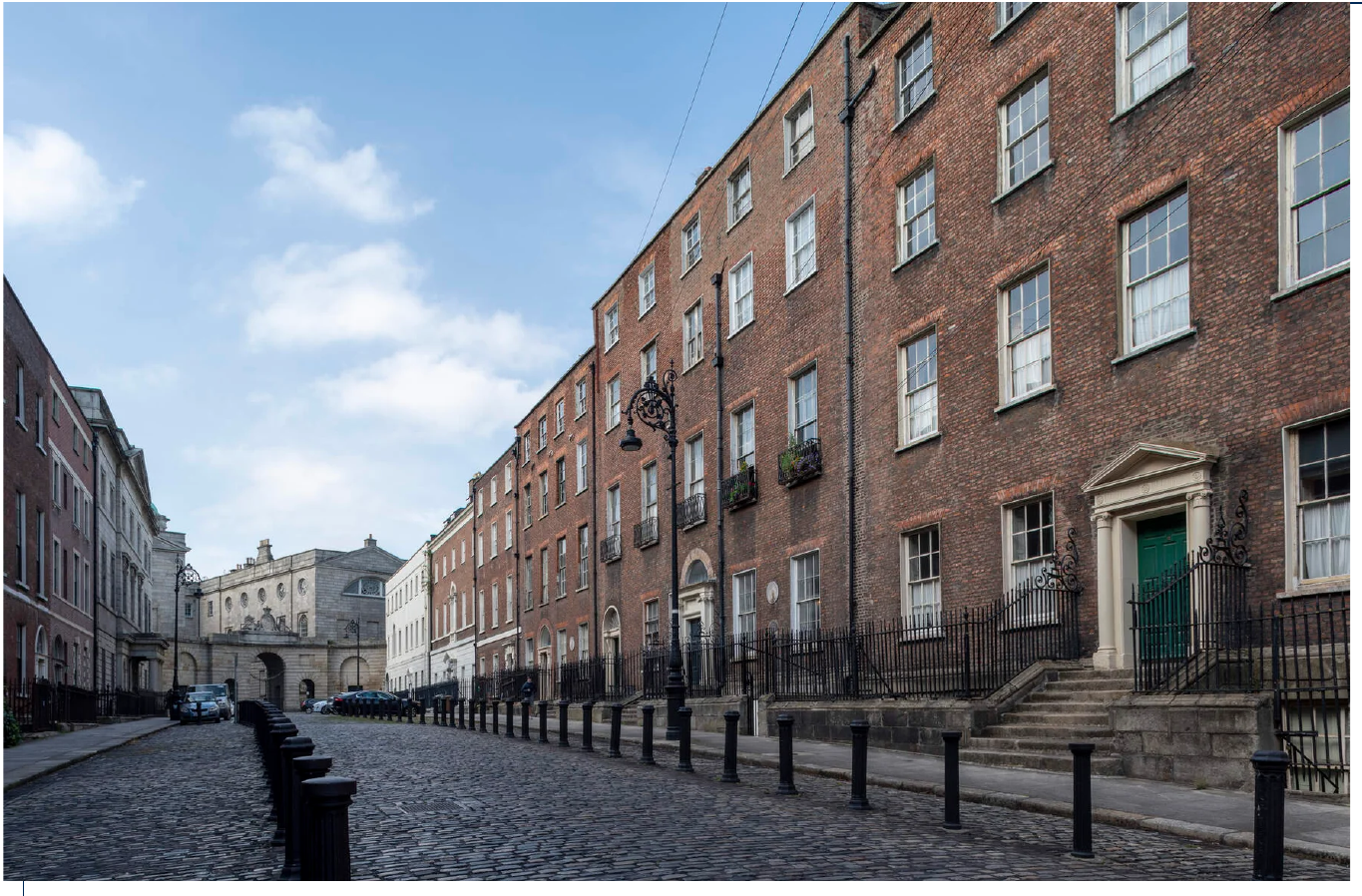
Henrietta Street represents Dublin's earliest Georgian street development, originally built to house the city's nobility including barons, viscounts, lords and earls. The street retains its original cobblestone surface and demonstrates the grandest scale of Georgian residential architecture.
Numbers 9 and 10 were designed by Edward Lovett Pearce for Luke Gardiner, the 1st Viscount Mountjoy, in 1735. The street's history reflects the social changes that occurred over time - by 1911, over 300 people lived in poverty within just fifteen houses, showing how Georgian Dublin's social landscape transformed dramatically.
Key architects and designers
Richard Castle (Cassels)
Castle emerged as one of the most influential architects in Georgian Ireland. His work on Leinster House established him as a master of Palladian principles, and his influence extended to training other significant architects of the period.
Edward Lovett Pearce
Pearce played a crucial role in establishing Georgian architectural standards in Dublin. His work on the Parliament House (now Bank of Ireland) and various Henrietta Street residences demonstrated his mastery of classical proportions and innovative design solutions.
James Gandon
Gandon brought European sophistication to Dublin's architecture through his work on the Custom House. His ability to integrate classical elements with practical requirements earned him recognition as one of Ireland's greatest architects.
Architectural influences and style development
Georgian architecture in Dublin drew heavily from Palladian principles, based on the work of 16th-century Italian architect Andrea Palladio. This classical influence emphasised:
- Mathematical proportions: Buildings designed according to classical ratios
- Symmetrical compositions: Perfect balance in architectural elements
- Classical orders: Use of Greek and Roman column styles
- Restrained decoration: Elegant simplicity rather than excessive ornamentation
Note
The style also incorporated practical considerations for Dublin's climate and urban conditions, adapting Mediterranean classical principles to Irish requirements. This adaptation shows how Georgian architects successfully merged classical ideals with local practical needs.
Social and cultural significance
Georgian architecture reflects the social hierarchies and cultural aspirations of 18th-century Dublin. The grandest buildings housed the aristocracy and wealthy merchants, whilst smaller Georgian houses accommodated the growing middle classes. The uniform architectural language created visual cohesion across different social levels whilst maintaining clear distinctions of scale and grandeur.
Important
The preservation of Georgian Dublin today provides invaluable insight into 18th-century urban planning and social organisation. These buildings serve not only as architectural monuments but as historical documents that reveal how Dublin society functioned during its golden age.
Remember!
Summary
Key Points to Remember:
-
Georgian architecture in Dublin spans approximately 1720-1800s, named after the four King Georges of England
-
Key visual features include redbrick facades, white sash windows, granite steps, classical columns, and symmetrical design
-
Major architects include Richard Castle, Edward Lovett Pearce, and James Gandon, who brought Palladian classical principles to Irish architecture
-
Important buildings include Leinster House (Irish Parliament), Custom House, Merrion Square, and the Bank of Ireland Cultural Centre
-
Historical significance: Georgian Dublin represents one of Europe's finest collections of 18th-century architecture, demonstrating how classical principles were adapted for Irish urban development