The Renaissance in Rome (Leaving Cert Art): Revision Notes
📚Revision Notes
The Renaissance in Rome
Introduction to Renaissance Rome
The Renaissance was a major cultural movement that swept across Europe from the 14th to 17th centuries, representing a "rebirth" of interest in classical learning and artistic achievement. Rome, known as the "Eternal City", played a crucial role in this transformation, becoming one of the most important centres of Renaissance art, architecture, and intellectual life.
Note
Rome's unique position as both the centre of the ancient Roman Empire and the spiritual heart of Christianity made it an ideal location for Renaissance developments. The city's wealth of ancient ruins provided endless inspiration for artists and scholars seeking to revive classical traditions.
Rome's position as the spiritual centre of Christianity, combined with its wealth of ancient ruins and papal patronage, made it an ideal location for Renaissance developments to flourish.
Historical background of Rome
Rome has been continuously inhabited for thousands of years, with human settlements in the area dating back approximately 14,000 years. According to legend, the city was founded around 753 BCE by Romulus and Remus, though historians believe the actual settlement likely occurred earlier.
The city experienced several major historical periods:
- Ancient Roman period: The great Roman Empire extended from 27 BCE until 395 CE, making Rome the capital of a vast empire stretching across Europe, North Africa, and the Middle East
- Imperial monuments: During this period, major structures like the Colosseum were built (70-80 CE) under Emperor Vespasian
- Medieval period: After the fall of the Roman Empire, Rome became dominated by feudalism and the Manor System
Note
The long history of Rome meant that by the Renaissance period, the city was filled with ancient ruins and artefacts that Renaissance artists and scholars could study. This abundance of classical material made Rome different from other Renaissance centres like Florence or Venice.
Christianity and papal influence
After the fall of the Roman Empire, Christianity became increasingly important across Italy and Europe. By the Middle Ages, Christianity had become the dominant religion in Europe. The Bishop of Rome, known as the Pope, established residence in Vatican City, which became an independent state within Rome.
The Vatican City houses several important historical sites significant to Renaissance development, including:
- The Sistine Chapel
- Saint Peter's Basilica
- Extensive papal collections of art and manuscripts
Renaissance humanism arrives in Rome
The Renaissance in Rome began in the early 15th century during a period of relative peace, allowing arts and learning to flourish. A key feature of the Renaissance was the rediscovery of ancient Greek and Roman ideas and texts by European scholars.
Important
Renaissance Humanism was the study of ancient Greek and Roman texts with the goal of promoting new norms and values in society. This intellectual movement represented a fundamental shift from mediaeval thinking.
Renaissance Humanism differed from mediaeval thinking by:
- Focusing less heavily on religious worldview
- Emphasising reason and individual thought
- Promoting worldly wisdom based on logic and reason
Renaissance humanists promoted education in the studia humanitatis (humanities), which included:
- Grammar
- History
- Poetry
- Philosophy
This represented a fundamental shift from the feudalistic and religious focus that dominated mediaeval Europe. Humanist ideals flourished in Rome during the 15th and 16th centuries as scholars and artists travelled to the city to study its ancient ruins.
Key Renaissance popes and their patronage
The Renaissance in Rome developed under the leadership of several important Popes who became major patrons of the arts:
Pope Martin V (1417-1431)
- Elected Pope on November 11th, 1417
- Finally arrived in Rome in 1420
- His papacy marked the beginning of serious Renaissance development in Rome
- Brought stability after a period of church division
Pope Eugene IV (1431-1447)
Pope Eugene IV died in 1447 and was replaced by Pope Nicholas V. His papacy was considered difficult for Rome, but still led to several major contributions to the Renaissance.
Pope Nicholas V (1447-1455)
Example
Pope Nicholas V's Renaissance Contributions
Pope Nicholas V is particularly important for Renaissance Rome because:
- He worked closely with Leon Battista Alberti, an Italian architect, author, humanist scholar, and poet
- Alberti is considered an example of the concept of a "Renaissance Man" due to his many talents
- Together, Nicholas V and Alberti created plans to build several large projects in Rome, including many churches
Pope Julius II (1503-1513)
Pope Julius II commissioned some of the most famous Renaissance artworks, including:
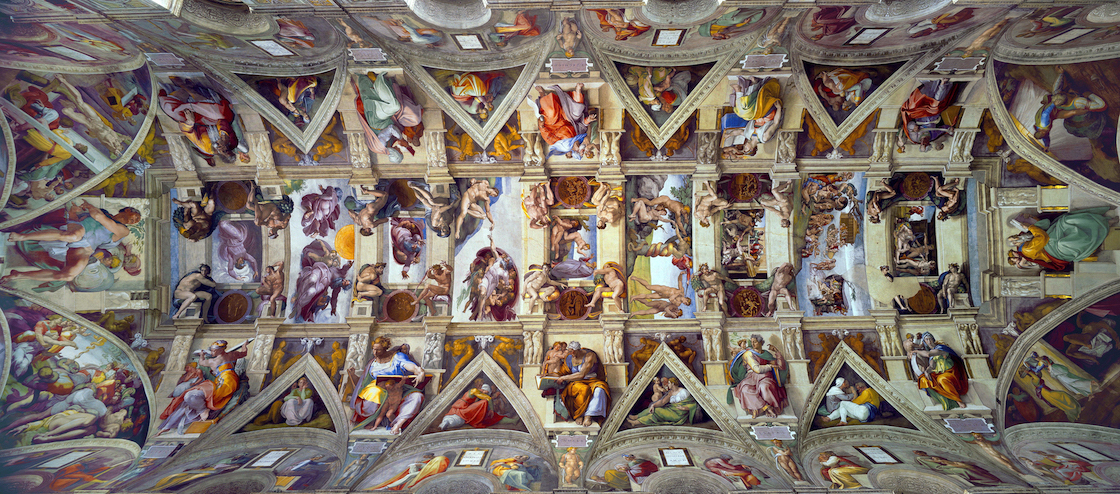
- Michelangelo's Sistine Chapel ceiling (1508-1512)
- While Michelangelo was working on Pope Julius II's tomb, he took on painting the chapel ceiling as a side task
- The Sistine Chapel ceiling became one of Michelangelo's greatest and most recognised artistic accomplishments
Pope Leo X (1513-1521)
- Born Giovanni di Lorenzo de Medici
- Son of Lorenzo de Medici from the famous Florentine family
- Was a patron of the arts during the Renaissance
- Closely linked with the famous Renaissance artist Raphael
Major Renaissance artists in Rome
Donatello
- Travelled to Rome to study classical art and excavate ruins of ancient Rome
- His trip helped him develop understanding of classical sculptures
- This knowledge influenced his own artistic work
- Remained in Rome until 1433 before returning to Florence

Masaccio
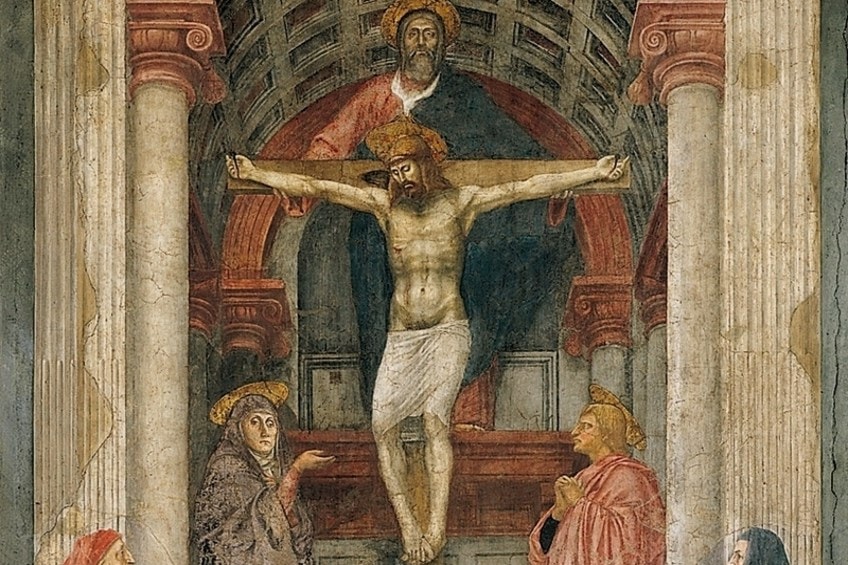
- Travelled to Rome in 1423 along with his mentor Masolino
- Was heavily influenced by his time in Rome
- Historians consider his altarpiece for the Carmelite Church in Pisa as evidence of Roman influence
- Much of his later work showed strong influence from ancient Roman and Greek art
Michelangelo (1475-1564)
Example
Michelangelo's Sistine Chapel Project
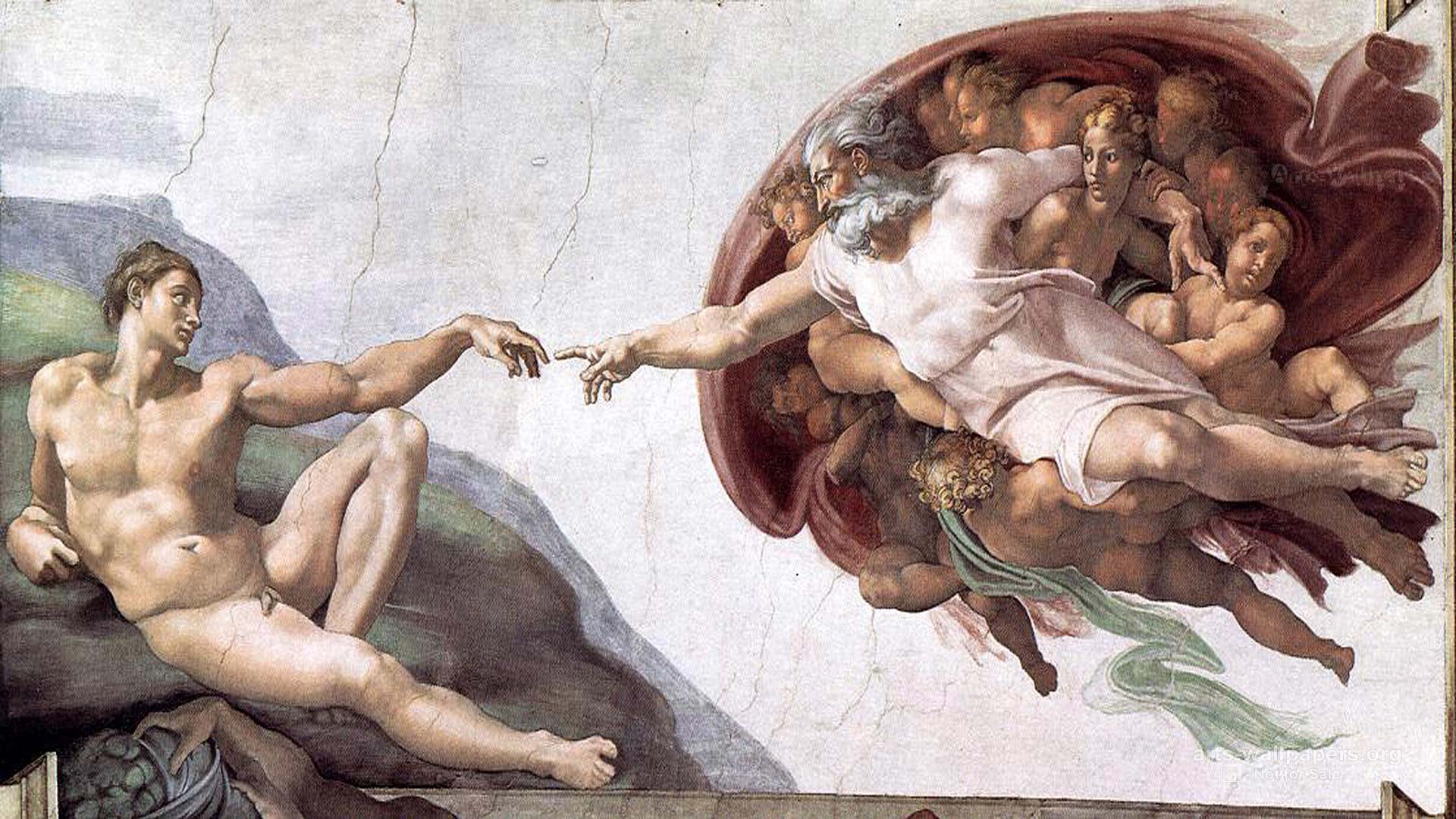
Michelangelo was employed to paint the ceiling of the Sistine Chapel from 1508 to 1512:
- He was initially working on Pope Julius II's tomb but took on the chapel painting as an additional task
- The Sistine Chapel ceiling features famous biblical scenes including the Creation of Adam
- This work is considered one of his greatest artistic accomplishments
- The project was commissioned by Pope Julius II who served from 1503 to 1513
Architectural and artistic achievements
The Renaissance in Rome produced numerous significant works that combined classical techniques with Christian themes:
- The Sistine Chapel: Featuring Michelangelo's magnificent ceiling frescoes with biblical narratives, prophets, and decorative elements
- Saint Peter's Basilica improvements: Various Renaissance artists contributed to enhancing this important religious site
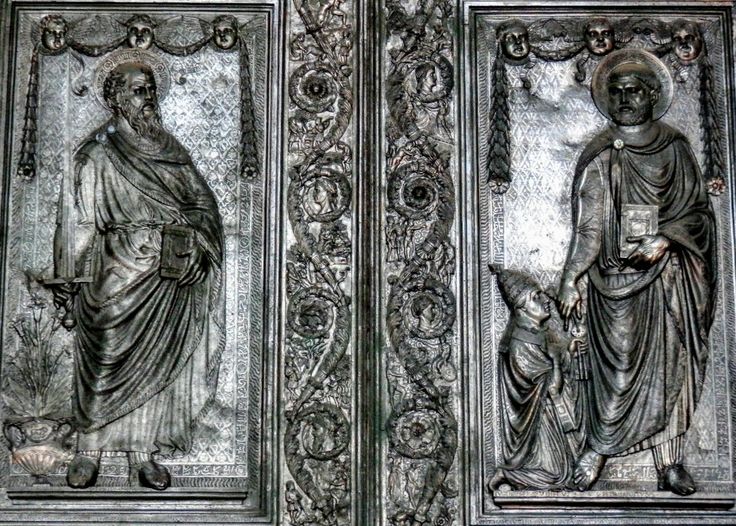
- The Filarete Doors: Created for Saint Peter's Basilica, completed in 1445, showing six panels depicting Jesus the Saviour, Mary enthroned, St. Paul with sword, and St. Peter receiving keys
- Vatican artistic collections: Accumulated under various papal patrons
Note
The artistic achievements of Renaissance Rome were unique because they successfully blended pagan classical themes with Christian religious content. This synthesis was made possible by the humanist belief that classical wisdom could enhance rather than contradict Christian faith.
The legacy of Renaissance Rome
Rome's Renaissance period established it as a major centre for:
- Artistic innovation: Combining classical techniques with Christian themes
- Architectural development: Blending ancient Roman styles with Renaissance innovations
- Intellectual life: Attracting scholars, artists, and thinkers from across Europe
- Papal patronage: Creating a model for religious leaders supporting the arts
The city's unique combination of ancient ruins, Christian significance, and Renaissance patronage created an environment where new ideas could flourish while building upon classical foundations.
Summary
Key Points to Remember:
- Rome became a major Renaissance centre in the early 15th century due to papal patronage and its wealth of ancient classical sources for study
- Key Renaissance Popes like Martin V, Nicholas V, Julius II, and Leo X were crucial patrons who commissioned major artistic works
- Michelangelo's Sistine Chapel ceiling (1508-1512) represents one of the greatest achievements of Renaissance art, commissioned by Pope Julius II
- Renaissance Humanism found fertile ground in Rome through the study of ancient texts and ruins, promoting education in humanities subjects
- Major artists including Donatello, Masaccio, and Michelangelo all worked in Rome and were influenced by classical Roman art and architecture