Biomolecules: The Chemicals of Life (LC 2027) (Leaving Cert Biology): Revision Notes
📚Revision Notes
Proteins
Proteins are among the most important biomolecules in living organisms. They serve countless functions from providing structural support to controlling chemical reactions in our bodies.
What are proteins made of?
Proteins contain four main elements: carbon, hydrogen, oxygen and nitrogen. Some proteins also contain sulphur or phosphorus. Unlike other biomolecules, there's no fixed ratio of these elements in proteins because they are incredibly large and complex molecules with intricate three-dimensional shapes.
Note
The lack of a fixed elemental ratio makes proteins unique among biomolecules - their composition varies depending on their specific function and structure, making them incredibly diverse and adaptable molecules.
Building blocks of proteins
Amino acids - the basic units
Proteins are built from smaller units called amino acids. While there are hundreds of different amino acids found in nature, all living things use just 20 common amino acids to make proteins.
Each amino acid has the same basic structure with four parts attached to a central carbon atom:
- An amino group ()
- A hydrogen atom (H)
- A carboxyl group ()
- An R group (side chain) - this varies between different amino acids
The R group is what makes each amino acid unique and gives it different properties.
Essential amino acids
Of the 20 amino acids we use, humans can make 11 of them in our bodies. However, we must get the other 9 essential amino acids from our diet because we cannot manufacture them ourselves. Plants and other animals can make all 20 amino acids they need.
Important
Critical for human health: We must obtain these 9 essential amino acids from our diet daily since our bodies cannot produce them. A deficiency in any essential amino acid can lead to serious health problems, including impaired growth and immune function.
From amino acids to proteins
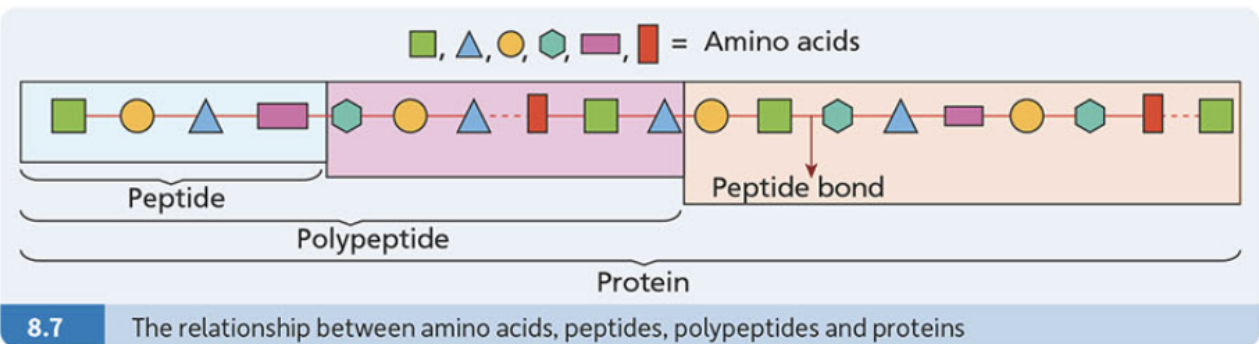
Amino acids join together in a specific sequence to form increasingly complex structures:
Peptides are short chains of amino acids containing up to 50 amino acids. Amino acids are linked together by peptide bonds formed between the amino group of one amino acid and the carboxyl group of another.
Polypeptides consist of long chains of more than 50 amino acids bonded together.
Proteins form when over 200 amino acids are joined in a chain. Each amino acid can be thought of as a letter in the alphabet - by combining them in different sequences, nature can create a huge range of proteins with unique shapes and functions. The protein then folds into a complex three-dimensional shape that determines what job it can do.
Example
Understanding the Hierarchy: Building Complexity
Think of protein formation like building with blocks:
- Step 1: Individual amino acids = single building blocks
- Step 2: Peptides (up to 50) = small structures like walls
- Step 3: Polypeptides (50+) = larger structures like rooms
- Step 4: Proteins (200+) = complete functional buildings
Each level adds complexity and new capabilities!
Types of proteins
Proteins can be classified into two main structural types based on their shape and function:
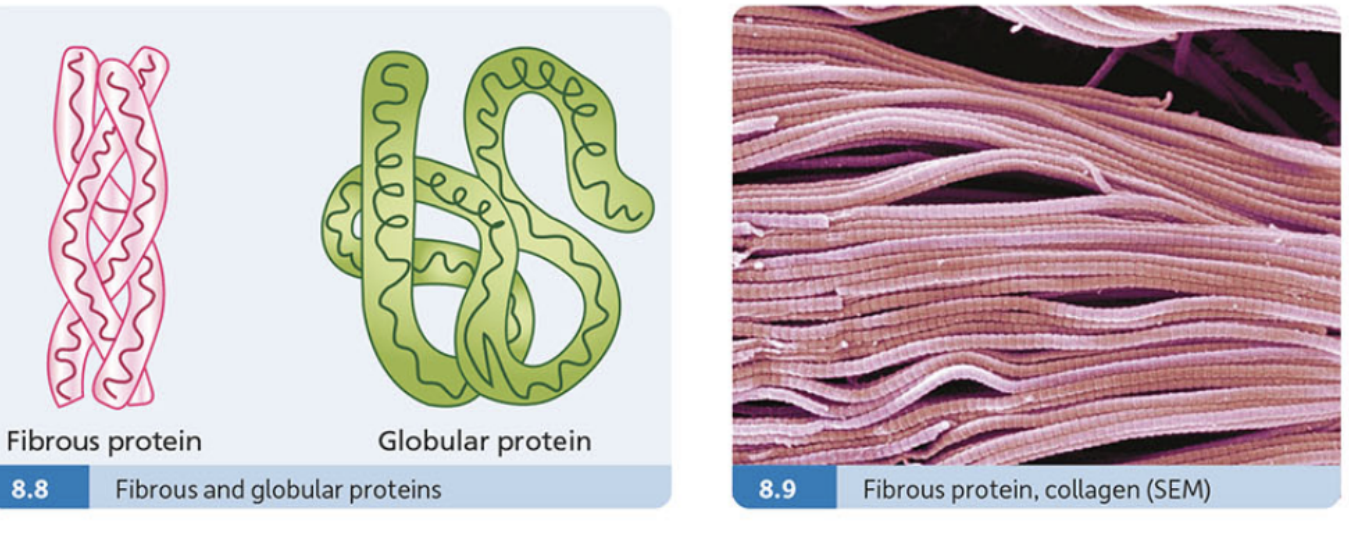
Fibrous proteins
- Show very little folding and form long fibres which are strong and tough
- Have a structural role in the body
- Examples include keratin in hair, nails and feathers, and myosin in muscles
- Collagen is another fibrous protein found in connective tissues
Note
Fibrous proteins are like the steel beams and cables in construction - they provide the framework and strength that holds our bodies together. Their long, rope-like structure makes them perfect for this supportive role.
Globular proteins
- Show extensive folding and form compact, rounded 3-D shapes
- Have functional roles - they are active molecules that do specific jobs
- Examples include haemoglobin in red blood cells and enzymes that control chemical reactions
Note
Globular proteins are like specialised tools - their compact, folded shape creates specific binding sites and active regions that allow them to perform precise biological functions.
Where do we get proteins?
Carbohydrates and lipids can be stored in the body, but proteins cannot be stored. This means we need a regular supply of protein in our diet. When we digest proteins, they are broken down into amino acids which are either used immediately by the body or taken to the liver and converted to urea for removal.
Good sources of protein in our diet include meat, fish, eggs, nuts, milk, yoghurt, peas, beans and lentils.
Important
Daily Protein Requirement: Since proteins cannot be stored like fats or carbohydrates, you must consume protein every day to maintain healthy body functions. This makes meal planning crucial for getting adequate amino acids.
What do proteins do in our bodies?
Proteins have many essential metabolic roles in living organisms:
Enzymes are made of proteins and they control reactions in the body. These reactions may be anabolic (building up processes like photosynthesis) or catabolic (breaking down processes like respiration).
Many hormones are protein-based and they control and regulate different processes in the body. For example, insulin regulates the amount of sugar in our blood.
Proteins are essential to the structure and functions of membranes. Channel proteins form pores in membranes to allow substances to pass through. Carrier proteins act as receptors to recognise molecules. If these proteins have the wrong shape, the channel proteins cannot transport substances through pores across the membrane properly.
Proteins such as haemoglobin in red blood cells help transport oxygen around the body.
Antibodies are made of protein, and they inactivate and help to destroy viruses and bacteria, making them crucial for our immune system.
Summary
Key Points to Remember:
- Proteins are made from 20 different amino acids, with 9 being essential in the human diet
- The hierarchy goes: amino acids → peptides → polypeptides → proteins, with increasing complexity at each level
- Fibrous proteins provide structural support (like keratin and collagen) while globular proteins have specific functional roles (like enzymes and haemoglobin)
- Proteins cannot be stored in the body, so we need regular dietary sources like meat, fish, eggs, nuts, and legumes
- Proteins serve vital roles as enzymes, hormones, transport molecules, structural components, and antibodies