Homeostasis (LC 2027) (Leaving Cert Biology): Revision Notes
📚Revision Notes
Homeostasis
What is homeostasis?
Homeostasis is the ability of an organism to maintain a constant internal environment. This process is essential for life because it allows organisms to function properly even when conditions around them change. Think of it as your body's internal balancing act that keeps everything running smoothly.
Note
The word "homeostasis" comes from Greek words meaning "same" and "standing still." However, homeostasis doesn't mean everything stays completely still - it means maintaining balance within normal, healthy ranges.
Key terms you need to know
Understanding homeostasis requires knowing the difference between two types of changes:
- External change: This refers to changes in the surroundings where an organism lives. For example, the temperature outside, the availability of food, or the amount of water in the environment.
- Internal change: This refers to changes in the environment surrounding the cells inside a multicellular organism. For example, the temperature of your blood, the concentration of glucose in your bloodstream, or the pH level of your body fluids.
Important
Don't confuse external and internal changes! External changes happen in the environment around the organism, while internal changes happen inside the organism's body. Your body's homeostatic systems primarily respond to internal changes to keep your cells functioning properly.
How homeostasis works: the stimulus-response process
Homeostatic systems operate through a three-part process that detects problems and fixes them. This system has three essential components:
1. Receptor
The receptor detects a stimulus or change in the organism's internal or external surroundings. Think of receptors as the body's alarm system - they're constantly monitoring conditions and alerting the body when something changes.
2. Control centre
The control centre receives information from the receptor and processes it. It then sends a message to an effector about what action needs to be taken. This is like the brain of the operation, making decisions about how to respond.
3. Effector
The effector causes a response that helps restore balance. This could be a muscle contracting, a gland releasing hormones, or any other action that helps fix the problem.
Example
Worked Example: The Stimulus-Response Process in Action
Let's trace through what happens when you get too hot:
Step 1: Receptor - Temperature sensors in your brain detect that your body temperature has risen above 37°C
Step 2: Control centre - Your brain processes this information and decides that cooling is needed
Step 3: Effector - Your brain sends signals to sweat glands in your skin, which begin producing sweat to cool you down
Examples of homeostatic control
Your body controls many different factors to maintain internal balance. Here are some key examples:
- Blood and tissue pH: The kidneys control blood pH levels
- Blood glucose concentration: Insulin helps control blood sugar levels
- Toxic chemicals in the body: The liver breaks down harmful substances
- Oxygen and carbon dioxide levels: The lungs control gas exchange
- Body temperature: The skin and blood vessels help regulate heat
Note
Each of these examples involves the same basic stimulus-response process with receptors, control centres, and effectors working together. The beauty of homeostasis is that this same simple pattern controls many different body functions.
Understanding negative feedback
Most homeostatic systems use negative feedback to maintain balance. Negative feedback means that when the correct level of something is reached, the system turns itself off to prevent overcorrection.
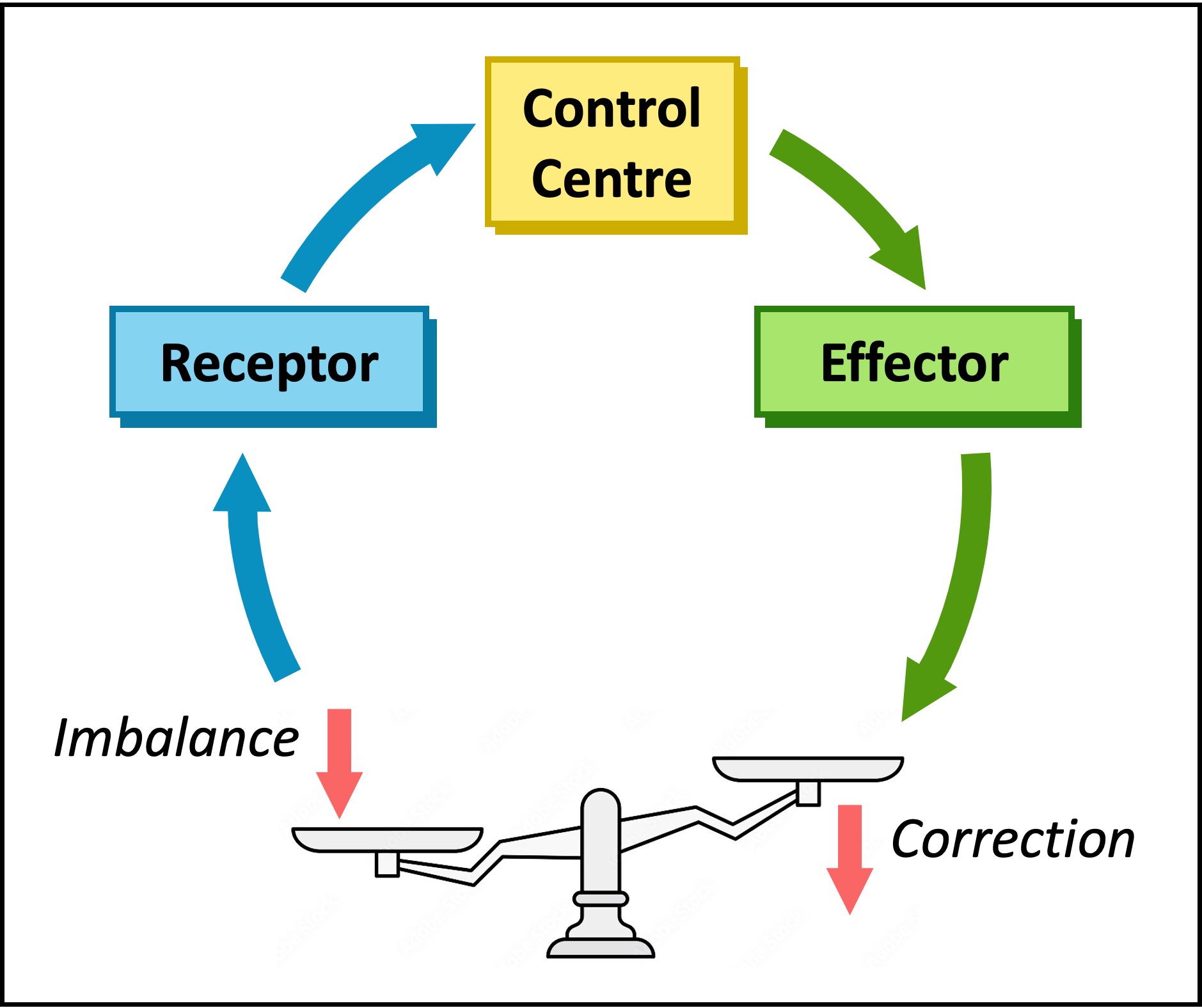
Here's how it works: when a factor (like temperature) moves away from its normal level, the body responds to bring it back to normal. Once the normal level is restored, the response stops. This prevents the body from overshooting and going too far in the opposite direction.
Important
Remember: Negative feedback = "Normal level reached = No more response needed." It's called "negative" because reaching the target stops (negates) the response, not because it's a bad thing!
Example 1: hormonal control - thyroid regulation
The control of thyroid hormones provides an excellent example of negative feedback through hormonal pathways. Here's how this system works:
Example
Worked Example: Thyroid Hormone Regulation Pathway
When thyroxine levels are low:
Step 1: The hypothalamus detects low thyroxine concentration in the blood
Step 2: The hypothalamus sends a message to the pituitary gland
Step 3: The pituitary gland releases TSH (thyroid stimulating hormone)
Step 4: TSH travels to the thyroid gland and stimulates it to produce more thyroxine
Step 5: Thyroxine levels in the blood increase, which helps control metabolism
When thyroxine levels return to normal:
Step 1: The hypothalamus detects that thyroxine concentration has reached the correct level
Step 2: It stops sending messages to the pituitary gland
Step 3: The pituitary gland stops producing TSH
Step 4: The thyroid gland reduces thyroxine production
Step 5: Thyroxine levels remain stable at the correct concentration
This system ensures that your metabolism stays properly regulated without the thyroid producing too much or too little hormone.
Example 2: nervous control - temperature regulation
Temperature control in humans demonstrates how the nervous system maintains homeostasis through rapid responses.
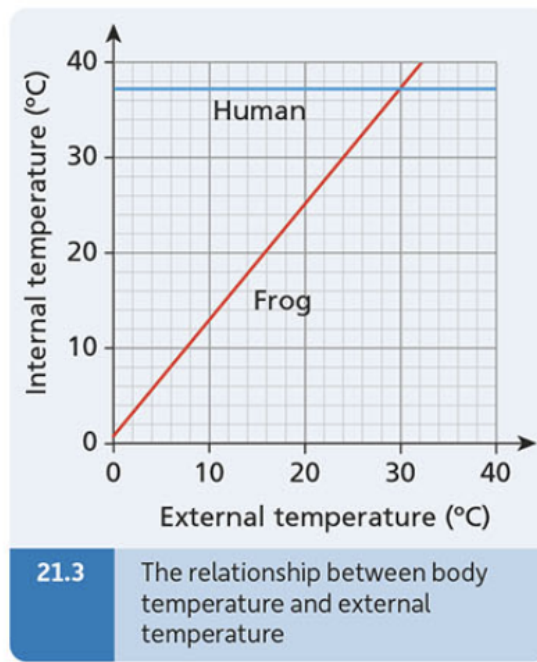
When body temperature is normal (37°C):
The brain doesn't send nerve impulses for heating or cooling, so we maintain a steady temperature and don't sweat.
When body temperature gets too high:
Example
Worked Example: Temperature Control Response
Step 1: Receptor - Temperature sensors in the brain detect the temperature increase
Step 2: Control centre - The brain processes this information and sends nerve impulses to the skin
Step 3: Effector - This causes sweating to begin
Step 4: Response - As sweat evaporates, it cools the body down
Step 5: Negative feedback - When temperature returns to normal, sweating stops
This system shows how humans can maintain a constant body temperature regardless of external conditions, unlike cold-blooded animals such as frogs, whose body temperature changes with their environment.

Sometimes this system is challenged, such as during illness when body temperature may rise to cause a fever as part of the immune response.
The benefits of homeostasis
Homeostasis provides several crucial advantages for living organisms:
Efficient cellular function
When cells operate under consistent conditions, they can function at their optimal level. This means enzymes work properly, chemical reactions occur at the right rate, and cellular processes run smoothly.
Independence from external environment
Homeostasis allows organisms to function effectively even when external conditions change. For example, humans can maintain their body temperature in both hot and cold environments, allowing them to live in diverse climates.
Controlled internal changes
While homeostasis maintains overall stability, it still allows for slight, controlled changes in internal environments when necessary. For example, body temperature can fluctuate slightly during different activities or times of day while remaining within safe limits.
Note
Think of homeostasis as flexibility within stability. Your body maintains overall balance while still being able to adapt to different situations like exercise, sleep, or eating meals.
Nervous vs hormonal coordination in homeostasis
Both the nervous and hormonal systems work together to maintain homeostasis, but they operate in different ways:
Nervous coordination:
- Speed: Very fast responses
- Method: Electrical signals carried by nerve cells (neurones)
- Duration: Short-lived effects
- Location: Localised effects (affects specific areas)
- Example: Catching an object, rapid muscle movements
Hormonal coordination:
- Speed: Slower responses
- Method: Chemical signals carried through the blood
- Duration: Longer-lasting effects
- Location: Widespread effects throughout the body
- Example: Growth, slower developmental changes
How they work together
These two systems often coordinate their efforts. For example, during stress, the nervous system responds quickly by sending messages to the adrenal glands, which then release hormones that help the body cope with the stressful situation over a longer period.
Note
Think of it like this: The nervous system is like texting (fast, immediate, specific), while the hormonal system is like sending a letter (slower, longer-lasting, affects more people). Both have their place in communication!
Remember!
Summary
Key Points to Remember:
-
Homeostasis maintains constant internal conditions - it's like your body's internal thermostat keeping everything balanced
-
The stimulus-response process has three parts - receptor detects, control centre decides, effector responds (remember: RCE)
-
Negative feedback prevents overcorrection - when the right level is reached, the system switches off to avoid going too far
-
Both nervous and hormonal systems work together - nervous system for quick responses, hormonal system for longer-term control
-
Homeostasis allows organisms to function independently - you can maintain steady body temperature whether it's hot or cold outside