B-Lymphocytes and T-Lymphocytes (Leaving Cert Biology): Revision Notes
📚Revision Notes
B-Lymphocytes and T-Lymphocytes
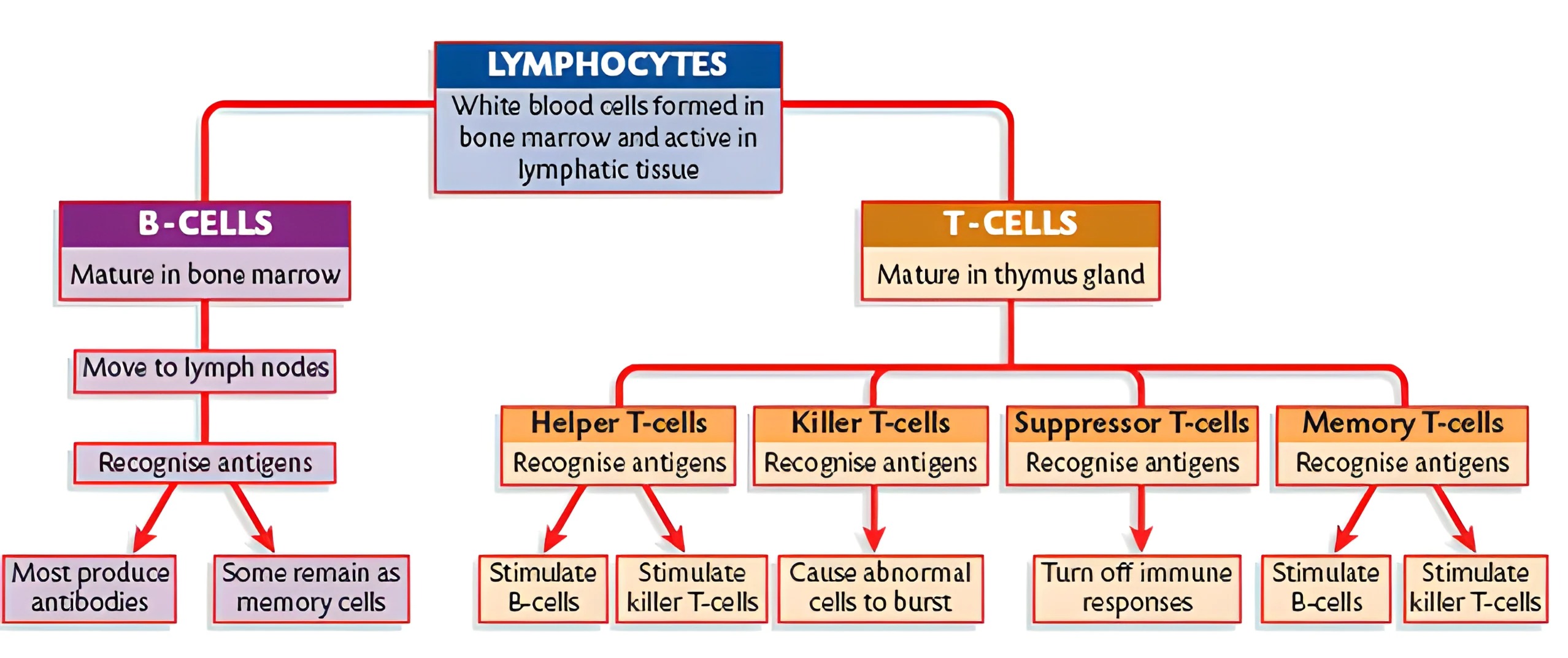
- Lymphocytes are a type of white blood cell. They play an important role in the immune response.
- All lymphocytes are made in the bone marrow.
- Depending on where they mature, lymphocytes are divided into 2 main groups;
- B-cells.
- T-cells.
B Cells
- B-cells are the lymphocytes responsible for producing antibodies.
- Humans are born with millions of different B-cells.
- B-cells mature in the bone marrow.
- Once mature, they move to the lymph nodes**.**
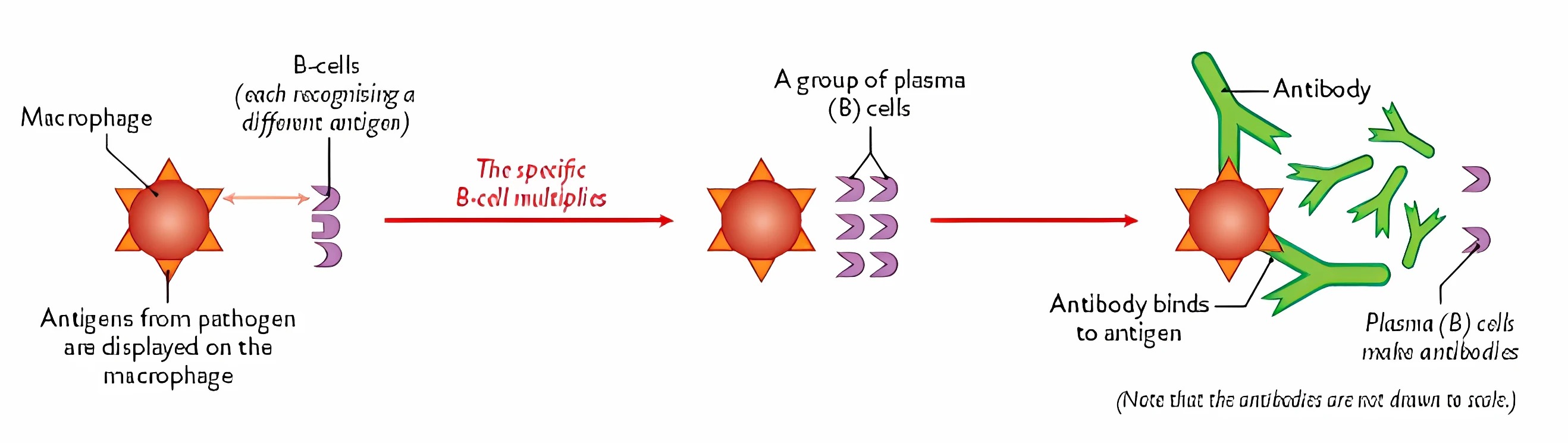
- Each B-cell produces a specific antibody with a unique shape, which is displayed on its surface.
- When a B-cell's antibody matches an antigen, the B-cell multiplies (clones) and produces large quantities of the specific antibody.
- After the infection is overcome, most B-cells die, but a small number remain as memory B-cells.
- These provide long-term immunity by responding quickly to future infections by the same pathogen.
T Cells
- T-cells mature and are activated in the thymus gland (T for thymus).
- T-cells do not produce antibodies.
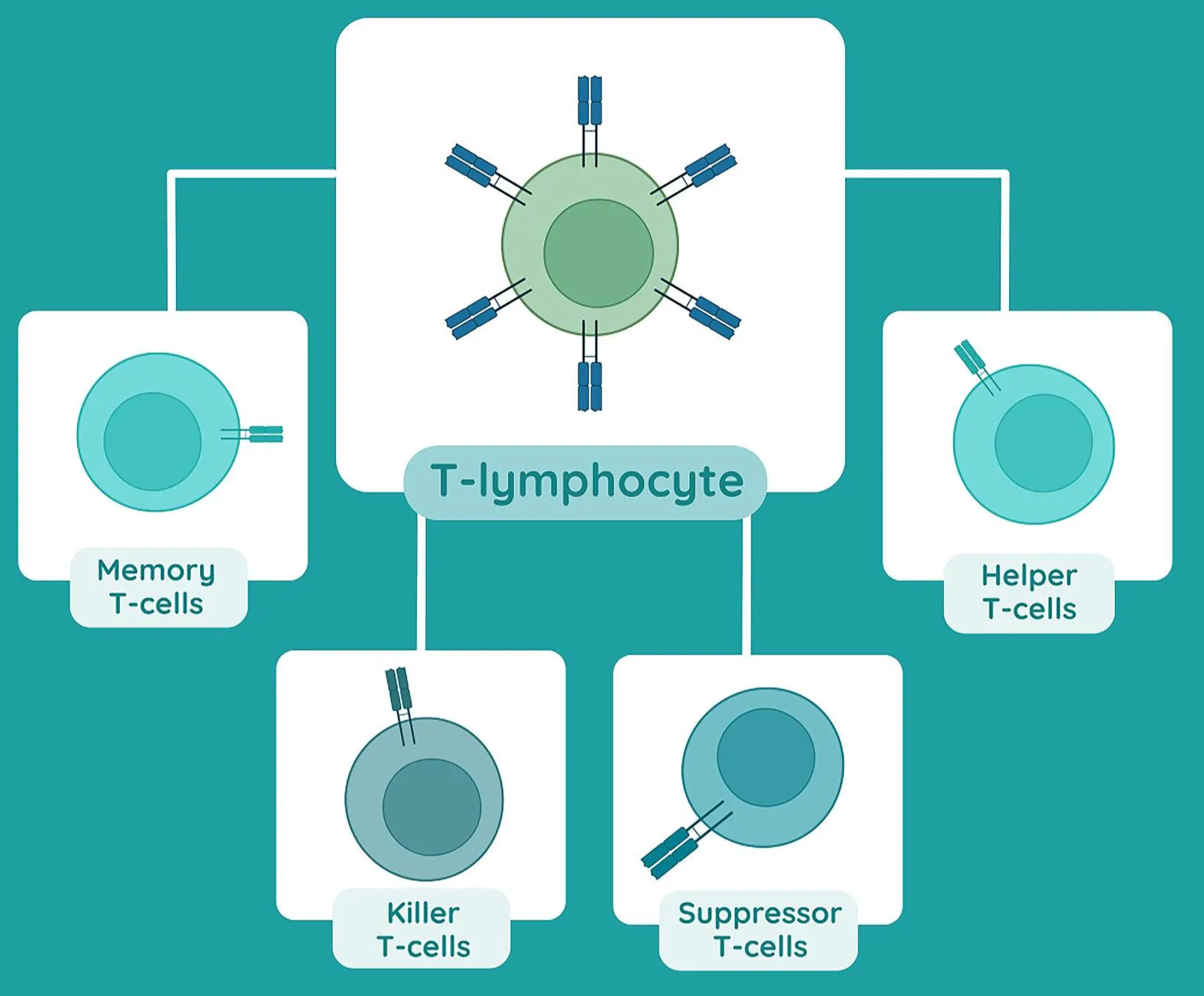
- There are four types of T-cells:
- Helper T-cells
- Killer T-cells
- Suppressor T-cells
- Memory T-cells
1. Helper T-Cells
- Helper T-cells multiply and release chemicals to stimulate (help) B-cells to multiply.
- These B-cells then produce the correct antibodies.
- Helper T-cells also stimulate the production of killer T-cells.
2. Killer T-Cells
- Killer T-cells attack and destroy abnormal body cells, including infected and cancerous cells.
- Also known as natural killer (NK) cells because they are cytotoxic (cell-killing).
3. Suppressor T-Cells
- Suppressor T-cells inhibit the activity of B-cells and other T-cells.
- Suppressor T-cells become active after the pathogens are destroyed.
- In this way, they turn off the immune response once the infection is under control, preventing damage to healthy tissue.
4. Memory T-Cells
- Memory T-cells stimulate B-cells and killer T-cells to multiply if the same antigen enters the body again.
- After an infection, memory T-cells can live for years or even a lifetime, providing immunity to future infections by the same pathogen.