The Human Skeleton (Leaving Cert Biology): Revision Notes
📚Revision Notes
The Human Skeleton
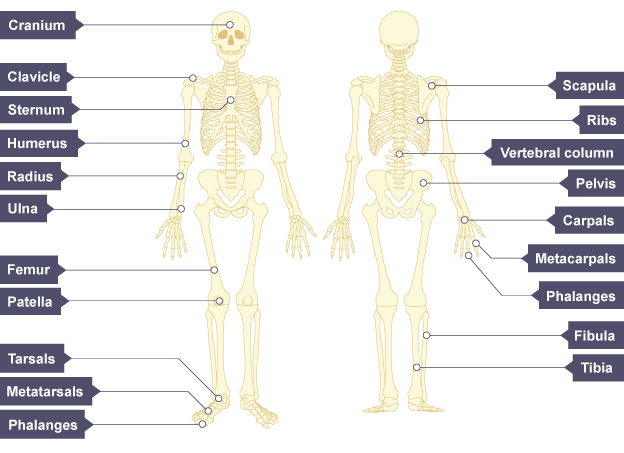
The human skeleton is divided into 2 regions:
- The axial skeleton contains the skull, facial bones, spine, ribcage and sternum.
- The appendicular skeleton consists of the limbs, pectoral girdle and pelvic girdle.
The Pectoral Girdle
- Clavicles: Collar bones
- Scapulae: Shoulder blades
The Pelvic Girdle
- Hip Bones: Surrounded by a hollow cavity called the pelvis
The Arms
- Humerus
- Radius
- Ulna
- Carpals: Bones of the wrist
- Metacarpals: Bones of the hand
The Skull
The skull protects the brain and is made up of 22 bones that are fused together, except for the lower jaw which can move to open and close the mouth.
The Legs
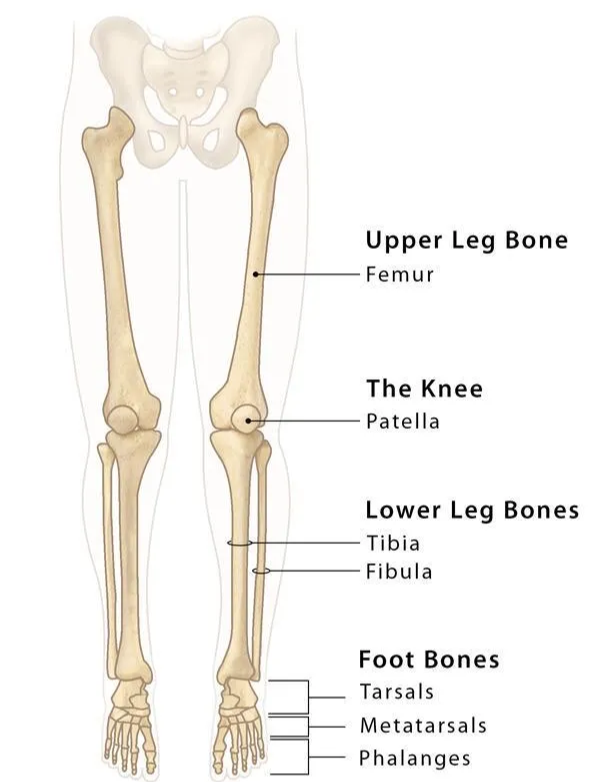
- Femur: Thigh bone (largest bone in the body)
- Patella: Kneecap
- Fibula
- Tibia
- Tarsals: Bones of the ancle
- Metatarsals: Bones of the foot
The Spine
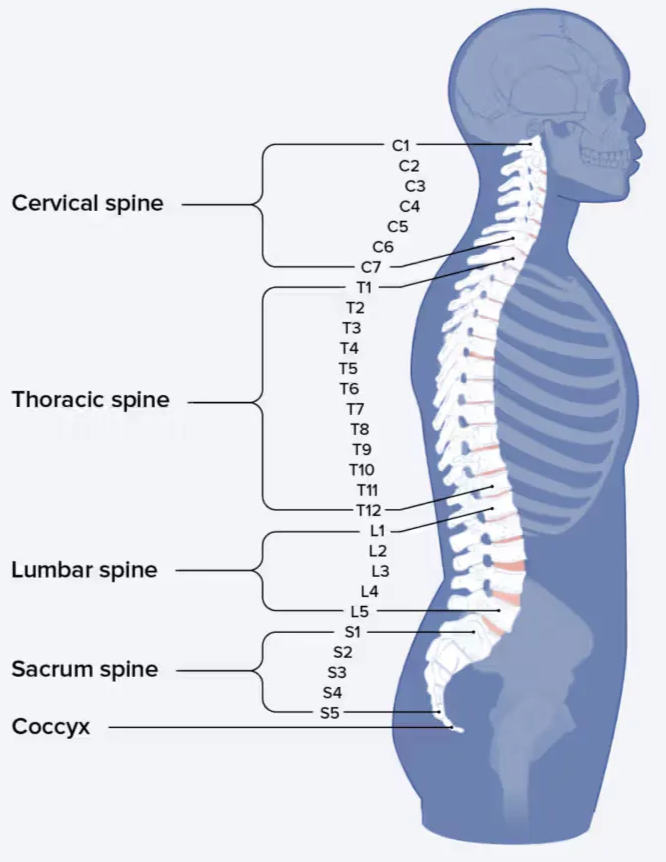
- The spine consists of 33 bones (vertebrae), arranged into 5 regions.
- The vertebrae enclose the spinal cord for protection.
- A pad of fluid enclosed by cartilage, called a disc, is located between most of the vertebrae.
- These discs act as shock absorbers and protect the vertebrae from rubbing against each other.
- Vertebrae get larger further down the spine as they need to support more weight.
Sections of the Spine
- Cervical – 7 vertebrae
- Thoracic – 12 vertebrae
- Lumbar (small of back) – 5 vertebrae
- Sacrum (hip) – 5 vertebrae
- Coccyx (tail) – 4 vertebrae
Note
Note: People are taller in the mornings when their discs are fully expanded. During the day the discs become compressed and people become slightly shorter.
Note
You need to know the name of each section of the spine and the corresponding number of vertebrae for the exam!
Ribs
- The rib cage protects the heart and lungs.
- It consists of the sternum and 12 pairs of ribs:
- 7 true ribs, attached to the breastbone and spine.
- 3 false ribs, attached to the spine and each other at the front of the chest.
- 2 floating ribs, attached to the spine.