The Structure of Flowering Plants (LC 2026) (Leaving Cert Biology): Revision Notes
📚Revision Notes
Xylem and Phloem
Xylem
- There are two types of xylem:
- Vessels
- Tracheids.
- The living part of xylem dies as it matures, so xylem is a dead tissue.
- Xylem is found in the vascular bundles of roots, stems, leaves, and flowers.
Function of Xylem:
- Transports water and minerals from the roots to the leaves.
- Provides mechanical support to the plant.
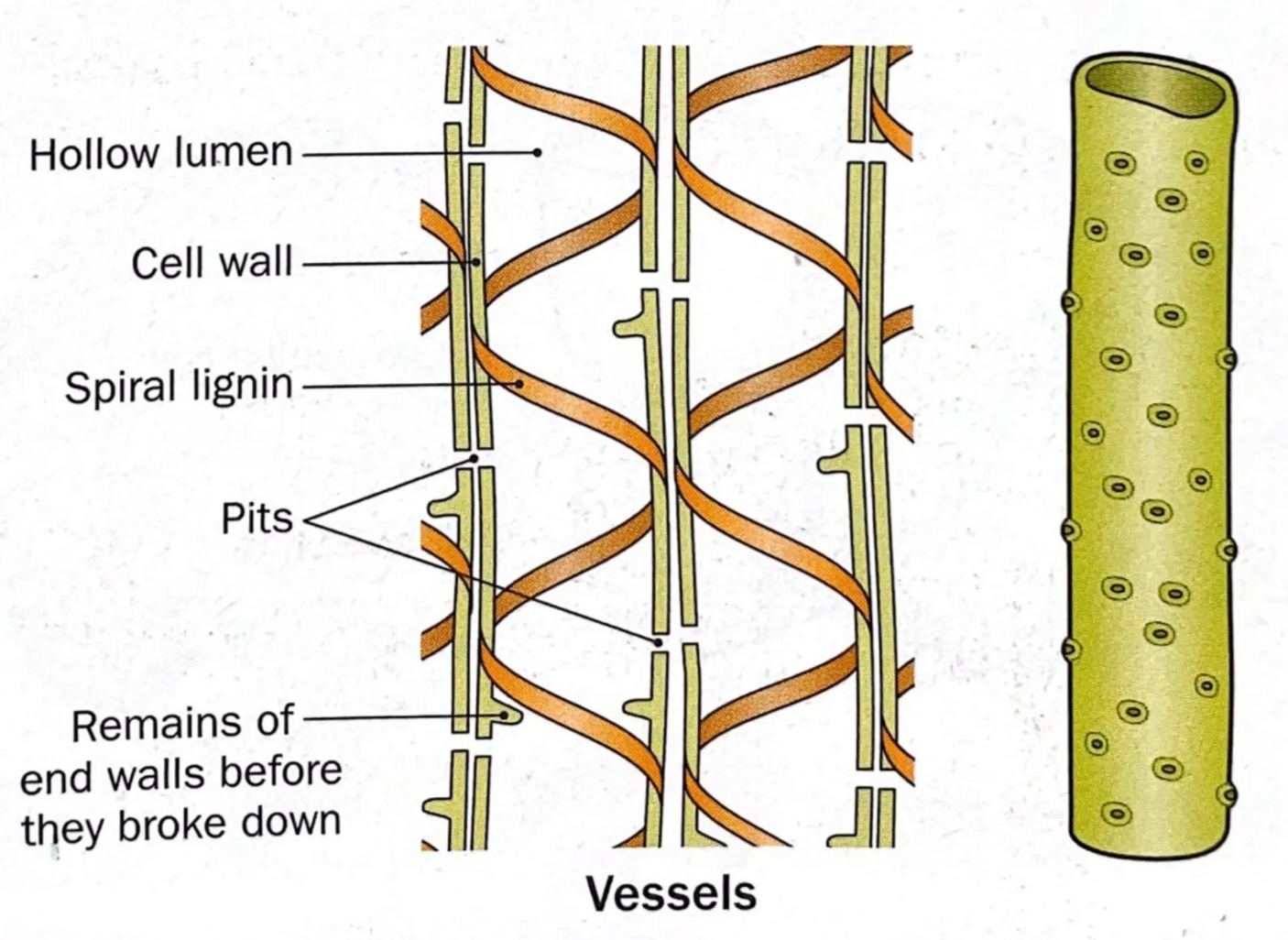
1. Vessels
- Tubes formed by cells joining end to end.
- Wider than tracheids.
- Have pits in their side walls to allow water to move from one vessel to another.
- More efficient at transporting water than tracheids.
- Found mostly in flowering plants.
- Spiral lignin is found in the walls for strength and support.
2. Tracheids
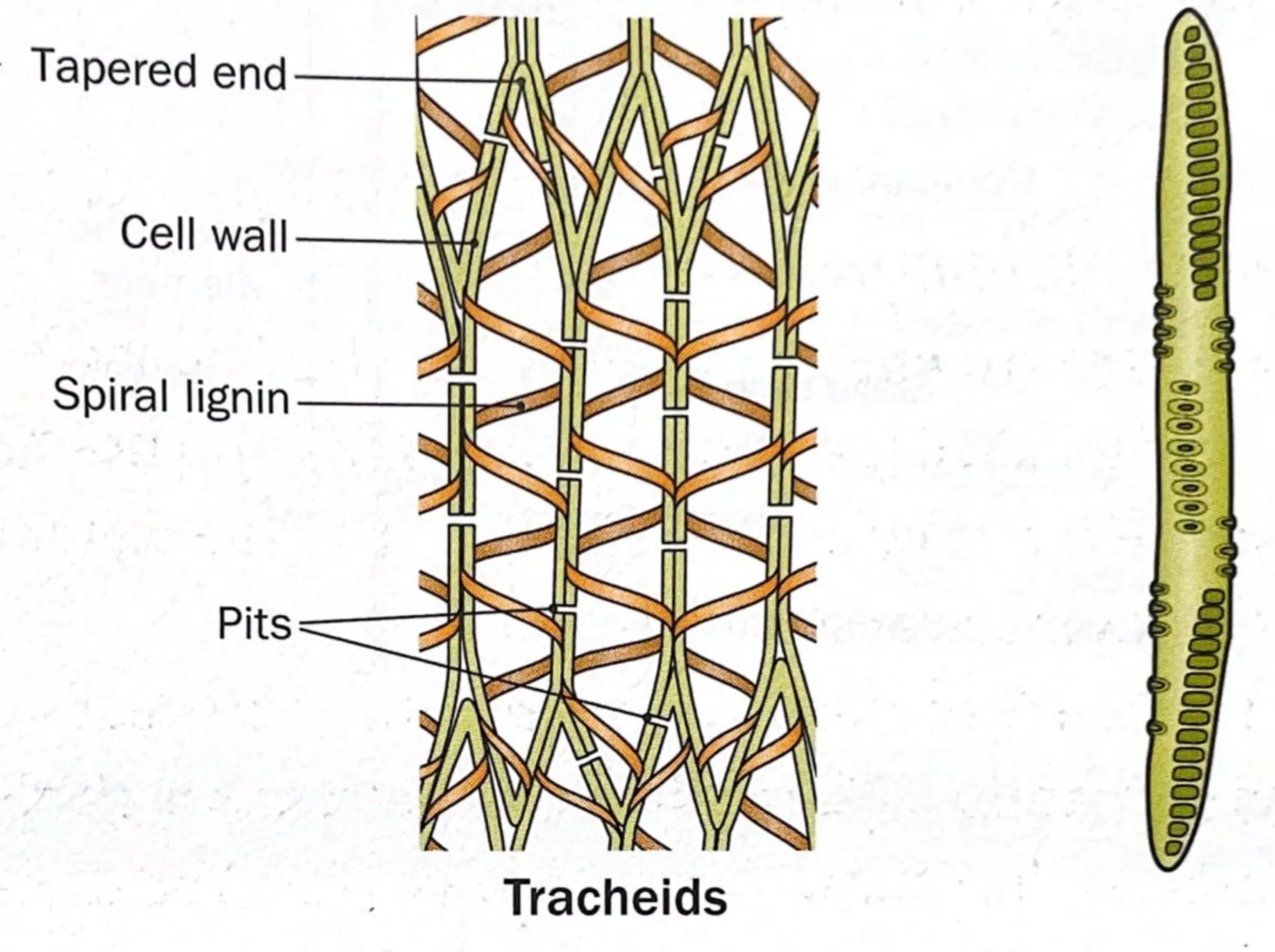
- Long, tapered cells.
- Hollow insides.
- Water passes from tracheid to tracheid or from tracheid to cell through thin wall areas called pits.
- The walls of tracheids are strengthened with lignin for support.
- Tracheids are more primitive than vessels.
Phloem
-
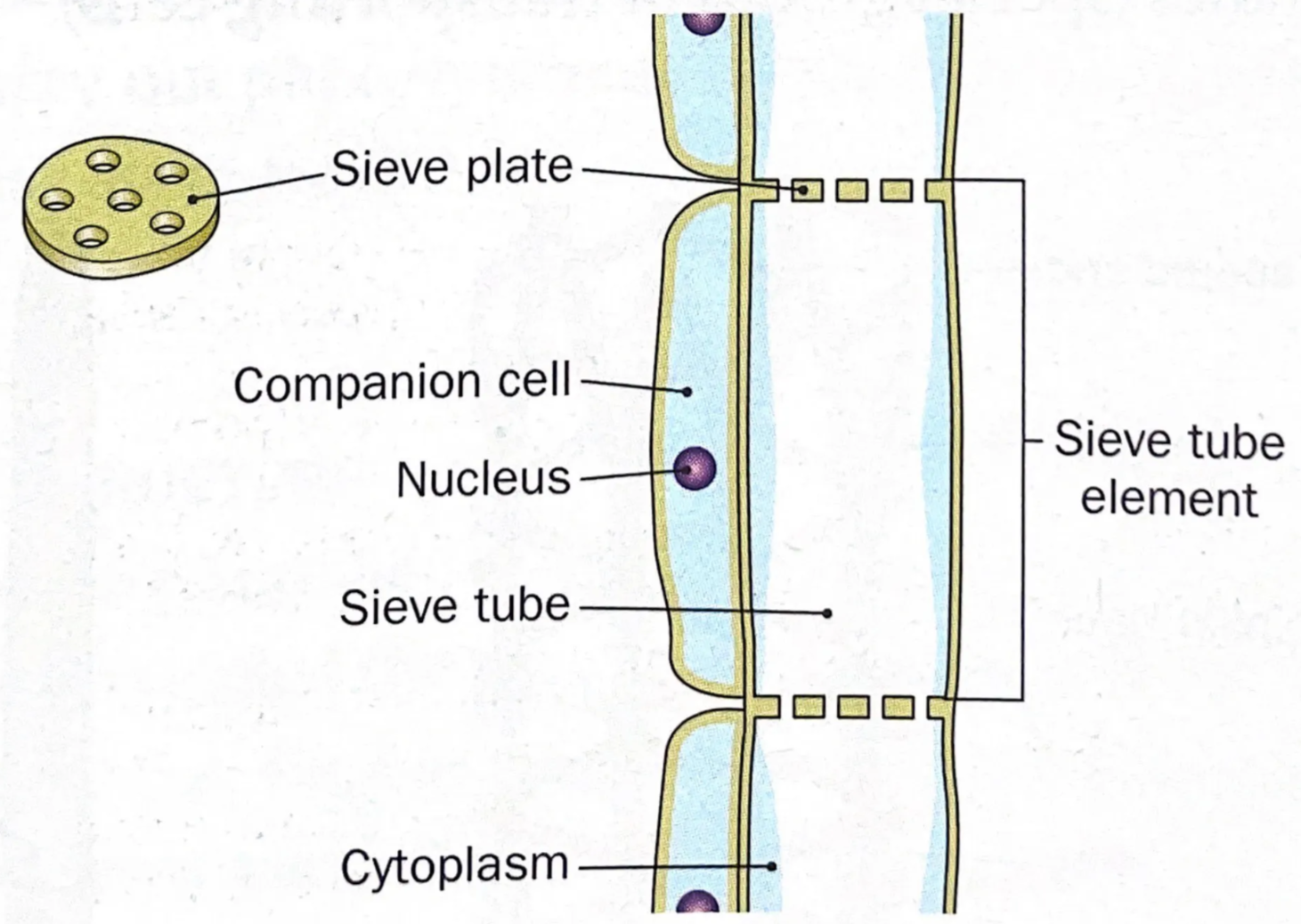
Phloem is made up of companion cells and sieve tubes.
-
Sieve tubes are long tubular structures formed when sieve tube cells join end to end.
-
The end walls of sieve tube cells have pores, called sieve plates, that allow substances to pass between cells.
-
Sieve tube cells do not contain a nucleus but do contain cytoplasm.
-
Their walls are made of cellulose
-
Companion cells
- Each sieve tube element has a companion cell attached.
- Companion cells contain a nucleus, so each companion cell controls a sieve tube element.
- Phloem is living tissue because of the companion cells.
-
Sieve tubes transport food made by photosynthesis from the leaves to the rest of the plant.
-
Phloem is found in the vascular bundles of roots, stems, leaves, and flowers.
Xylem vs Phloem
| Xylem | Phloem |
|---|---|
| Made of tracheids or vessels | Made of sieve tubes and companion cells |
| Dead tissue | Living tissue |
| Walls strengthened with lignin | Walls strengthened with cellulose |
| Transports water and minerals | Transports food |
| Flow is always upwards | Flow can be upwards or downwards |