Key Economic Indicators (LC 2027) (Leaving Cert Business): Revision Notes
📚Revision Notes
Key Economic Indicators
Economic indicators are statistics or pieces of data that measure different elements of an economy's performance. These measurements help us understand whether the economy is performing well or if certain areas need attention and intervention.
Note
Ireland's Central Statistics Office (CSO) collects and publishes data on six key economic indicators that provide a comprehensive picture of our economic health. Understanding these indicators is essential for businesses, policymakers, and citizens to make informed decisions.
Employment
Employment measures how many people in the labour force have jobs and are actively contributing to economic activity. This indicator tells us about the health of the job market and people's ability to earn income.
Key employment concepts
Full employment means that all those seeking work are employed at salaries equivalent to their skills. In Ireland, this typically means 96-98% of the labour force is employed, with the remaining 2-4% representing people transitioning between jobs.
The labour force includes everyone between the ages of 16 and 65 who is working or available for work. It includes both employed people and those actively seeking employment.
The unemployment rate measures the percentage of the labour force who are currently unemployed but actively seeking work. This figure fluctuates with economic conditions.
Impact of employment levels
Employment levels significantly affect multiple aspects of the economy and society:
Important
High employment brings several benefits. Government finances improve because more people pay income tax and fewer people claim unemployment benefits. Consumer demand increases as more people have disposable income to spend on goods and services. Businesses benefit from increased sales and may need to recruit additional staff to meet demand.
Important
High unemployment creates challenges across the economy. Government revenues fall while expenditure on social welfare increases. Reduced consumer spending leads to lower business profits and potential job losses. Social problems such as crime rates and mental health issues often increase during periods of high unemployment.
Inflation
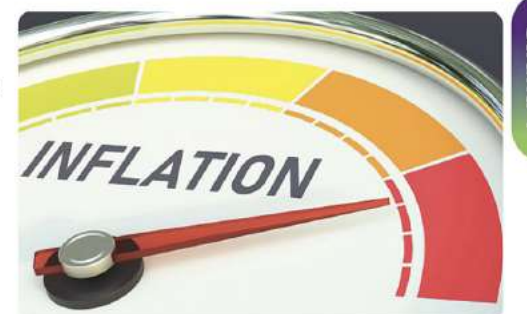
Inflation represents a sustained increase in the general level of prices over a specific period. When inflation occurs, the purchasing power of money decreases, meaning consumers can buy less with the same amount of money.
Measuring inflation
The Central Statistics Office measures inflation using the Consumer Price Index (CPI). This tracks the price changes of a typical basket of goods and services that an average consumer would purchase, including food, housing, transport, and entertainment.
Note
Each item in the basket receives a weighting based on its importance in household spending. For example, housing costs carry more weight than entertainment expenses because families typically spend more on housing.
Types of inflation
Demand-pull inflation occurs when there is increased demand for goods and services, but the supply cannot keep pace. This typically happens when the economy is performing well and consumers have more money to spend.
Cost-push inflation happens when the costs of producing goods increases, forcing businesses to raise prices to maintain their profit margins. This can occur due to rising wages, raw material costs, or energy prices.
Impact of inflation on businesses
Important
High inflation creates several challenges. Higher costs for raw materials make production more expensive, potentially reducing profit margins. Irish firms may become less competitive compared to international competitors if their prices rise faster. Export sales may decline as Irish goods become more expensive for foreign buyers. Consumer spending patterns may change as people become more price-sensitive and reduce their purchases.
Important
Low inflation generally benefits the economy. Price stability makes business planning easier and gives consumers confidence to spend. Government spending can focus on services rather than wage increases to match inflation. Raw material costs remain relatively stable, helping businesses maintain consistent pricing.
Interest rates
Interest rates represent the cost of borrowing money or the return for saving money. In Ireland, interest rates are primarily influenced by the European Central Bank (ECB) because we use the euro as our currency.
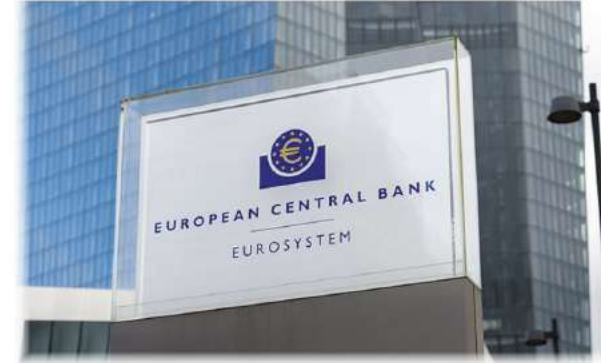
The ECB sets base interest rates as part of monetary policy to control inflation and maintain economic stability across the eurozone. When the ECB changes rates, it affects borrowing costs for businesses and consumers throughout Ireland.
How interest rates affect the economy
Important
High interest rates make borrowing more expensive, which typically reduces consumer spending on items bought with credit, such as cars and houses. Businesses may postpone expansion plans due to higher borrowing costs. However, savers benefit from higher returns on their deposits. Mortgage repayments increase, reducing disposable income for homeowners.
Important
Low interest rates encourage borrowing and spending. Consumers are more likely to take loans for major purchases, boosting demand for goods and services. Businesses find expansion more affordable and may invest in new equipment or facilities. Mortgage repayments decrease, giving homeowners more disposable income to spend on other items.
Economic growth and development
Economic growth measures the increase in the total value of goods and services produced in a country over a specific period, typically measured year-on-year. This is quantified using Gross Domestic Product (GDP).
Economic development goes beyond simple growth statistics to consider improvements in living standards, education levels, healthcare quality, and overall quality of life for citizens.
The economic cycle
Note
Economic activity naturally fluctuates in cycles with four main phases:
- Boom - Economic activity peaks with high employment, rising prices, and strong consumer confidence
- Recession - Economic activity slows down for two consecutive quarters with rising unemployment
- Depression - The lowest point of economic activity with high unemployment and reduced spending
- Growth - Economic recovery begins with increasing production and employment levels
Measuring economic activity
Important
GDP (Gross Domestic Product) measures the total value of goods and services produced within Ireland's borders, regardless of whether they're produced by Irish or foreign companies.
GNP (Gross National Product) measures the total value of goods and services produced by Irish companies, whether located in Ireland or abroad. For Ireland, GNP often provides a better indication of actual economic activity available to Irish citizens because many multinational corporations operate here primarily for tax purposes.
Exchange rates
Exchange rates determine the price of one currency in terms of another currency. For example, if the euro-dollar exchange rate is 1.07, this means one euro can be exchanged for 1.07 US dollars.
Exchange rates constantly fluctuate based on economic conditions, political stability, trade balances, and investor confidence. These changes significantly impact businesses involved in international trade.
Impact on businesses
Important
Cost of exports: When the euro weakens against other currencies, Irish exports become cheaper for foreign buyers, potentially increasing demand. When the euro strengthens, Irish exports become more expensive abroad, which may reduce sales.
Cost of imports: A falling euro makes foreign goods more expensive for Irish businesses to purchase, increasing their costs. A rising euro makes imports cheaper, reducing costs for businesses that rely on foreign suppliers.
Competitiveness: Currency fluctuations affect how competitive Irish businesses are in global markets. A weaker euro can make Irish goods and services more attractive internationally, while a stronger euro may make it harder to compete on price.
Currency conversion
Example
Worked Example: Currency Conversion
When businesses need to convert currencies:
- Converting euros to foreign currency: Multiply by the exchange rate
- Converting foreign currency to euros: Divide by the exchange rate
If the EUR/USD rate is 1.07:
- €1,000 to USD: €1,000 × 1.07 = $1,070
- 1,070 ÷ 1.07 = €1,000
Consumer confidence
Consumer confidence measures how optimistic consumers feel about current and future economic conditions. This statistical measurement reflects people's willingness to spend money and make major purchases.
How consumer confidence is measured
Note
Consumer confidence surveys ask people about their current financial situation, expectations for the future, and likelihood of making major purchases. The results create a consumer sentiment index that economists use to predict spending patterns and economic trends.
High consumer confidence typically leads to increased spending, which boosts business sales and encourages economic growth. Low consumer confidence often results in reduced spending as people save money and delay major purchases due to economic uncertainty.
Relationship with other indicators
Important
Consumer confidence closely links to other economic indicators:
- Inflation: Low inflation increases disposable income and spending confidence, while high inflation makes consumers more price-sensitive and reduces demand
- Interest rates: High rates make borrowing more expensive and reduce consumer spending, while low rates encourage spending and major purchases
- Employment: High employment levels boost confidence as more people have secure incomes, while unemployment creates uncertainty and reduces spending
Remember!
Summary
Key Points to Remember:
-
Economic indicators are vital statistics that measure different aspects of economic performance and help predict future trends
-
The six key indicators work together to provide a comprehensive picture of economic health: employment, inflation, interest rates, economic growth, exchange rates, and consumer confidence
-
Employment levels directly impact government finances, consumer demand, and social well-being across the economy
-
Inflation affects purchasing power - high inflation reduces what people can buy with their money, while low inflation maintains price stability
-
Interest rates influence borrowing and spending throughout the economy, with the ECB setting policy for the eurozone including Ireland