National Policy and Business (LC 2027) (Leaving Cert Business): Revision Notes
📚Revision Notes
National Policy and Business
What is national policy?
National policy is how the Irish government tackles important issues that affect the country. Think of it as the government's plan for solving problems and achieving goals that benefit society and the economy.
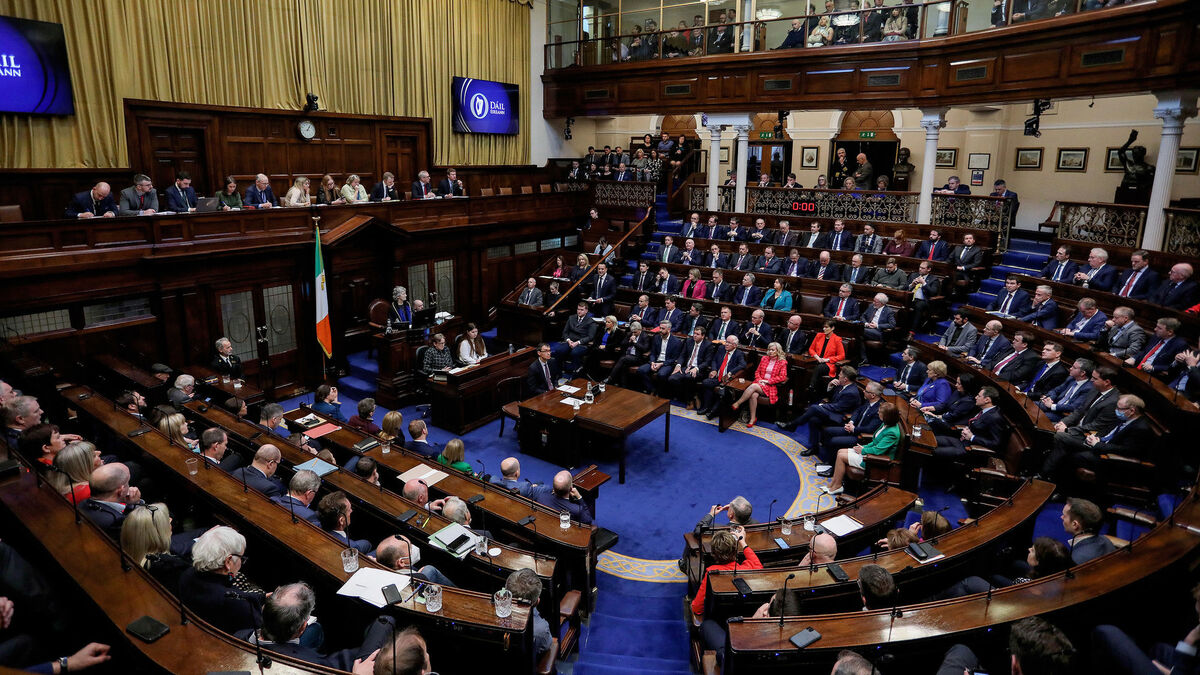
When governments create policies, they're essentially setting out their approach to dealing with challenges. These policies can be put into action through different methods:
- Creating new laws and regulations
- Funding specific services like healthcare or education
- Investing in infrastructure projects like roads or broadband
- Setting up new government agencies
Note
The key thing to remember is that policies are created by whoever is in government at the time, so they can change when new political parties come into power. This is why businesses need to stay informed about political developments and potential policy shifts.
The policy cycle
Government policies don't just appear overnight - they follow a structured process called the policy cycle. This systematic approach ensures that policies address real problems and are properly implemented.
Example
The Policy Cycle in Action: Addressing Road Safety
- Identification - Rising number of road traffic accidents identified as a serious problem
- Monitoring - Department of Transport tracks accident statistics and fatality rates
- Discussion - Road safety experts, driving instructors, gardaí, and citizen groups debate solutions
- Decision - Government decides to implement stricter penalty points system and lower speed limits
- Implementation - New laws passed, penalty points system updated, speed limit signs changed
This cycle helps ensure that policies are well thought out and address real problems that people face.
Policy vs legislation
Many students get confused between policy and legislation, but understanding the difference is crucial for business students.
Important
Key Difference:
- Policy is like a set of guidelines or principles that organisations use to make decisions. Policies are flexible and can be changed fairly easily when circumstances change.
- Legislation refers to actual laws created by parliament. These laws are legally binding, meaning everyone must follow them or face legal consequences.
Think of it this way: policy sets the direction, while legislation makes it legally enforceable.
For example, a company's policy about working from home can be updated quickly if needed, but changing employment legislation requires a formal parliamentary process that can take months or years.
Business's role in policy development
Irish businesses don't just sit back and wait for the government to make policies - they actively try to influence what those policies look like. Understanding how this influence works is essential for anyone studying business in Ireland.
Irish Business and Employers Confederation (IBEC)
IBEC is Ireland's main business lobby group, representing over 7,500 companies that employ more than 70% of the private sector workforce. IBEC acts as the voice of Irish business, making sure that government policies consider the needs and challenges faced by companies.
Note
IBEC works by:
- Meeting with government ministers and civil servants
- Submitting policy proposals and suggestions
- Representing Irish business interests in the EU
- Providing research and data to support their arguments
The organisation has policy groups covering different areas like digital transformation, energy policy, taxation, and employment law.
Economic and Social Research Institute (ESRI)
The ESRI is an independent research institute that provides evidence-based research to help with policy-making in Ireland. Founded in 1960, the ESRI's job is to give policymakers reliable, objective information they can use to make better decisions.
The ESRI produces research on topics like:
- Economic forecasting and analysis
- Education and skills development
- Healthcare policy
- Climate change and sustainability
Note
This research is crucial because it means policies are based on facts and evidence rather than just opinions or political preferences. This evidence-based approach leads to more effective policies that actually solve problems.
Interest groups and lobbying
Interest groups are organisations that represent people with common interests or goals. They try to influence government decisions and policies that affect their members. Examples include trade unions, environmental groups, and professional associations.
Lobbying is the process these groups use to try to persuade decision-makers. This might involve:
- Meeting with politicians and civil servants
- Submitting detailed policy proposals
- Running public awareness campaigns
- Organising petitions or protests
For example, the Irish Farmers' Association regularly lobbies the government about agricultural policies, while environmental groups might lobby for stronger climate action.
Note
Lobbying is perfectly legal and is actually an important part of democracy - it ensures that different voices are heard when policies are being developed. However, there are regulations in place to ensure transparency in the lobbying process.
National policies
Let's examine three specific examples of Irish national policies that have significant impacts on how businesses operate and develop their strategies.
Policy 1: Ireland's National Waste Policy 2020-2025
This policy aims to create a circular economy where waste is minimised and resources are reused as much as possible. The policy represents a major shift from the traditional "take-make-dispose" economic model.
Key aims:
- Reduce food waste by 50% by 2030
- Maintain recycling targets for different materials
- Introduce standardised bin colours nationwide
- Encourage businesses to design products that last longer and can be recycled
Impact on businesses:
- Companies need to think about packaging design
- New opportunities in recycling and waste management sectors
- Businesses may face new regulations about waste disposal
- Potential cost savings from reducing waste
Important
This policy creates both challenges and opportunities for businesses. While companies may need to invest in new processes and materials, those that adapt quickly can gain competitive advantages and access new markets in the growing circular economy sector.
Policy 2: White Paper on Enterprise Policy 2022-2030
This policy is all about helping Irish businesses grow and become more competitive. It recognises that Ireland needs to adapt to challenges like digitalisation and climate change while maintaining its position as an attractive location for international investment.
Key objectives:
- Help businesses become more digital and innovative
- Support Irish-owned companies to export more
- Attract high-quality foreign investment
- Create jobs in all regions of Ireland
- Support the transition to a low-carbon economy
Impact on businesses:
- More government support and grants available
- Training programmes to help workers develop new skills
- Better infrastructure and digital connectivity
- Support for research and development
Policy 3: National Social Enterprise Policy 2024-2027
Social enterprises are businesses that exist primarily to solve social or environmental problems rather than just make profit. This policy aims to support these hybrid organisations that combine commercial success with social impact.
Key features:
- €2.34 billion total value of social impact
- Support for over 4,335 social enterprises
- Focus on areas like healthcare, education, and community development
- Help social enterprises access funding and grow
Impact on businesses:
- New funding opportunities for businesses with social goals
- Recognition for companies that prioritise social impact
- Support for businesses working in underserved communities
Case studies
These real-world examples demonstrate how Irish businesses have successfully aligned their strategies with national policies to achieve both commercial success and contribute to policy objectives.
Macroom Buffalo Cheese
Example
Case Study: Macroom Buffalo Cheese - Aligning Business with National Policies
This Cork-based company shows how businesses can align with national policies. The Lynch family started producing buffalo cheese in 2009, and their success demonstrates several policy themes:
Policy Alignment:
- Sustainability: As an Origin Green company, they follow sustainable farming practices
- Innovation: They diversified their product range and invested in new facilities
- Rural development: They created jobs in rural County Cork
- Export growth: Their products are now sold internationally
The company's approach aligns with government policies supporting sustainable agriculture, rural development, and export growth, showing how businesses can thrive while supporting national objectives.
FiltraCycle
Example
Case Study: FiltraCycle - Innovation Meeting Environmental Policy
This young business turns cigarette waste into sustainable plastic, showing how entrepreneurs can create solutions that align with environmental policies:
Innovation and Impact:
- Circular economy: They recycle waste that would otherwise pollute the environment
- Innovation: They developed new technology to solve an environmental problem
- Sustainability: Their process prevents toxic waste from entering the environment
- Job creation: They're growing and creating new employment opportunities
FiltraCycle demonstrates how businesses can build successful companies while also supporting national environmental policies, creating a win-win situation for business and society.
Summary
Key Points to Remember:
- National policy is the government's approach to solving important issues affecting Ireland
- Policy is flexible while legislation is legally binding - know the difference!
- IBEC represents business interests while ESRI provides research to support policy-making
- Interest groups and lobbying are important ways that different voices influence policy development
- Current policies focus on sustainability, digital transformation, and supporting Irish businesses to grow and export
- Businesses can achieve commercial success while contributing to national policy objectives