A State-owned Company (Leaving Cert Business): Revision Notes
📚Revision Notes
A State-owned Company
Note
State-owned companies in Ireland are enterprises wholly or partially owned by the Irish government, operating in various sectors to provide public services or support economic development.
State-owned Companies
These companies are ran like enterprises but owned by the government. Irish Rail, RTE and ESB are examples of State-owned companies.
- Nationalisation: When the government takes over and starts to run a Business
- Privatisation: When the government sells a state-owned company to private investors State-owned companies exist to protect the interests of the public. Certain services may not be profitable or enticing to investors however they provide a public service. For example, running certain rural Bus services would never be profitable for a private company. As a result, Bus Eireann operates some of these routes in order to provide a public service. This is only possible since making a profit is not the primary goal of state-owned companies.
Benefits of Nationalisation
- Public Interest: Nationalised companies prioritise public welfare over profit, ensuring essential services are accessible to all citizens.
- Stability: They can provide consistent and reliable services, less affected by market fluctuations.
- Investment in Infrastructure: Government ownership can lead to significant investment in infrastructure, fostering long-term economic growth.
- Control Over Strategic Sectors: Nationalisation ensures that key industries, such as energy or transport, remain under domestic control, enhancing national security.
Disadvantages of Nationalisation
- Inefficiency: Without the pressure of competition, these companies may become inefficient and less innovative.
- Political Interference: Decisions may be influenced by political considerations rather than commercial or operational efficiency.
- Financial Burden: They can require substantial government funding, which might lead to increased public debt or divert resources from other areas.
- Market Distortion: Nationalised companies may create an uneven playing field, hindering private sector competition and innovation.
- Industrial Action: Nationalised industries may be more prone to strikes and other forms of industrial action, disrupting services and operations.
Case Study: Irish Rail
Irish Rail is a state-owned company. It highlights many of the drawbacks of Nationalisation.
- Inefficiency: Since there is no competitors, Irish Rail has no incentive to reduce journey times and improve the service. This has led to longer journey times for consumers. Delays are also very common.
- Political Interference: Politicians often interfere with Irish Rail and prevent it from operating in the most efficient way. Lobbying from politicians led to Kilcock being given lower fares, which cost Irish Rail revenue.
- Financial Burden: Irish Rail receives a subsidy from the government to cover its operations. This is a yearly cost to the taxpayer.
- Lack of innovation: Most Irish Rail services are on older diesel trains and there is no incentive to improve the service.
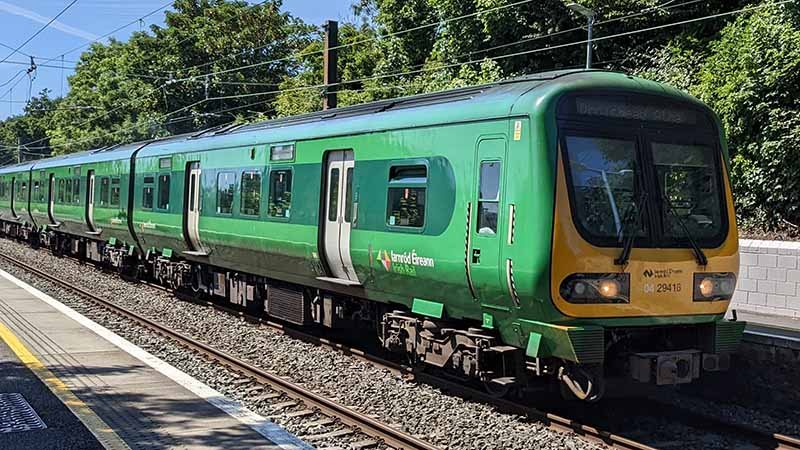
*Irish Rail is a state-owned company *