Financial Regulation (LC 2027) (Leaving Cert Business): Revision Notes
📚Revision Notes
Financial Regulation
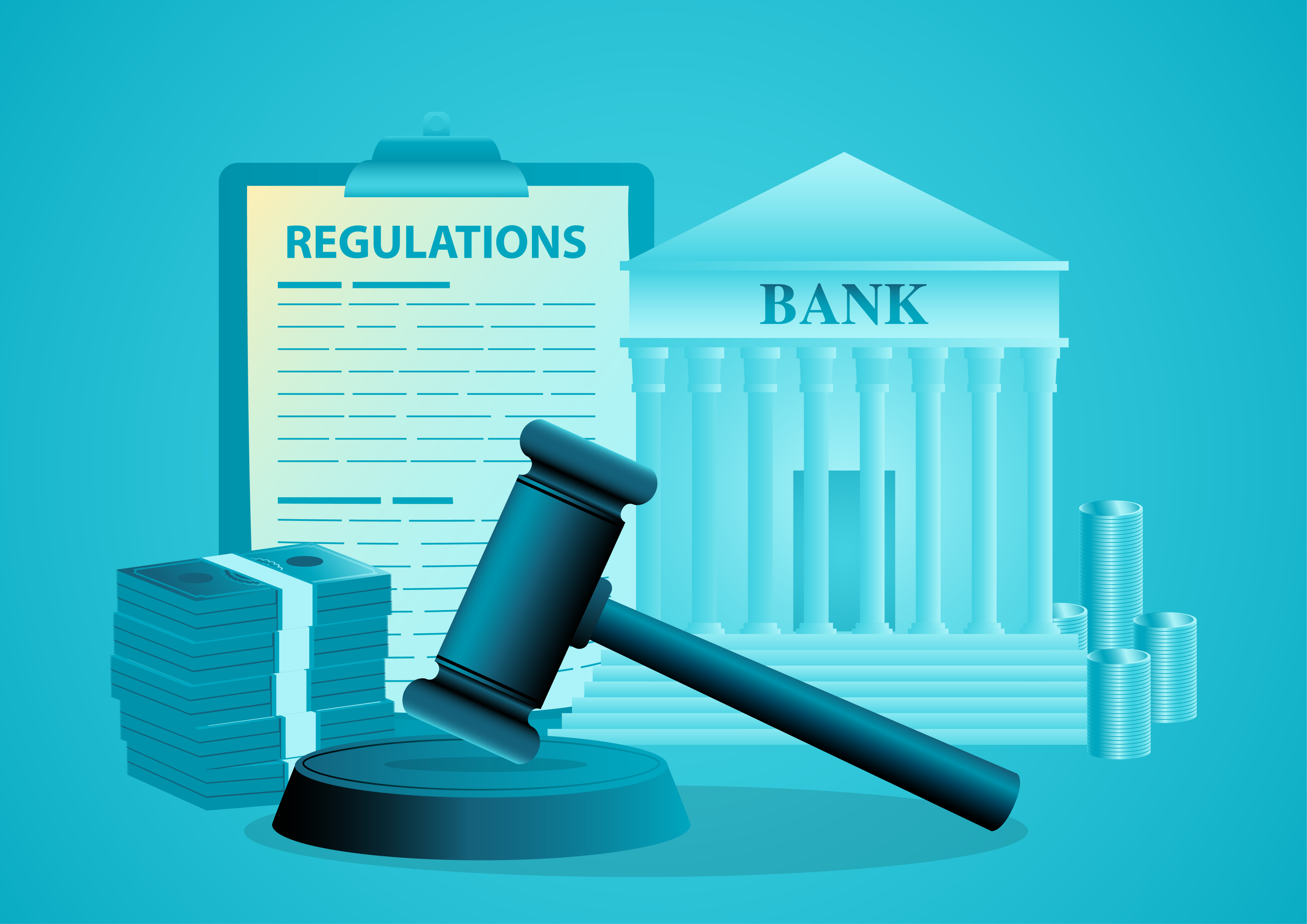
Financial regulation involves creating rules and oversight systems to ensure the financial services industry operates safely, fairly, and in the best interests of consumers. This system protects people from financial harm and maintains stability in the economy.
Why financial regulation matters
Financial regulation serves several crucial purposes in modern economies. It protects consumers from unfair practices, prevents financial institutions from taking excessive risks that could harm the economy, and ensures transparency in financial markets. Without proper regulation, financial institutions might engage in risky behaviour that could lead to economic crises, as seen in the 2008 global financial crisis.
Note
The regulatory system also helps maintain consumer confidence in financial services. When people trust that banks, insurance companies, and investment firms are properly supervised, they are more likely to save, invest, and participate in the financial system.
Financial regulation in Ireland
The Central Bank of Ireland serves as the primary financial regulatory authority in the country. This institution has extensive powers and responsibilities that affect every aspect of Irish financial services.
Key responsibilities of the Central Bank
The Central Bank performs several essential functions to maintain financial stability and protect consumers:
Licensing and supervision: The Central Bank grants licences to financial institutions including banks, insurance companies, investment firms, and credit unions. It continuously monitors these organisations to ensure they operate within the law and maintain adequate financial reserves.
Risk management: The bank identifies and assesses various risks in the financial system, including market risk, credit risk, and liquidity risk. It sets guidelines to help financial institutions manage these risks effectively.
Consumer protection: As the regulator of financial service providers in Ireland, the Central Bank enforces regulations to protect consumers from unfair practices. It ensures transparency in financial advertising and lending practices, and regularly reviews consumer protection frameworks.
Anti-money laundering: The Central Bank works to prevent criminal exploitation of the financial services industry by issuing guidelines and conducting inspections to ensure institutions have robust anti-money laundering systems.
Financial regulation in the European Union
The European Union operates a comprehensive financial regulation system through several key institutions. This system ensures consistent standards across all EU member states and promotes financial stability throughout Europe.
European Banking Authority (EBA)
The European Banking Authority plays a central role in creating uniform banking regulations across the EU. Established after the 2008 financial crisis, the EBA works to prevent future banking crises and protect consumers.
Note
The EBA's main functions include creating a single rulebook that ensures all EU banks follow the same regulations, regardless of which country they operate in. This eliminates regulatory arbitrage, where banks might try to exploit differences between national regulations.
The authority also conducts stress testing across EU banks to assess their ability to withstand economic shocks. These tests help identify potential weaknesses before they become serious problems.
European Securities and Markets Authority (ESMA)
ESMA regulates securities markets to ensure fair and transparent operations across the EU. This authority protects investors and maintains market integrity.
ESMA's key responsibilities include setting standards for investment products and services, ensuring consistent regulation across EU securities markets, and gathering market data to identify potential risks. The authority also works to prevent market abuse and ensures that investors receive accurate information about investment products.
European Insurance and Occupational Pensions Authority (EIOPA)
EIOPA supervises insurance companies and pension funds to ensure they can meet their obligations to policyholders. This authority is particularly important given the long-term nature of insurance and pension commitments.
The organisation ensures uniform standards across EU insurance and pension sectors, promotes transparency and accountability in financial services, and works to protect consumers in relation to insurance and pensions. EIOPA also conducts research and monitors market developments to identify emerging risks.
European Central Bank (ECB)
The European Central Bank serves multiple critical functions in the EU financial system beyond its role in monetary policy.
Note
The ECB sets interest rates for the eurozone, manages foreign currency reserves, ensures financial market supervision, authorises the production of euro banknotes, and monitors price trends to maintain price stability. The bank works closely with national central banks to coordinate policy across the eurozone.
Managing financial risk
Financial risk management involves identifying, assessing, and controlling various threats to financial security. Both institutions and individuals must understand and manage these risks effectively.

Types of financial risk
Investment risk affects all financial products, from simple savings accounts to complex investment portfolios. This includes market risk (when asset values fluctuate), credit risk (when borrowers default), and liquidity risk (when assets cannot be easily converted to cash).
Pension risk involves the possibility that pension funds may not provide adequate retirement income. Factors affecting pension security include investment performance, life expectancy changes, and economic conditions.
Mortgage risk includes the possibility of interest rate changes, property value fluctuations, and borrower default. Proper regulation helps ensure that lending standards protect both borrowers and lenders.
Cryptocurrency risk presents new challenges as these digital assets are highly volatile and operate outside traditional financial systems. Their decentralised nature makes them difficult to regulate and protect.
Consequences of under-regulation
Important
When financial markets lack adequate regulation, several serious problems can emerge. Consumer harm occurs when people are exposed to unsuitable products or poor investment advice without proper protection. Market instability can result from excessive risk-taking by financial institutions. Increased fraud risk emerges when oversight is insufficient to detect and prevent fraudulent schemes.
The 2008 global financial crisis demonstrated how under-regulation in certain areas, particularly complex financial products, can threaten the entire global economy.
Financial fraud and consumer protection
Financial fraud involves deceiving people to steal their money or personal information. As technology advances, fraudsters develop increasingly sophisticated methods to target consumers.
Common types of financial fraud
Phishing involves sending fake emails, texts, or making phone calls that appear to come from legitimate financial institutions. These communications trick people into revealing personal information such as account numbers, passwords, or PINs.
Smishing refers to text message scams that pretend to be from reputable companies. These messages often contain links to fake websites designed to steal personal information.
Identity theft occurs when criminals steal personal information to open accounts, make purchases, or conduct financial transactions in someone else's name. This can cause significant financial and credit damage that takes years to resolve.
Credit/debit card fraud involves unauthorised use of payment cards, either through physical theft or online scams. Modern chip-and-PIN technology has reduced some forms of card fraud, but online fraud continues to evolve.
Investment fraud typically involves promises of unrealistic returns with little or no risk. Scammers often pressure victims to act quickly and may use fake testimonials or credentials to appear legitimate.
The SAFE test for fraud protection
The Central Bank of Ireland promotes the SAFE test as a simple way for consumers to protect themselves from financial scams.
Example
The SAFE Test: Your Fraud Protection Guide
Stop: Take time to think carefully about any financial offer. Ask yourself what is being offered, who is making the offer, why they are contacting you, and whether you feel pressured to act quickly.
Assess: Verify that the company is legitimate by checking official registers and ensuring they have proper authorisation to offer financial services.
Fact-check: Seek independent advice to confirm that the service or product is genuine. Don't rely solely on information provided by the seller.
Expose and report: If you have any concerns about a financial offer, contact the Central Bank or relevant authorities immediately.
Digital currencies and financial technology
Digital currencies represent a significant evolution in money and payment systems. These new forms of currency are changing how people think about money, payments, and financial services.
Understanding digital currencies
Digital currency is money that exists only in electronic form, accessible through computers or mobile devices. Unlike physical cash, digital currencies have no physical representation and exist purely as data in computer systems.
Cryptocurrency
Cryptocurrency is a specific type of digital currency that uses cryptographic techniques to secure transactions and control the creation of new units. These currencies operate on decentralised networks, meaning no single authority controls them.
Popular cryptocurrencies include Bitcoin, Ethereum, and many others. Each operates on its own network with specific rules and characteristics.
Note
Blockchain technology underpins most cryptocurrencies. This system creates a permanent, tamper-resistant record of all transactions by linking them together in blocks that are distributed across many computers.
The blockchain process works by recording new transactions, transmitting them to a network of computers, validating the transactions through consensus, grouping confirmed transactions into blocks, and creating a permanent chain of transaction history.
Central Bank Digital Currency (CBDC)
A Central Bank Digital Currency represents a digital version of a country's official currency, issued and controlled by the central bank rather than commercial entities.
Unlike cryptocurrencies, CBDCs are backed by government authority and maintain the stability of traditional currency while offering digital convenience. The European Central Bank is currently exploring a digital euro that would complement existing euros.
Note
The proposed digital euro would offer several advantages including legal tender status (making it as valid as physical euros), universal acceptance across the euro area, enhanced security features, and seamless integration with existing financial systems.
Consumers could access digital euros through bank accounts or dedicated apps, use them for online purchases, person-to-person transfers, and even offline payments. The system would include automatic overflow features to linked accounts when holding limits are exceeded.
Consumer protection in the digital age
As financial services become increasingly digital, consumer protection measures must evolve to address new challenges and opportunities.
Financial regulators are working to ensure that digital financial services maintain the same level of consumer protection as traditional services. This includes ensuring transparent pricing, fair terms and conditions, robust security measures, and accessible complaint procedures.
Note
Educational initiatives help consumers understand new financial products and services, recognise potential scams, and make informed decisions about digital financial tools.
The regulatory framework continues to develop as technology advances, balancing innovation with consumer protection and financial stability.
Remember!
Summary
Key Points to Remember:
-
Financial regulation protects consumers and maintains economic stability through oversight of banks, insurance companies, and investment firms.
-
Multiple authorities work together - the Central Bank of Ireland handles national regulation while EU bodies (EBA, ESMA, EIOPA, ECB) ensure consistent European standards.
-
The SAFE test provides simple fraud protection - Stop to think, Assess the legitimacy, Fact-check information, and Expose suspicious activity.
-
Digital currencies are transforming finance but require careful regulation to balance innovation with consumer protection and financial stability.
-
Stay informed and vigilant about new financial products and potential scams, especially as technology continues to evolve rapidly.