Global Ecosystems (Leaving Cert CASD): Revision Notes
📚Revision Notes
Global Ecosystems
What are ecosystems?
An ecosystem is a geographic area where plants, animals, and other living things work together with weather and landscapes to create a "bubble of life." Think of it as a natural community where everything is connected and depends on everything else to survive.
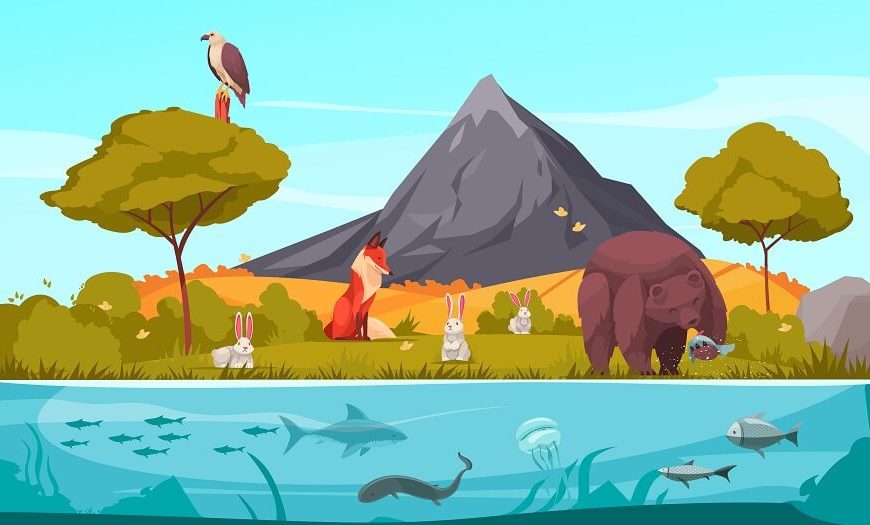
Ecosystems are made up of two main types of components:
-
Biotic factors - These are all the living parts including plants, animals, fungi, and other organisms
-
Abiotic factors - These are all the non-living parts such as rocks, soil, temperature, humidity, and sunlight
Important
The most important thing to understand about ecosystems is their interconnectedness. Every single part depends on every other part, either directly or indirectly. For example, if temperature changes in an ecosystem, it affects which plants can grow there. This then impacts the animals that eat those plants, forcing them to either adapt, move away, or face extinction.
Ecosystem scale and examples
Ecosystems can be incredibly small or amazingly large. A tiny tide pool left by the ocean contains a complete, functioning ecosystem.
Example
Worked Example: Tide Pool Ecosystem
These pools contain:
-
Producers: Seaweed (a type of algae that makes food through photosynthesis)
-
Herbivores: Abalone that eat the seaweed
-
Carnivores: Sea stars that eat other animals like clams and mussels
The organisms must survive being submerged in seawater and pounding ocean currents when the tide comes in, then survive sun exposure and higher temperatures when the tide goes out. Each species has special adaptations - seaweed has a protective coating to prevent drying out in the sun.
The entire Earth's surface consists of connected ecosystems that form larger units called biomes. Biomes are vast sections of land, sea, or atmosphere defined by their climate, geography, and the plants and animals living there. The five main types of biomes are:
-
Desert
-
Aquatic
-
Tundra
-
Grassland
-
Forest
Global biome examples
Within each biome, you'll find many different ecosystems with unique characteristics.
Desert biomes
The Sahara Desert has a hot, arid climate and includes oasis ecosystems with date palm trees, fresh water, and animals like crocodiles. It also contains sand dune ecosystems where organisms like monitor lizards and fennec foxes must survive in shifting sand for long periods. Interestingly, the Sahara even receives abiotic factors from marine environments - the Atlantic Ocean creates cool fogs that drift over the Northwest African coast.
The Gobi Desert stretches across Mongolia and China but is completely different from the Sahara. It's a cold desert with freezing temperatures, based on bare rock rather than sand. Some grasses manage to grow in this harsh climate, supporting grazing animals like the goitered gazelle and even the takhi (an endangered species of wild horse that was reintroduced in the 20th century after going extinct in the wild).
Antarctica is also considered a cold desert biome. Its thick ice sheet allows only a few nutrient-poor mosses to grow, so animal life like penguins, whales, and seals must rely on the ocean for food rather than the land.
Threatened ecosystems
The Great Plains and bison
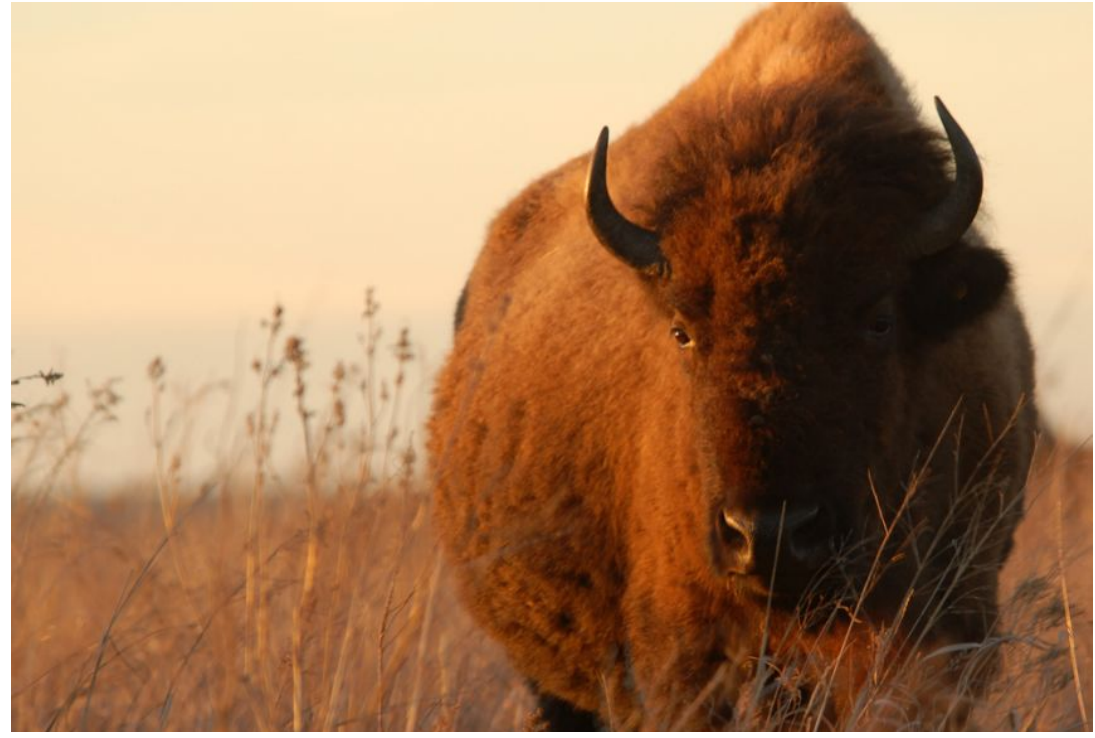
Humans are part of ecosystems too, but our impact can be devastating or sustainable depending on our approach. Indigenous peoples of North America's Great Plains developed a complex, sustainable lifestyle centred around the bison - a keystone species native to that grassland ecosystem.
Example
Case Study: Indigenous Sustainable Practices
Bison were essential to Indigenous tribes like the Lakota, Blackfeet, and Cheyenne, who used:
-
Bison hides for homes and clothing
-
Bison meat for food
-
Bison horn for tools
-
Spiritual practices centred around the animals
This sustainable relationship supported tens of millions of bison and numerous tribes for centuries.
However, in the mid-to-late 1800s, the U.S. government implemented "scorched earth" policies encouraging the military to kill as many bison as possible. This was genocide - an attempt to destroy Indigenous culture and seize tribal lands. By 1900, fewer than 1,000 wild bison remained. This devastated both Indigenous communities and the ecosystem itself. Today, much of the Great Plains has been converted to farmland for cattle, making it one of the world's most threatened ecosystems.
Amazon rainforest destruction
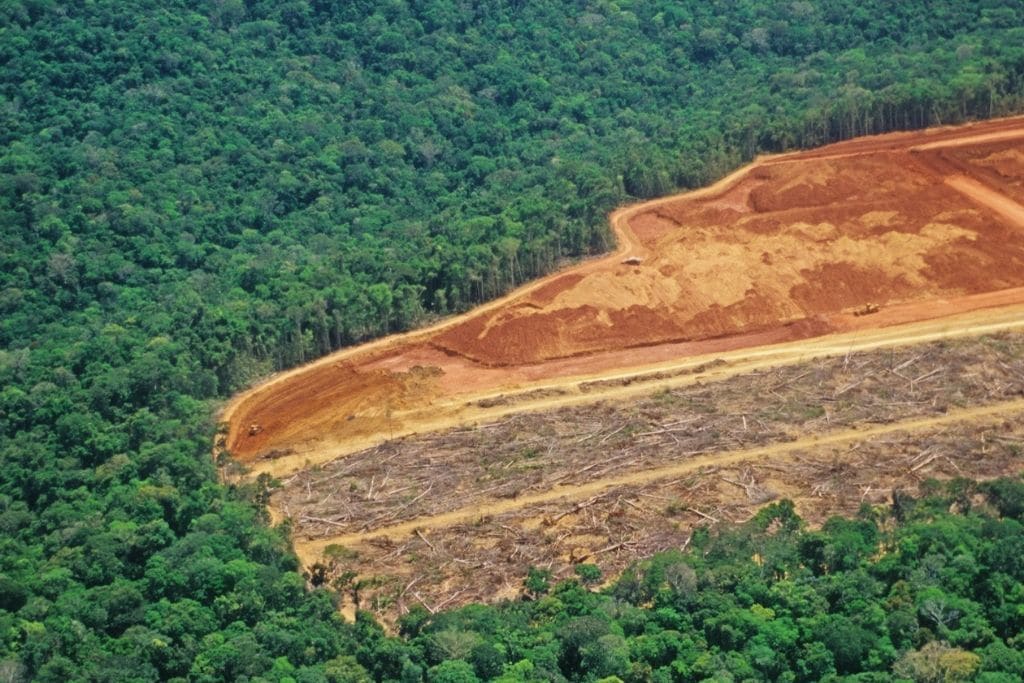
Tropical rainforest ecosystems around the Amazon River face serious threats. These rainforests have distinct layers defined by different levels of sunlight, with each layer supporting unique plants and animals.
Note
Rainforest Structure:
-
Emergent layer - The tallest trees exposed to high winds and harsh sun, supporting birds of prey, monkeys, and insects
-
Canopy - Densely packed trees with epiphytes (plants like mosses, ferns, and orchids growing on branches), home to most rainforest animals including toucans and howler monkeys
-
Understory - Darker layer supporting shade-loving plants, insects, and larger animals like snakes
-
Forest floor - Darkest layer filled with decomposing matter, home to giant anteaters and soil-aerating creatures
Indigenous peoples like the Yanomami live sustainably in the Amazon, farming and hunting in areas until resources are partially depleted, then migrating to allow the rainforest to replenish itself.
Important
However, international demand for beef, rainforest wood, and other products has incentivised local farmers and governments to continue deforestation. This creates a devastating cycle - many rainforest countries were formerly colonised by Europeans who built economies based on resource extraction, leaving locals impoverished. Now citizens face the challenge of balancing ecosystem protection with economic survival.
Deforestation degrades soil, creates deserts, increases greenhouse gases contributing to climate change, shrinks animal populations, and disrupts life cycles throughout the rainforest ecosystem. It also threatens Indigenous communities by destroying their traditional medicines, cultural knowledge, and way of life.
Ecosystem restoration and conservation
Some ecosystems can recover after damage, but restoration often requires considerable effort and many years. The United Nations declared a Decade on Ecosystem Restoration in 2022 to encourage governments and groups to restore local ecosystems.
Restoration methods
Removing destruction causes: One approach involves removing human interference and allowing ecosystems to recover naturally. Cocos Island National Park in Costa Rica protects unique plant and animal life by prohibiting human habitation and extending protection to surrounding ocean areas.
Example
Case Study: Yellowstone Wolf Reintroduction
In the early 1900s, the U.S. government killed wolves in Yellowstone National Park, viewing them as threats to livestock and game animals. However, scientists discovered that removing wolves disrupted the food web - elk populations exploded and overgrazed vegetation.
In 1995, wolves were reintroduced, and decades later, researchers noticed positive changes including a growing beaver population as the ecosystem rebalanced.
Global conservation efforts
People worldwide are working to preserve important ecosystems. Ecuador's constitution recognises "Rights of Nature," stating that Pachamama (Earth) has the right to exist, maintain its vital cycles, and regenerate. Ecuador protects rainforest, mountain, and Galápagos Islands ecosystems.
Scientists are also attempting to restore coral reefs damaged by climate change-induced rising sea temperatures by growing more temperature-resistant corals.
Individual action
Global citizens can help ecosystems thrive by:
-
Learning about local and international ecosystems
-
Supporting local conservation groups
-
Following wildlife interaction recommendations
-
Making sustainable purchasing choices
-
Supporting international conservation organisations
-
Taking political action to pressure governments for better environmental policies
Summary
Key Points to Remember:
-
Ecosystems are interconnected communities where all biotic (living) and abiotic (non-living) factors depend on each other for survival.
-
Human impact can be sustainable or destructive - Indigenous communities often developed sustainable relationships with ecosystems, while modern industrial practices frequently cause severe ecosystem damage.
-
Biomes contain multiple ecosystems with the five main types being desert, aquatic, tundra, grassland, and forest, each adapted to specific climate and geographic conditions.
-
Ecosystem restoration is possible but challenging requiring either removal of destructive factors or active human intervention to rebalance natural systems.
-
Individual actions matter in supporting global ecosystem conservation through sustainable choices, supporting conservation efforts, and political engagement for environmental protection.